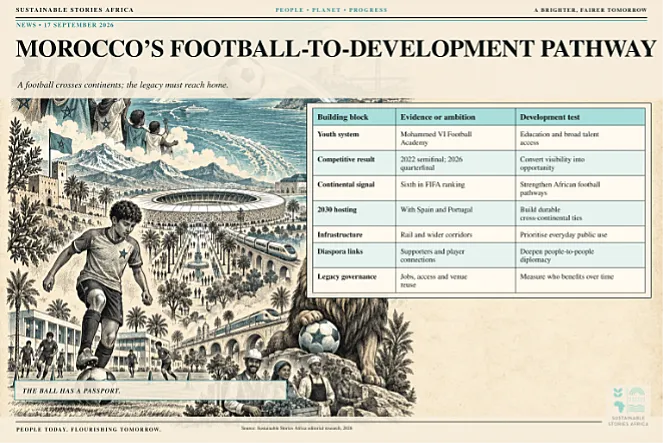
Morocco’s football rise reflects long-term investment in youth, education, training facilities and diaspora connections.
As the country prepares to co-host the 2030 World Cup, it wants the tournament to strengthen infrastructure, jobs and cross-continental cooperation.
The development test is whether sporting ambition leaves affordable, inclusive benefits after the final whistle.
Football Becomes A Development Strategy
Morocco’s rise in world football is increasingly being presented as evidence of a broader development strategy, not a tournament surprise.
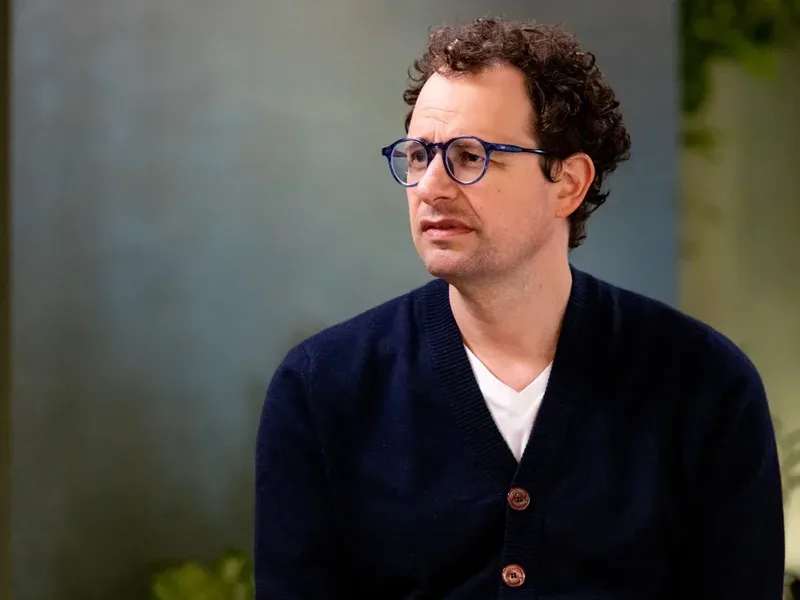
In a Brookings Foresight Africa discussion published on July 29, 2026, Morocco’s ambassador to the United States, Youssef Amrani, said the country’s 2022 World Cup semifinal run and 2026 quarterfinal finish grew from sustained investment in young players, education, modern facilities and the Mohammed VI Football Academy.
The results have raised the stakes for 2030, when Morocco will co-host the men’s World Cup with Spain and Portugal.
For Amrani, the event will highlight African talent, creativity and ambition while strengthening cooperation between Africa and Europe.
The policy question is whether that visibility can translate into durable jobs, useful infrastructure and wider opportunity.
Academies, Diaspora And Infrastructure Reinforce Success
Morocco’s model connects talent identification with an institutional pathway.
- The academy in Rabat combines football development, education, training centres and high-quality facilities.
- The approach treats elite performance as the product of a system, while ties with the Moroccan diaspora widen the pool of players, supporters and international relationships.
The 2026 World Cup added momentum.
- Morocco reached the quarterfinals and rose to sixth in the FIFA men’s ranking, according to the Brookings discussion.
- Amrani also cited the broader performance of African teams as evidence that the continent’s competitiveness is deepening.
On the diplomatic side, football created spaces where Moroccan, African and American audiences met through culture, travel and shared support.
Preparations for major tournaments are also being tied to transport and regional connectivity.
- Morocco has expanded rail infrastructure and is pursuing larger corridors, including the Nigeria-Morocco gas pipeline initiative involving West African countries.
- These projects are not sporting assets alone, but the World Cup can accelerate attention, deadlines and investment.
Legacy Depends On Benefits People Can Use
A successful 2030 legacy would leave communities with more than stadium memories.
- Reliable transport, public spaces, hospitality skills, local supply contracts and stronger youth development systems can improve daily life and expand opportunity long after the tournament.
- Co-hosting across two continents can also demonstrate practical cooperation across languages, cultures and markets.
However, major events can concentrate benefits, displace priorities or leave expensive facilities underused.
- Amrani acknowledged affordability concerns around ticket prices and called for innovation in financing.
That concern should extend to the full investment programme: who gains contracts, whose neighbourhoods improve, whether women and young people access new jobs, and whether facilities have viable post-event uses.
Public reporting can keep that promise visible.
- Baseline data collected before construction would allow citizens to see whether travel times, employment, small-business participation and access to sport actually improve.
- Independent evaluation after the tournament would also help future African hosts distinguish investments that created lasting value from those driven mainly by event pressure.
Measure The Legacy Before Construction Accelerates
Morocco and its co-hosts should publish a clear legacy scorecard before locking in the largest spending commitments.
- It should cover local procurement, youth training, job quality, accessibility, emissions, public transport use, community participation and the long-term operating plans for venues.
Other African countries can draw diverse lessons, without copying Morocco’s spending scale.
- Sports policy works best when academies connect education to opportunity, infrastructure serves several public purposes, and diplomacy supports trade, tourism and cultural exchange.
Governments, sports bodies and investors should treat competitions as milestones within a development plan, not as substitutes for one.
Path Forward – Make Sporting Investment Serve People Longer
Morocco should anchor 2030 delivery in transparent legacy targets for youth, local firms, accessible transport, affordable participation and venue reuse.
African partners can adapt the academy, diaspora and dual-use infrastructure model while matching investment to local needs and fiscal capacity.