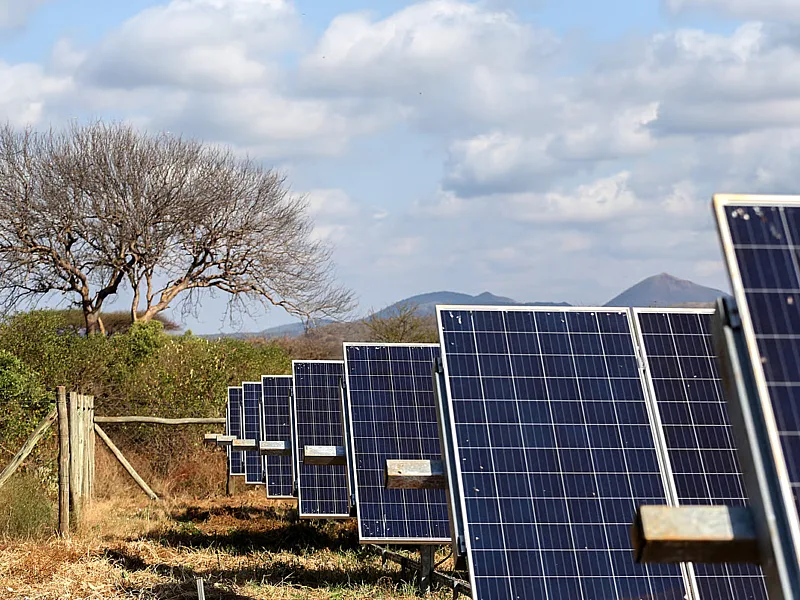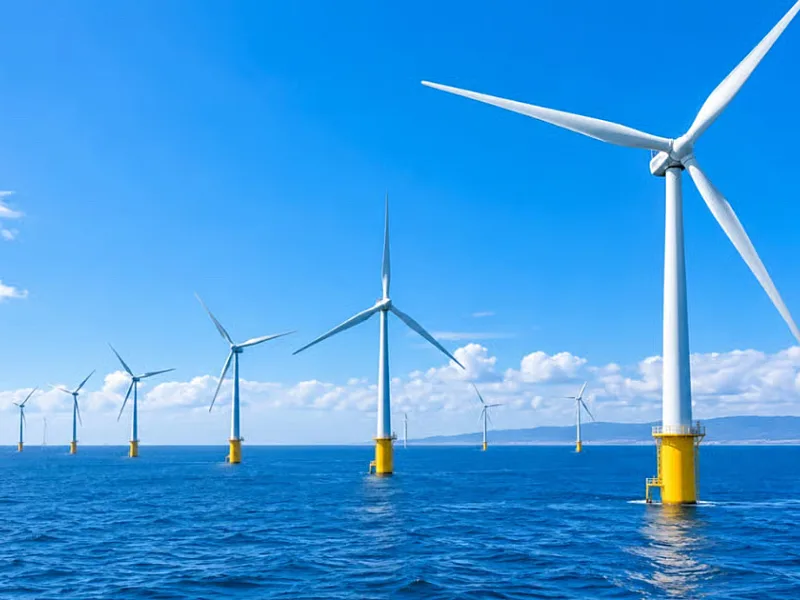
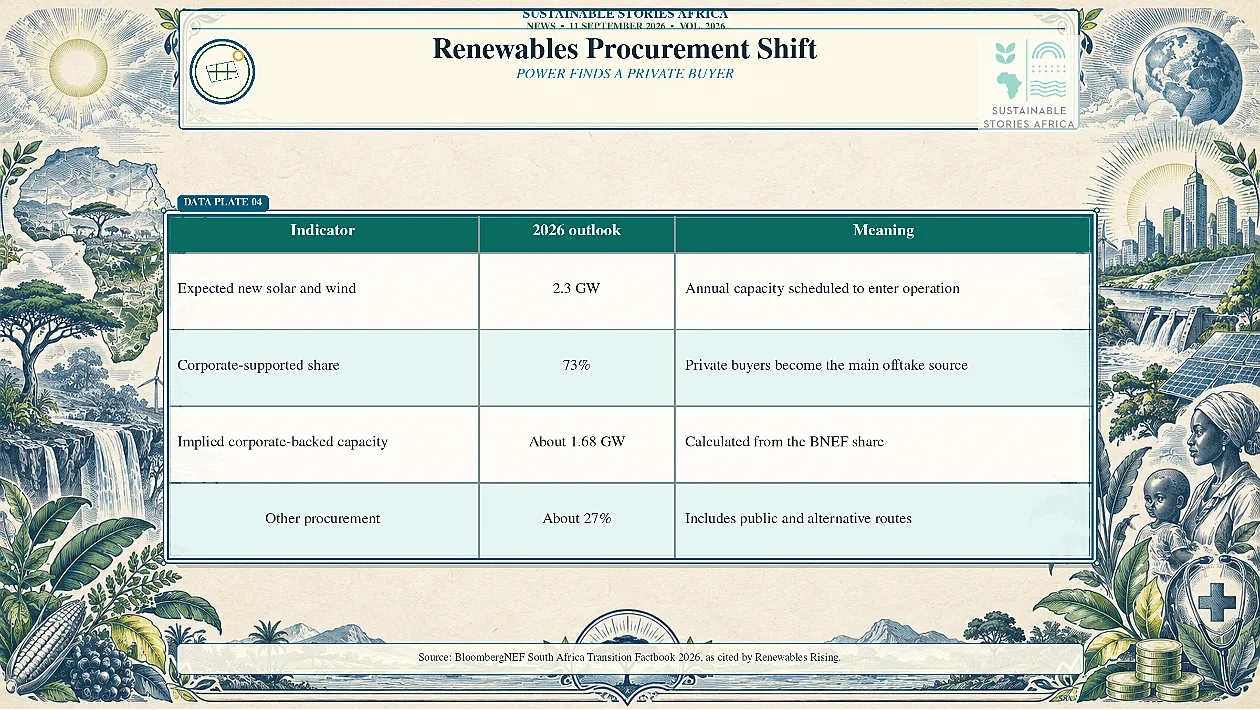
Corporate buyers are expected to support 73% of South Africa's anticipated 2.3 GW of new solar and wind capacity in 2026.
The forecast marks the first time private power-purchase agreements are set to overtake public procurement as the market's main growth engine.
Faster clean-power contracting can strengthen industrial competitiveness, but grid congestion and unequal access remain binding constraints.
Businesses Become the Main Power Buyers
Corporate power-purchase agreements are set to support most of South Africa's new solar and wind capacity in 2026, signalling a decisive change in how the country's energy transition is financed.
- BloombergNEF expects business buyers to back 73% of the 2.3 gigawatts anticipated to enter operation during the year.
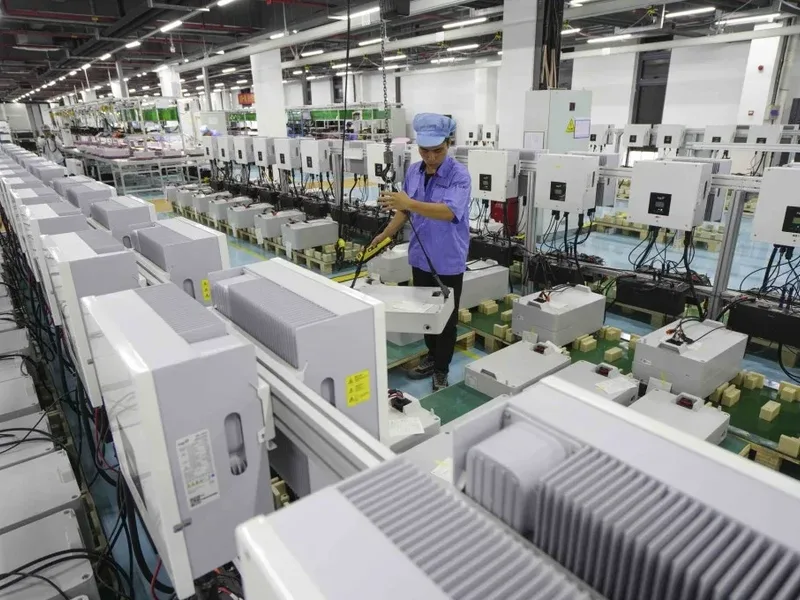
The shift means renewable growth is increasingly driven by mines, manufacturers, retailers, data centres and electricity traders seeking lower-cost, lower-carbon supply.
For the first time, private procurement is expected to outpace the government's Renewable Energy Independent Power Producer Procurement Programme as a source of new capacity.
Market Reform Unlocks Private Demand
South Africa's electricity reforms have allowed private generators and traders to contract more directly with customers, including through wheeling arrangements that use the national grid.
Corporate buyers supported about 670 MW of new wind and solar in an earlier comparison reported around the forecast, but their share is now expected to dominate annual additions.
Demand reflects more than sustainability targets.
- Power-intensive companies need predictable prices and more reliable supply, while exporters face tighter carbon requirements in overseas markets.
- Long-term contracts give developers bankable revenue and help buyers manage exposure to utility tariffs and fossil-fuel volatility.
Private Deals Bring Wider Benefits
A deeper corporate market can reduce pressure on the public balance sheet and accelerate projects that do not need a sovereign-backed procurement round.
- Competition among generators and traders may also create more flexible products for customers that cannot sign a conventional single-project agreement.
The gains will not be automatic.
- Large buyers have the credit quality and legal capacity to negotiate complex contracts, while smaller businesses and low-income households may remain dependent on public systems.
- Renewable growth that mainly serves strong corporate balance sheets must still contribute to reliable networks, local jobs and an affordable transition.
Grid Capacity Remains the Bottleneck
Transmission constraints are the most immediate limit.
- South Africa's best wind and solar resources are often far from major demand centres, and grid capacity in several development zones is already scarce.
- Projects can secure buyers and finance yet still wait for a connection.
- Storage, flexible demand and faster grid investment are therefore central to sustaining the procurement shift.
Regulators should maintain transparent connection queues, strengthen market rules and protect system reliability as more bilateral contracts enter the grid.
Policymakers must also preserve a role for public auctions where they can deliver geographic diversity, community benefits or technologies that the corporate market will not procure on its own.
Municipalities and communities need a visible place in the new market.
- Project approvals should disclose local employment, land-use arrangements and community participation, while grid charges should reflect actual system costs.
Aggregators can pool the demand of medium-sized firms, schools and hospitals that cannot negotiate alone.
These measures would spread the benefits of liberalisation and reduce the risk that private procurement creates a fast lane available only to the largest electricity users.
Path Forward – Connects Markets and Communities
South Africa should accelerate transmission, clarify trading rules and widen access to aggregated clean-power contracts for smaller buyers.
Private procurement can lead capacity growth, but public policy must ensure the resulting system remains reliable, affordable and socially inclusive.
Culled from: Most renewables now bypass state auctions