Spain has asked Brussels to make climate resilience a binding and permanently funded pillar of European policy.
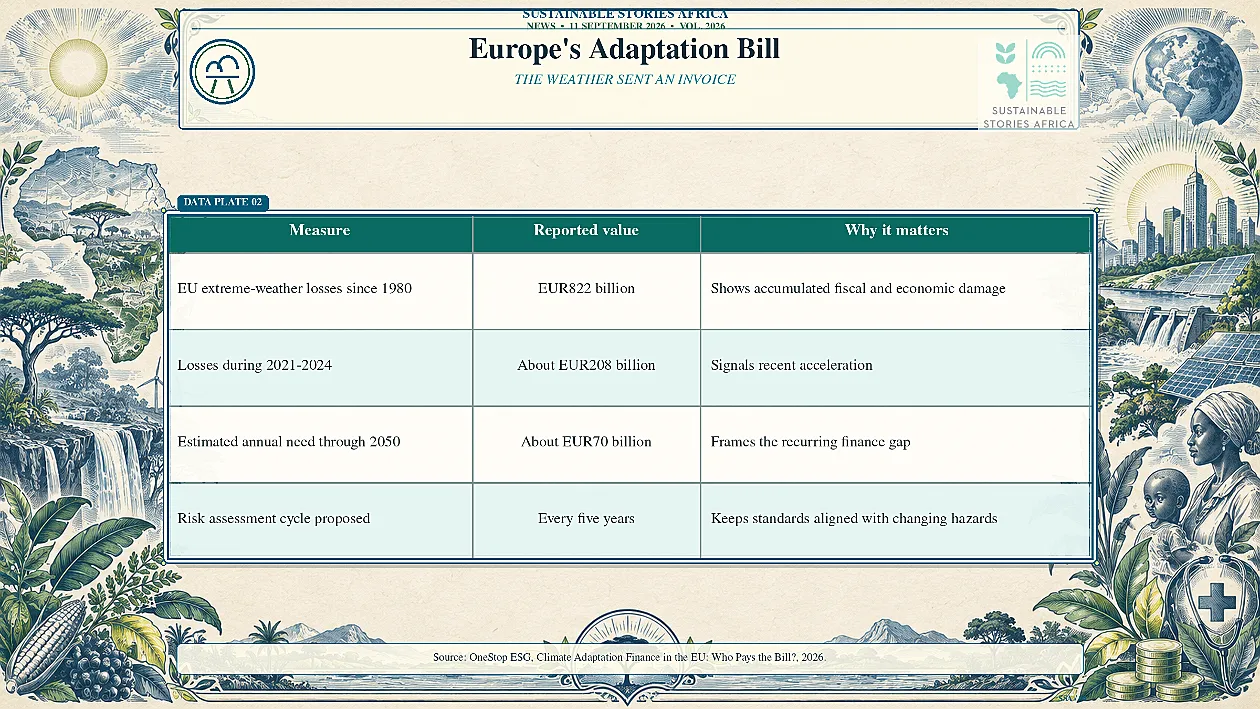
The proposal arrives after extreme-weather losses reached EUR822 billion since 1980 and an assessment placed annual adaptation needs near EUR70 billion through 2050.
The argument extends beyond Europe: funding rules can either crowd capital into resilient infrastructure or price exposed regions out of investment.
Spain Forces Adaptation Onto Budget Agenda
Spain has proposed a permanent European Climate Adaptation Fund and binding resilience targets as the European Union prepares a new climate-resilience framework and negotiates its 2028 - 2034 budget.
Ecological Transition Minister Sara Aagesen sent the proposal to EU Climate Commissioner Wopke Hoekstra on September 4, after a summer of severe heat and wildfires across southern Europe.
The plan links money to standards.
- It calls for climate-risk assessments every five years, stronger civil-protection capacity, a public-private reinsurance scheme and climate-risk bonds.
Spain has also floated levies on oil and gas profits, taxes on private jets and luxury air travel, and common European borrowing as possible funding sources.
Losses Outrun Existing Funding Tools
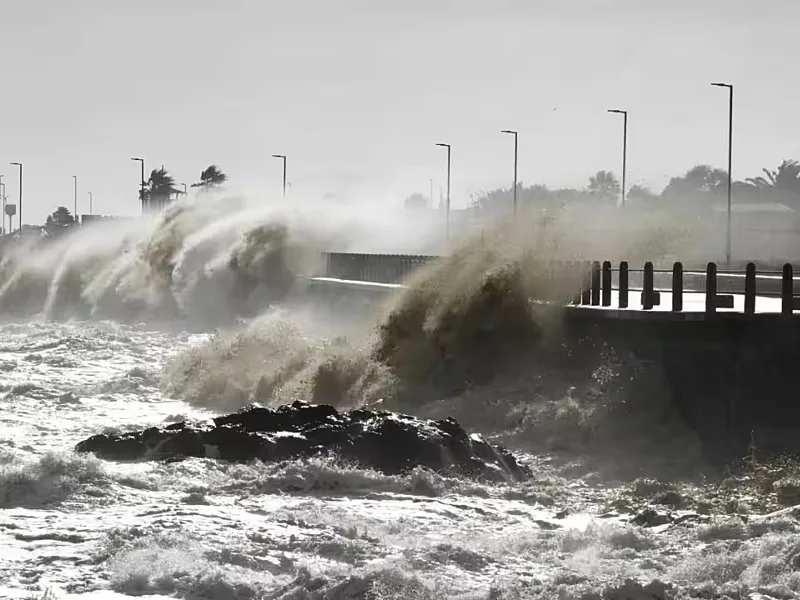
Spain estimates that extreme weather has caused EUR822 billion in accumulated EU losses since 1980, including about EUR208 billion between 2021 and 2024.
- A Commission-backed assessment published in January put adaptation needs at roughly EUR70 billion each year until 2050.
Those figures expose the limits of annual grants and emergency reconstruction budgets.
Mitigation policy can count tonnes of carbon dioxide avoided. Adaptation has no single equivalent unit because its benefit is often a loss that never occurs
- A hospital that remains open in a heatwave
- A harvest that survives drought or a rail line designed for higher temperatures.
That makes common standards difficult, but it also makes early design decisions essential.
Resilience Tests Could Change Lending
The proposal's most important feature may be the principle of climate resilience by design.
- If applied to EU financing, projects would have to show that they can function under future physical conditions before public money is committed.
- Lenders and insurers would then price risk at the start of an asset's life rather than after construction.
Poorly designed rules could also redirect capital away from Europe's most exposed southern regions.
- A rigid pass-or-fail test may make precisely the communities that need adaptation appear unfinanceable.
Funding must therefore help weaker projects improve their resilience instead of merely identifying them as risky.
Funding Choices Need Durable Foundations
A standing fossil-fuel levy could support the polluter-pays principle, but temporary windfall profits cannot finance a permanent system.
- Common debt may spread costs across generations that benefit from resilient infrastructure, though joint borrowing remains politically contentious.
- Ordinary budgets offer another route, but adaptation would compete with health, defence and pensions.
African governments should watch the design closely.
- Similar questions already shape flood protection, resilient agriculture and urban infrastructure across the continent.
- A workable system will need long-term public finance, private-risk sharing and safeguards that prevent climate exposure from becoming a reason to withhold investment.
Europe's choices will also influence global capital markets.
- Banks and infrastructure investors may reuse EU resilience tests when they assess projects elsewhere, even where public budgets and insurance coverage are far weaker.
African institutions should participate in standard-setting early, argue for context-sensitive measures and document the avoided losses created by adaptation.
- Otherwise, rules intended for Europe could become de facto global requirements without matching finance for implementation.
Path Forward – Makes Resilience Financeable Everywhere
Europe must agree on stable funding, comparable resilience tests and support for regions that cannot meet new standards unaided.
The wider lesson is clear: adaptation rules should improve exposed assets and communities, not screen them out of affordable finance.
Culled from: Climate Adaptation Finance in the EU: Who Pays the Bill?