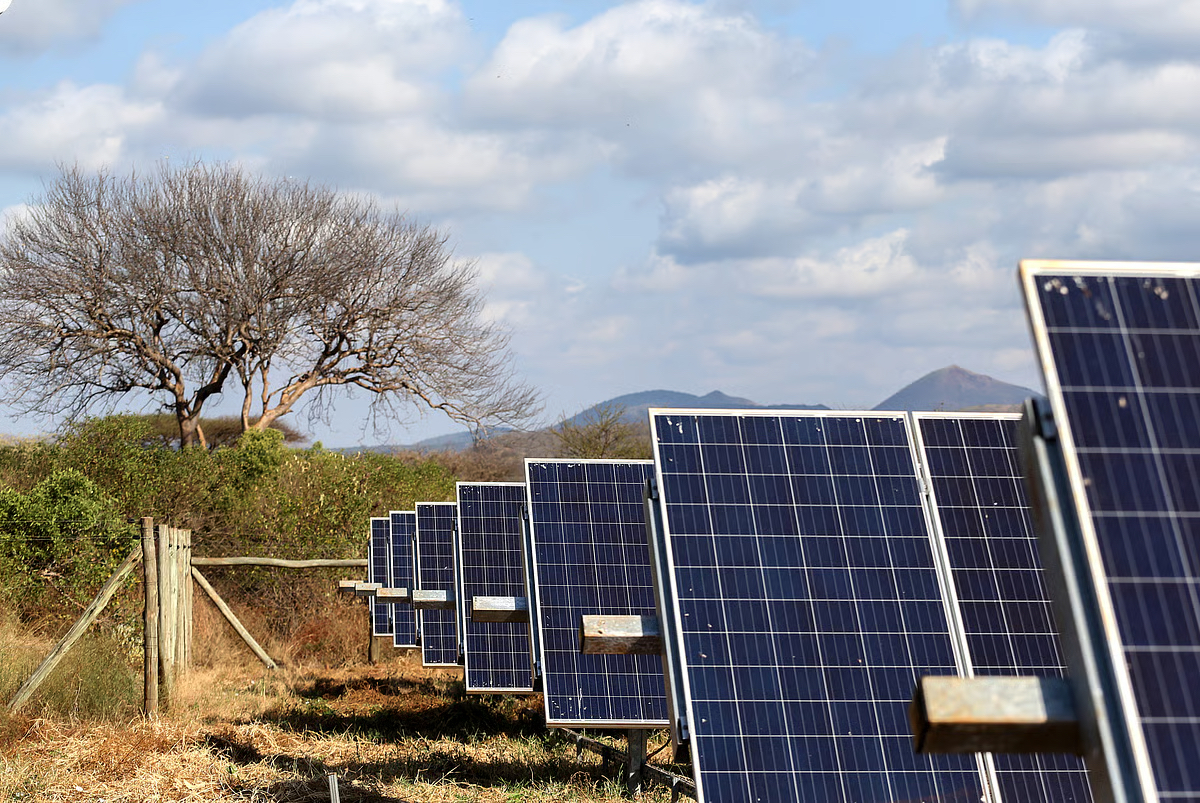
Battery-backed solar mini-grids could provide near-term electricity access to 21 million people in four West African countries, IRENA says.
The assessed opportunity covers about 568 MW and 42,700 settlements across Burkina Faso, Mali, Nigeria and Senegal.
Strong regulation, blended finance and technical capacity will determine whether falling technology costs translate into dependable power for remote communities.
Mini Grids Offer a Faster Route
Solar mini-grids combined with battery storage could expand reliable electricity access across rural West Africa, where extending national networks is often too costly.
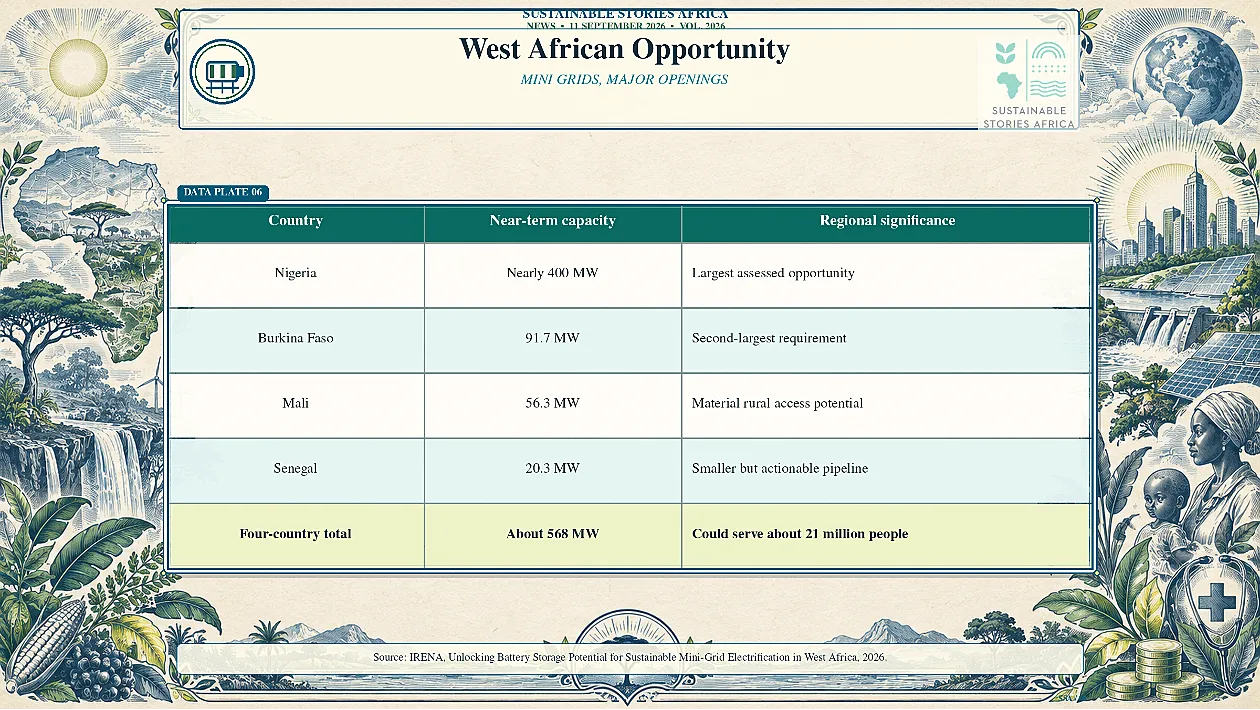
A new International Renewable Energy Agency assessment identifies a near-term opportunity of about 568 megawatts across Burkina Faso, Mali, Nigeria and Senegal, enough to serve roughly 21 million people in 42,700 settlements.
The opportunity addresses a persistent development gap. Western Africa accounted for 33% of the 565 million people without electricity in sub-Saharan Africa in 2023.
Most lived in rural and remote areas, while 451 million people across rural sub-Saharan Africa remained without access.
Nigeria Holds the Largest Market
Nigeria accounts for nearly 400 MW of the assessed near-term capacity, well ahead of Burkina Faso at 91.7 MW, Mali at 56.3 MW and Senegal at 20.3 MW.
IRENA's least-cost planning work shows decentralised systems can compete where distance, terrain, low demand density or weak public finances make conventional grid expansion impractical.
The longer-term potential is far larger.
- When grid expansion is constrained, solar-battery mini-grids could supply more than half of new connections and serve between 47 million and 110 million people.
- IRENA identified about 397,270 settlements that could potentially use mini-grids, with solar photovoltaic resources suitable for 98.5% of them.
Batteries Improve Reliability and Value
Batteries store daytime solar output and release it when sunlight falls, or demand rises.
- That improves service quality for homes and makes mini-grids more useful for clinics, schools, cold storage, irrigation and small businesses.
- It can also reduce diesel use and protect customers from fuel-price shocks.
IRENA estimates that avoided fuel costs could outweigh the extra battery investment by two to four times.
Under the highest-demand scenario, storage could create nearly $25 billion in value while requiring about 130 gigawatt-hours of battery capacity.
About 2.25 GWh may be needed by 2030 to provide universal Tier 2 supply across the four assessed countries.
Finance and Regulation Decide Delivery
Technology costs alone will not connect communities.
- Developers need transparent licences, tariffs that protect consumers while covering costs, standards for equipment and service, and clear rules for what happens when the national grid eventually arrives.
- Poorly designed subsidies can deter investment, while unaffordable tariffs can leave systems underused.
Governments and development banks should use blended finance, guarantees and results-based support to lower early-stage risk.
- Training local technicians and supporting productive uses of electricity can strengthen revenue and community value.
- Planning must also involve residents so sites, service levels and payment models reflect actual needs rather than spreadsheet assumptions.
Affordability requires careful service design.
- Tier 2 access supports lighting, phone charging, fans and limited appliances, but communities may need higher loads for milling, refrigeration or workshops.
Developers should plan modular systems that can grow with demand and publish service-quality obligations.
- Connecting electricity to agriculture, health and local enterprise can turn each mini-grid from a household utility into infrastructure for wider rural development.
Path Forward – Powers Communities Beyond Grids
West African governments should align least-cost plans, mini-grid rules, concessional finance and workforce development around bankable community projects.
Success will be measured by reliable services and productive livelihoods, not by installed megawatts or settlement counts alone.