The European Investment Bank has commissioned a two-year feasibility study for Morocco's first offshore wind farm, a project that could become Africa's first if built.
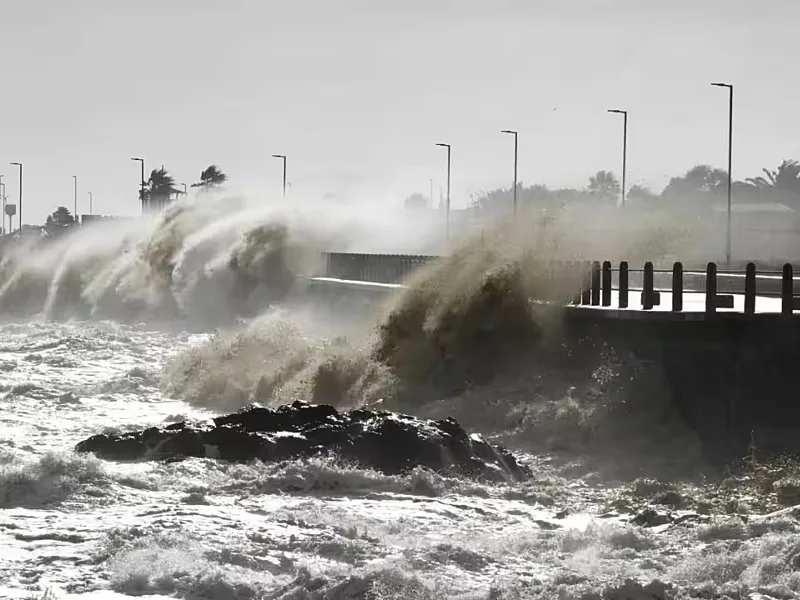
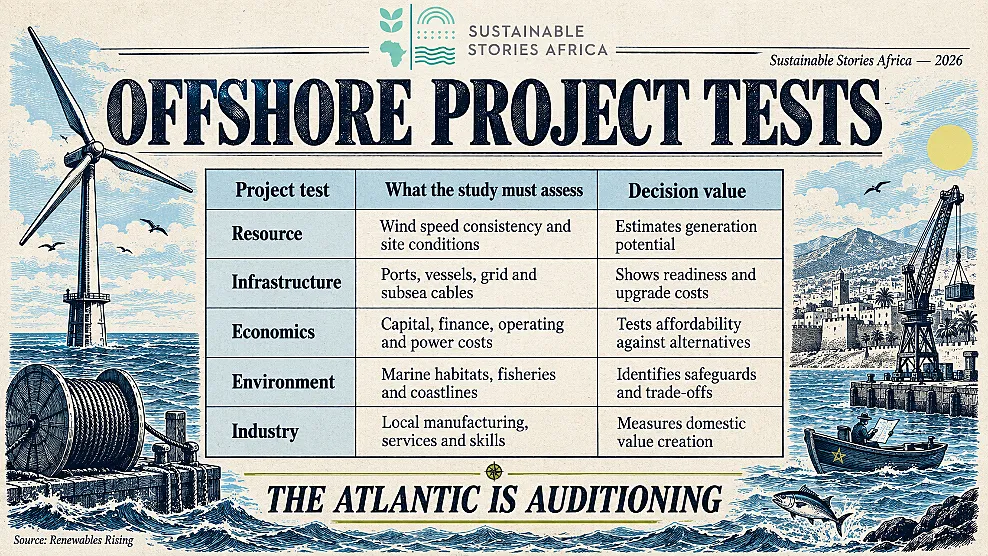
The study will test whether strong coastal resources can overcome high costs, demanding infrastructure and difficult marine conditions.
Its outcome could influence industrial policy and clean-energy investment far beyond Morocco.
A first project could reset expectations
Morocco has taken an early step towards what could become Africa's first offshore wind farm after the European Investment Bank commissioned a two-year feasibility study.
- The work will examine whether the country's coastal wind resource can support a technically and commercially viable project.
No construction decision has been announced.
- That distinction matters because offshore wind requires far more than strong wind speeds.
- Developers need detailed seabed and environmental studies, grid connections, ports capable of handling very large components, specialised vessels, bankable contracts and long-term policy certainty.
The sea offers scale and complexity
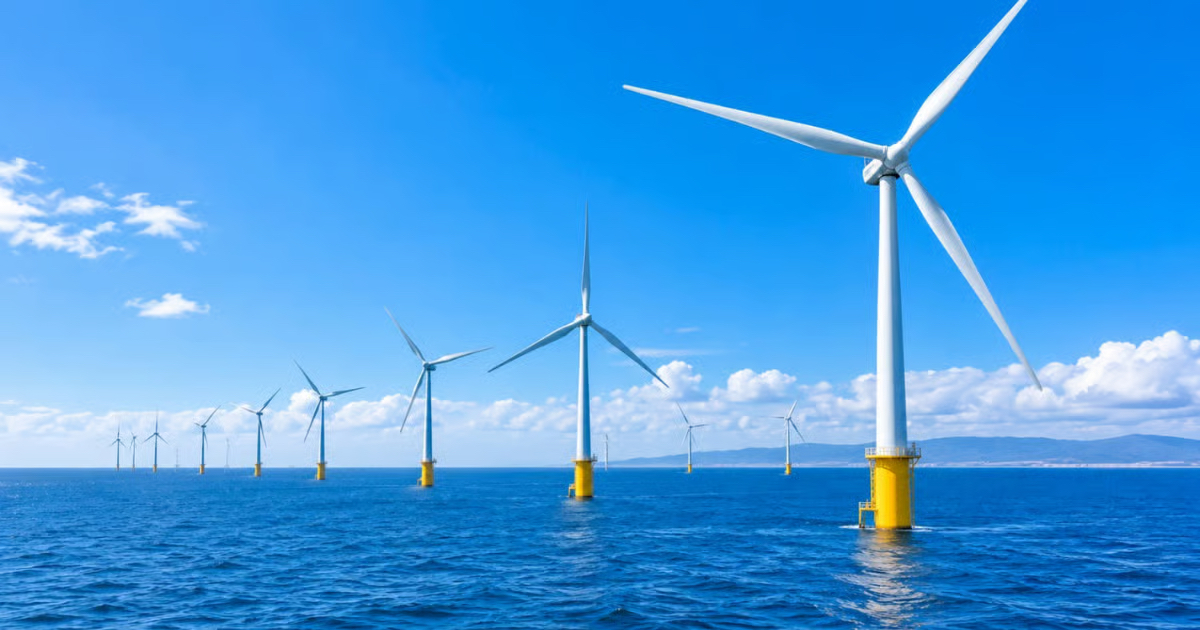
Offshore turbines can capture powerful and relatively consistent winds while avoiding some land constraints.
- Their output could support rising electricity demand, industrial decarbonisation and, where economics permit, green-hydrogen production.
- Morocco already has experience using large renewable projects to strengthen its energy strategy, giving the study a base of institutional knowledge.
Costs remain the central test.
- Offshore foundations, subsea cables, corrosion protection and marine logistics make projects capital-intensive.
- Financing costs can rise further in markets where investors see currency, policy or offtaker risk.
Renewables Rising notes that these barriers have so far kept utility-scale offshore wind away from African shores.
Local industry could change project economics
The supply chain will determine whether offshore wind creates broad value or becomes an expensive import programme.
- Turbine assembly, towers, cables, port services, operations and maintenance can support skilled jobs, but only when policy gives local firms time and certainty to invest.
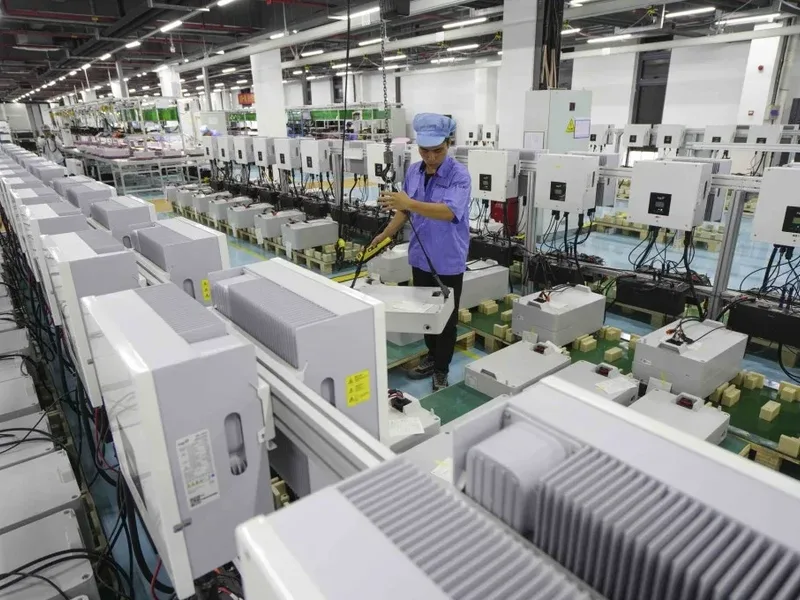
Renewables Rising points to China's experience, where manufacturing close to project sites has helped lower electricity-production costs.
Morocco cannot copy that model overnight, but it can use the study to identify components that local or regional firms could supply competitively.
- Training, standards and port upgrades would need to start before procurement, not after contracts are awarded.
The study must answer difficult questions
A credible assessment should compare offshore wind with onshore wind, solar, storage and transmission on a system-cost basis.
- It should also examine fisheries, marine ecosystems, coastal livelihoods and community benefit-sharing.
- Early consultation can reduce conflict and improve site selection.
For the continent, the study’s value lies partly in the evidence it can produce.
- Transparent data on wind resources, seabed conditions, grid needs and likely costs could help other coastal countries judge whether offshore development suits their own power systems.
Transmission planning will be decisive.
- A large offshore project can add substantial power at one connection point, but the grid must absorb variable output and move it to demand centres.
- Storage, flexible generation and regional interconnection may improve system value.
The feasibility study should identify these associated investments so the headline generation cost does not conceal the full cost of reliable delivery.
Financing design will matter too.
- A first project may need public risk-sharing, but guarantees should buy measurable learning and cost reduction rather than shield developers from every commercial risk.
- Competitive tenders, open resource data and clear connection rules can help Morocco test market appetite while protecting consumers from an unnecessarily expensive contract.
Evidence should guide Africa offshore ambitions
Morocco should publish the study's core assumptions and use competitive procurement only if the project proves affordable, environmentally responsible and useful to the grid.
Regional institutions can turn the findings into shared technical standards and skills programmes.
Africa needs successful clean-energy projects, but it also needs disciplined decisions about where each technology works.
Culled from: Morocco’s offshore wind gamble could open a new chapter for Africa