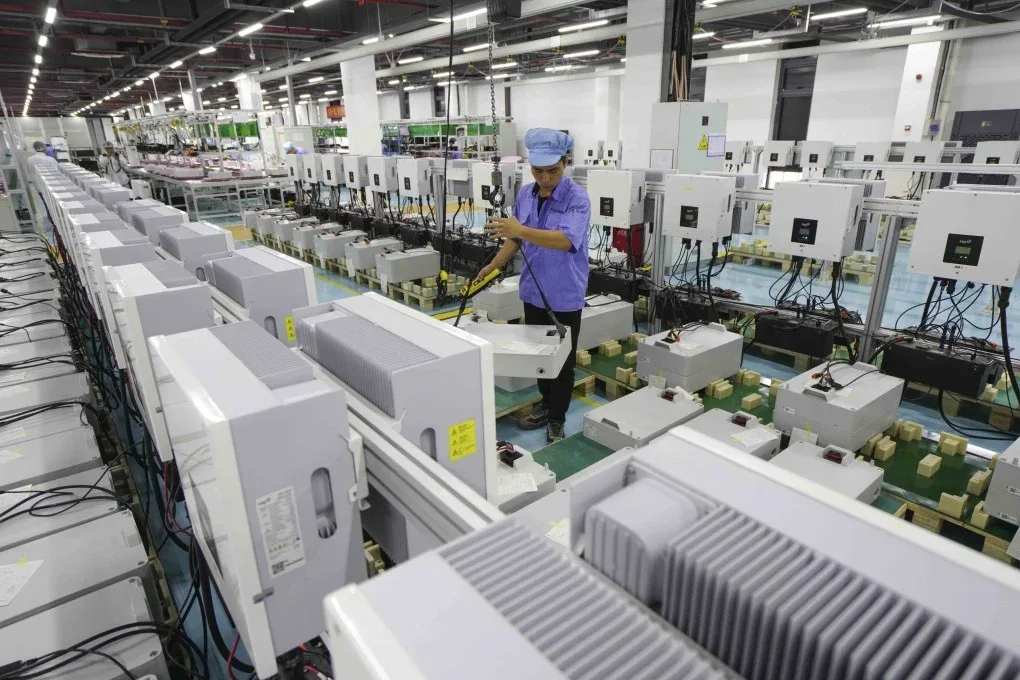
China is tightening policy around battery manufacturing after years of rapid capacity growth and intense price competition.
Export VAT rebates are being withdrawn while approvals for some new energy-storage cell factories have reportedly been paused pending a capacity review.
The measures may stabilise producers, but higher storage prices could slow renewable projects in import-dependent African markets.
Beijing Moves to Restrain Oversupply
China's battery policy is entering a more restrictive phase as authorities seek to curb manufacturing overcapacity and destructive price competition.
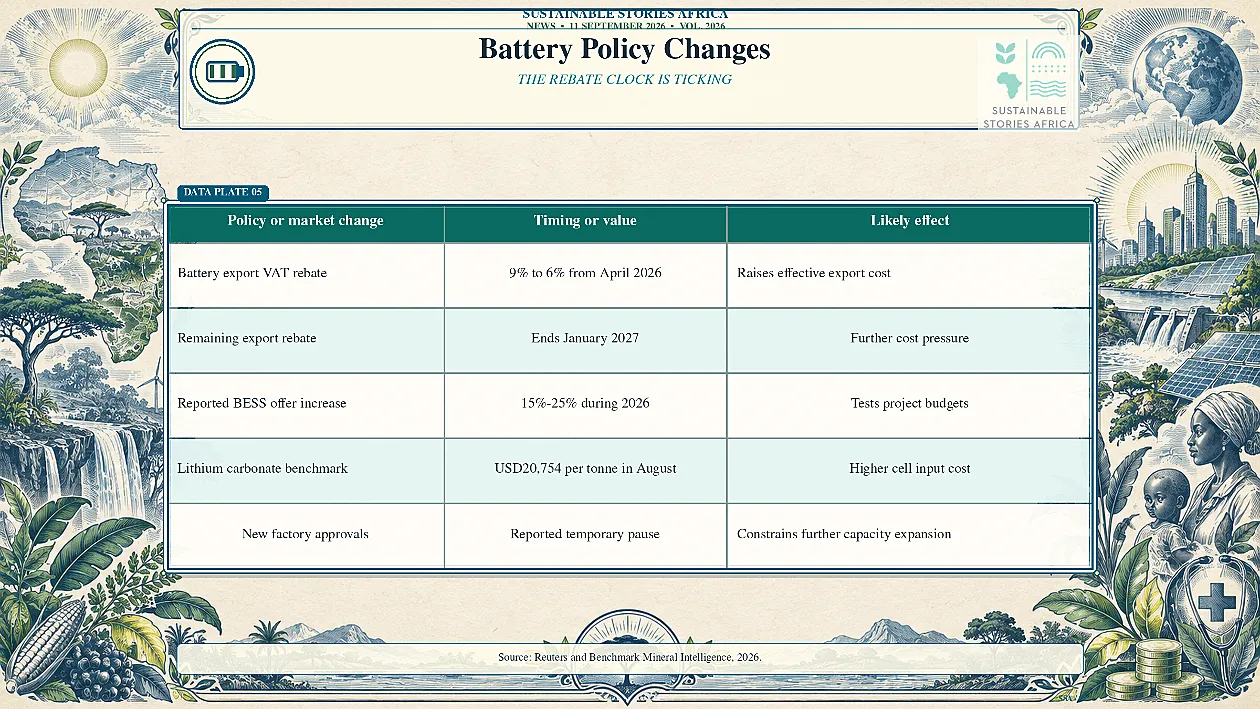
Reports indicate that approvals for some new battery energy storage cell factories have been temporarily paused while regulators review existing and planned capacity.
Projects already approved or under construction may continue.
The reported pause follows changes to tax support.
- The export value-added tax rebate for listed battery products fell from 9% to 6% on April 1, 2026 and is scheduled to disappear on January 1, 2027.
- China is also introducing a consumption tax on lithium-ion batteries, adding another potential cost to equipment sold at home or abroad.
Storage Economics Face Multiple Pressures
Battery storage is essential to renewable power because it moves electricity from sunny or windy periods to times of higher demand and supports grid stability.
- Years of expanding Chinese production helped drive prices down, making solar-plus-storage projects viable in markets that struggle with unreliable grids and expensive diesel backup.
That trend has begun to reverse in parts of the market.
- ICIS reported that Chinese battery-energy-storage system offers rose by as much as 15% to 25% in 2026 as lithium prices increased and export support declined.
- Benchmark data cited in the analysis put lithium carbonate near $20,754 a tonne in August, more than twice its October 2025 level.
African Projects Carry Import Exposure
African developers are particularly exposed because many projects depend on Chinese cells and integrated systems.
- A moderate price increase can weaken project returns, delay financial close or reduce the hours of storage included in a mini-grid.
- Smaller systems face shipping, financing and currency costs that already make equipment more expensive than headline factory prices suggest.
The policy shift does not remove the long-term case for batteries.
- Storage demand continues to grow as countries add variable renewables and businesses seek dependable power.
- Chinese authorities may also improve sector quality by discouraging redundant factories and unsustainable underpricing.
The near-term challenge is managing volatility while the industry adjusts.
Diversification Can Protect Project Pipelines
Developers should update procurement assumptions, use transparent price-adjustment clauses and assess several suppliers rather than relying on the lowest initial quote.
Governments can reduce avoidable costs through predictable import rules, stronger quality standards and local-currency finance.
Regional assembly and recycling could gradually build resilience without pretending that full supply-chain independence will arrive quickly.
Public and development financiers should protect high-impact access projects from temporary price shocks.
- Concessional capital, guarantees and pooled procurement can keep viable mini-grids and utility storage moving while markets reset.
The aim should be disciplined diversification, not a retreat from storage-dependent renewable development.
Quality assurance must remain central as buyers search for cheaper alternatives.
- Weak cells, poor battery-management systems or inadequate warranties can turn a low purchase price into safety incidents and early replacement costs
Regulators and financiers should require traceable products, independent testing and plans for end-of-life recovery.
Procurement that considers lifetime performance will protect consumers and prevent volatile markets from becoming a channel for substandard equipment.
Path Forward – Shields Clean Energy Projects
African buyers need diversified supply, realistic price assumptions and finance that absorbs short-term equipment volatility.
China's reset may strengthen battery manufacturing over time, but vulnerable renewable projects should not bear the transition cost alone.
Culled from: China’s battery policy shift to hit renewables growth