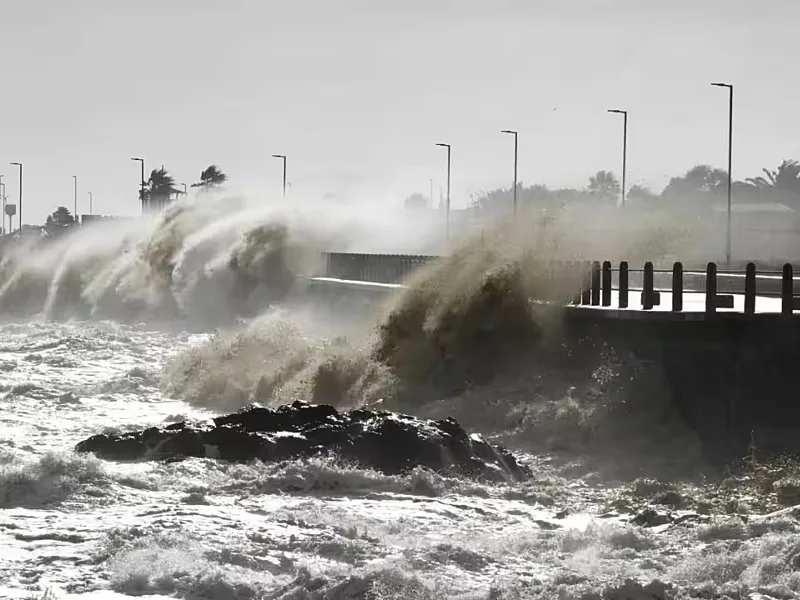
Nature loss is moving from the margins of environmental policy into the core work of financial supervision.
Banks, insurers and central banks face growing pressure to identify how damaged ecosystems can weaken borrowers, assets and whole economies.
For African markets, better data and locally grounded stress tests could determine whether vulnerable sectors receive resilience finance or become harder to fund.
Nature Risk Reaches Financial Supervision
The finance sector's treatment of nature-related risk is under sharper scrutiny as central banks and researchers seek better ways to measure how biodiversity loss can transmit through loans, investments and insurance.
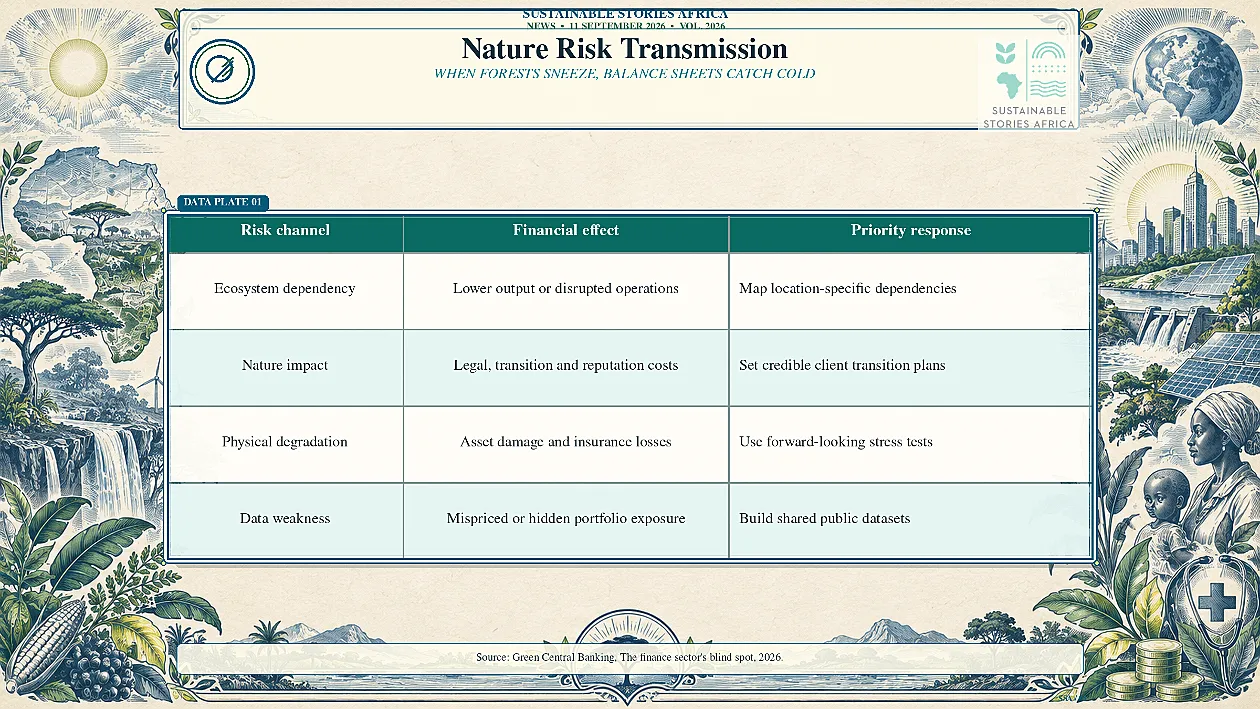
Green Central Banking's analysis describes a blind spot that matters because financial institutions depend on businesses whose revenues, assets and supply chains rely on functioning ecosystems.
The risk is not confined to conservation. Soil degradation can weaken agricultural output, water stress can interrupt mining and manufacturing, and ecosystem decline can increase the cost of protecting property and infrastructure.
When these pressures reduce company cash flows or asset values, banks may face higher credit losses while insurers confront claims that historical models did not anticipate.
Data Gaps Hide Portfolio Exposure
The central problem is visibility.
- Climate reporting has gradually built common measures around greenhouse-gas emissions, but nature is location-specific.
- The same loan can carry very different risk depending on the watershed, habitat or commodity supply chain involved.
Financial institutions therefore need geospatial information, company-level dependency data and credible transition plans before they can distinguish manageable exposure from concentrated systemic risk.
Recent estimates illustrate the scale.
- Global Canopy's ENCORE work says EUR7.1 trillion of the European Union's economy is highly exposed to financial risk from nature degradation at home and abroad.
- That exposure can extend through imports and financing relationships to African producers of food, minerals and other commodities.
- Weak disclosure in those supply chains does not remove the risk; it makes the risk harder to price.
Better Measurement Can Redirect Capital
Improved supervision could change how capital is allocated.
- Banks that understand ecosystem dependencies can engage clients early, finance water efficiency and regenerative production, and avoid abrupt withdrawals when damage becomes visible.
- Supervisors can also test whether institutions are relying on optimistic assumptions or concentrating exposure in places where nature loss and climate hazards reinforce each other.
However, there is a danger that crude risk scores make finance more expensive for exposed communities and countries.
- African regulators need methods that separate vulnerability from poor management and recognise credible investment in resilience.
- Otherwise, a framework designed to protect financial stability could penalise the places that most need long-term capital.
Regulators Must Close Evidence Gaps
Central banks, finance ministries and market regulators should develop interoperable nature-risk data, publish sector guidance and require institutions to explain how material dependencies enter governance and risk decisions.
Financial firms should map high-impact portfolios before making broad nature-positive claims.
Development banks can support the public data and technical capacity that smaller institutions cannot build alone.
The immediate test is whether nature becomes part of ordinary credit, investment and supervisory practice rather than another voluntary report.
- That requires transparent methods, safeguards against greenwashing and engagement with communities whose knowledge can reveal risks that remote datasets miss.
This work also needs a clear development lens.
- Many African economies depend heavily on agriculture, fisheries, forests and extractive industries, yet their financial institutions often have less access to detailed environmental data.
- International standards should fund local measurement and recognise informal livelihoods rather than importing models built for data-rich markets.
Better evidence can help regulators protect stability while enabling banks to finance restoration, adaptation and more resilient enterprise.
Path Forward – Builds Nature Smart Finance
Supervisors should pair disclosure with practical portfolio testing, shared data and clear expectations for client engagement.
African markets need locally relevant metrics and concessional finance so higher risk awareness directs investment toward resilience instead of producing financial exclusion.
Culled from: The finance sector’s blind spot - by Moriah Costa