Africa’s fast-growing data centre industry is emerging as a major new driver of renewable energy demand.
As cloud computing, AI, and digital services expand, power-hungry infrastructure is reshaping energy markets across the continent.
The shift signals new investment opportunities, but also exposes urgent gaps in grid reliability, policy alignment, and sustainable power supply.
A Digital Boom Meets an Energy Turning Point
Africa’s data centres are no longer just digital infrastructure; they are becoming anchors of the continent’s clean energy transition.
From Microsoft’s cloud regions in Nigeria and South Africa to hyperscale expansions by Amazon Web Services and Google, demand for reliable, high-capacity electricity is surging.
Data centres, which can consume as much power as small cities, are forcing a rethink of how Africa generates and distributes energy.
The core question is no longer whether Africa needs more power, but whether that power will be clean, reliable, and scalable enough to support its digital future.
Rising Energy Demand Meets Structural Constraints
Africa’s digital economy is expanding at an unprecedented pace. Internet penetration, fintech growth, AI adoption, and cloud migration are all driving demand for data storage and processing.
Yet, the continent’s energy systems remain constrained, characterised by grid instability, fossil fuel dependence, and limited baseload capacity.
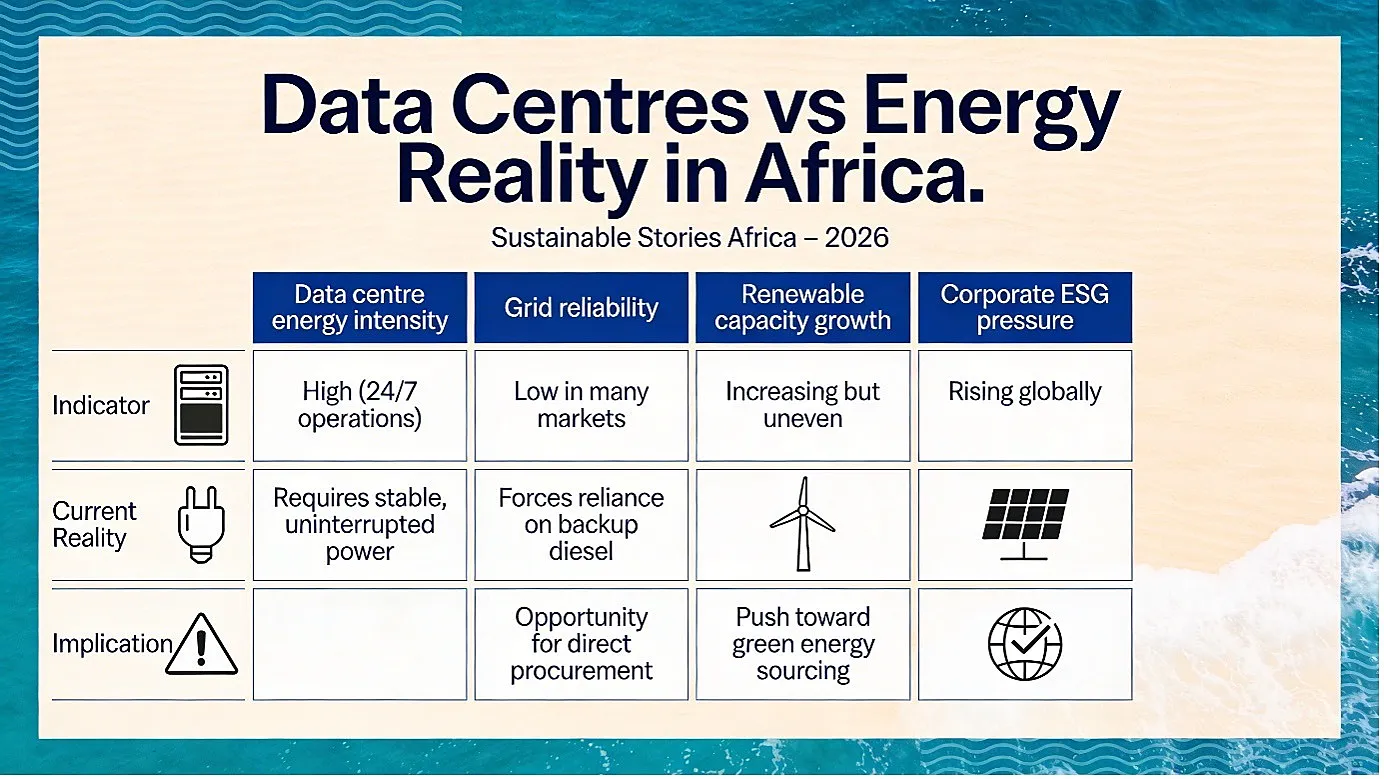
Data Centres vs Energy Reality in Africa
Indicator | Current Reality | Implication |
|---|---|---|
Data centre energy intensity | High (24/7 operations) | Requires stable, uninterrupted power |
Grid reliability | Low in many markets | Forces reliance on backup diesel |
Renewable capacity growth | Increasing but uneven | Opportunity for direct procurement |
Corporate ESG pressure | Rising globally | Push toward green energy sourcing |
In Nigeria, South Africa, and Kenya, operators are increasingly bypassing unreliable grids through captive power solutions, including solar, hybrid systems, and power purchase agreements (PPAs) with renewable developers.
This shift is not purely environmental; it is economic. Diesel-powered backup systems significantly increase operating costs, making renewables an increasingly competitive alternative.
A senior infrastructure executive at a recent industry forum noted:
“Data centres are becoming energy companies by necessity. If the grid cannot deliver reliability, they will build their own solutions—and increasingly, those solutions are renewable.”
A New Market for Clean Energy Investment
The convergence of digital infrastructure and renewable energy presents a compelling opportunity.
Data centres offer what renewable developers often lack: predictable, long-term demand. This creates a bankable revenue stream that can unlock financing for solar, wind, and battery storage projects.
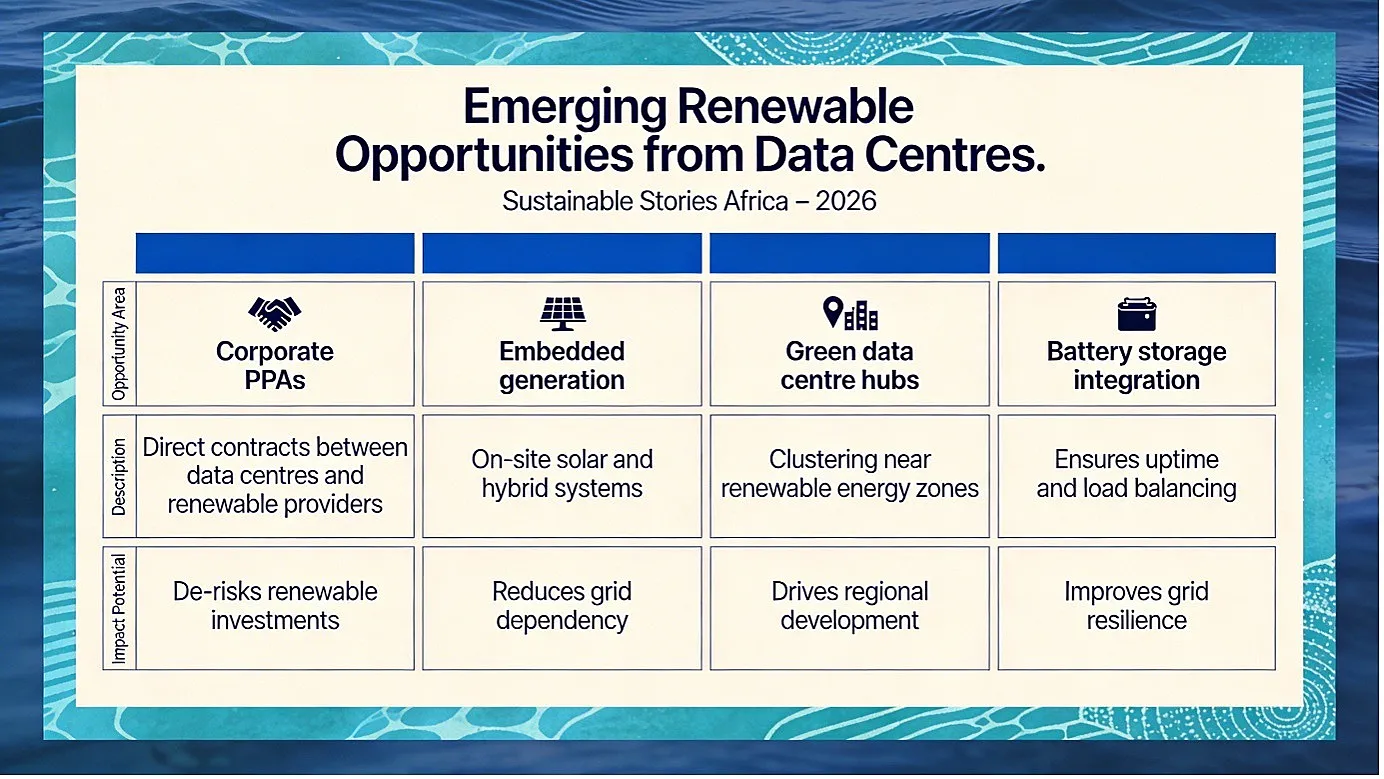
Emerging Renewable Opportunities from Data Centres
Opportunity Area | Description | Impact Potential |
|---|---|---|
Corporate PPAs | Direct contracts between data centres and renewable providers | De-risks renewable investments |
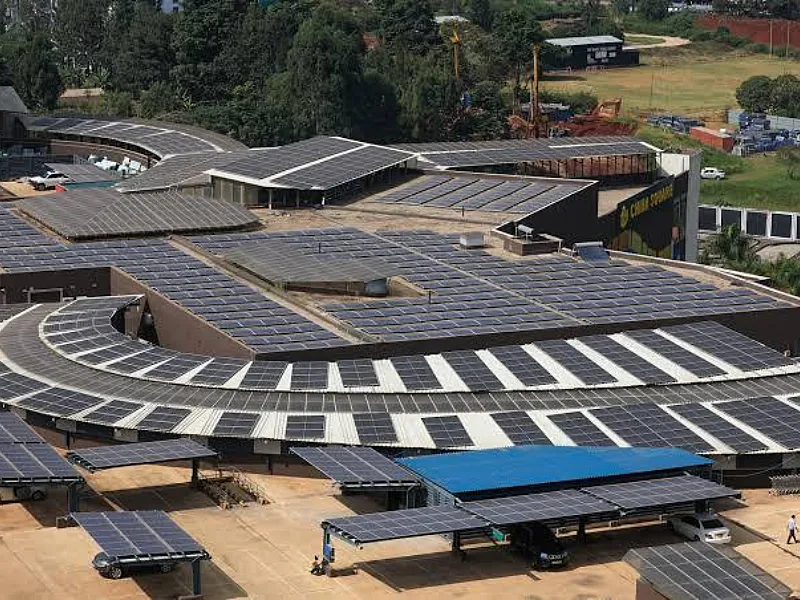
Embedded generation | On-site solar and hybrid systems | Reduces grid dependency |
Green data centre hubs | Clustering near renewable energy zones | Drives regional development |
Battery storage integration | Ensures uptime and load balancing | Improves grid resilience |
Globally, companies such as Microsoft and Google have committed to 100% renewable energy targets, and these commitments are extending into African operations.
If scaled effectively, this could position data centres as anchor tenants for renewable energy ecosystems, stimulating investment, improving grid stability, and accelerating decarbonisation.
However, the benefits extend beyond infrastructure. Reliable digital services underpin financial inclusion, education, healthcare delivery, and governance systems, making this an economic transformation story, not just an energy one.
Aligning Policy, Capital, and Infrastructure
For Africa to fully harness this momentum, alignment across policy, finance, and infrastructure is critical.
Governments must create enabling environments for renewable energy procurement, streamlining approvals for PPAs, incentivising private investment, and strengthening regulatory clarity.
Investors, particularly development finance institutions and climate funds, must play a role in de-risking early-stage projects and scaling blended finance models.
Meanwhile, data centre operators must integrate sustainability into core strategy—not as compliance, but as a competitive advantage.
As one policy advisor at an energy transition roundtable observed:
“Africa has a unique opportunity to leapfrog into green digital infrastructure. But it will require coordination between energy regulators, digital economy players, and capital providers.”
Without this coordination, the risk is clear: a rapid expansion of diesel-powered infrastructure that locks in high emissions and inefficiencies for decades.
Path Forward – Powering Digital Growth Sustainably
Africa’s digital expansion is inevitable, but its energy pathway remains a choice. Aligning data centre growth with renewable energy can unlock a dual dividend—economic acceleration and climate resilience.
Priorities now include scaling PPAs, strengthening grid integration, and mobilising climate finance. If implemented efficiently, data centres could become the backbone of Africa’s clean energy future, powering both bytes and sustainable development.
Culled From: Data centres anchor new demand for renewables in Africa