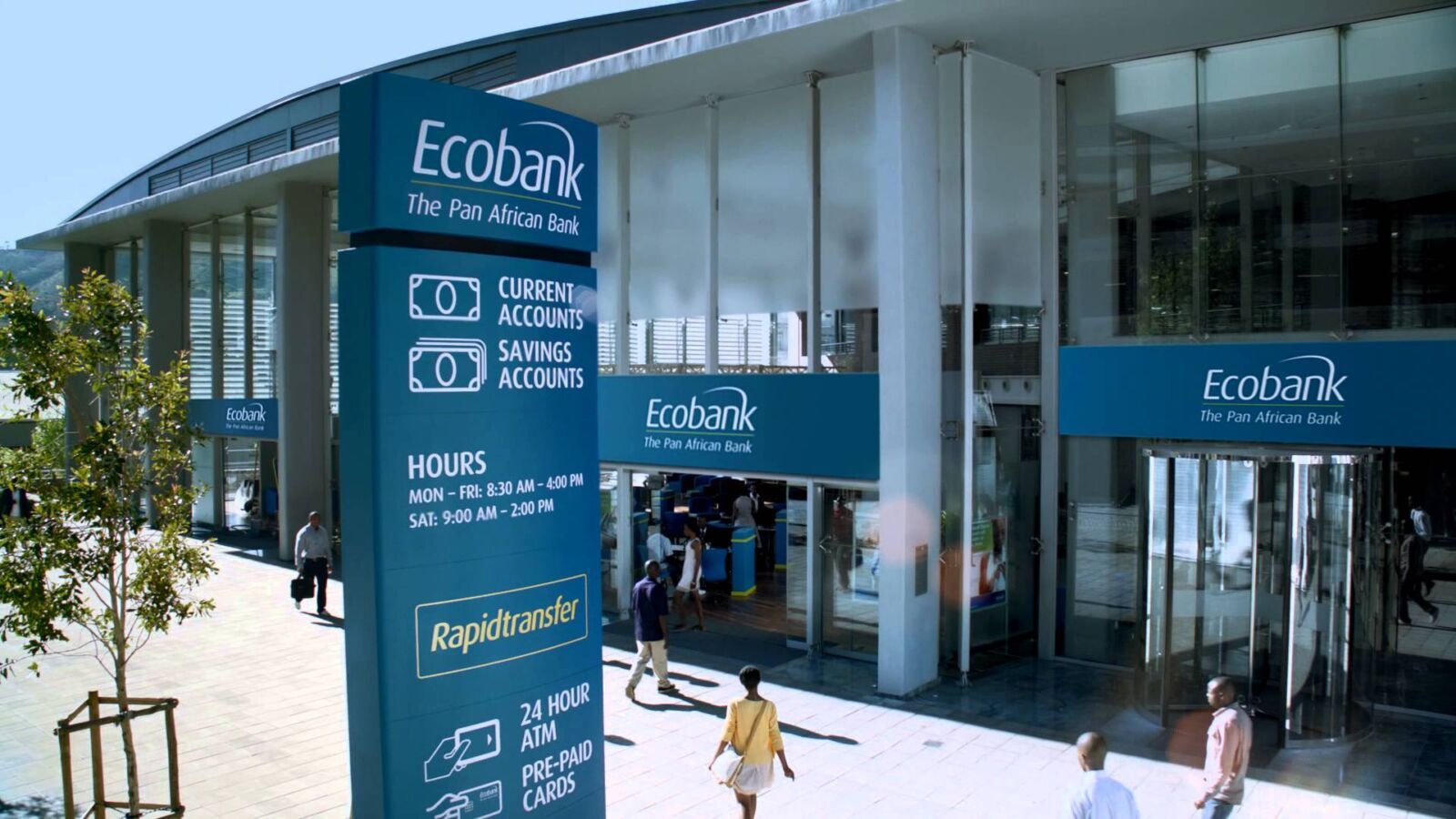
Ecobank has launched the world's first International Capital Market Association-aligned commercial bank, Nature Bond, raising $450 million for biodiversity conservation and sustainable economic development across Africa.
The landmark transaction arrives as governments and investors search for new ways to close Africa's nature-finance gap and protect ecosystems that underpin food systems, water security, and livelihoods.
For communities, businesses, and markets, the bond signals a growing recognition that nature is not simply an environmental asset, but also an economic infrastructure.
A $450 Million Bet on Nature's Economic Value
Africa's forests, wetlands, rivers, and biodiversity-rich landscapes have long supported millions of livelihoods. Now, they are attracting a new class of investment.
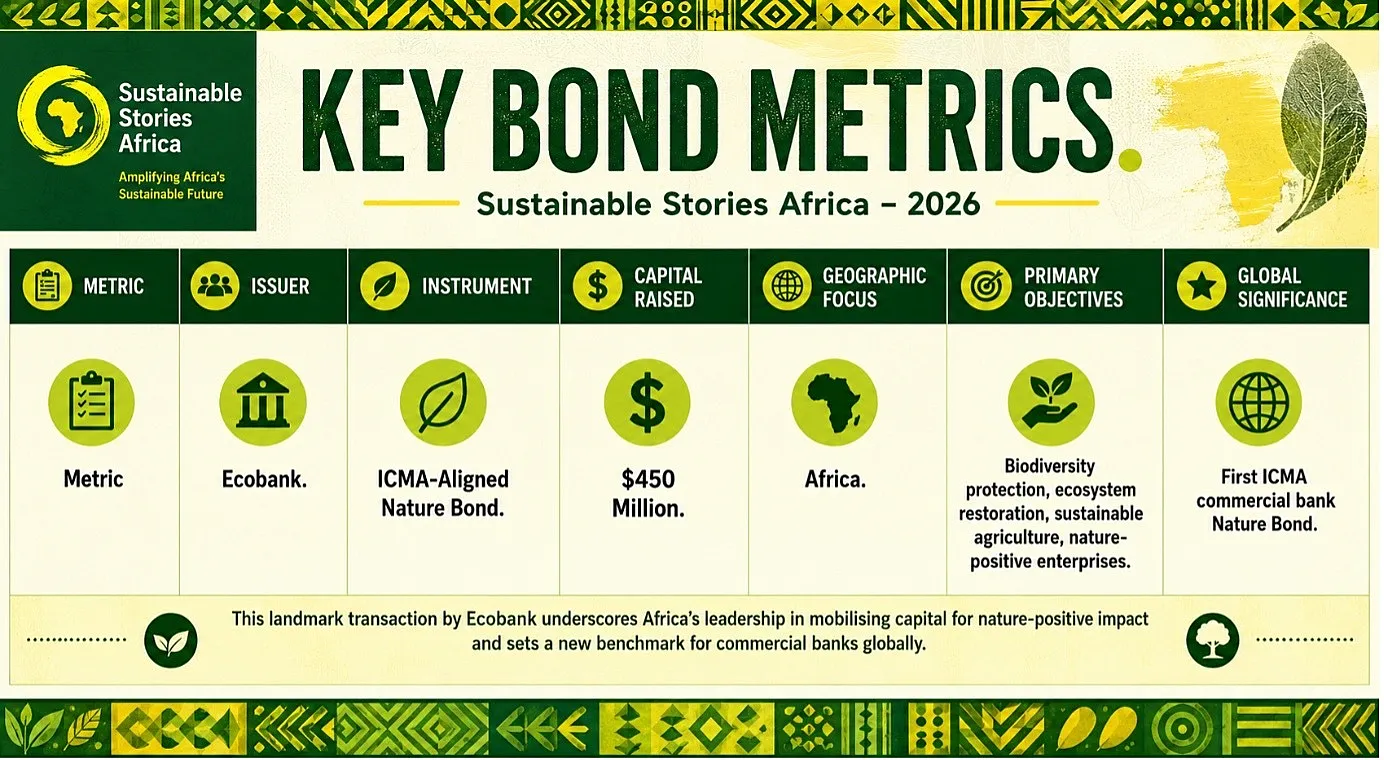
Ecobank has launched the world's first International Capital Market Association (ICMA)-aligned Nature Bond issued by a commercial bank, mobilising $450 million to support biodiversity protection, sustainable agriculture, ecosystem restoration, and nature-positive businesses across Africa.
The landmark issuance positions nature conservation not as philanthropy, but as a mainstream investment opportunity.
It also places Africa at the centre of a growing global movement seeking to channel private capital toward environmental resilience.
The bond will help finance projects that protect natural ecosystems while supporting economic activity, creating a new pathway for investors looking to align financial returns with measurable environmental outcomes.
Turning Biodiversity Into An Investable Asset Class
The launch comes at a critical moment for Africa's environmental future.
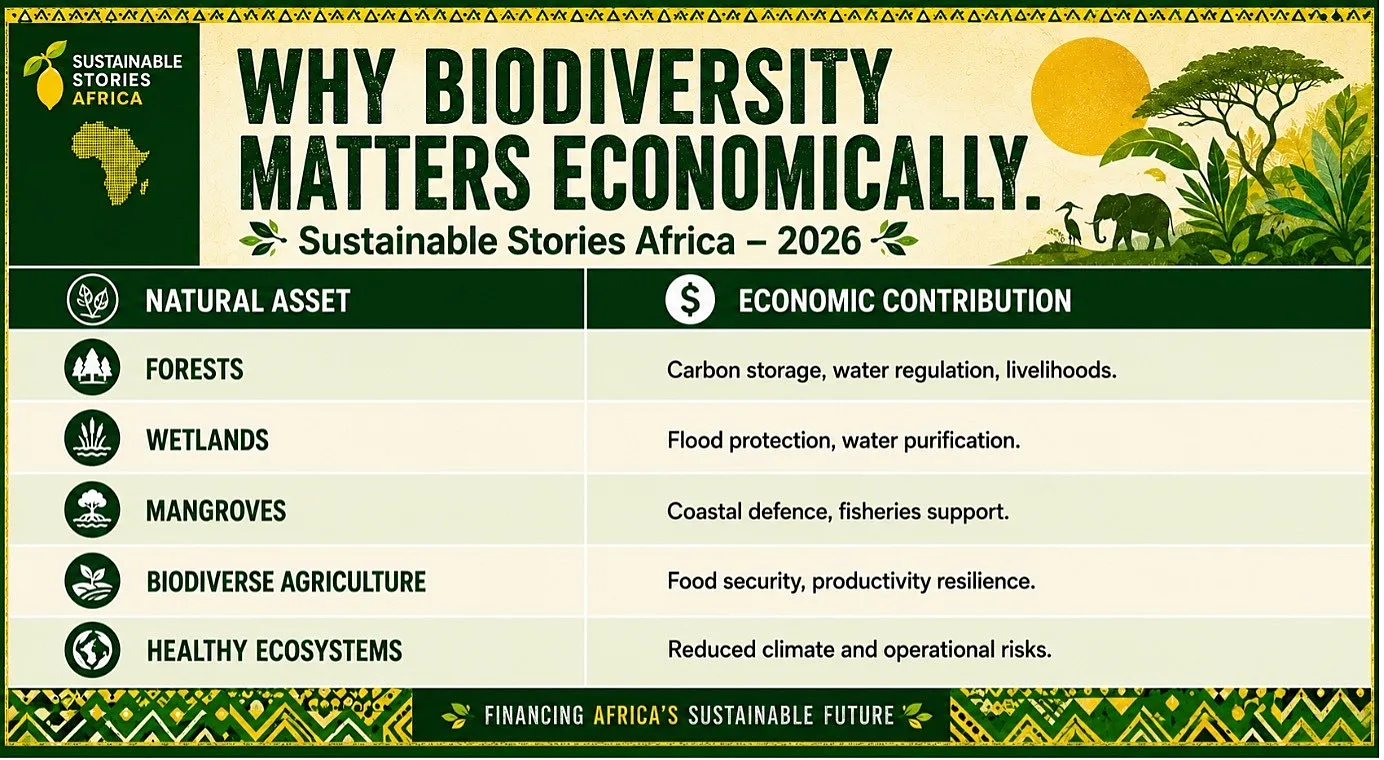
The continent contains some of the world's most important ecosystems, including the Congo Basin rainforest, East Africa's savannahs, mangrove forests along West African coastlines, and diverse freshwater systems that support agriculture and fisheries.
However, conservation financing remains significantly underfunded.
According to international estimates, biodiversity loss and ecosystem degradation continue to accelerate globally, while funding needs for nature protection run into hundreds of billions of dollars annually.
Traditional public financing alone has proven insufficient.
Ecobank's Nature Bond seeks to bridge part of that gap by mobilising private-sector capital.
- For a farmer in Ghana, biodiversity protection may mean healthier soils and more resilient harvests.
- For fishing communities in Senegal, it may support healthier coastal ecosystems.
- For businesses dependent on natural resources, stronger ecosystems can reduce operational risks linked to climate change and environmental degradation.
The bond therefore represents more than a financing instrument; it represents a shift in how natural capital is valued within financial markets.
Industry observers view the transaction as evidence that environmental assets are increasingly becoming part of mainstream investment strategies rather than niche sustainability initiatives.
What Success Could Mean For Africa
If replicated across African financial markets, the implications could be transformative.
Nature-positive finance could unlock billions of dollars for conservation while simultaneously supporting rural development, employment, sustainable agriculture, ecotourism, and climate resilience.
- For investors, the bond offers exposure to projects aligned with growing environmental priorities.
- For governments, it creates an additional source of financing without relying solely on constrained public budgets.
- Most importantly, communities that depend directly on natural resources stand to benefit from improved ecosystem health.
The alternative is increasingly costly.
Environmental degradation already threatens agricultural productivity, water availability, biodiversity, and economic stability across many African countries.
As climate pressures intensify, the cost of inaction is expected to rise significantly.
The Nature Bond model suggests that protecting ecosystems and generating economic value need not be competing objectives.
Instead, they can become mutually reinforcing outcomes.
Scaling Nature Finance Beyond A Single Transaction
The significance of Ecobank's initiative extends beyond the $450 million raised.
The transaction provides a blueprint that other African financial institutions can adapt and scale.
To maximise impact, policymakers, regulators, development finance institutions, investors, and commercial banks will need to work together to build credible pipelines of nature-positive projects.
Clear measurement frameworks, transparent reporting standards, and strong governance mechanisms will be essential for maintaining investor confidence.
Institutional investors increasingly seek opportunities that deliver measurable environmental outcomes alongside financial returns.
Africa's biodiversity assets present a significant opportunity; however, only if projects can demonstrate both impact and investment readiness.
The challenge now is turning a pioneering transaction into a broader market movement.
Path Forward – Building Markets That Value Nature
Ecobank's Nature Bond demonstrates how African financial institutions can mobilise private capital for biodiversity protection while supporting economic growth.
The next priority is expanding the pipeline of bankable nature-positive projects across the continent.
Success will depend on stronger partnerships between governments, investors, development institutions, and local communities.
If scaled effectively, nature finance could become a core pillar of Africa's ESG transition, helping protect ecosystems while strengthening long-term economic resilience.
Culled From: Ecobank Launches World's First ICMA Commercial Bank Nature Bond Raising $450 Million to Protect African Biodiversity