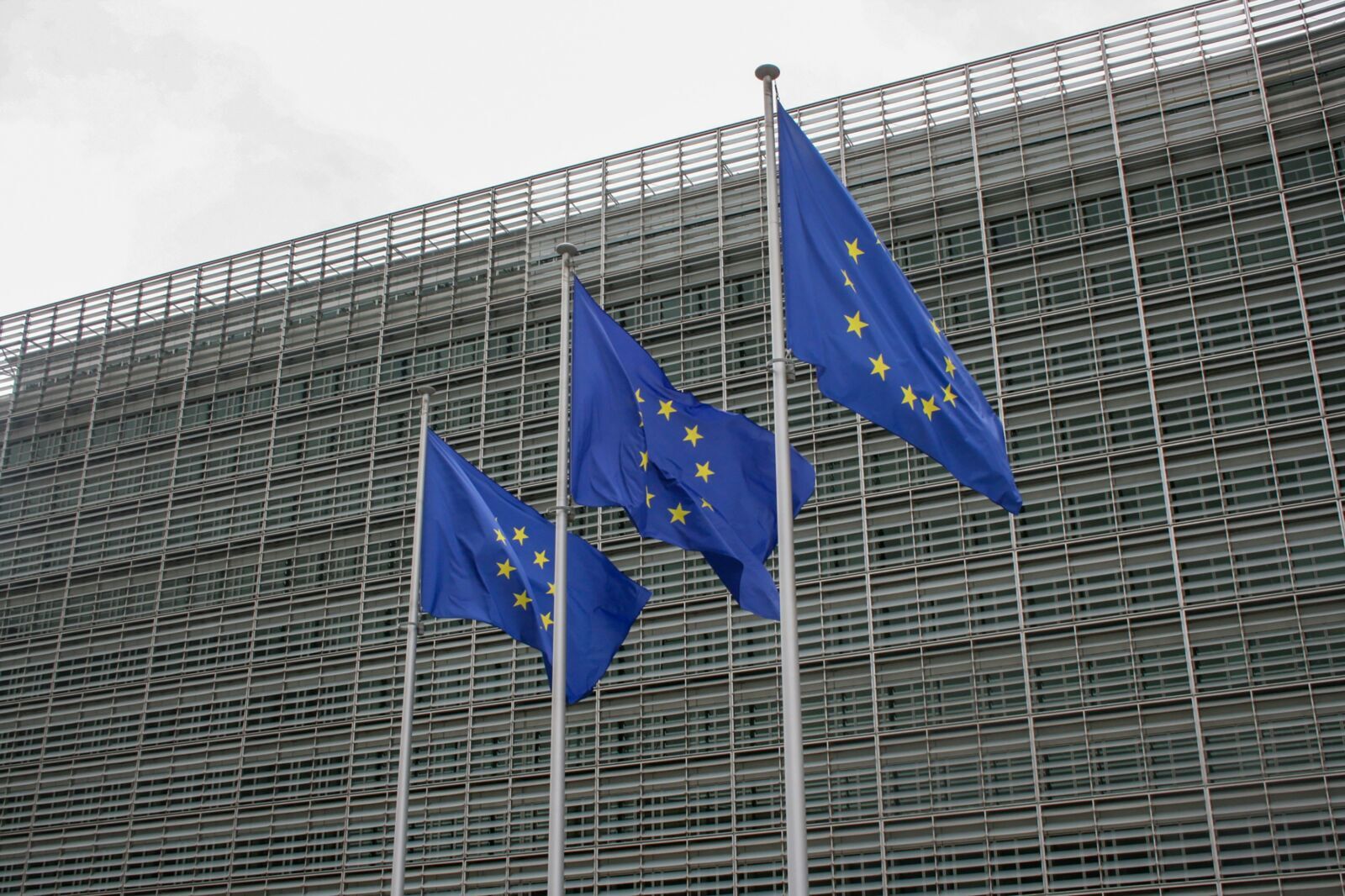
The EU’s carbon-pricing regime is entering a tougher phase as CBAM moves into force.
By making high-emission goods more expensive, Europe is strengthening the business case for renewable energy and cleaner production.
For African exporters, the shift could reshape competitiveness, investment choices and industrial policy.
Carbon Costs Are Rewriting Energy Choices
Europe’s new carbon border regime is turning emissions into a trade cost, and renewables into a competitive advantage.
The European Union’s Carbon Border Adjustment Mechanism, widely described as a carbon border tax, entered its definitive phase in 2026, requiring importers of carbon-intensive goods to account for emissions embedded in products entering the bloc.
The measure covers sectors including cement, iron and steel, aluminium, fertilisers, electricity and hydrogen.
It is designed to align imported goods with the carbon costs already faced by European producers under the EU Emissions Trading System.
The immediate signal is clear: companies that rely on high-emission energy and production systems may face rising market pressure, while those investing in renewable power, energy efficiency and cleaner industrial processes could gain an advantage.
For Africa, this is not a distant European policy story. It is a trade, finance and development story.
Why Carbon Pricing Is Now Industrial Policy
The EU’s approach links climate ambition directly to market access. Under the mechanism, importers must collect emissions data and eventually surrender certificates linked to the carbon content of covered goods.
That means carbon intensity is no longer just an environmental metric. It is becoming a cost line.
- For a steel producer, cement exporter or fertiliser manufacturer selling into Europe, the energy source behind production now matters more.
- A factory powered largely by coal, diesel, or heavy fuel oil may face a different cost profile from one increasingly supported by solar, wind, hydro or cleaner grid electricity.
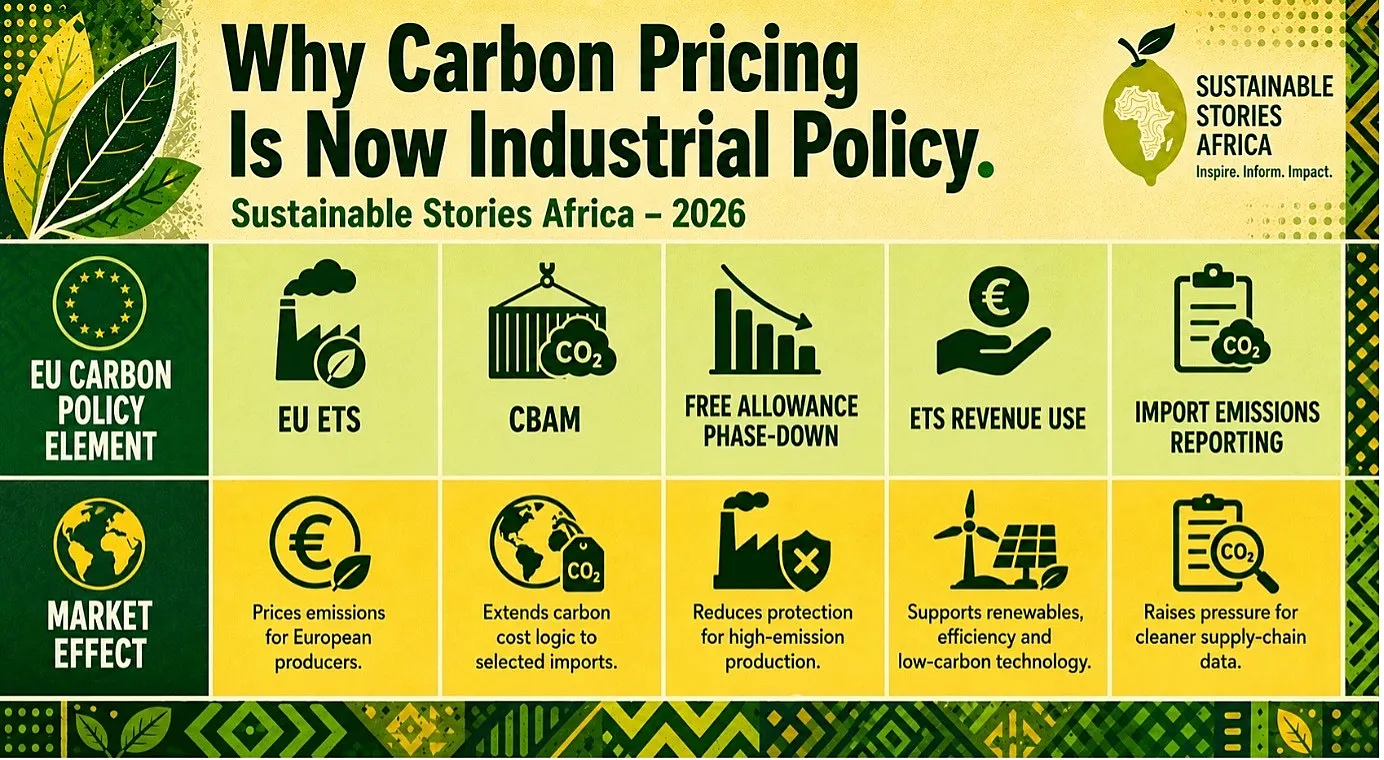
The policy is also connected to Europe’s broader clean-industry agenda. Revenues from emissions trading are channelled into national climate investments and EU-level funds that support low-carbon innovation, energy efficiency and renewable technologies.
This gives renewables a double boost.
- First, fossil-heavy production becomes more expensive where carbon costs apply.
- Second, public finance increasingly supports alternatives that lower emissions.
For African economies, the implications will vary. Countries with cleaner electricity grids, renewable energy resource advantages and credible emissions data systems may become more attractive suppliers.
Others may face higher compliance costs and competitiveness risks.
Clean Power Can Become Export Strength
The upside is significant.
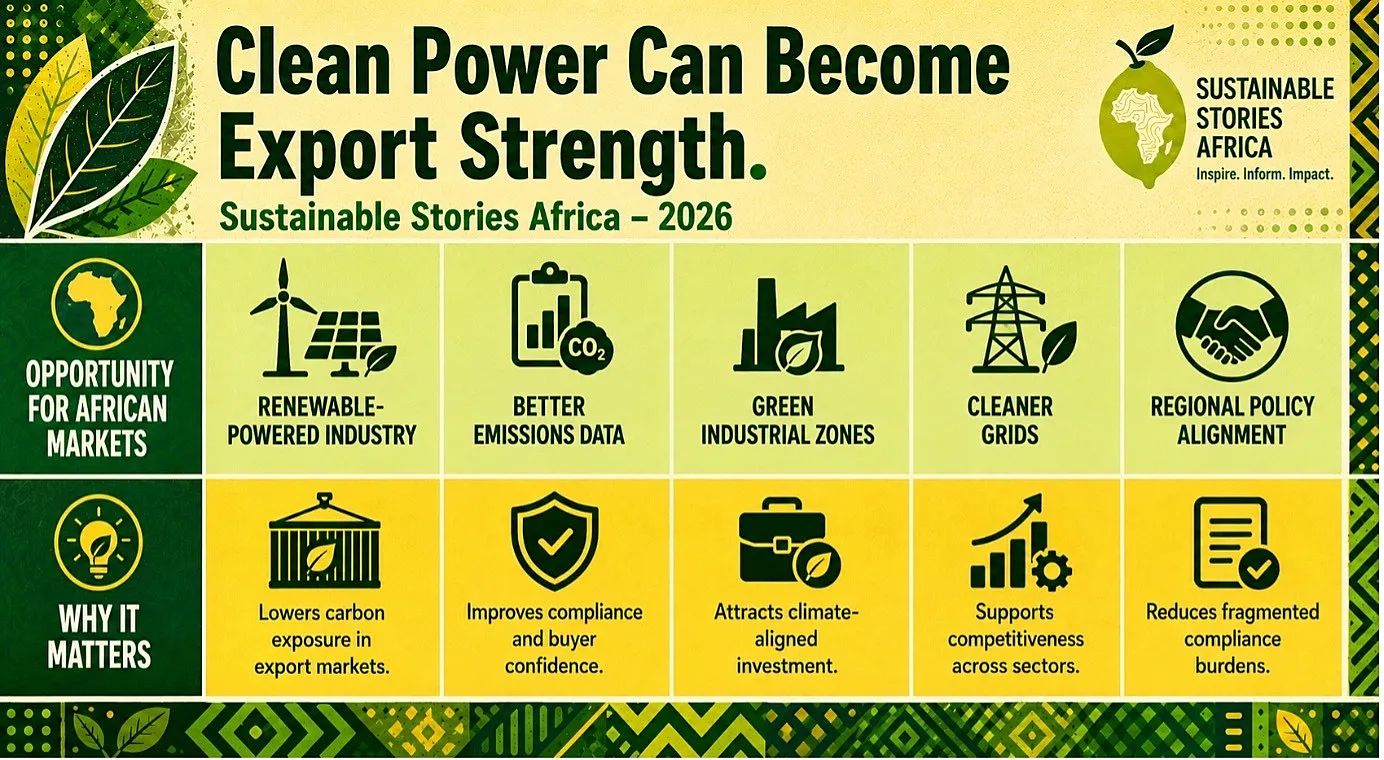
If African manufacturers, miners and industrial parks invest early in renewable electricity and credible emissions tracking, they could strengthen their access to European markets while lowering long-term energy risks.
A cement plant using cleaner power, a green-hydrogen project linked to renewable energy, or an aluminium producer with lower-carbon electricity could become more competitive in a world where buyers increasingly ask: how was this made?
The opportunity is not only about avoiding penalties. It is about building industrial resilience.
There is also a development case.
Renewable investment can reduce dependence on expensive imported fuels, improve energy security and support job creation in installation, maintenance, grid services and manufacturing supply chains.
However, the risks are real.
- Exporters without emissions data may be forced to use default values that could weaken their position.
- Smaller firms may struggle with compliance costs.
- Governments that delay industrial decarbonisation may find their exporters facing new barriers in premium markets.
Africa Must Prepare Before Costs Rise
African policymakers, exporters and financiers need to treat Europe’s carbon rules as an early warning system.
The first priority is data.
- Companies must know the emissions intensity of their products, power sources and supply chains. Without reliable data, exporters will struggle to defend their competitiveness.
The second priority is energy strategy.
- Governments should accelerate renewable procurement, grid expansion, embedded generation frameworks and clean industrial zone development.
The third priority is finance.
- Local banks and development finance institutions should support manufacturers that want to decarbonise production, install renewable power, improve energy efficiency or meet emissions-reporting requirements.
This is where ESG moves from report writing into real economic strategy.
The EU carbon regime may have started as a climate policy; however, it is becoming a trade filter.
African markets that respond early can use it to attract investment, protect exports and move higher up the clean industrial value chain.
Those who wait may discover that carbon is no longer invisible in global commerce.
Path Forward – Turn Carbon Pressure Into Clean Growth
Africa’s response should be strategic, not defensive.
Governments and businesses need better emissions data, investments in renewable energy, and practical support for exporters.
The goal is not simply to comply with Europe.
It is to build cleaner, more competitive industries that can withstand carbon-conscious markets and advance long-term ESG-led growth.
Culled From: New EU carbon tax boosts renewables