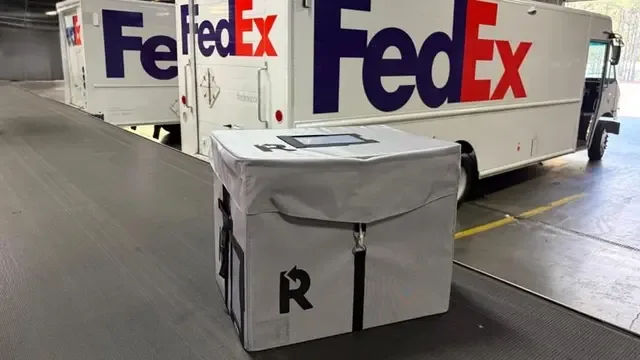
FedEx is introducing reusable shipping boxes to reduce packaging waste.
The initiative signals a shift toward circular logistics in global supply chains.
If scaled, it could reshape how businesses manage cost, waste, and sustainability.
A Box That Could Redefine Logistics
Every year, billions of cardboard boxes are used once and discarded, fueling a growing global waste crisis. Now, FedEx is attempting to change that equation.
The logistics giant has introduced reusable shipping boxes designed for use multiple times across business supply chains, marking a significant step toward circular logistics.
The initiative aims to reduce packaging waste, lower emissions, and improve efficiency for corporate customers navigating rising sustainability expectations.
At a time when regulators, investors, and consumers are demanding greener operations, FedEx’s move positions packaging, not just transport, as a critical frontier in sustainable logistics.
From Linear Waste to Circular Systems
Traditional logistics operates on a linear model: produce, ship, discard. Packaging, particularly cardboard, has long been treated as disposable, even as volumes surge alongside e-commerce and global trade.
FedEx’s reusable boxes challenge this model by introducing durability, return cycles, and reuse tracking into the packaging process.
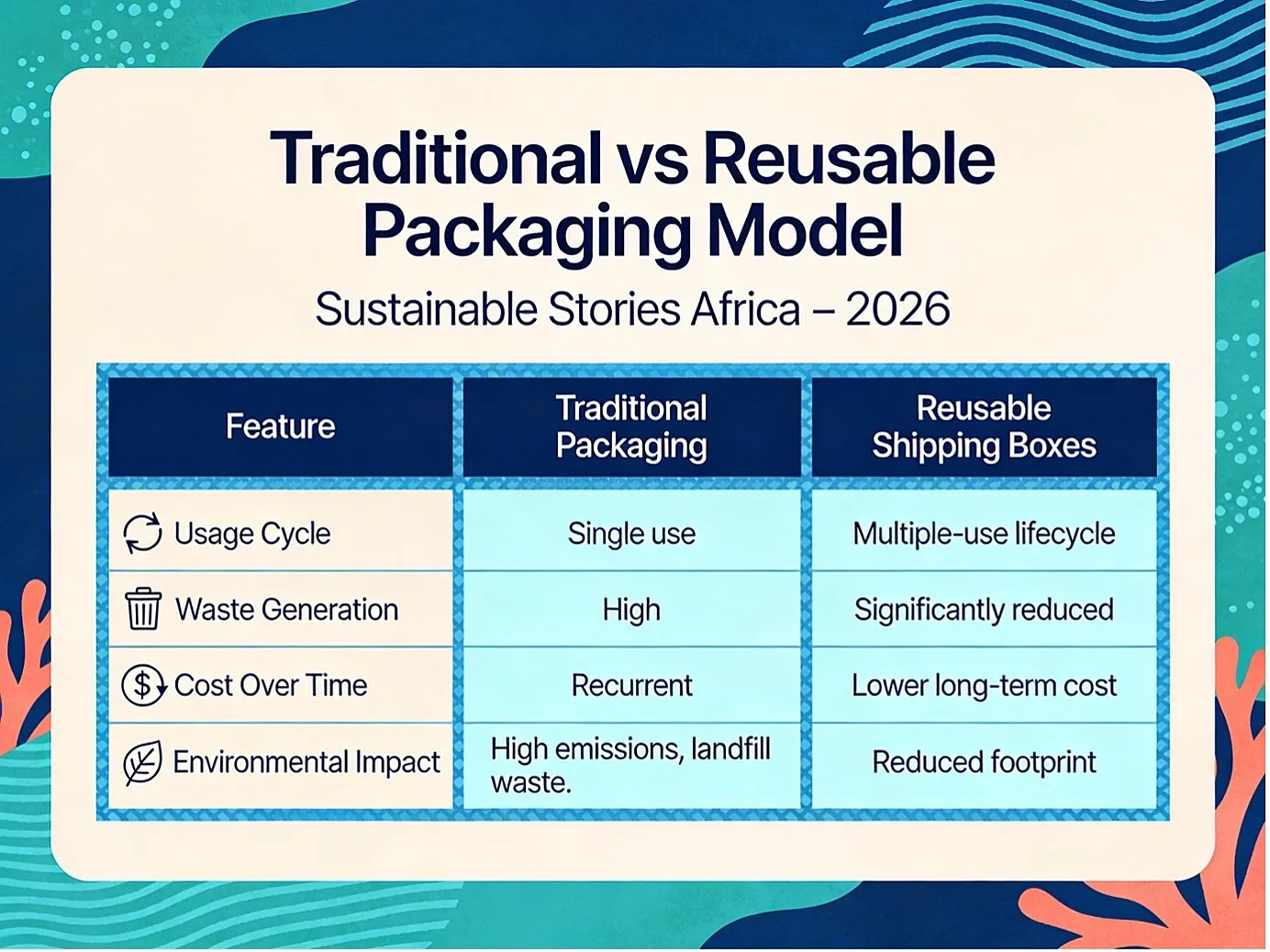
Traditional vs Reusable Packaging Model
Feature | Traditional Packaging | Reusable Shipping Boxes |
|---|---|---|
Usage Cycle | Single use | Multiple-use lifecycle |
Waste Generation | High | Significantly reduced |
Cost Over Time | Recurrent | Lower long-term cost |
Environmental Impact | High emissions, landfill waste | Reduced footprint |
The reusable boxes are designed for durability, allowing them to circulate through supply chains multiple times before replacement.
Businesses can return used boxes to FedEx’s network, enabling a looped system that mirrors circular economic principles.
This shift aligns with broader global trends, in which companies are under pressure to reduce Scope 3 emissions, particularly those linked to packaging and logistics.
What Circular Logistics Could Unlock
If widely adopted, reusable packaging could unlock significant value across business ecosystems.
For companies, the benefits extend beyond sustainability branding:
- Lower long-term costs – Reduced need for continuous packaging procurement
- Improved supply chain efficiency – Standardised packaging reduces handling complexity
- Enhanced ESG performance – Measurable reductions in waste and emissions
- Regulatory readiness – Compliance with tightening environmental regulations
For the planet, the implications are even more profound. Packaging waste, especially from logistics, accounts for a significant share of global solid waste streams. A shift toward reuse could drastically cut landfill volumes and carbon emissions associated with production and disposal.
For emerging markets, including those in Africa, the opportunity is particularly compelling.
As e-commerce and cross-border trade expand, adopting reusable systems early could help avoid replicating the waste-heavy models seen in developed economies.
Scaling the Model Beyond Pilot Phase
While the concept is promising, its success will depend on execution at scale.
FedEx and the broader logistics industry must now address key challenges:
- Operational integration – Ensuring seamless return and redistribution systems
- Customer adoption – Encouraging businesses to shift from single-use models
- Cost structures – Balancing upfront investment with long-term savings
- Infrastructure readiness – Building systems to track, collect, and reuse packaging efficiently
For policymakers, this represents an opportunity to accelerate change through:
- Incentives for reusable packaging adoption
- Regulations limiting single-use materials
- Investments in circular infrastructure
For businesses, the call to action is clear: rethink packaging as an asset, not a consumable.
PATH FORWARD – Circular Packaging Models Gain Global Momentum
Reusable packaging is emerging as a cornerstone of sustainable logistics, bridging cost efficiency with environmental impact. Scaling adoption will require collaboration across logistics providers, businesses, and regulators.
As global supply chains evolve, circular models like FedEx’s could redefine industry standards, turning packaging from waste into a reusable resource that supports both economic growth and sustainability goals.
Culled From: FedEx Introduces Reusable Shipping Boxes to Reduce Packaging Waste in Business Logistics