Ghana has ended its exclusive 5G rollout model, allowing MTN Ghana and Telecel Ghana to compete for spectrum licences.
The policy shift aims to accelerate deployment after delays caused by the country's wholesale-only approach.
For consumers, businesses and investors, the move promises faster connectivity, stronger competition and a more dynamic digital economy.
Ghana Chooses Competition Over Exclusivity
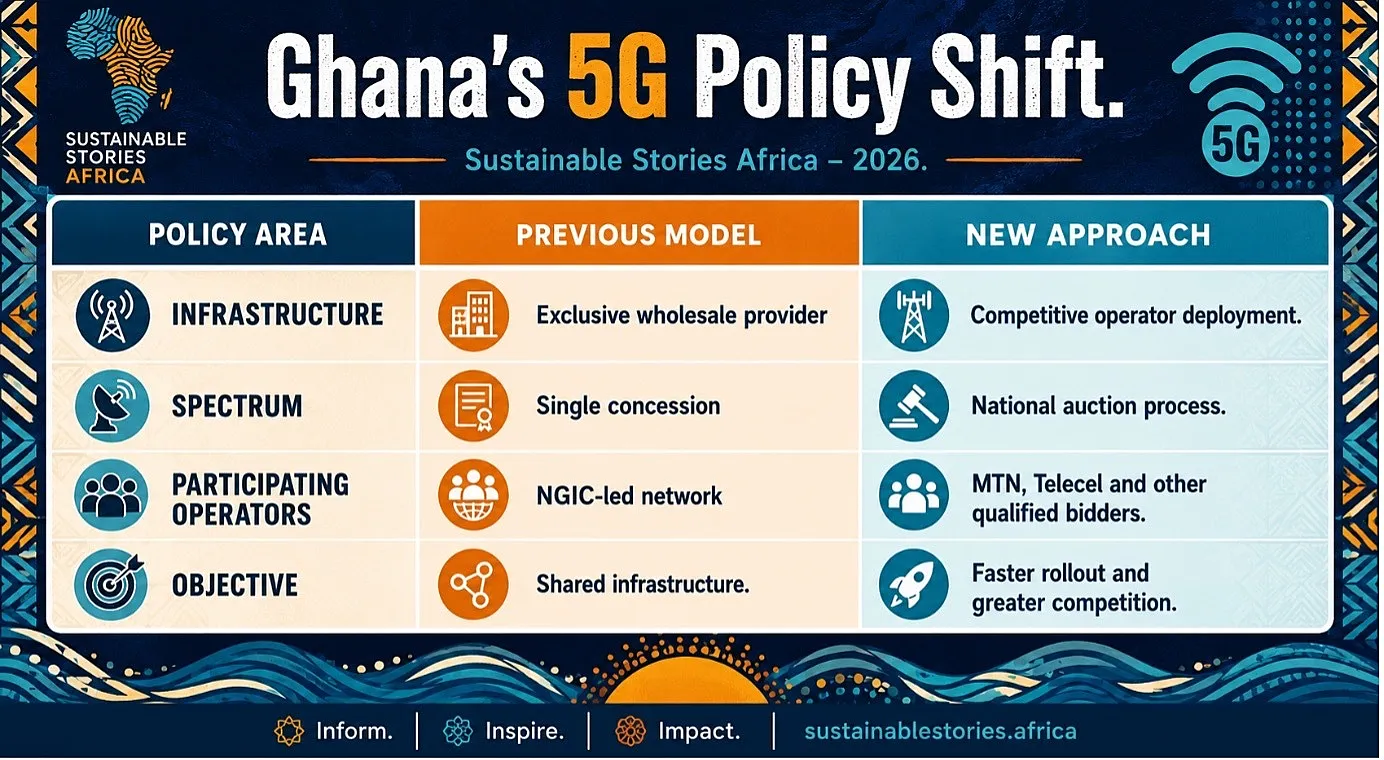
Ghana has fundamentally reshaped its digital infrastructure strategy by abandoning its exclusive wholesale 5G model and opening the country's next-generation mobile network to direct competition from telecom operators.
The government has revoked the exclusive concession previously granted to Next Gen Infraco (NGIC). It will auction 5G spectrum licences in the coming weeks.
MTN Ghana and Telecel Ghana have confirmed they intend to participate, marking one of the country's most significant telecommunications policy reforms in recent years.
The decision follows mounting concerns over the slow pace of deployment under the monopoly framework. By March 2026, NGIC had deployed only 49 operational 5G sites, well below the government's target of 1,200 sites by 2027, prompting policymakers to conclude that greater market competition could deliver faster results.
Faster Networks Could Transform Ghana's Digital Economy
The policy reversal reflects a broader lesson emerging across African digital markets: competition often accelerates innovation more than exclusivity.
Under the previous framework, NGIC was responsible for building a shared wholesale 5G network that all mobile operators would access.
The model was designed to reduce infrastructure duplication, lower deployment costs, and prevent market concentration.
However, rollout delays left Ghana trailing regional peers that have already commercialised 5G services.
Countries including South Africa, Kenya and Nigeria have spent recent years expanding commercial 5G coverage, enabling new applications across manufacturing, financial technology, cloud computing, healthcare and smart-city development.
According to GSMA Intelligence estimates cited in industry reports, Ghana could achieve roughly 7% population 5G coverage by the end of 2026 if commercial deployment accelerates, compared with approximately 22% in Nigeria, 38% in Kenya and more than 60% in South Africa.
The reform also aligns with a broader digital policy agenda announced earlier this year.
Communications Minister Samuel Nartey George said Cabinet had approved removing the exclusivity arrangement to open spectrum allocation to competitive bidding, with the ambition to reach 70% population coverage by Ghana's 70th Independence anniversary.
Better Connectivity Creates Wider Economic Opportunity
For businesses, the benefits extend well beyond faster mobile downloads.
- Reliable 5G networks support automation, artificial intelligence, cloud services, advanced manufacturing, digital health and financial innovation.
- Small businesses gain access to improved digital tools, while investors often view high-quality digital infrastructure as a prerequisite for broader economic development.
- Consumers also stand to benefit from stronger competition.
- Multiple operators investing directly in network infrastructure can encourage better service quality, wider geographic coverage and greater product innovation over time.
Conversely, prolonged deployment delays risk slowing Ghana's digital transformation at a time when neighbouring markets continue expanding next-generation connectivity.
Regulation Must Balance Competition And Inclusion
Opening the market is only the beginning.
The success of Ghana's revised strategy will depend on transparent spectrum allocation, efficient regulatory oversight and investment incentives that encourage rapid nationwide deployment rather than concentrating coverage in major urban centres.
Government, regulators and industry participants must also ensure that competition strengthens, rather than fragments, the telecommunications ecosystem through infrastructure sharing where appropriate, improved rural connectivity and affordable consumer access.
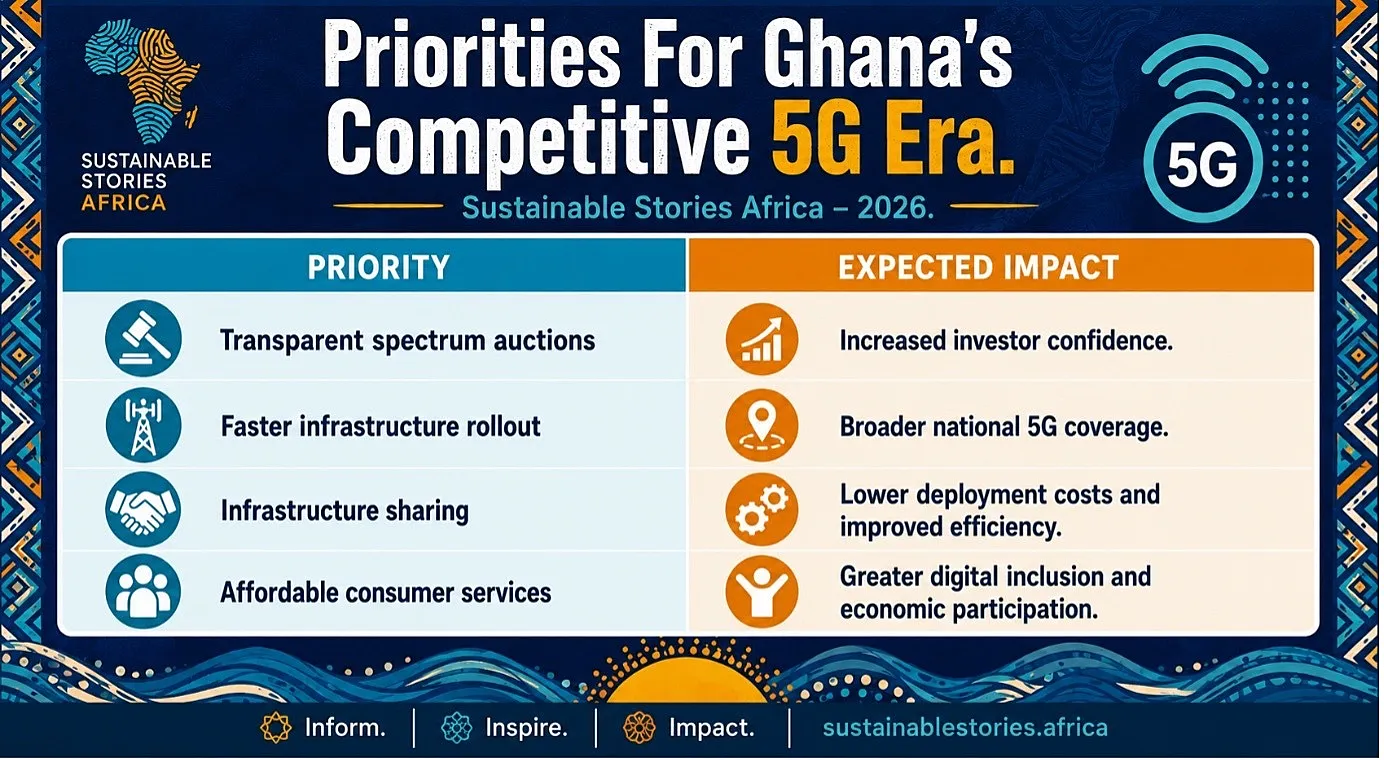
Path Forward – Competition Can Accelerate Inclusive Connectivity
Ghana's decision signals an important evolution in African digital policy, placing greater confidence in competitive markets to deliver next-generation infrastructure more quickly and efficiently.
If accompanied by strong regulation, sustained investment and inclusive deployment, the country's new approach could strengthen digital resilience, expand innovation and position Ghana among Africa's leading digital economies while advancing long-term sustainable development objectives.
Culled From: Ghana opens 5G rollout to MTN and Telecel, ends exclusive model