Google is building a 1GW data centre campus near Detroit.
It is supported by a clean energy partnership of up to 2.7GW.
It reflects rising energy demands from AI and the push for sustainable digital infrastructure.
Powering the Digital Economy With Clean Energy
The future of the digital economy is not just about data; it is about power.
Google has confirmed plans to develop a 1GW data centre campus near Detroit, supported by a clean energy partnership of up to 2.7GW, marking one of the most significant integrations of digital infrastructure and renewable energy at scale.
The move comes as demand for computing power, driven by artificial intelligence, cloud services, and data processing, continues to surge, placing unprecedented pressure on energy systems.
The Energy Behind the Data Boom
Data centres are among the fastest-growing sources of electricity demand globally.
As AI models expand and digital services scale, the energy required to power servers, cooling systems, and infrastructure is rising sharply.
Google’s project reflects a broader trend: technology companies are increasingly pairing data infrastructure with dedicated clean energy supply to manage both cost and carbon impact.
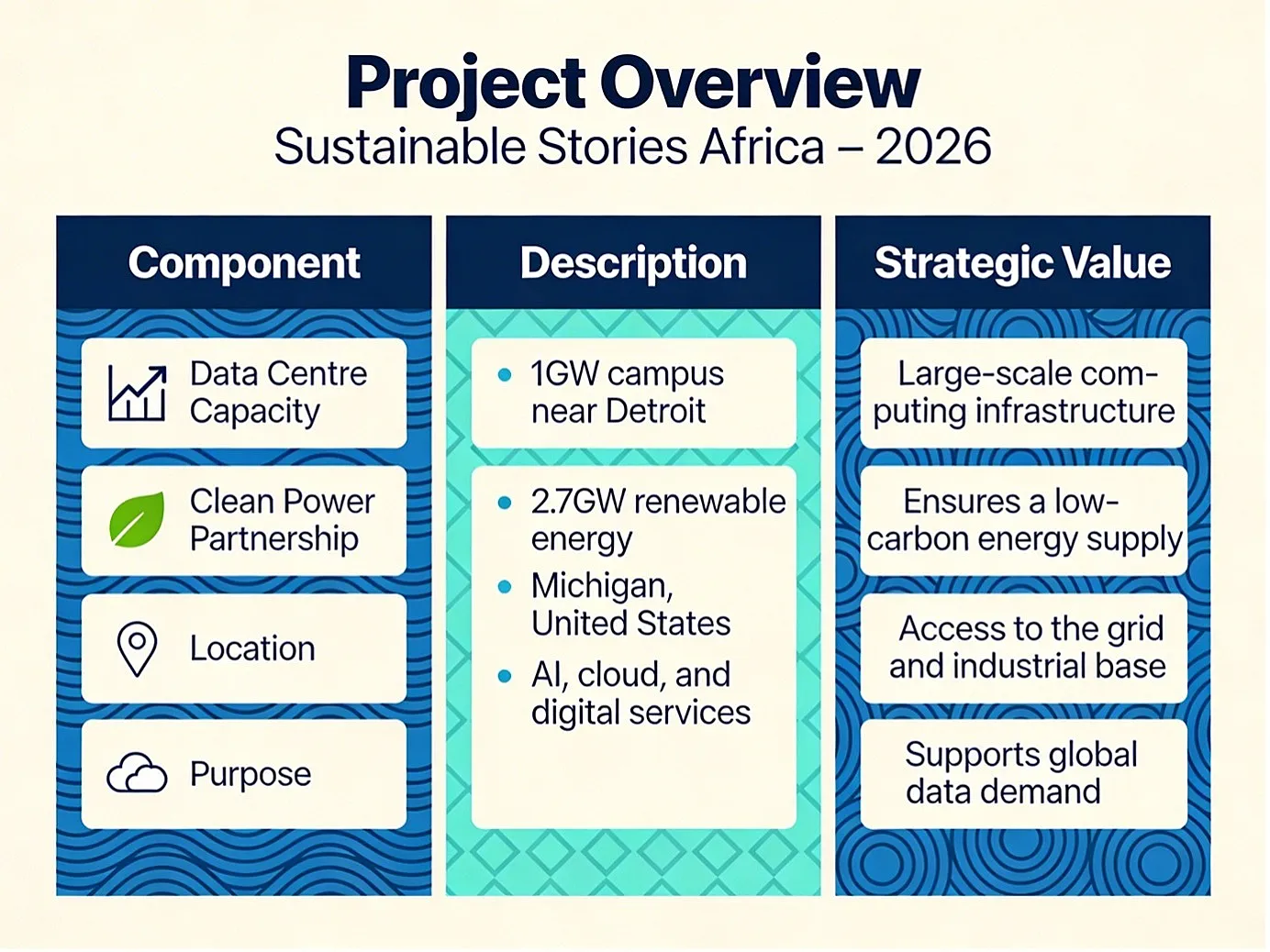
Project Overview
Component | Description | Strategic Value |
|---|---|---|
Data Centre Capacity | 1GW campus near Detroit | Large-scale computing infrastructure |
Clean Power Partnership | 2.7GW renewable energy | Ensures a low-carbon energy supply |
Location | Michigan, United States | Access to the grid and industrial base |
Purpose | AI, cloud, and digital services | Supports global data demand |
By securing double the energy capacity, Google aims to ensure consistent power availability while maintaining its commitment to operating on carbon-free energy.
This approach reflects a shift from traditional reliance on the grid to a dedicated clean-energy ecosystem for digital infrastructure.
What Clean-Powered Data Centres Could Deliver
If scaled globally, projects like this could redefine how the digital economy grows.
Key benefits include:
- Reduced carbon footprint – Aligning data growth with climate goals
- Energy reliability – Dedicated clean power reduces dependence on volatile grids
- Cost efficiency – Long-term renewable contracts stabilise energy costs
- Infrastructure resilience – Integrated systems improve operational stability
For emerging markets, including Africa, the implications are significant. As digital adoption accelerates, ensuring that data infrastructure is powered sustainably will be critical to avoiding a surge in emissions.
Moreover, such models demonstrate how energy and digital infrastructure can be co-developed, creating opportunities for regions with strong renewable potential to attract technology investments.
Aligning Digital Growth With Energy Transition
Google’s announcement highlights a critical challenge for the global economy: balancing rapid digital expansion with climate commitments.
To address this, stakeholders must focus on:
- Scaling renewable energy capacity – Matching growing electricity demand from data centres
- Investing in grid infrastructure – Ensuring reliable integration of large-scale renewables
- Encouraging co-location strategies – Building data centres alongside clean energy sources
- Strengthening policy frameworks – Supporting clean energy procurement and innovation
For governments, this represents an opportunity to attract investment by offering competitive clean energy ecosystems.
For investors, the convergence of digital and energy infrastructure is emerging as a key growth frontier.
PATH FORWARD – Clean Energy Powers Next Phase Digital Expansion
Google’s project signals a shift toward integrating renewable energy directly into digital infrastructure planning. Clean power will become a defining factor in data centre development.
As global data demand accelerates, aligning energy supply with sustainability goals will be essential to ensure that the digital economy grows without compromising climate commitments.
Culled From: Google Confirms 1GW Data Center Campus Near Detroit With 2.7GW Clean Power Partnership