A new global climate adaptation standard promises to transform how countries and businesses prepare for rising climate risks.
The International Organization for Standardisation’s framework introduces structured guidance to strengthen resilience planning and risk management worldwide.
Experts say the standard could unlock financing, improve preparedness, and help vulnerable economies such as those in Africa respond more effectively to escalating climate impacts.
New Global Standard Targets Climate Resilience
The International Organisation for Standardisation (ISO) has launched a global climate adaptation standard designed to help governments, businesses, and institutions systematically strengthen resilience to climate risks.
The new framework provides structured guidance for assessing climate vulnerabilities, developing adaptation strategies, and integrating resilience planning into operational and investment decisions.
It marks a critical evolution in global climate governance, shifting focus beyond emissions reduction toward managing unavoidable climate impacts.
With climate-related disasters increasing in frequency and severity, the standard aims to ensure organisations proactively prepare for disruptions affecting infrastructure, supply chains, and economic stability.
For climate-vulnerable regions such as Africa, the framework provides a pathway to improve preparedness, reduce losses, and enhance long-term economic resilience.
Structured Framework Enhances Climate Risk Management
The ISO climate adaptation standard establishes a systematic approach to identifying, assessing, and managing climate risks across sectors. It provides organisations with clear processes to integrate climate considerations into strategic planning and risk management systems.
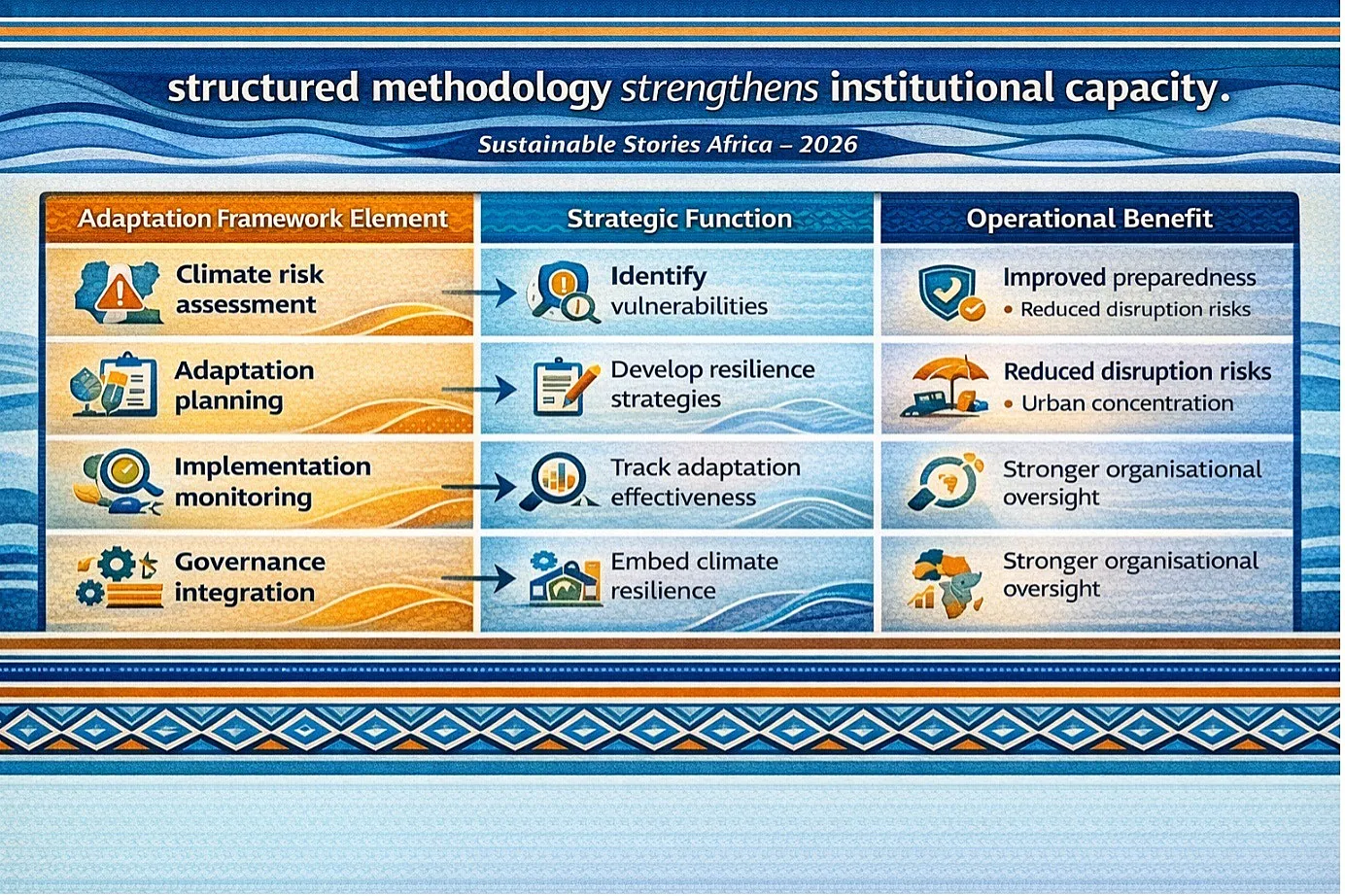
This structured methodology strengthens institutional capacity to anticipate and manage environmental disruptions.
Adaptation Framework Element | Strategic Function | Operational Benefit |
|---|---|---|
Climate risk assessment | Identify vulnerabilities | Improved preparedness |
Adaptation planning | Develop resilience strategies | Reduced disruption risks |
Implementation monitoring | Track adaptation effectiveness | Continuous improvement |
Governance integration | Embed climate resilience | Stronger organisational oversight |
The framework aligns with broader global sustainability reporting and risk disclosure standards, supporting integration with ESG frameworks, financial reporting requirements, and regulatory expectations.
This alignment enhances transparency, accountability, and investor confidence.
Adaptation Standard Unlocks Resilience Investment Potential
Standardised adaptation frameworks can accelerate climate finance flows by providing investors with greater confidence in resilience planning and risk management.
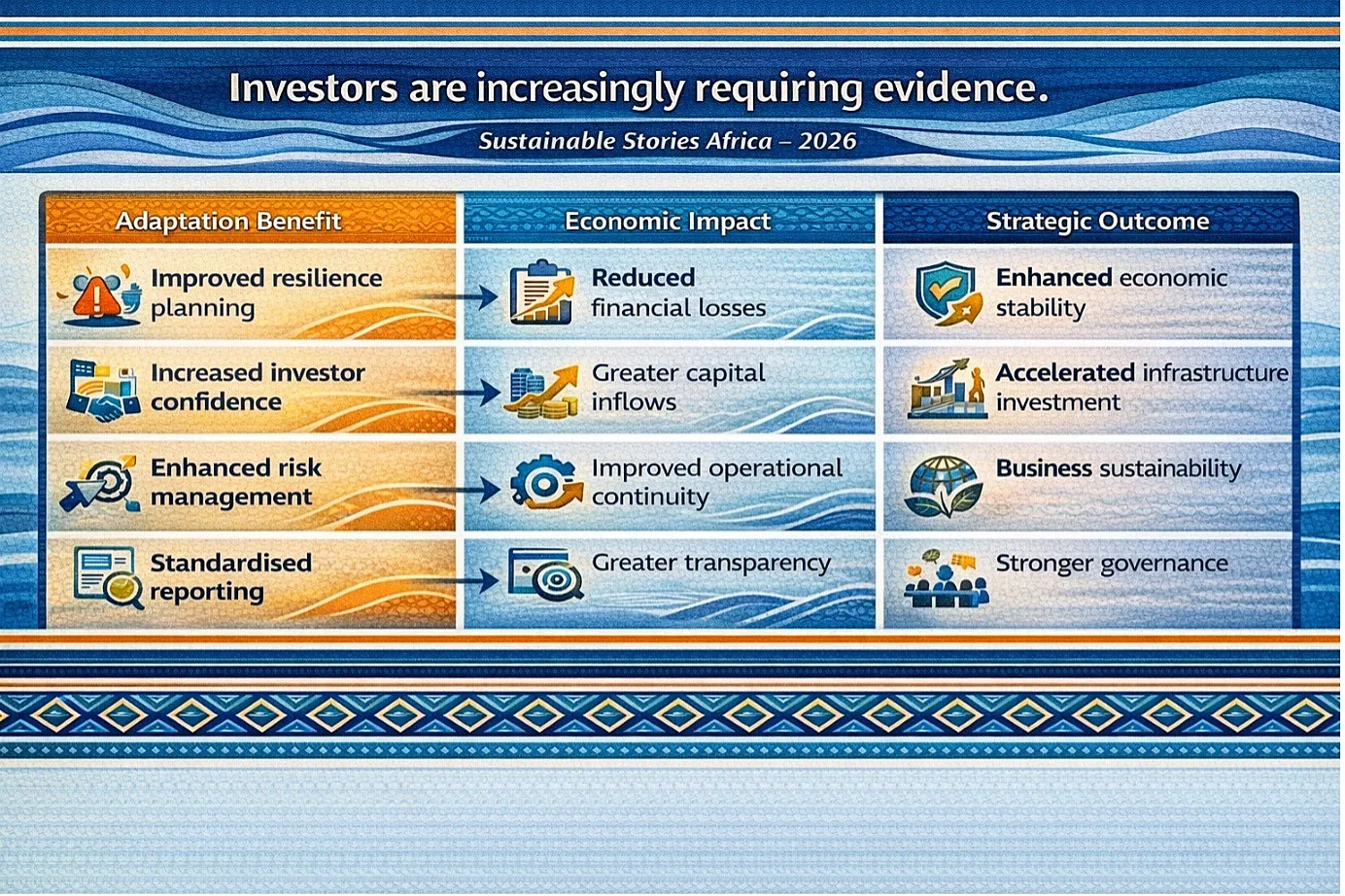
Investors are increasingly requiring evidence of climate resilience before allocating capital, particularly in infrastructure, agriculture, and industries that are vulnerable to climate disruption.
Adaptation Benefit | Economic Impact | Strategic Outcome |
|---|---|---|
Improved resilience planning | Reduced financial losses | Enhanced economic stability |
Increased investor confidence | Greater capital inflows | Accelerated infrastructure investment |
Enhanced risk management | Improved operational continuity | Business sustainability |
Standardised reporting | Greater transparency | Stronger governance |
For developing economies, adopting structured adaptation standards can strengthen competitiveness, reduce vulnerability, and support sustainable economic development.
Resilience is becoming a core determinant of long-term investment attractiveness.
Organisations Must Integrate Adaptation Into Strategy
To fully realise the benefits, governments, businesses, and financial institutions must integrate climate adaptation into governance structures, operational planning, and investment decisions.
The standard provides a roadmap for embedding resilience into infrastructure planning, supply chain management, and corporate risk management systems.
Early adoption can help organisations anticipate disruptions, reduce costs, and strengthen long-term sustainability.
As climate risks intensify globally, proactive adaptation planning will be essential for integrating economic stability, supporting development, and ensuring institutional resilience.
The ISO framework establishes a foundation for systematic climate resilience planning worldwide.
Path Forward – Standard Enables Structured Climate Resilience Planning
Organisations must adopt the ISO adaptation framework to strengthen climate preparedness, improve governance, and support resilience investment strategies.
Structured climate planning can enhance economic stability, attract investment, and reduce long-term climate vulnerability.
Culled From: https://esgnews.com/iso-launches-global-climate-adaptation-standard-to-strengthen-local-resilience-planning/