Kenya and Morocco are opening their electricity grids to prosumers, individuals and businesses that both produce and consume power.
The shift reflects growing pressure to decentralise energy systems and expand access amid rising demand.
For households, SMEs, and investors, the reforms could redefine energy ownership, pricing, and resilience across African markets.
A Structural Shift in Who Powers Africa
Kenya and Morocco have taken decisive steps to allow prosumers, households, businesses, and communities generating their own electricity, to connect to national grids and sell excess power.
The policy shift marks a fundamental reconfiguration of electricity markets, moving away from centralised utility dominance toward decentralised, participatory energy systems.
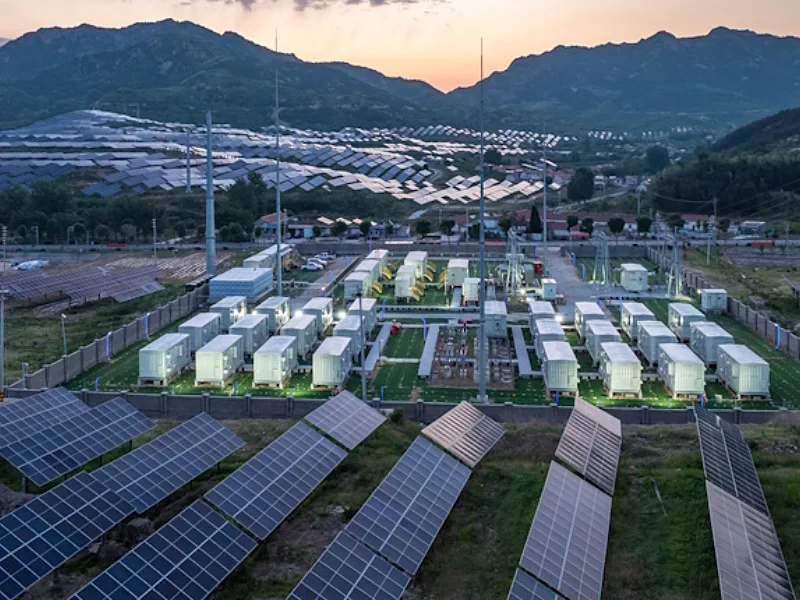
In Kenya, recent regulatory updates now allow distributed solar producers to feed electricity into the grid under net-metering or feed-in frameworks.
Meanwhile, Morocco is advancing similar reforms, enabling self-generators, particularly industrial and commercial users, to inject surplus power into the system.
At stake is more than energy access. The reforms signal a broader economic shift: from passive consumption to active participation in energy markets, with implications for pricing, investment flows, and grid stability.
From Centralised Power to Distributed Participation
Africa’s energy systems have historically been centralised, with utilities controlling generation, transmission, and distribution. But rising demand, grid constraints, and climate commitments are forcing a rethink.
Kenya, already a leader in geothermal and renewable energy, is leveraging its distributed solar growth to deepen access and reduce pressure on national infrastructure.
Morocco, with its large-scale renewable ambitions, is complementing utility-scale investments with decentralised generation.
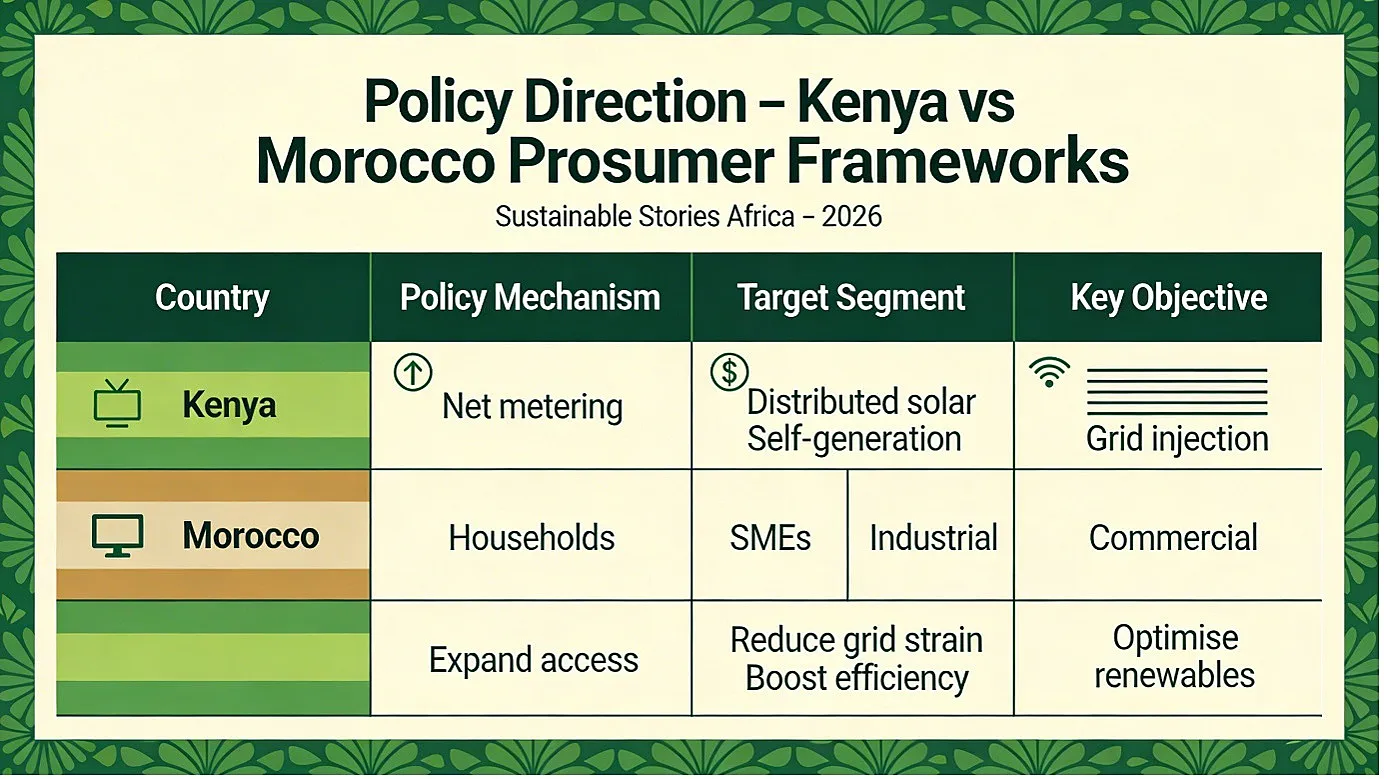
Policy Direction – Kenya vs Morocco Prosumer Frameworks
Country | Policy Mechanism | Target Segment | Key Objective |
|---|---|---|---|
Kenya | Net metering, distributed solar | Households, SMEs | Expand access, reduce grid strain |
Morocco | Self-generation, grid injection | Industrial, commercial | Boost efficiency, optimise renewables |
These reforms are emerging against a backdrop of structural pressure:
- Over 80 million Nigerians and millions across Africa still lack reliable electricity
- Urbanisation is accelerating demand beyond grid capacity
- Renewable technologies, especially solar, are becoming cheaper and more accessible
For a small business owner in Nairobi or Casablanca, the implications are immediate: reduced reliance on unstable grids, lower energy costs, and new revenue streams from surplus generation.
As one energy analyst noted in policy discussions, “The grid is no longer just a delivery system; it is becoming a marketplace.”
What Africa Gains From a Prosumer Economy
If effectively implemented, prosumer policies could unlock three major gains across African markets:
Energy Access Expansion – Decentralised generation allows communities to bypass infrastructure bottlenecks, accelerating electrification.
Economic Participation – Households and SMEs transition from cost centres to revenue generators, improving financial resilience.
Climate Alignment – Distributed renewables reduce emissions while supporting national net-zero commitments.
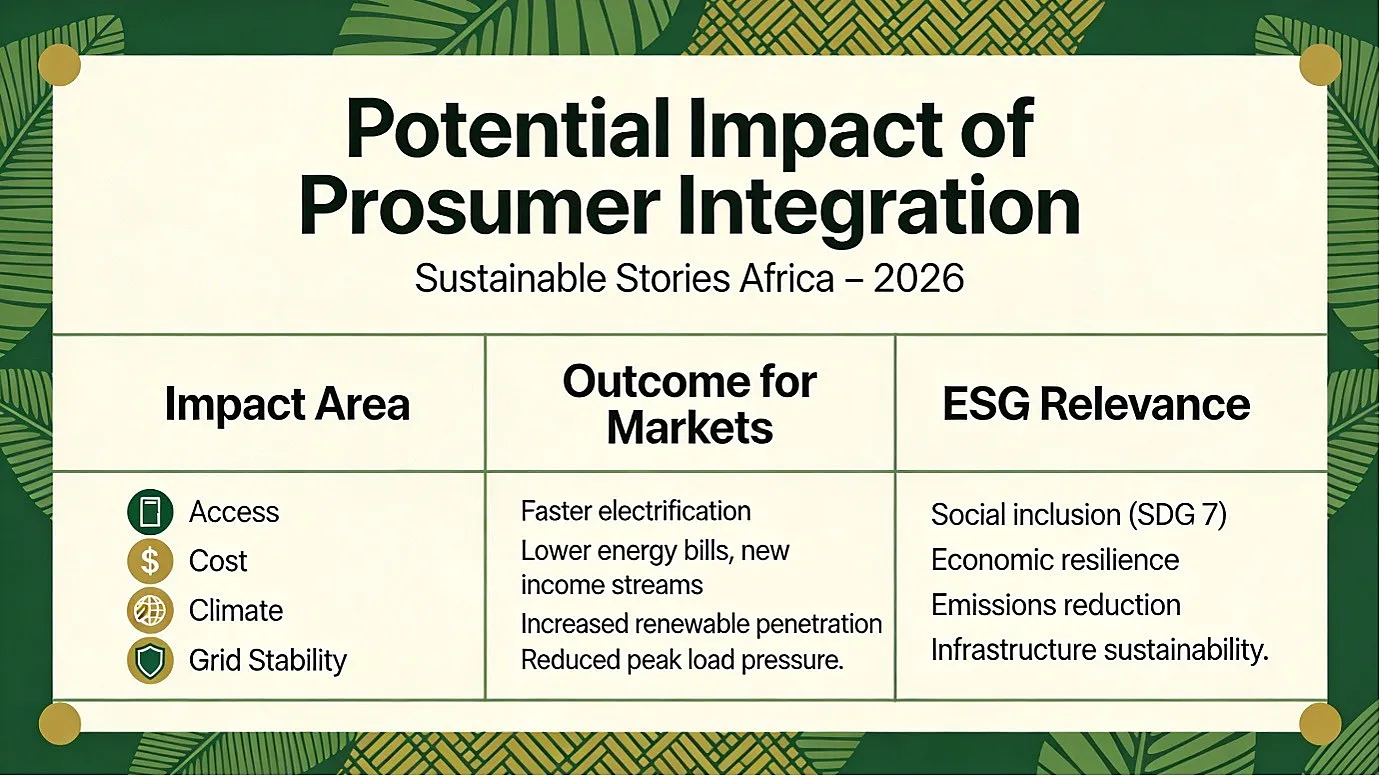
Potential Impact of Prosumer Integration
Impact Area | Outcome for Markets | ESG Relevance |
|---|---|---|
Access | Faster electrification | Social inclusion (SDG 7) |
Cost | Lower energy bills, new income streams | Economic resilience |
Climate | Increased renewable penetration | Emissions reduction |
Grid Stability | Reduced peak load pressure | Infrastructure sustainability |
However, the risks are equally clear. Without proper regulation, utilities could face revenue erosion, grid instability could increase, and inequities may deepen if only wealthier users can afford generation systems.
Policy, Investment, and Governance Must Align
For prosumer markets to scale sustainably, three priorities are emerging:
- Regulatory Clarity – Transparent pricing mechanisms for excess power, including feed-in tariffs and net billing structures
- Grid Modernisation – Investment in smart grids, storage systems, and digital monitoring to manage distributed inputs
- Inclusive Financing – Access to affordable solar and storage solutions for low- and middle-income households
Policymakers must also manage the transition carefully. Utilities, long the backbone of national power systems, will need new business models, shifting from sole providers to platform operators facilitating energy exchange.
For investors, the signal is clear: distributed energy is no longer a niche; it is becoming a core asset class in Africa’s infrastructure landscape.
Path Forward – Distributed Energy Becomes Market Infrastructure
Kenya and Morocco’s reforms point to a future where energy systems are decentralised, digital, and participatory.
Scaling this model will require coordinated investment in grid infrastructure, regulatory harmonisation, and inclusive financing mechanisms.
If replicated across African markets, prosumer integration could redefine energy access, accelerate climate goals, and unlock new economic value chains, turning electricity from a constraint into a catalyst for growth.
Culled From: Policy tracker: Kenya and Morocco open the grid to prosumers