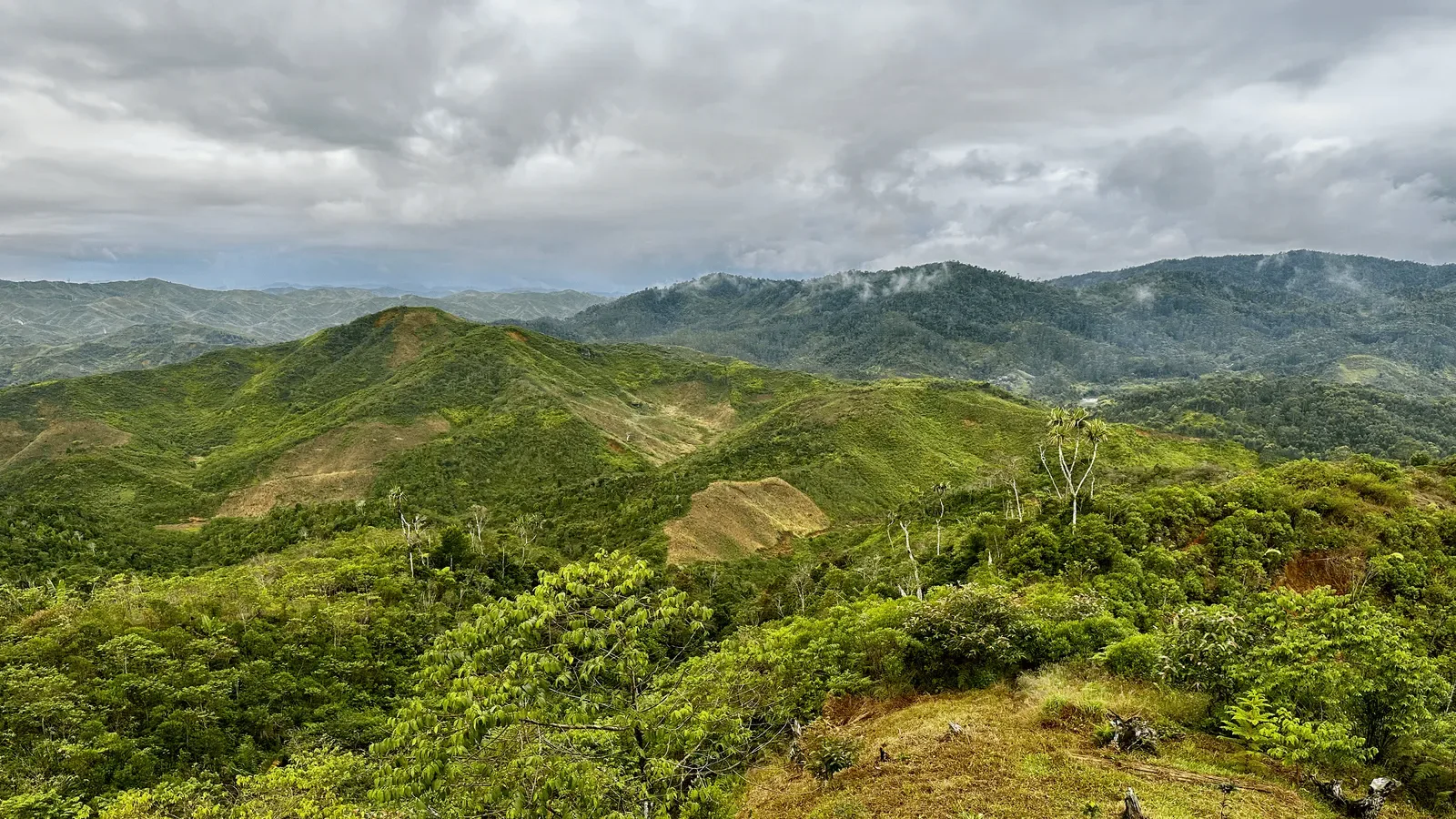
Three countries test different financing tools
A UNDP BIOFIN dialogue compares biodiversity finance in Madagascar, Senegal and Morocco.
The countries are at different stages, from preparing finance plans to applying new budget and funding tools.
Their experiences show how finance ministries, businesses and communities can influence which projects receive support.
Nature finance reaches the budget table
Madagascar, Senegal and Morocco are taking different routes to fund biodiversity priorities, according to a video discussion from the United Nations Development Programme’s Biodiversity Finance Initiative (BIOFIN).
- Madagascar is implementing a range of tools
- Senegal is costing its strategy and developing a trust fund
- Morocco is using spending and policy reviews to identify financing options as it prepares a national plan.
The discussion brought together representatives from the three countries.
- The conversation focused on a practical problem for governments that have conservation commitments. Environment ministries can set priorities.
- However, decisions about public expenditure, financial regulation and private investment involve institutions with different mandates.
Bringing them together early can determine whether a commitment has a budget and an institution responsible for delivery.
Three countries start from different places
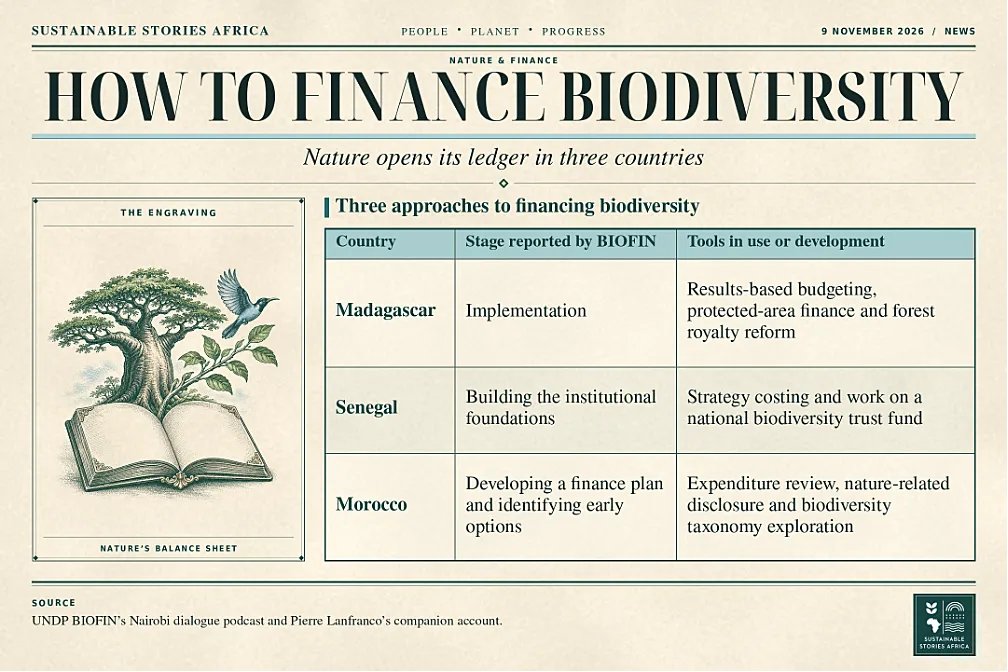
Madagascar joined BIOFIN in 2018 and has moved into implementation.
- Its work includes linking environmental budgets to results, developing financing for protected areas and reforming forest royalties.
- It is also developing financing approaches for its marine economy.
- Each tool serves a different purpose.
- A budget sets priorities for public spending, while a royalty reform can affect both what users pay and how revenues are managed.
Senegal has completed a policy and institutional review and begun estimating the cost of its national biodiversity strategy.
- BIOFIN says that work informed the development of a National Biodiversity Trust Fund and related reforms.
Morocco has used expenditure and policy reviews to identify early options while preparing its biodiversity finance plan.
- It is exploring nature-related disclosures and a classification system to help investors recognise activities eligible for biodiversity finance.
A spending review and a financial needs assessment serve different purposes.
- One shows what a government already spends and through which agencies.
- The other estimates what it would cost to deliver the strategic outcomes.
A finance ministry can use the difference to decide where reallocation helps, or a new funding source is needed.
BIOFIN’s account highlights the importance of updating those assessments as priorities and investment change.
Better spending can support local livelihoods
Healthy ecosystems support fisheries, tourism, farming and water supplies.
- For example, a finance ministry deciding whether to fund coastal restoration can assess the cost alongside the value of the services the ecosystem provides.
- It can also ask whether the investment budget covers long-term management and whether communities that depend on the coast can participate in decisions.
The dialogue identified changes to existing public expenditure as another source of support.
- A government reviewing an environmentally harmful subsidy needs to establish who benefits from it and how a change would affect their income.
Redirecting spending can fund conservation, and the design determines whether costs fall heavily on households or firms that have few alternatives.
Show how money reaches conservation work
Finance and environment ministries can publish where biodiversity spending already goes and what their national strategies still require.
- A trust fund under development can specify how it would select projects, protect its assets and involve the people affected by its grants.
- A disclosure framework can ask companies to identify which operations depend on natural resources and where their activities put ecosystems under pressure.
These steps help distinguish each instrument’s purpose. Disclosure can make exposure visible.
- A classification can guide lending or investment.
- A budget or trust fund can move money to projects.
- Following the chain through to local recipients and ecological outcomes will show whether better financial information leads to better conservation.
The BIOFIN account identifies fragmented coordination and limited data as obstacles that countries still face.
Private finance presents a similar measurement question.
- A lender might classify a loan as supporting biodiversity because it funds restoration, but the outcome depends on the site’s condition and how the work is maintained.
Clear criteria and follow-up reporting would help distinguish a financing commitment from the ecological result it aims to achieve.
Path Forward – Follow biodiversity finance into local projects
Madagascar’s implementation work, Senegal’s trust fund preparations and Morocco’s finance plan offer different milestones for tracking progress.
Governments can make those milestones visible through published budgets, funding criteria and project pipelines.
For communities and investors, the next evidence will be which projects receive funding, how benefits are shared and what happens to the ecosystems the financing is meant to protect.