Sahara Group says its PRAISE framework has guided three decades of expansion across markets and businesses.
Executive Director Temitope Shonubi cited investments in Nigerian power infrastructure, including Egbin Power and First Independent Power Limited.
The examples show how the company has used acquisitions and partnerships alongside direct investment.
Sahara sets out how it chooses investments
Sahara Group has credited a six-step decision framework with guiding its expansion into energy, infrastructure, technology and investment businesses across Africa, Asia, Europe and the Middle East.
In a November 6 statement from Lagos, the group said the approach helps it decide when to start a venture, acquire an existing asset or work with a partner.
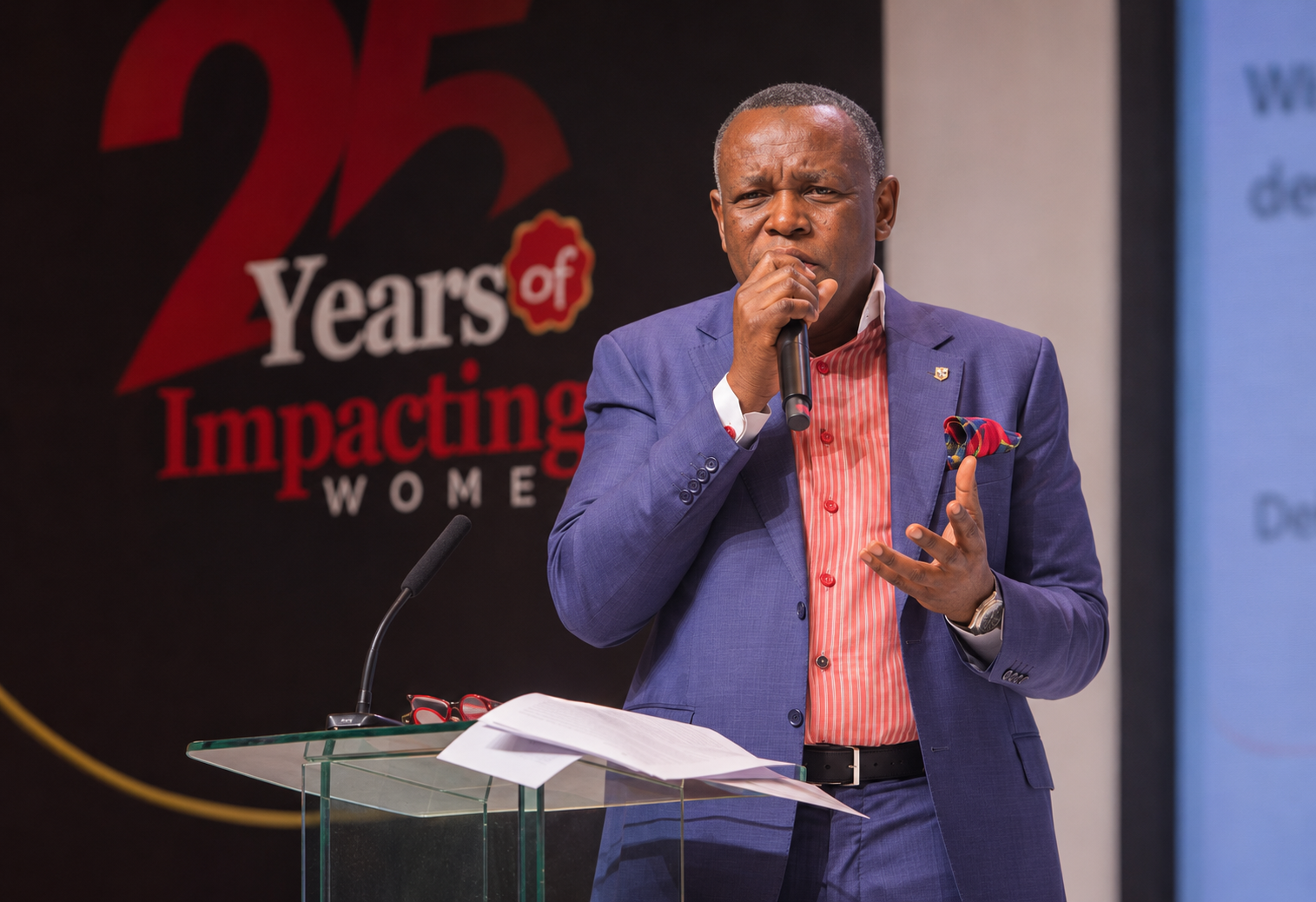
Co-founder and Executive Director Temitope Shonubi discussed the strategy at the 25th annual Women in Management, Business and Public Service conference in Lagos.
His talk was themed “Build, Buy, Partner.”
- Shonubi said that assessing market conditions and the capabilities a company already has can help it choose how to expand and what expertise it needs to bring in.
“Organizations do not grow by relying on a single strategy,” he said.
Sahara calls the framework PRAISE;
- Prepare
- Review
- Advance
- Implement
- Scale
- Evolve.
Shonubi presented it as a method the group has used since inception.
- At a conference focused on African business leadership, his examples illustrated how the same company can enter different projects through different routes, depending on the assets and partners available.
How Nigerian power illustrates the choices
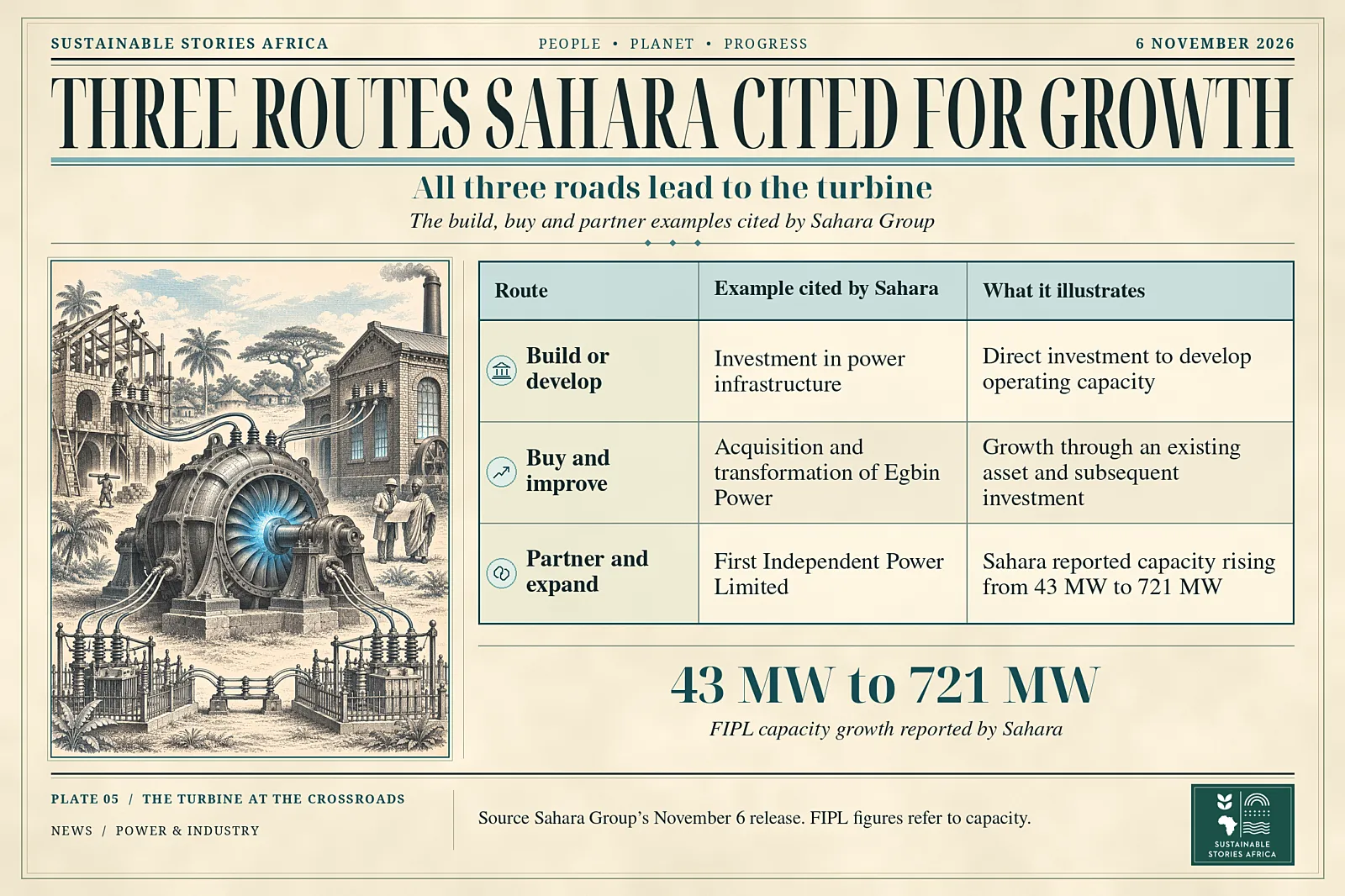
Shonubi cited Sahara’s investment in power infrastructure and its acquisition and transformation of Egbin Power.
- He also pointed to First Independent Power Limited, or FIPL, as an example of growth through partnership.
- Sahara said FIPL’s generation capacity increased from 43 megawatts to 721 megawatts.
The examples point to different demands on management.
- An acquisition gives the buyer an existing operation, including facilities and staff, but requires it to assess the condition of the assets and plan how to integrate them
- A partnership can combine capabilities and capital across organisations, with results depending partly on how responsibilities and decisions are shared.
What added capacity can tell customers
For households and businesses, the public value of more generating capacity depends on how much electricity reaches customers and how reliably it is supplied.
- A higher capacity figure describes a larger generation base.
- Actual output also depends on how often plants are available, whether fuel is supplied and whether the network can carry the power.
This distinction matters when assessing the results of a corporate expansion strategy.
- Capacity shows how the scale of an operation has changed.
- Operating measures such as generation, availability and emissions help explain what that expansion delivers over time.
The same reasoning applies to the options Shonubi put to business leaders.
- A company acquiring an asset may gain access to a market sooner, but integration and maintenance still need funding.
- A company working with a partner can draw on local experience, while both sides need to agree who will finance improvements and who will account for operational results.
For smaller companies at the conference, the same choice can turn on what they can afford to manage.
- Building an operation calls for time and internal expertise.
- Buying can require financing and the ability to assess inherited obligations.
A partnership can make specialist capabilities available sooner, provided the participants have a workable agreement on control and what happens when their priorities diverge.
What to measure as Sahara expands
Shonubi said the group intends to carry the framework into its next phase under its Beyond XXX vision, which the conference describes as marking Sahara’s first 30 years and looking ahead to its next stage.
- He emphasised preparation, execution and learning as the group expands.
For business owners weighing a similar choice, the operating target can clarify whether to build, buy or partner.
- A firm that needs a local distribution network, for example, can compare the time and capital it would take to create one with the obligations it would take on through a deal.
For Sahara’s power businesses, reporting operational performance alongside capacity would give customers and investors a clearer basis for assessing the results.
Path Forward – Track What Sahara’s Next Investments Deliver
Sahara says it will use PRAISE to guide its next phase of expansion under Beyond XXX.
Its Nigerian power examples show where it has applied different routes to growth.
Reporting output, plant availability and environmental performance alongside capacity would help readers assess what future investments deliver for customers and communities.