Uganda launched its National Energy Compact in Kampala, targeting 85% electricity access and 50% clean cooking access by 2030.
The plan calls for $17.7 billion in investment, including about $9.4 billion in private capital.
Delivery will determine whether more households and businesses gain reliable power and practical access to cleaner cooking.
Uganda puts an investment plan behind access goals
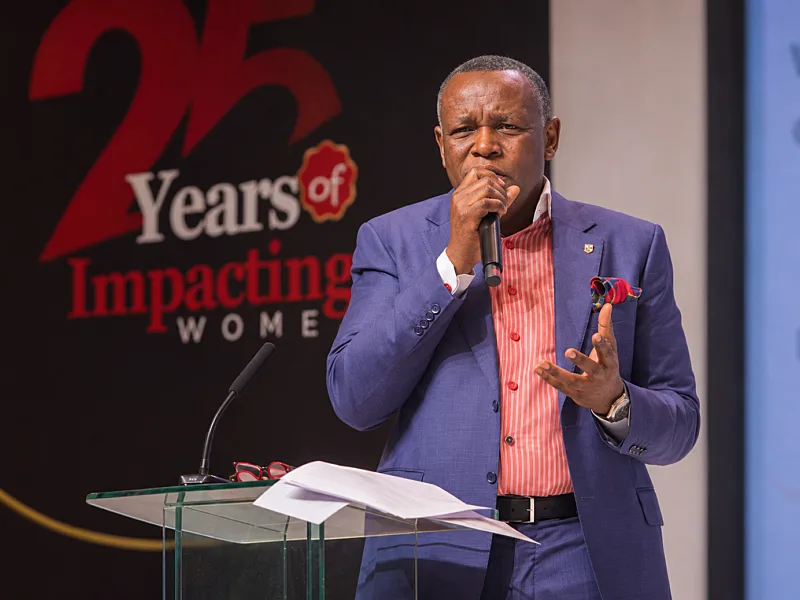
Uganda and the African Development Bank Group launched the country’s National Energy Compact at the 11th Africa Energy Market Place in Kampala on 22 October.
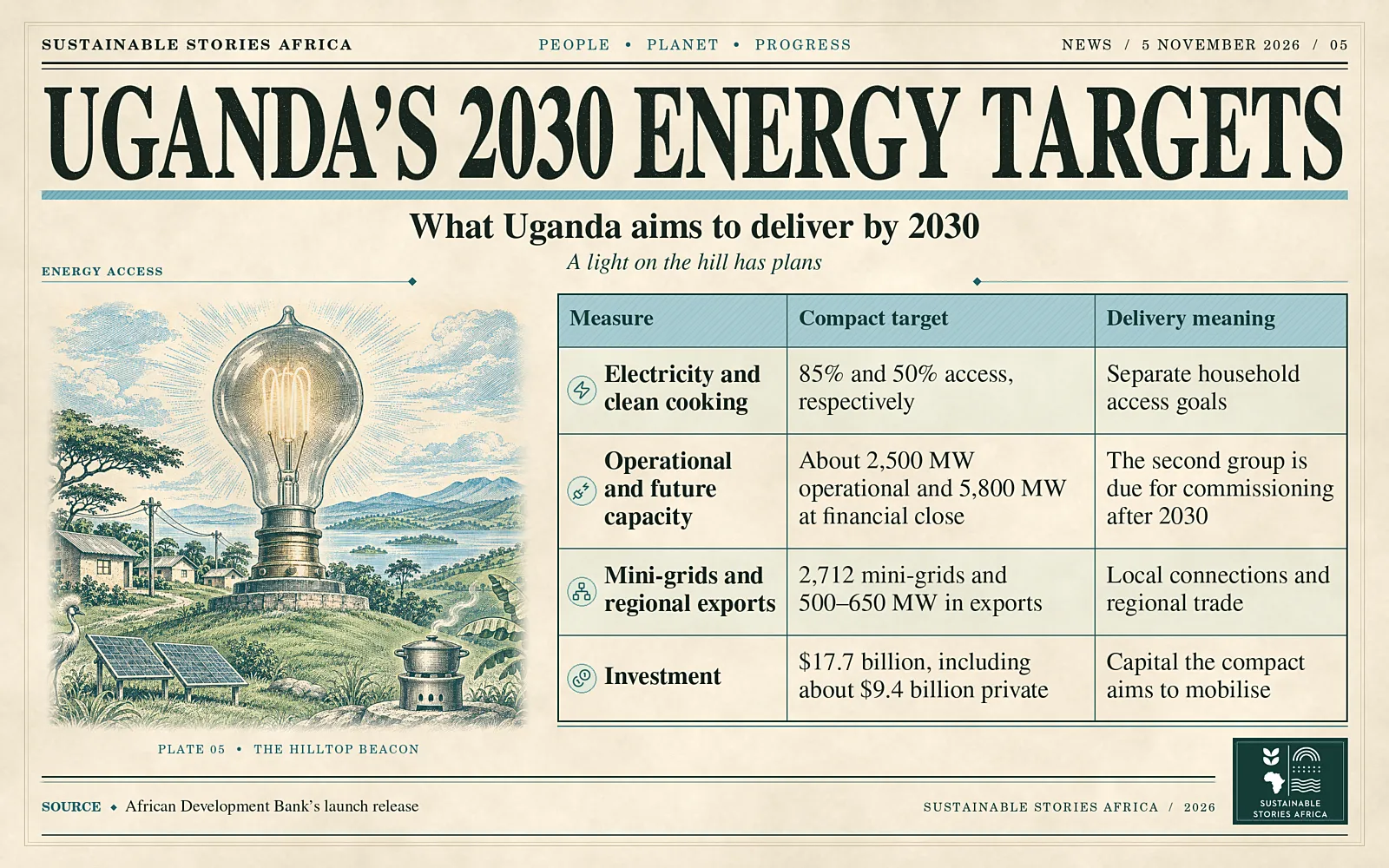
- The compact sets targets of 85% electricity access and 50% clean cooking access by 2030.
- It also sets out how the government intends to bring generation, mini-grids, regional trade and private finance into the delivery programme.
The African Development Bank’s account of the launch puts the investment ambition at $17.7 billion, with about $9.4 billion expected from private sources.
- The Kampala meeting followed the compact’s presentation at the Africa Energy Forum in June.
It brought together ministries, utilities, regulators, investors and development partners to agree which projects and reforms should move first.
Two deadlines for different stages of delivery
Participants separated projects that should be operating by the end of 2030 from those that should reach financial close by then.
- The compact identifies around 2,500 megawatts of operational capacity and a further 5,800 megawatts at financial close, with that additional capacity expected to be commissioned after 2030.
- Financial close is when financing arrangements are in place.
- It can precede construction and electricity delivery by years.
The 2030 plan also includes 2,712 mini-grids and regional electricity exports of 500 to 650 megawatts.
- The national targets sit within Mission 300, the African Development Bank Group and World Bank Group initiative to connect 300 million additional people in Africa to electricity by 2030.
- Uganda’s Vision 2040 provides the longer horizon for universal access.
Participants also produced a Uganda Energy Access Investment Brief and outlined policy and regulatory reforms with implementation timelines.
- Kevin Kariuki, the African Development Bank’s vice president responsible for power, energy, climate and green growth, noted Uganda’s renewable potential and reforms supporting independent transmission projects.
He said these could strengthen Uganda’s role in the East African Power Pool, where neighbouring markets can trade electricity.
Where access could change daily decisions
At the launch, Prime Minister Robinah Nabbanja noted the value of reliable power for irrigation, processing and cold storage.
These uses show why connection counts tell only part of the story.
- A farmer considering a cold room also needs to know whether power will stay on through the hottest part of the day and whether sales can cover the cost of refrigeration.
Clean cooking calls for a parallel delivery effort.
- Households may have access to an electricity connection but face other constraints on changing how they cook, such as appliance cost or reliable supply.
- Keeping electricity and cooking targets separate makes it easier to track whether progress in one area improves outcomes in the other.
- Mini-grid operators, meanwhile, need enough local demand to maintain systems after installation and connect customers over time.
Export plans and household access targets therefore call for different measures of progress.
- A regional sale needs interconnection capacity and a buyer, while a new customer needs a local connection and an affordable tariff.
Utilities and regulators will have to manage both as the system grows.
- Reporting progress against separate milestones can show whether a generation project is advancing faster than the infrastructure needed to carry its output.
Give investors and communities a delivery record
Forum participants agreed to establish a Compact Delivery and Monitoring Unit within the Ministry of Energy and Mineral Development.
According to the African Development Bank, the first semi-annual progress report is due in December 2026.
That report provides an early opportunity to show which projects have owners, financing plans and schedules, and how reforms support their delivery.
- For investors, project sequencing matters because generation, transmission and customer demand develop on different timetables.
- For communities, it matters because an announced project may take years to reach a household or business.
A public delivery record that separates financing milestones from operational capacity and customer connections would make it easier to see where progress is slowing and who is responsible for the next decision.
The timetable also matters for private capital.
- Investors can assess whether rules, procurement and approvals will be ready when a project needs them.
- The monitoring unit’s reporting can give market participants a common view of dependencies across institutions.
This becomes particularly useful when one part of the investment plan requires several public bodies to act before money can be committed.
Path Forward – December Reporting Will Test Delivery Plans
The compact gives Uganda separate milestones for projects expected to operate by 2030 and those expected to secure financing by then.
December’s progress report is the first stated checkpoint.
Connection quality, affordability and cooking uptake will determine how much of the investment translates into changes households and businesses can use.