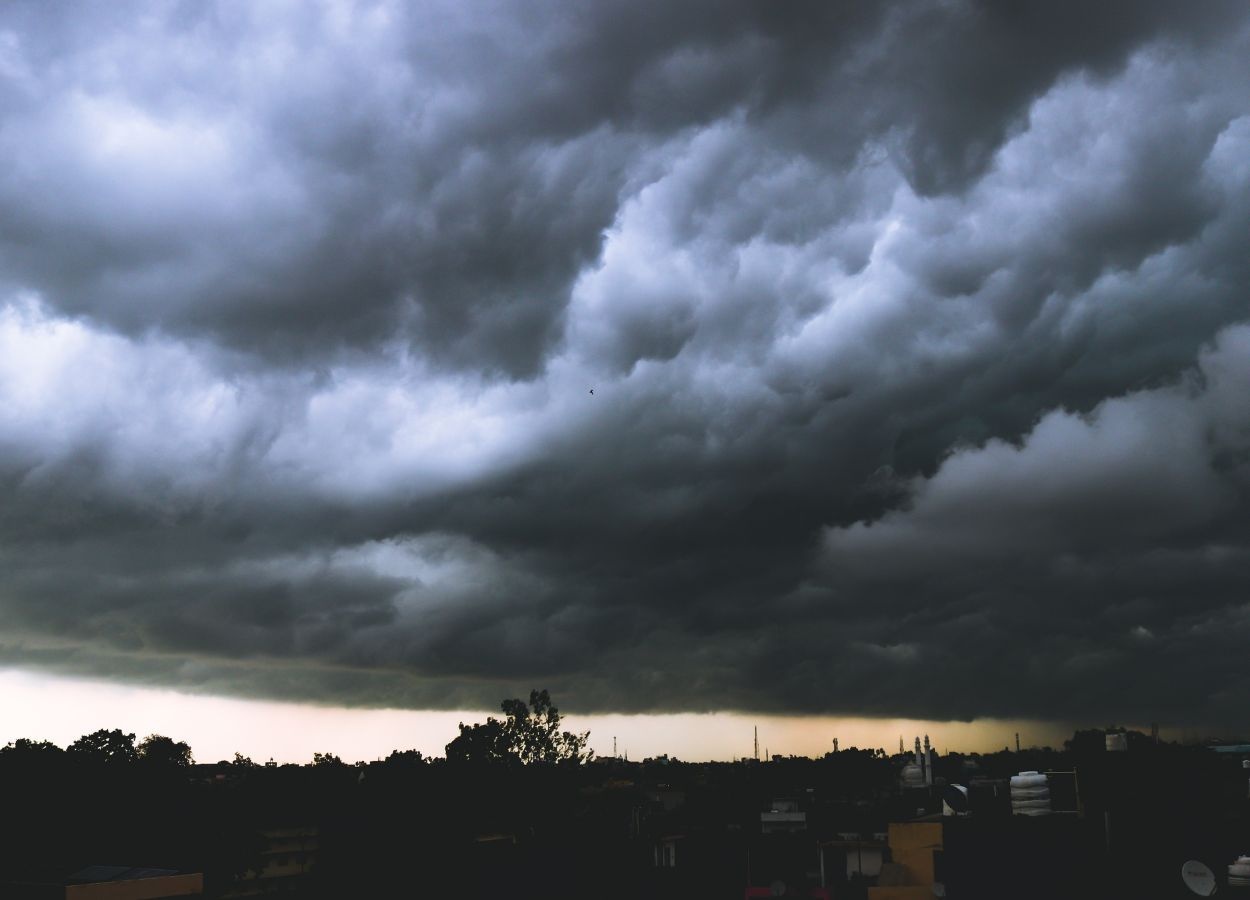
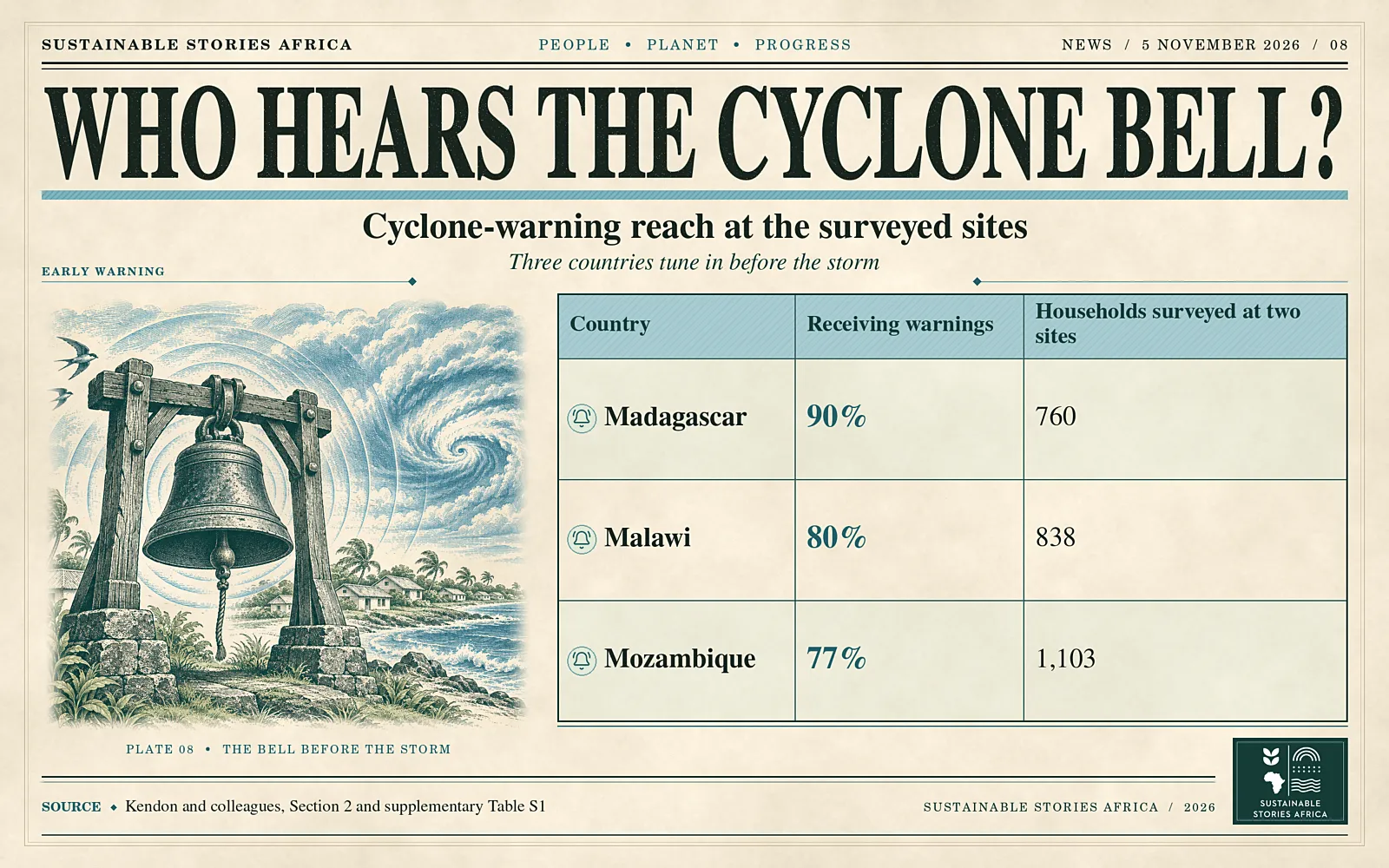
Household surveys at sites in Madagascar, Malawi and Mozambique found that most respondents received cyclone warnings, but fewer than half evacuated after receiving an alert.
Researchers identified barriers including late information, limited transport and difficulty moving people or protecting assets.
Their October paper calls for warning systems that give people a practical way to act before severe weather arrives.
Receiving a warning is only the first step
Southern African cyclone warnings reached a majority of households in surveyed communities; however, fewer than half evacuated after getting an alert, according to a paper led by Elizabeth Kendon in the October Bulletin of the American Meteorological Society.
- The authors draw on household surveys and work with communities and agencies to examine how warning systems can respond to cyclones, flooding and drought as extreme events intensify.
The household evidence comes from two survey sites each in Madagascar, Malawi and Mozambique.
- The figures describe the surveyed communities.
They bring into focus a problem that a count of alerts sent cannot explain: people may receive a warning and still lack enough time, transport or support to leave.
What keeps people in harm’s way
The researchers describe involuntary immobility, in which people who would choose to move are unable to do so.
- Someone may need help to reach a shelter, lack money for transport or face a road that floods before assistance arrives.
- People may also stay because they fear losing livestock or other assets.
- The paper describes communication problems as well, including network issues and uncertainty about how local warnings are passed on.
The mix of barriers differs by setting.
- Radio and television were dominant channels in the Madagascar survey sites, while many people were unaware of local arrangements for relaying warnings.
- The findings suggest that assessing a warning system requires following the message through to the action it asks people to take, including what happens when networks or transport links fail.
The paper uses Cyclone Freddy, which brought widespread flooding in 2023, to illustrate why planning based on previous experience can fall short. It also looks beyond cyclones to hazards including drought.
The actions available differ by event.
- For a cyclone they might include reaching shelter before roads close.
- For drought, warning could allow more time to prepare for shortages or protect livelihoods.
What changes when a forecast comes with support
A warning can create time to organise transport, move livestock, check on neighbours or ready a shelter.
How much that time helps depends on local arrangements.
- A family that knows the route to a shelter still needs to be able to use it.
- A local agency that receives a forecast still needs the authority, staff and resources to act before the storm.
The authors outline six priorities.
- They call for better analysis of unprecedented hazards, stress testing warning systems, equipping weather and water services, involving vulnerable groups in design, combining local knowledge with scientific evidence and strengthening coordination across agencies.
Together these priorities link forecast quality to operational decisions, such as when a district opens a shelter or releases funds for transport.
Local knowledge can make the practical side of those decisions visible.
- People who regularly use a road may know which section becomes impassable first.
- Broadcasters may know which languages and formats reach different audiences.
Working with these groups in advance gives authorities a better chance of finding where their procedures rely on communications, transport or services that can fail during a storm.
Rehearse the response before the next severe event
A district can use a drill to see whether the warning reaches households with enough time and whether the evacuation route stays usable.
- Working with disability organisations, community leaders and local broadcasters can reveal problems before a real alert.
- Rehearsals can also clarify who can activate transport or open shelters when conditions change quickly.
The paper argues that even effective warning systems have limits.
- Early action can reduce immediate exposure, while investments in infrastructure and services can reduce the vulnerability that leaves people with few safe choices
For authorities and funders, that means looking at what a warning enables alongside longer-term work on shelters, routes and livelihoods.
- The measures address different points in the same chain of risk.
Financing arrangements can determine whether a well-designed response starts on time.
- A forecast can trigger a plan, but arranging a vehicle or staffing a shelter also costs money.
- If approval comes after the hazard has arrived, the time gained from forecasting is lost.
Agencies and funders can use exercises to see whether spending authority and supplies are available at the point the plan calls for them.
Path Forward – Give Communities The Means To Act
Kendon and colleagues call for warning systems built around what people can do after an alert. Stress tests, local participation and coordination can reveal gaps in time to address them.
Longer-term adaptation remains necessary where repeated hazards leave people with limited options for reaching safety.