A review of green hydrogen development in Australia, Chile and North Africa warns that projects can put new pressure on water systems and coastal habitats.
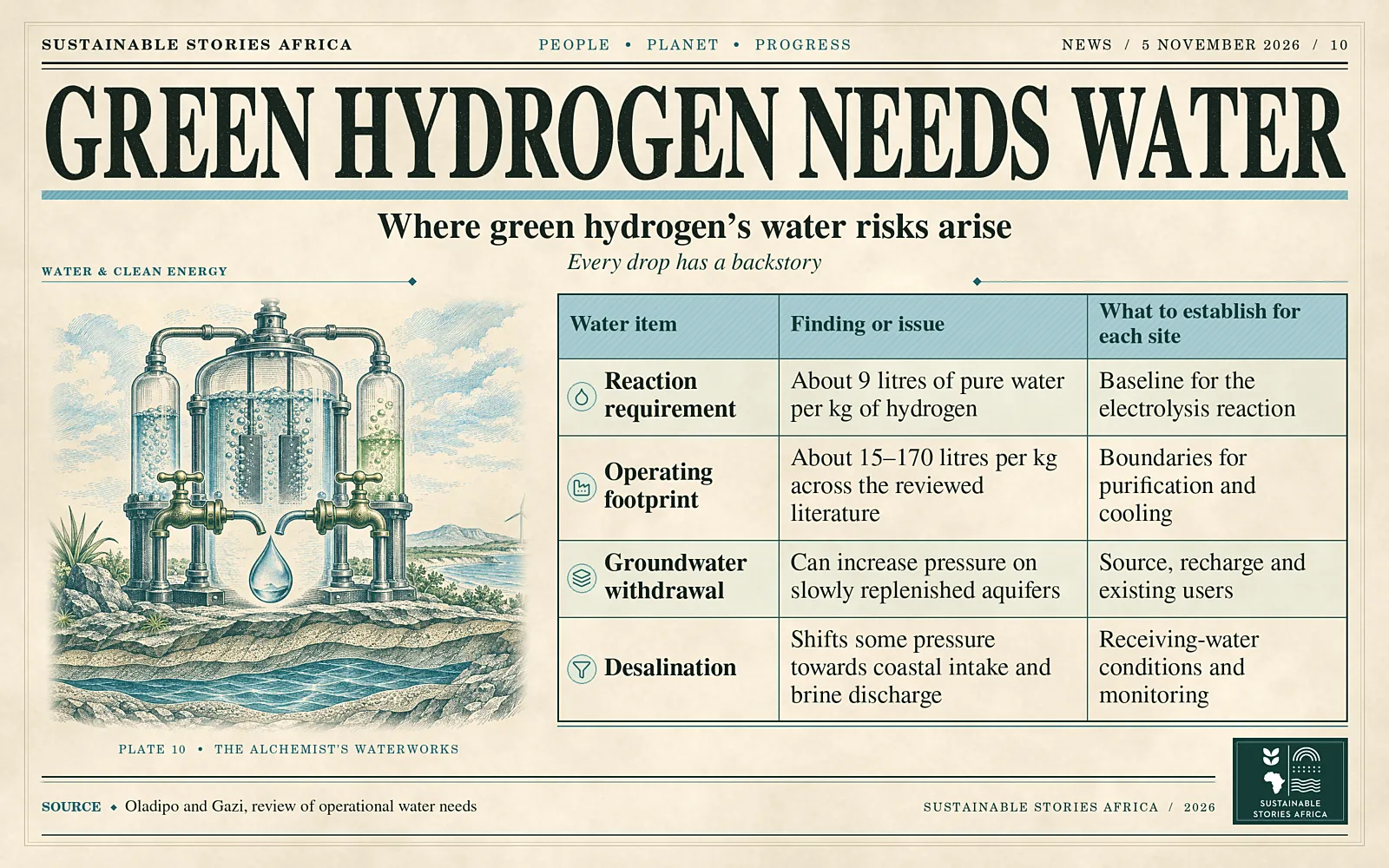
It reports operational water needs of 15 to 170 litres per kilogram of hydrogen across the cases and literature it reviews.
The range makes the source of a project’s water and the handling of its waste streams important to investment and permitting decisions.
A low-carbon fuel can have a local water cost
Renewable-powered hydrogen production could add significant water demand in dry regions, according to a review by Akeem Adeyemi Oladipo and Mustafa Gazi published online on 7 October in Critical Insights in Environmental Science and Technology.
- The authors examine export corridors in Australia, Chile and North Africa, where strong solar and wind resources can overlap with scarce freshwater or sensitive coastal ecosystems.
Green hydrogen uses renewable electricity to split water through electrolysis.
- The reaction requires roughly 9 litres of pure water per kilogram of hydrogen.
- The review puts the broader operating footprint at about 15 to 170 litres per kilogram in the literature it examines, depending on factors such as water treatment and cooling.
This range reflects differences in facilities and accounting boundaries, making site-specific estimates important.
Different sources shift the pressure
An electrolyser needs high-purity feedwater.
- A facility may withdraw additional water because some is lost during treatment or used for cooling.
In hot climates, the cooling system can materially change the amount of water the plant needs.
- A design that draws from an aquifer can raise different concerns from one using treated wastewater or desalinated seawater.
Desalination can reduce direct demand on freshwater supplies.
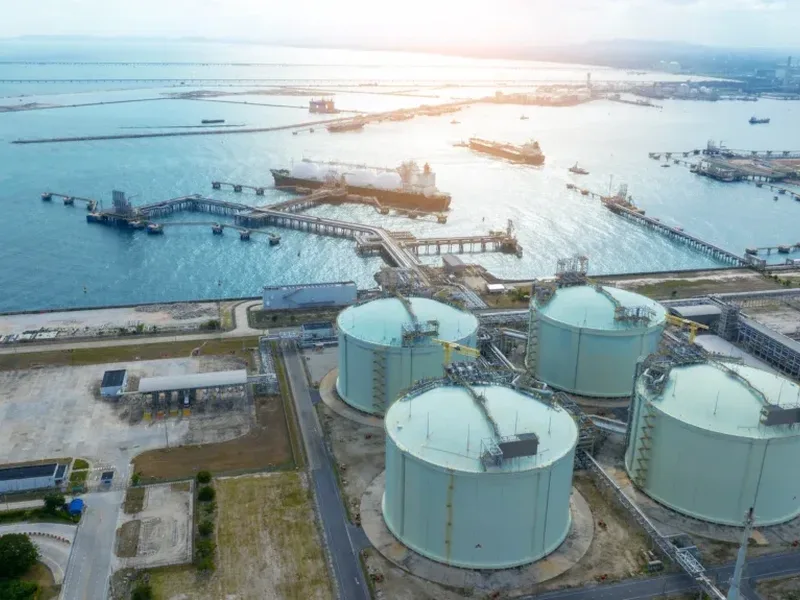
- It also uses energy and produces concentrated brine. Its impact depends in part on where intake and discharge infrastructure is built and how well the receiving waters disperse the brine.
- Inland facilities can face different trade-offs, including pumping costs and pressure on groundwater that may recharge slowly.
The review argues that a carbon-focused certification system can miss these local effects.
The authors compare the Maghreb and Suez corridors with Australia’s Pilbara and Spencer Gulf and Chile’s Atacama
- In the Chilean example, moving desalinated water inland can add pumping and infrastructure demands.
- In the Australian case, the review flags receiving waters where limited flushing can make discharge more consequential.
Comparing the cases shows how similar production processes can encounter different constraints.
What a credible water plan can deliver
A project with access to suitable treated wastewater may be able to reduce its call on freshwater.
- Its feasibility depends on the volume and quality available over time, how much additional treatment is required and whether other users already rely on that supply.
- New water infrastructure can benefit nearby communities if its allocation and service terms make that possible, but such benefits depend on the design and agreements for the specific project.
North African developers weighing coastal and inland sites face different constraints.
- A coastal site may make access to seawater easier while adding demands on sensitive habitats.
- An inland site may have excellent renewable resources yet require pipelines or significant pumping.
Comparing those options early can show which risks would be expensive to manage once a location has been selected.
A water assessment also needs to consider other facilities drawing on the same source or discharging into the same waters.
- A single plant may look manageable in isolation while several plants change the cumulative demand or load.
Planning at the level of a basin or coastal area can show where supply or ecological conditions would become limiting as an export corridor grows.
Bring water into permitting and finance
The review points to wastewater reuse, improved planning and technologies such as direct seawater splitting.
- Direct seawater electrolysis remains a research direction in the review.
- Near-term approvals can focus on what developers are able to demonstrate about the water sources and operating processes they plan to use.
A project’s water balance can show withdrawal, treatment losses, cooling demand and wastewater or brine disposal.
- Testing that balance under drought conditions can help authorities assess competition with farms, industry and households.
- Financing and permits can then specify how withdrawals and discharges will be measured and what conditions would prompt changes in operations.
The review’s comparison has implications for buyers as well.
- A contract for low-carbon hydrogen can ask for evidence on water sourcing and management alongside emissions.
This evidence could include the assumptions behind supply during drought, how the project accounts for competing users and what monitoring the operator will publish.
The aim is to make the local conditions attached to a global supply chain visible to the people purchasing its output.
Path Forward – Make Water Availability A Siting Test
The review calls for water and ecosystem limits to shape where green hydrogen plants are built and how they operate.
Disclosure can show whether developers have accounted for dry periods and existing users.
For coastal projects, intake and brine management are part of the same decision as securing a reliable feedwater supply.