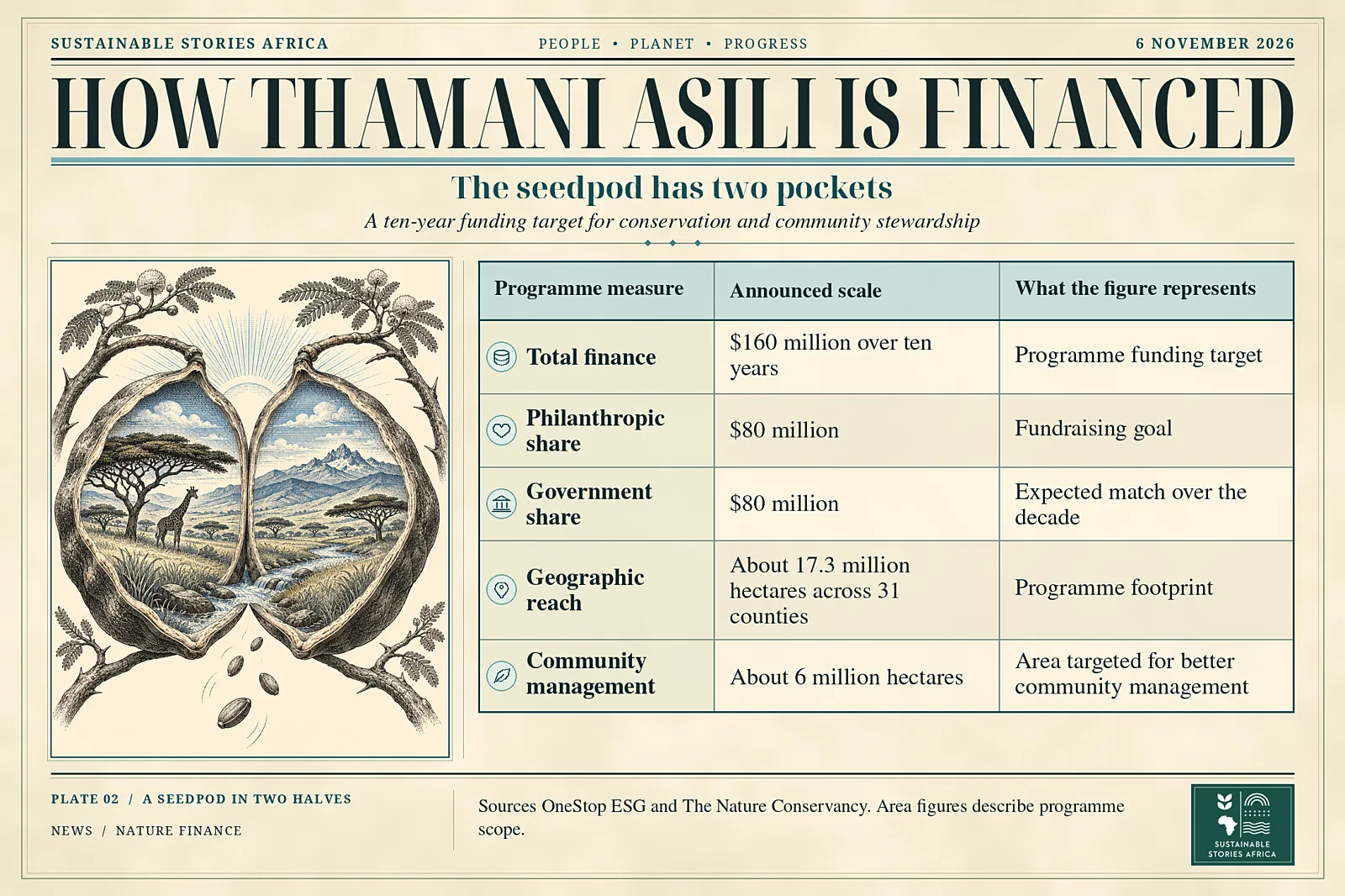
Kenya has launched a ten-year programme intended to mobilise $160 million for conservation and community livelihoods.
The plan pairs a philanthropic fundraising target with an expected government match.
The test is whether counties and communities can keep essential work funded after the first decade.
A decade to put conservation on a firmer footing
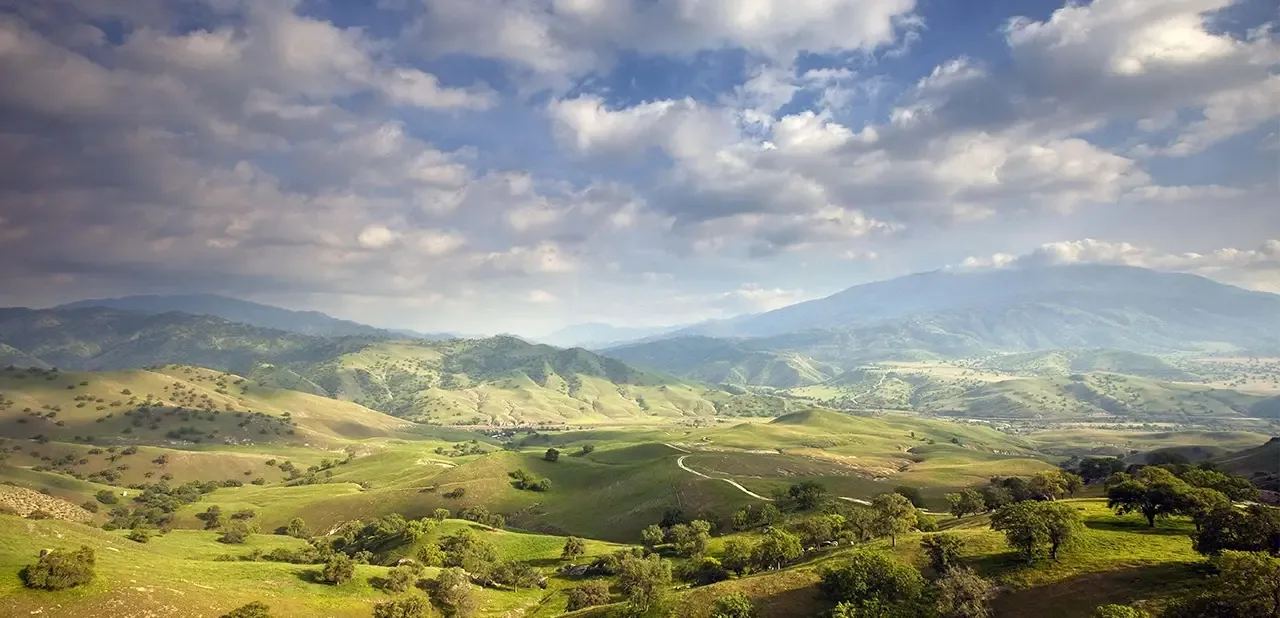
Kenya’s new Thamani Asili conservation programme aims to mobilise $160 million over ten years for work across about 17.3 million hectares in 31 counties.
- Launched on October 21 at Tsavo West National Park, the programme brings together the Kenyan government, The Nature Conservancy and Enduring Earth.
- About six million hectares are earmarked for support to improve community management, according to programme materials.
The plan addresses a problem familiar to communities that maintain water catchments, grazing areas and wildlife corridors.
- The benefits can reach far beyond the people who do the work, while recurring costs such as paying rangers and maintaining restored land fall close to home.
- A decade of finance gives the programme time to work out which institutions can meet those costs over the long term.
The funding split matters.
- The Nature Conservancy says the programme is designed to raise $80 million from philanthropy, with an equivalent contribution expected from the Kenyan government.
- OneStop ESG reported that Tourism and Wildlife Cabinet Secretary Rebecca Miano described the government contribution as committed at the launch.
A published payment schedule or budget line would show how that commitment translates into annual funding.
An infrastructure model for ongoing costs
Thamani Asili uses Project Finance for Permanence, which brings funders and government together around a conservation plan, financing and governance arrangements.
- An independent trust, the Thamani Asili Fund for Kenya, is responsible for managing and disbursing donor funds and tracking progress.
- The structure can tie payments to agreed milestones and help partners plan for costs that outlast a single budget cycle.
The infrastructure analogy has limits.
- This is a public and philanthropic financing plan. Its size gives partners room to test whether utilities, tourism operators or other businesses could support particular activities over time.
The headline figure itself represents neither commercial capital raised nor cash already available for every planned activity.
From shared benefits to recurring payments
The Upper Tana–Nairobi Water Fund shows why beneficiaries might contribute.
- Upstream soil and water conservation can reduce sediment reaching the reservoirs that supply Nairobi.
- East African Breweries pledged KSh60 million to the fund in 2024, according to OneStop ESG.
The pledge illustrates why an industrial water user may support restoration.
- A recurring payment agreement would give upstream land managers more certainty about what they can afford to maintain each year.
Any such arrangement would need to specify who pays, what gets measured and how communities share in the proceeds.
- A utility and industrial users could, for instance, agree on how to fund upstream work and monitor sediment.
- The agreement would also need to account for rainfall variability and other factors that affect readings.
- For farmers doing the work, payment terms and land rights would matter as much as the technical indicators.
Tourism and carbon credits may provide other revenue where local conditions support them.
- Their reliability varies.
- Tourism receipts can fall abruptly, and the viability of a carbon project can depend on consent, land tenure and market prices
- Public budgets and philanthropy may still have to cover activities whose benefits are widely shared, including wildlife protection and flood mitigation.
A water fund also illustrates a practical limit of the analogy with a treatment plant.
- A utility can often recover plant costs from its customers through an established billing system.
- A catchment can serve several utilities, companies and communities at once.
Coordinating contributions requires agreement on who benefits, how the work is funded and how decisions are made across the landscape.
What the trust can show early
The fund and its partners can make the plan easier to assess by publishing which contributions are secured, when they are due and what it costs to manage the targeted areas.
- Annual reporting can also distinguish commercial receipts from public and donor funding and show how much money reaches community organisations responsible for work on the ground.
The programme initially focuses on four priority landscapes, giving the trust room to learn from different conditions.
- Reporting on conservation outcomes alongside payments and community participation would show whether the financing is supporting the work promised and where longer-term public commitments may be needed.
Path Forward – Show Who Funds Conservation After Grants
Kenya’s conservation partners can use the first funding cycle to publish a payment schedule, clarify community decision rights and estimate what essential work will cost after the tenth year.
Where beneficiaries can pay reliably, recurring agreements could support upkeep.
Public budgets and philanthropy will remain important where conservation benefits are widely shared.