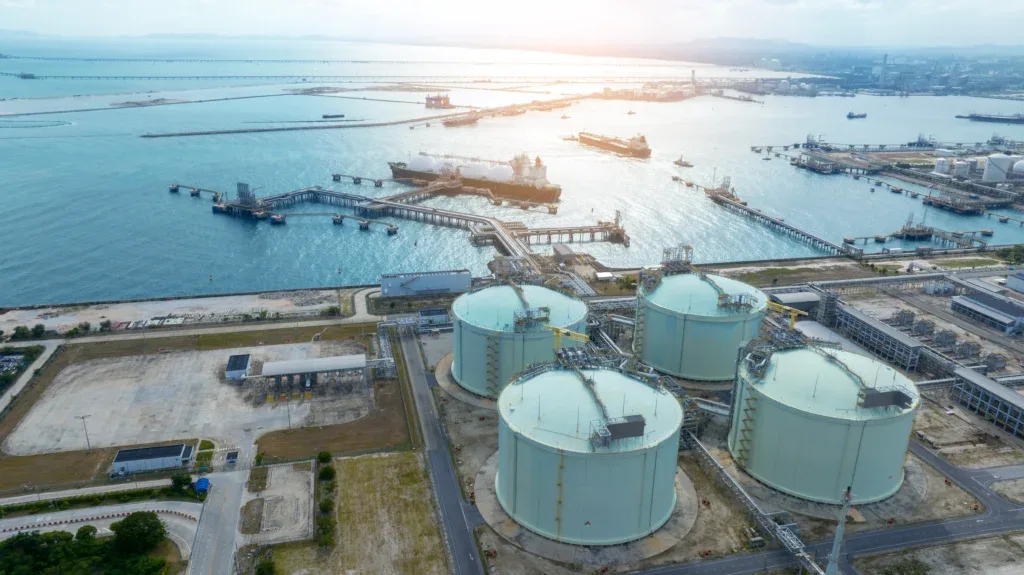
Tanzania and its partners are still working towards binding agreements for a proposed liquefied natural gas project in Lindi.
The $42 billion development must compete for investment with projects that offer clearer timelines.
For people near the proposed site, the wait leaves questions about land, jobs and local contracts.
A framework signed but investment still pending
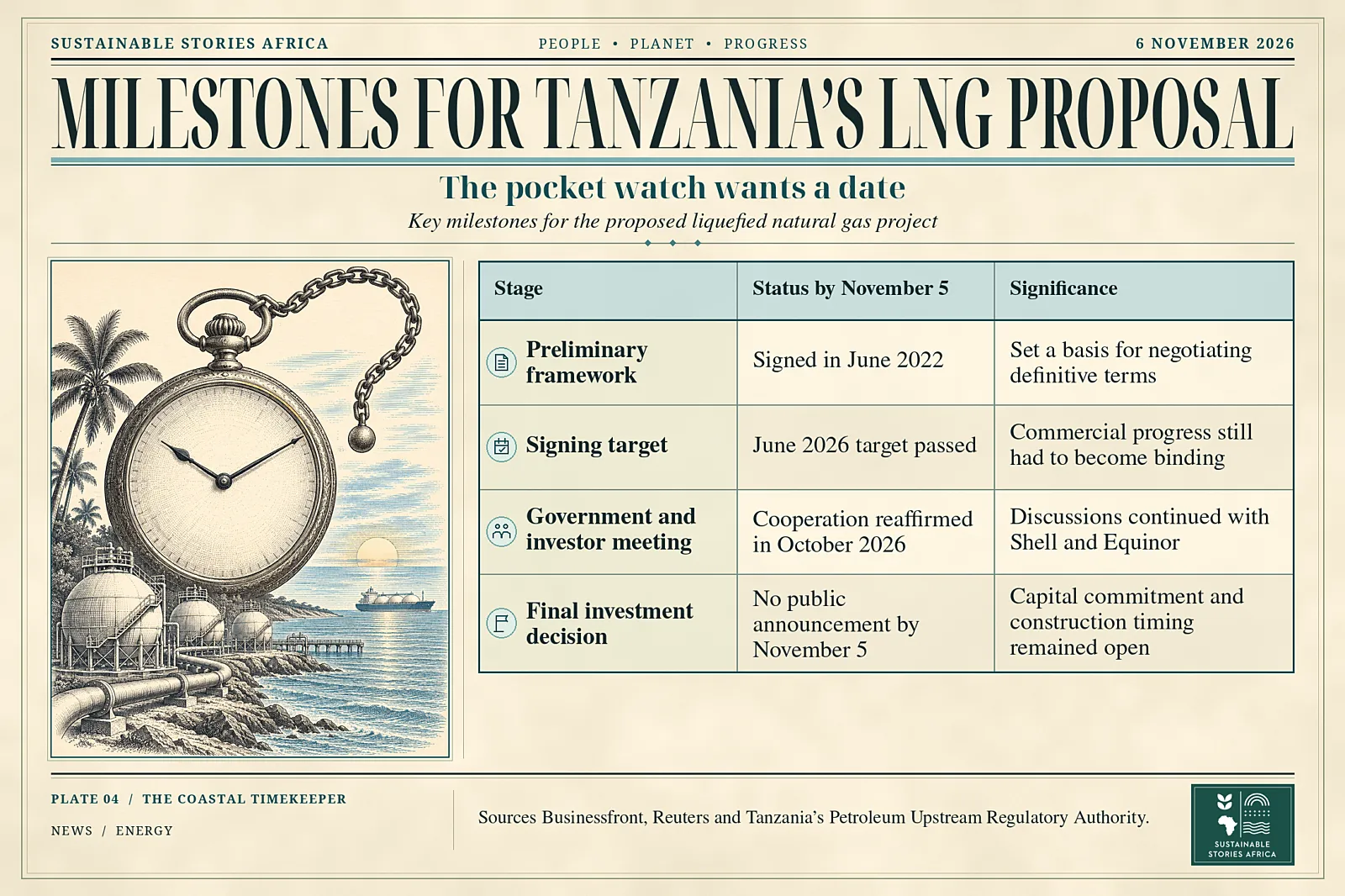
Tanzania’s proposed $42 billion liquefied natural gas project in Lindi remains without a publicly announced final investment decision after Shell, Equinor and the government reaffirmed their cooperation in October.
- Businessfront reported on November 4 that the parties had yet to sign binding agreements, prolonging uncertainty over a development Tanzania sees as a source of export earnings and domestic gas.
The plan would bring offshore gas to a liquefaction plant near Likong’o on Tanzania’s southern coast.
- Most production would be intended for export, with a portion set aside for the domestic market, Reuters reported.
- Shell and Equinor lead a group that also includes ExxonMobil, Pavilion Energy, MedcoEnergi and the state-owned Tanzania Petroleum Development Corporation (TPCD).
Finance Minister Khamis Mussa Omar told Reuters in October that the agreement was close.
- “It’s almost there,” he said. Tanzania and the two lead companies signed a preliminary framework in June 2022, but subsequent target dates passed.
The distinction matters. The framework established a basis for talks.
- Binding terms would define what each party agrees to, while a final investment decision would commit the partners to proceed.
Tanzania competes for company budgets
Businessfront reported that TPDC Managing Director Mussa Makame said major questions about project scale, taxes and revenue sharing had largely been settled.
- A meeting later in October with Energy Minister Juma Zuberi Homera reaffirmed cooperation.
- The public indications of progress came without a construction schedule or a financing commitment.
Equinor’s other plans show how the wait can affect Tanzania’s place in a global portfolio.
- Reuters reported, as cited by Businessfront, that Equinor aimed to supply 10 million to 15 million tonnes of LNG annually by the early 2030s and that Tanzania was absent from that plan.
- Equinor remains engaged in talks.
The omission shows that the company has other ways to expand supply over that period.
The cost of waiting in Lindi
Tanzania wants the project to help support industrialisation.
- A viable domestic gas allocation could give local buyers an additional supply source, while the plant and associated infrastructure could create business for Tanzanian contractors.
- These benefits depend on the terms, including how domestic gas is priced and delivered and what suppliers must do to qualify for work.
Businessfront reported that the land acquisition process had left some residents near the planned site unsure about their future.
- A family weighing whether to invest in its property or a small firm deciding whether to train staff for a construction contract faces a different kind of uncertainty from a multinational choosing between projects.
- A missed signing date extends that uncertainty even when the underlying gas resource and proposed site stay the same.
Tanzania also has to decide what risks to accept to secure the project.
- Terms that preserve tax revenue and a share of gas for domestic use have to sit alongside a financing case that investors can support.
- A schedule that slips further changes when those benefits might arrive and the market conditions the plant would face when it starts selling LNG.
The financing test will continue after negotiators reach agreement.
- Companies will still have to decide whether the returns justify a long construction period.
For the state, the timing of expected receipts matters because expenditure and oversight begin before any export revenue arrives.
- A financing plan and a construction timetable would give both sides a firmer basis for judging when the costs and benefits might materialise.
What the next announcement needs to establish
The government and project partners can clarify which terms are binding, which approvals remain and what must happen before investors commit capital.
- For domestic buyers, details on the size and delivery of the gas allocation would show how the project could support local industry.
- For Lindi residents, a clear update on land acquisition and how to raise unresolved concerns would be useful while negotiations continue.
Environmental and social commitments also need practical milestones.
- Publication of the assessment and monitoring process, alongside local hiring and procurement plans, would give residents and businesses a way to judge progress as the project moves from talks towards approval.
Path Forward – Clarify Gas Terms and Local Obligations
The next milestones are binding agreements and a final investment decision. Until those are public, forecasts for construction and production remain contingent.
Tanzania and its partners can give Lindi residents clearer information on land, jobs and procurement while explaining how domestic buyers would access gas if the project proceeds.