Cleared equipment still faces engineering checks
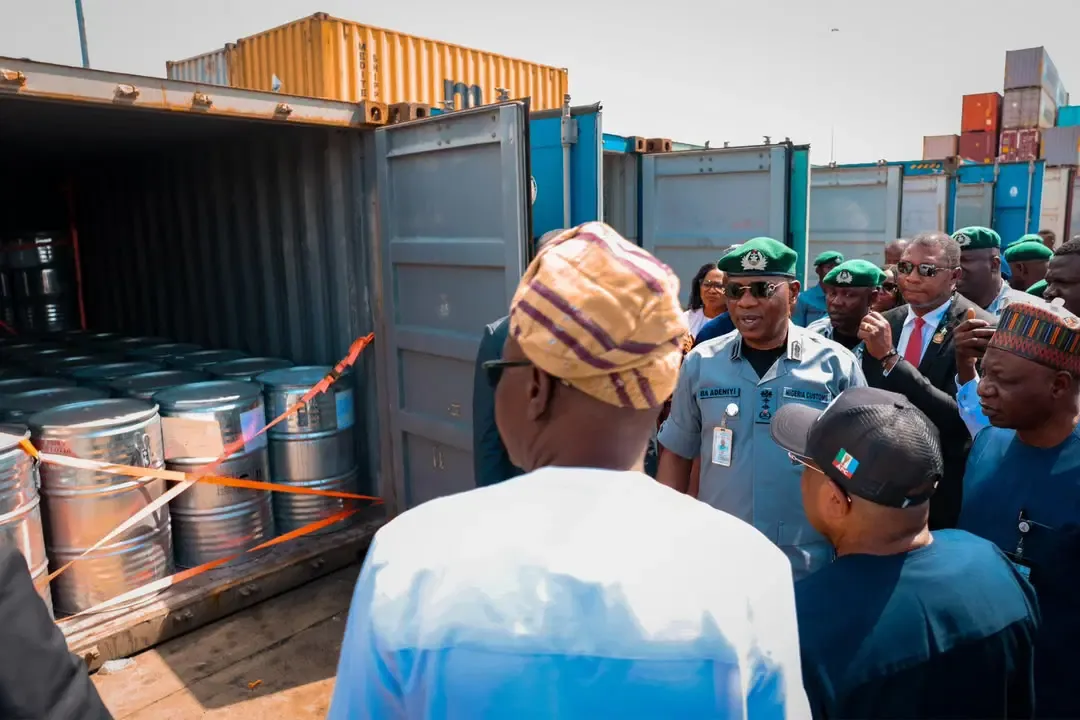
Customs has begun evacuating an initial batch of 98 containers of transmission equipment from Nigerian ports.
Some consignments had been stranded for up to two decades.
What engineers find inside will determine which stalled projects can move forward.
Customs starts with 98 containers
Nigeria has begun evacuating an initial batch of 98 containers of electricity transmission equipment after some consignments remained uncleared for up to 20 years.
Customs Comptroller-General Bashir Adewale Adeniyi and Power Minister Joseph Tegbe flagged off the exercise at Apapa in Lagos on 6 November, following President Bola Tinubu’s directive to clear the cargo and resolve outstanding charges and administrative barriers.
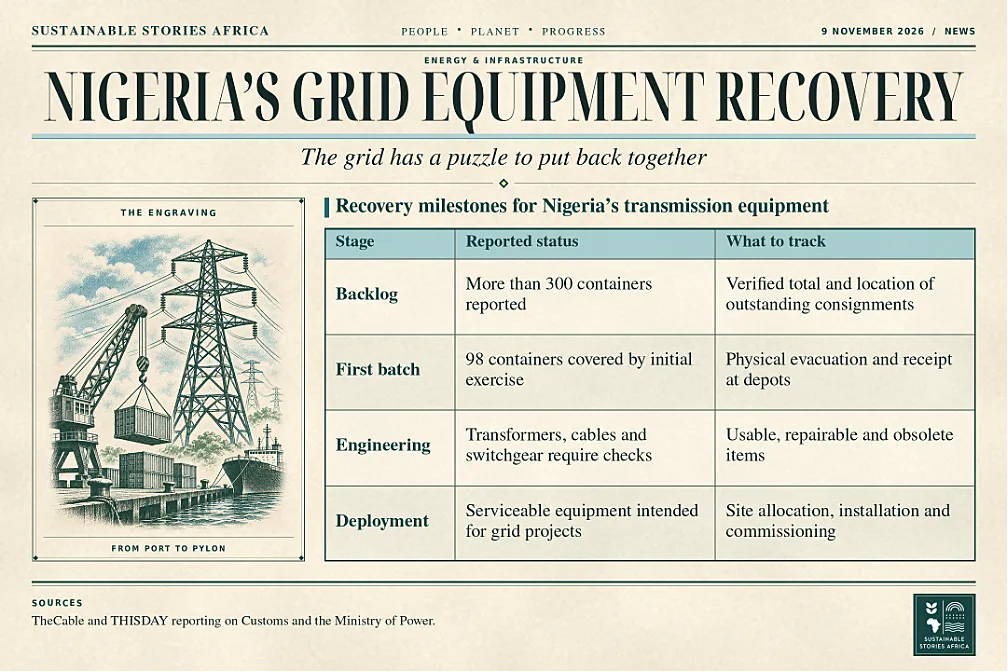
The first batch, part of a backlog of more than 300 containers, according to the power ministry’s account reported by THISDAY.
- The equipment includes high-capacity transformers, cables and switchgear intended for public power projects.
- The ministry said engineers would verify and test the materials and refurbish items where necessary before sending them to project sites.
The exercise therefore gives Nigeria a chance to recover equipment it already bought, with the potential benefit to consumers still dependent on installation and commissioning.
How port delays reached the grid
The equipment was procured to expand the transmission network and relieve pressure on overloaded substations, Tegbe said.
- When an installation lacks a transformer, the consequences extend beyond the missing item.
- A completed civil works site can remain idle while neighbouring substations continue carrying loads the new equipment was meant to redistribute.
- Extended storage also exposes equipment to deterioration and can add charges that make release more difficult.
Customs reported using priority processing and approved waivers to move the shipments.
- Adeniyi also said some contractors had abandoned consignments linked to public projects.
- The launch accounts leave individual contracts open, with the reasons for delay in each case.
A container-by-container inventory would help distinguish commercial disputes, paperwork problems and project failures that require separate remedies.
- The backlog age also makes it worth separating the original procurement cost from the cost of getting usable equipment into service now.
- A project could still need foundations, heavy equipment transport, protection systems or crews to carry out installation.
These requirements will vary by site.
- Publishing them would show why two containers released on the same day may improve on very different schedules.
The date a consignment leaves the port is one milestone in that longer sequence.
Where recovered equipment could help
A suitable transformer can allow a substation to serve more load or relieve pressure on another installation.
- Cables and switchgear can help engineers finish connections and isolate faults.
- For a shop paying to keep a generator running, the practical benefit would be fewer interruptions attributable to the specific grid bottleneck a project resolves.
- Local distribution faults and shortages elsewhere in the power system can still affect supply.
Engineers will need to compare recovered equipment with the specifications of projects that need it today.
- A component ordered years ago may remain viable yet require a different assignment if a project has changed.
A condition report can help agencies decide where testing and refurbishment offer value, and which items require safe disposal.
Give each asset a destination
The power ministry said it would oversee the equipment through installation and commissioning.
- Publishing the chain of custody would make that commitment measurable.
- Updates could identify the procuring agency, each batch’s condition, the projects receiving it and the expected commissioning date.
- A dated status report could also explain which shipments are still at the ports and what each agency needs to do to move them.
The same record would support a review of how the backlog accumulated.
- Future procurement contracts can link shipment dates, clearing arrangements and the readiness of installation sites, with an assigned official accountable for resolving delays.
- For consumers, reports on equipment placed in service and the faults it is expected to address would connect the recovery exercise to electricity delivery.
It would also help to identify the agency responsible for receiving equipment and the one expected to operate it.
- At a project that has changed hands, that distinction can decide who pays for testing and who signs off on the completed installation.
Otherwise, a delay can move from the port to a depot or a project site.
Path Forward – Track recovered equipment through to commissioning
The immediate milestones are a verified inventory, completed tests and named project destinations.
Customs and the power ministry can report outstanding shipments separately from equipment that engineers have cleared for use.
The commissioning record will show which substations and transmission lines benefit. Performance data from those sites can then show whether the work eases overloading or improves voltage.