Researchers are pursuing “cancer interception” to stop pancreatic cancer before it turns invasive.
New optimism follows a drug that quashes pancreatic tumours.
If it works, more patients could reach treatment while it can still help.
A New Reason for Optimism
Researchers pursuing one of the world's deadliest cancers are chasing a radical strategy known as cancer interception.
It treats abnormally growing tissue before it becomes cancerous and spreads, according to a report published by Nature on 2 October 2026.
Researchers are already exploring possibilities of interception in other cancers, including breast and skin cancers.
The success of a new drug against pancreatic tumours has raised hopes that the approach could work here too.
The Drug, the Data and the Gaps
The newly approved drug is daraxonrasib, sold as Rasonque.
- It is a once-daily pill that targets RAS proteins, which help drive most pancreatic cancers.
- In a trial of 500 patients, recipients had a median overall survival of 13.2 months, compared with 6.7 months for those given standard chemotherapy.
The gain of about six and a half months matters in a disease with few options.
However, interception aims for something larger: shifting diagnosis and treatment to the stage before a tumour becomes invasive, when intervention is most likely to work.
Several research strands support that aim.
- In animal studies, a KRAS inhibitor given once tiny precancerous growths appeared improved survival.
- Scientists are also developing blood tests and artificial intelligence that may spot subtle abnormalities on scans.
- A vaccine against cells carrying mutated KRAS is under investigation, although researchers do not yet know whether it prevents the cancer
Other teams are working to stop vulnerable pancreatic cells changing identity on the path to cancer.
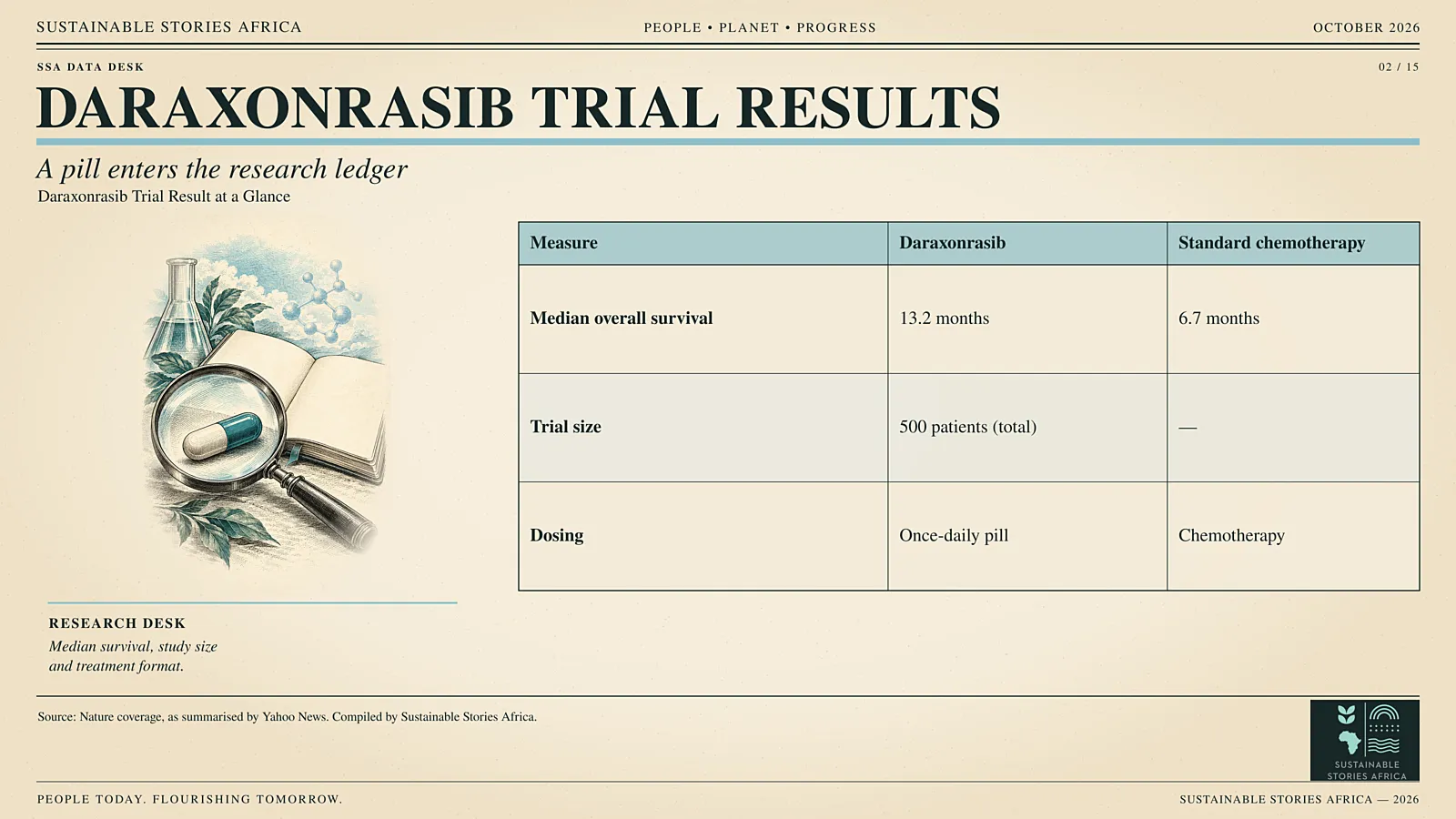
The table shows survival nearly doubling, but it describes patients with established disease.
Interception research asks whether similar targeting could work earlier, and that evidence is not yet in.
Earlier Treatment, Better Odds
Interception depends on finding high-risk people before cancer advances.
- Dr Diane Simeone of UC San Diego's Moores Cancer Centre says early detection combined with interception is “going to be the breakthrough strategy that really changes survival.”
If the approach succeeds, more patients could reach treatment while it can still help.
If detection tools lag behind drug development, many people will still be diagnosed late, when options remain limited.
What Must Happen Next
Funders should back the blood-sample and imaging collections needed to refine detection tools.
Researchers should run trials that test whether treating precancerous growths prevents invasive disease, rather than assuming it will.
Health systems, including those in lower-resource settings such as many African countries, should also plan how screening and access to new drugs would work if trials succeed.
Without that groundwork, breakthroughs risk reaching only well-funded health systems.
Path Forward – Moving Interception From Lab to Clinic
Interception remains a research strategy, not standard care.
Priorities include better early detection, vaccine testing and trials showing whether treating precancerous growths prevents invasive disease.
Progress depends on evidence, so patients should rely on their clinicians rather than headlines.
Culled from: Can pancreatic cancer be stopped in its tracks? Radical tactic raises hopes | Nature