Nigeria’s solar market continues to favour rooftop systems over balcony alternatives.
Despite improved safety standards, structural and regulatory barriers limit the adoption of solar panels on balconies.
The trend highlights how infrastructure realities and housing design shape the uptake of clean energy.
Solar Adoption Shaped by Structural Realities
In Nigeria’s fast-growing solar market, rooftop installations are emerging as the dominant solution, outpacing newer balcony solar systems despite advancements in safety and design.
The preference is not merely technological; it reflects deeper structural realities.
From building design and urban planning constraints to regulatory ambiguity, Nigeria’s energy transition is being shaped as much by physical infrastructure as by innovation.
As households and businesses increasingly turn to solar to offset unreliable grid power and rising diesel costs, the choice of installation type is becoming a critical factor in scaling adoption.
Why Rooftop Solar Dominates the Market
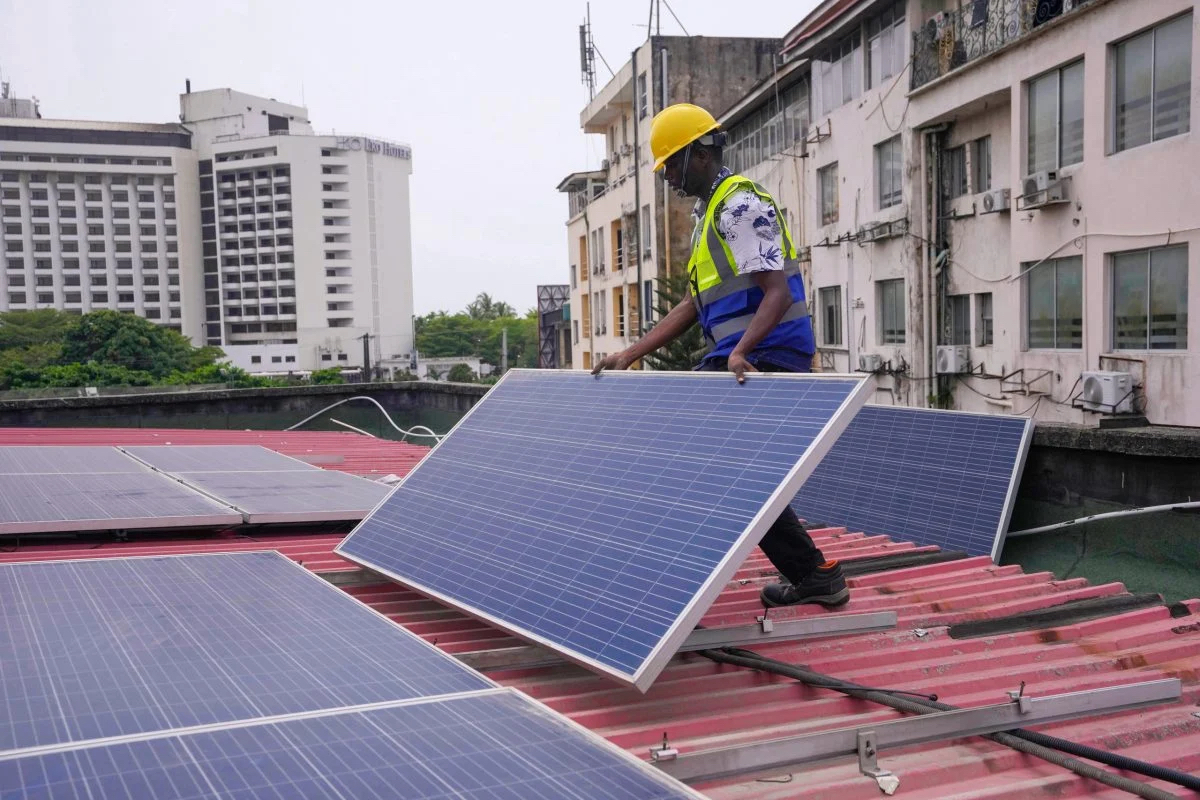
Rooftop solar systems have long been the standard in Nigeria, particularly for residential homes, commercial buildings, and industrial facilities.
They offer higher capacity, greater flexibility, and compatibility with hybrid systems that include battery storage.
Balcony solar, common in European markets, has been proposed as an alternative for apartment dwellers. These systems are typically smaller, modular, and designed for plug-and-play installation.
However, in Nigeria, adoption remains limited.
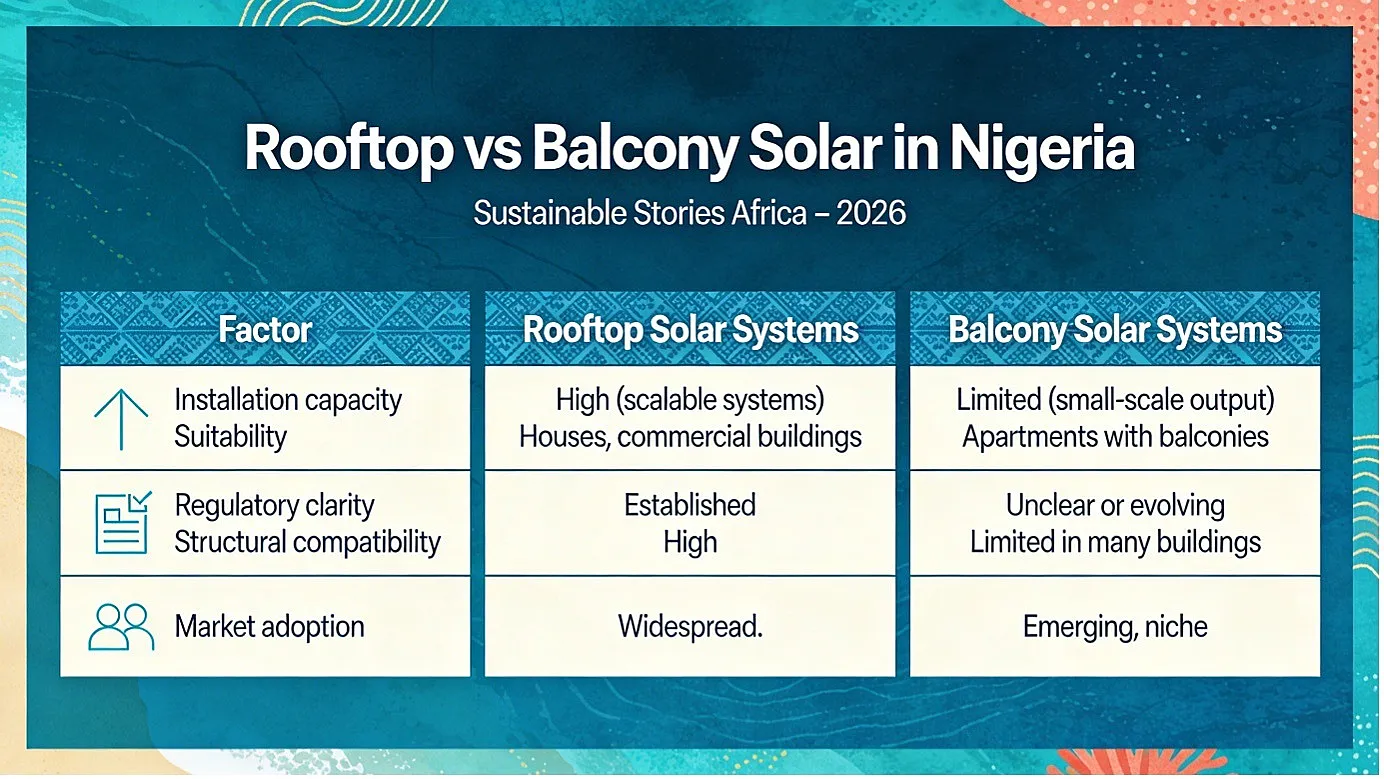
Rooftop vs Balcony Solar in Nigeria
Factor | Rooftop Solar Systems | Balcony Solar Systems |
|---|---|---|
Installation capacity | High (scalable systems) | Limited (small-scale output) |
Suitability | Houses, commercial buildings | Apartments with balconies |
Regulatory clarity | Established | Unclear or evolving |
Structural compatibility | High | Limited in many buildings |
Market adoption | Widespread | Emerging, niche |
One of the key constraints is building design. Many Nigerian urban apartments lack the structural provisions or orientation required for efficient deployment of balcony solar.
In addition, informal housing patterns and inconsistent building standards further complicate installation.
Regulatory frameworks also lag innovation. While rooftop solar has benefited from clearer guidelines and established installer networks, balcony systems operate in a grey area, raising questions around grid connection, safety compliance, and certification.
As one industry stakeholder might observe in such contexts, “Technology may be ready, but the ecosystem is not.”
Expanding Access Through Flexible Solar Solutions
Despite current limitations, balcony solar still holds promise, particularly for expanding access in dense urban environments where rooftop space is constrained or unavailable.
If regulatory clarity improves and building designs evolve, balcony systems could complement rooftop installations, creating a more inclusive solar ecosystem.
Unlocking Broader Solar Adoption
Opportunity Area | Potential Outcome |
|---|---|
Urban solar access | Inclusion of apartment dwellers in solar transition |
Modular energy systems | Flexible, scalable adoption models |
Reduced entry costs | Lower upfront investment for smaller systems |
Distributed generation | Decentralised energy resilience |
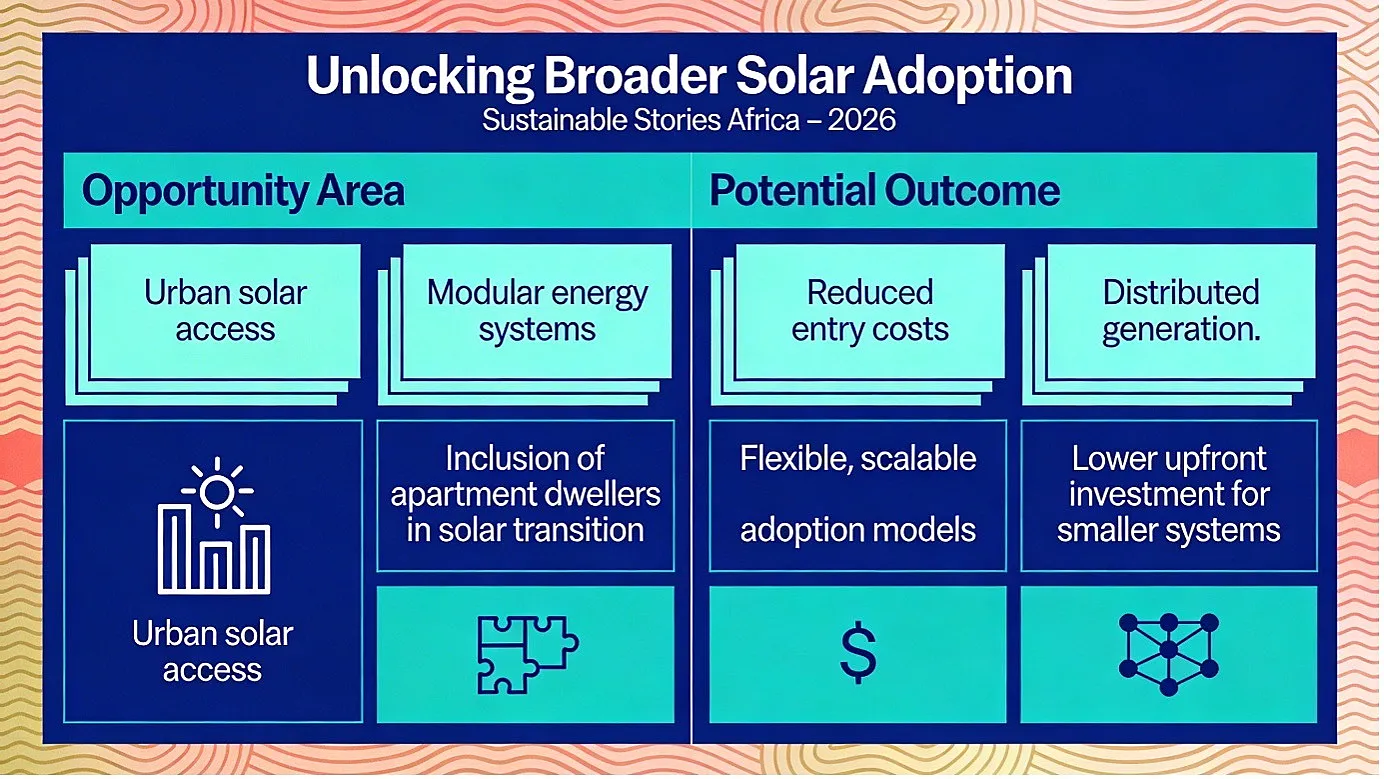
For Nigeria, where millions live in multi-unit housing, such solutions could significantly expand the reach of renewable energy.
However, without deliberate policy and infrastructure alignment, these opportunities may remain unrealised.
Aligning Policy, Design, and Innovation
To fully harness the potential of both rooftop and balcony solar systems, Nigeria must adopt a more integrated approach.
Regulators need to establish clear standards for balcony solar installations to address safety, grid integration, and certification requirements. This will help build investor confidence and encourage market entry.
Urban planning and building codes must also evolve. New developments should incorporate solar-ready designs, enabling both rooftop and balcony installations where feasible.
Financial innovation will be equally important. Flexible financing models can lower barriers to entry for households, particularly in urban areas.
Finally, public awareness and technical training will play a critical role in scaling adoption, ensuring that both consumers and installers understand the benefits and limitations of different solar solutions.
The objective is not to replace rooftop solar, but to expand the ecosystem, to make clean energy accessible across diverse housing contexts.
PATH FORWARD – Design Inclusive Systems, Expand Solar Access Across Urban Nigeria
Nigeria’s solar future depends on aligning innovation with infrastructure and policy.
By enabling diverse installation models and updating regulatory frameworks, the country can accelerate the adoption of clean energy while improving access for urban households.
Culled From: Why Nigeria favours rooftop solar over balcony solar despite better safety measures - Energy in Africa