Norway’s $2 trillion wealth fund is tightening expectations on nature risk.
Companies are being asked to assess and disclose impacts on biodiversity and ecosystems.
The move could reshape global ESG standards and corporate accountability practices.
Nature Risk Moves to the Top of the ESG Agenda
For years, climate risk dominated the sustainability conversation. Now, nature risk is taking centre stage.
Norway’s sovereign wealth fund, valued at approximately $2 trillion and one of the largest investors globally, has set new expectations for companies to identify, assess, and manage risks related to biodiversity loss and ecosystem degradation.
The move signals a critical shift in global finance: nature is no longer an externality; it is a material financial risk.
What the Fund Is Asking Companies to Do
The fund’s guidance focuses on integrating nature-related risks into corporate governance, strategy, and disclosure frameworks.
Companies across sectors, from agriculture and mining to manufacturing and finance, are being urged to align with emerging global standards on biodiversity and ecosystem impact.
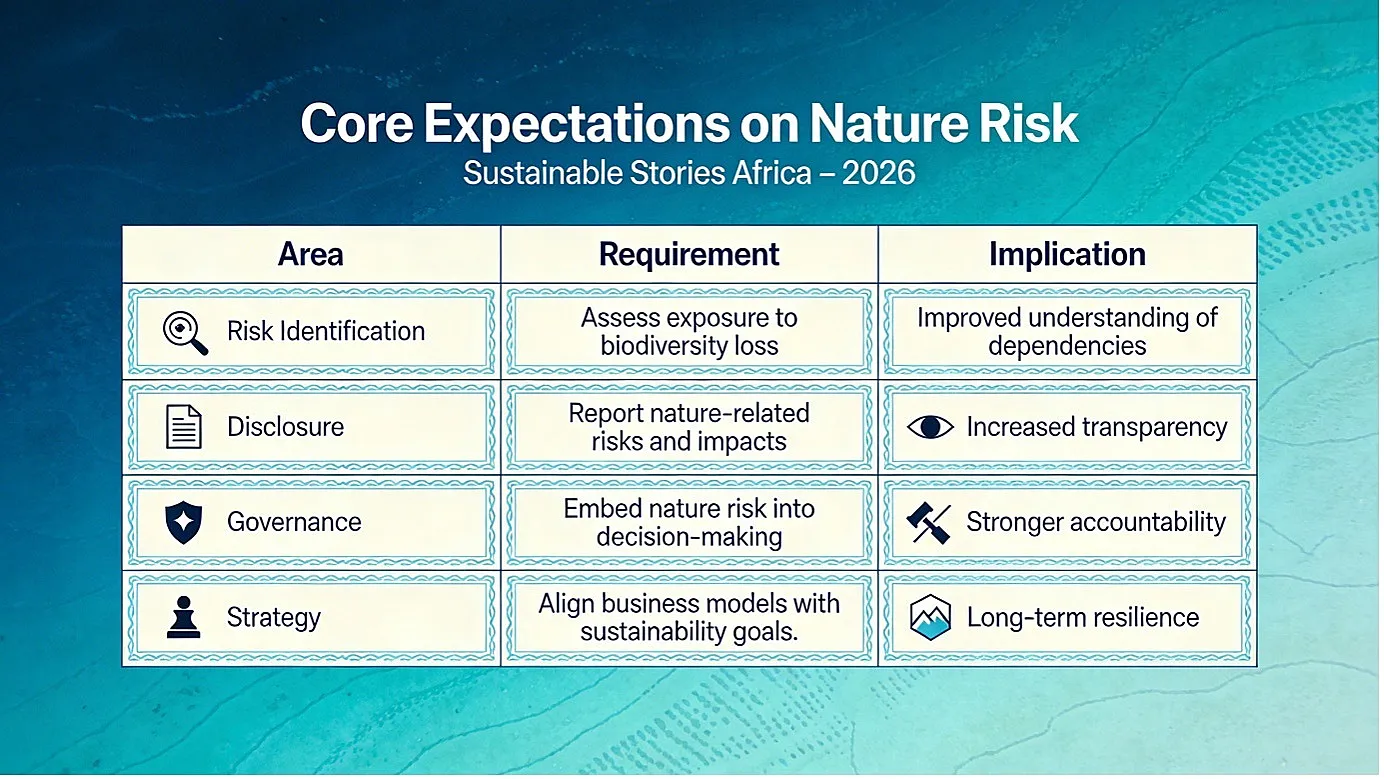
Core Expectations on Nature Risk
Area | Requirement | Implication |
|---|---|---|
Risk Identification | Assess exposure to biodiversity loss | Improved understanding of dependencies |
Disclosure | Report nature-related risks and impacts | Increased transparency |
Governance | Embed nature risk into decision-making | Stronger accountability |
Strategy | Align business models with sustainability goals | Long-term resilience |
The approach aligns with frameworks such as the Taskforce on Nature-related Financial Disclosures (TNFD), which is gaining traction globally.
For companies, this represents a significant expansion of ESG reporting, moving beyond carbon emissions to include land use, water resources, and ecosystem health.
What Stronger Nature Risk Management Could Unlock
If widely adopted, these expectations could transform how businesses and investors approach sustainability.
Key benefits include:
- Enhanced risk management – Identifying vulnerabilities linked to ecosystem degradation
- Improved investment decisions – Allocating capital to sustainable, resilient businesses
- Stronger market confidence – Building trust through transparent disclosures
- Biodiversity protection – Supporting conservation and restoration efforts
For emerging markets, particularly in Africa, the implications are profound. The continent’s natural capital, forests, wetlands, and biodiversity, is both an asset and a risk factor.
Companies operating in these environments will increasingly need to demonstrate how they manage and protect these resources to remain competitive in global capital markets.
From Climate to Nature: Expanding the ESG Frontier
The fund’s move highlights a broader evolution in ESG: from a focus on carbon to a more holistic view of environmental risk.
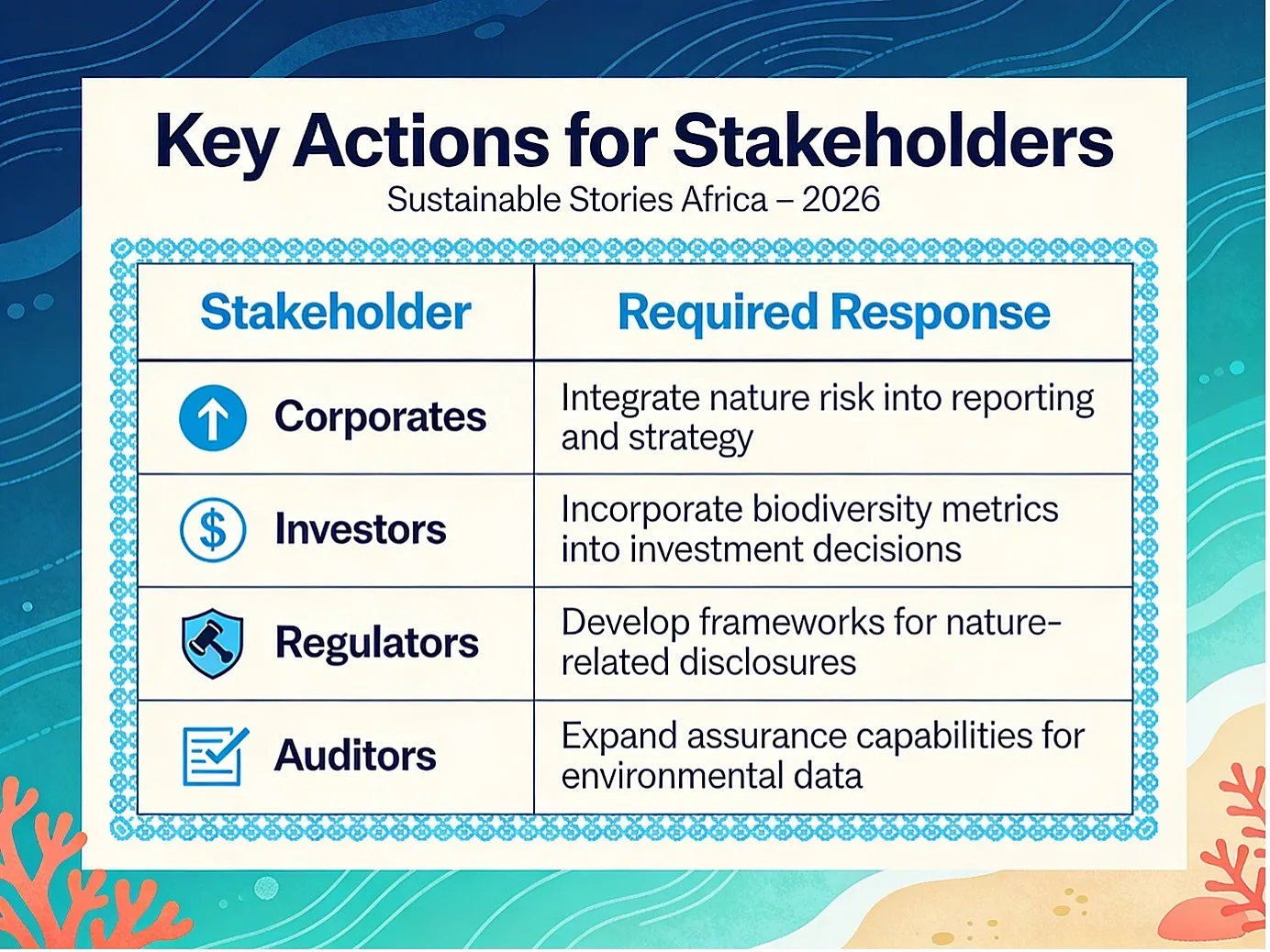
Key Actions for Stakeholders
Stakeholder | Required Response |
|---|---|
Corporates | Integrate nature risk into reporting and strategy |
Investors | Incorporate biodiversity metrics into investment decisions |
Regulators | Develop frameworks for nature-related disclosures |
Auditors | Expand assurance capabilities for environmental data |
For companies, the challenge lies in data; measuring and reporting nature-related impacts is complex and often requires new tools and methodologies.
For investors, the opportunity is to identify and support businesses that are aligned with sustainable ecosystem management.
PATH FORWARD – Nature Risk Becomes Core Investment Consideration
Norway’s wealth fund is accelerating the integration of nature risk into global financial systems. Companies must adapt by embedding biodiversity considerations into strategy and reporting.
As ESG evolves, aligning financial performance with ecosystem sustainability will be essential to ensure long-term value creation while protecting the natural systems that underpin global economies.
Culled From: Norway’s $2 Trillion Wealth Fund Sets Nature Risk Expectations for Portfolio Companies