
Panterra has released 2026 reports on West African real estate and Nigeria's construction sector alongside a digital property investment platform.
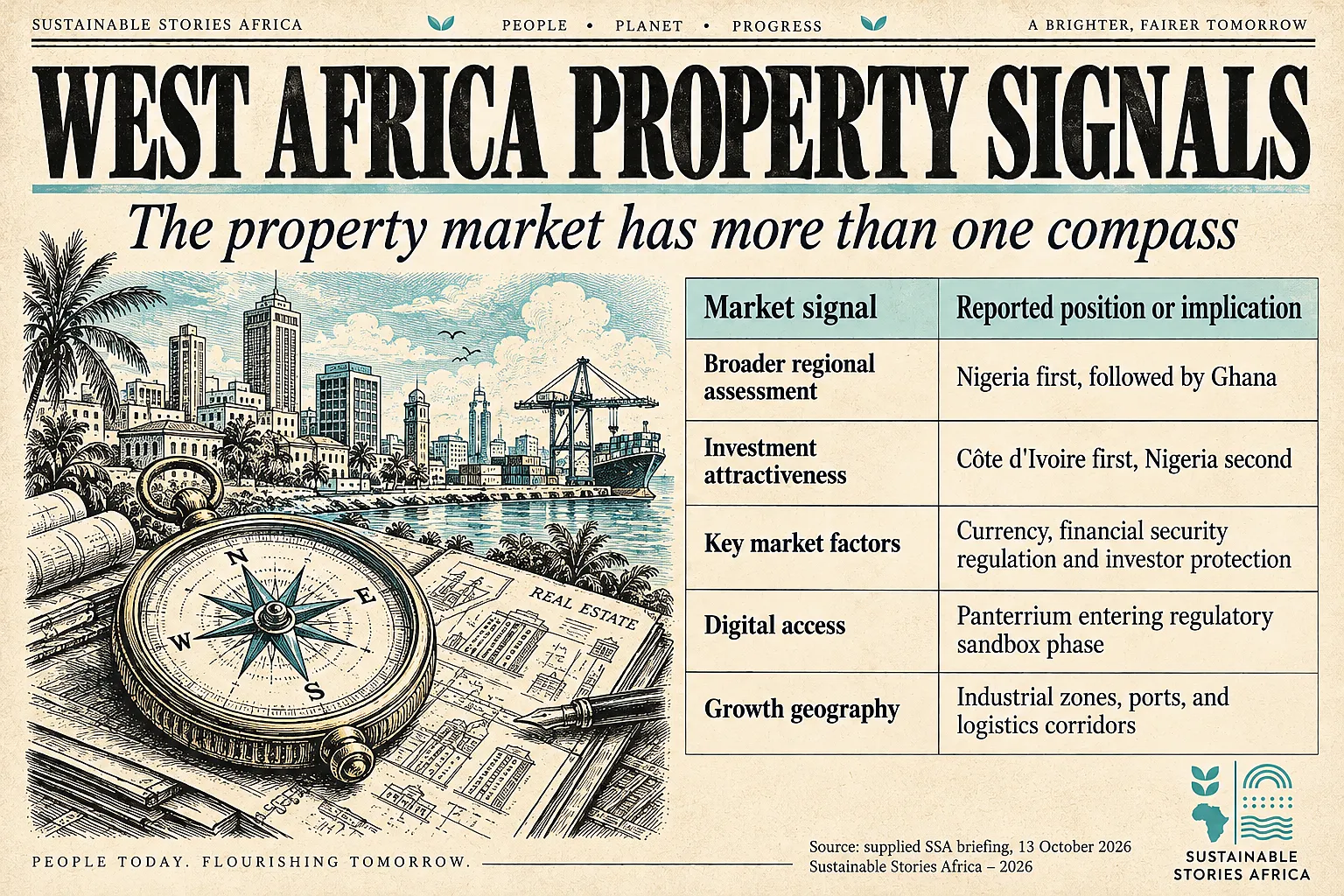
The research ranks Nigeria first on the broader regional market assessment and Côte d'Ivoire first for investment attractiveness.
Better data may widen access, but regulation, risk disclosure and currency conditions will shape investor outcomes.
New Research Maps Regional Property Opportunities
Panterra has launched new 2026 research on West Africa's real estate market and Nigeria's construction sector, together with Panterrium, a digital platform designed for property ownership and investment.
The releases were presented in Lagos at an event that brought together participants in property, finance and construction.
The package responds to a persistent regional problem: investors often make decisions across markets where comparable data, legal information and project access are uneven.
Panterra says its research evaluates economic activity, investment opportunities, capital market depth, investor protection, legal frameworks and political and regulatory conditions.
Rankings Reveal Different Strengths Across Markets
The report places Nigeria first in its broader West African market assessment, followed by Ghana, while Côte d'Ivoire ranks first for real estate investment attractiveness and Nigeria second.
- The research highlights currency stability, financing depth, security and partnerships with Global South investors as important market factors.
- It also points to major corridors shaping demand, including the Dangote refinery and the Lekki Free Trade Zone, as well as the planned Abidjan-Lagos Corridor.
Panterrium is preparing to enter a regulatory sandbox, a stage that should test how the platform presents opportunities, processes transactions and protects users before wider deployment.
Rankings Cannot Replace Rigorous Property Diligence
Regional property comparisons are difficult because legal systems, currencies, planning regimes and data quality vary widely.
- A rank can be a useful starting point; however, it cannot replace asset-level due diligence.
- Investors still need to test title, location, developer capacity, construction cost, rental demand and exit conditions.
The platform's strongest contribution could be a consistent evidence trail that allows users to see these risks before committing funds.
- It could also encourage developers to improve disclosure if clearer documentation attracts more interest.
- That outcome would strengthen market transparency beyond the transactions completed directly on the platform.
Independent review of the index would further improve confidence in its regional comparisons.
Clearer Data Could Widen Responsible Participation
Comparable research can help developers and investors look beyond promotional claims and understand why one market or asset may carry more risk than another.
- A regulated digital platform could also reduce some barriers to property participation, particularly if it offers clear documentation, realistic minimum investments and consistent reporting.
- The wider economic opportunity extends to industrial zones, port cities and logistics corridors where housing, warehousing and commercial space may follow infrastructure investment.
However, access should not be confused with safety. Property remains illiquid and exposed to title disputes, construction delays, exchange rate movements and local planning rules.
Platforms Need Transparent Methods and Protections
Panterra should publish enough of its methodology for users to understand how it calculates rankings and weighted indicators, and how often it will refresh data.
- Panterra should provide risk disclosures, verified title and project documentation, fee transparency and clear procedures for complaints and exits.
- Regulators should test custody of funds, advertising claims, data protection and suitability for retail investors during the sandbox phase.
- Developers and public agencies can also improve the market by making planning, land and transaction data easier to verify.
Path Forward – What Responsible Property Access Now Requires
The research and platform can improve decision-making if methodology, risks and conflicts of interest are visible.
Regulatory testing should focus on whether users can verify what they own, what they pay and how they exit.
Regional governments can reinforce the effort by improving land records and planning transparency.
Reliable public data will determine whether digital access broadens responsible investment or distributes old property risks through a new channel.
Culled from: West Africa Real Estate Market Gets Important New 2026 Research Reports And Digital Investment Platform