Solar power has overtaken fintech as Africa’s leading magnet for venture and infrastructure capital, signalling a decisive pivot in investor priorities.
As grid constraints, currency volatility and energy insecurity deepen across key markets, capital is flowing into distributed renewables, utility-scale solar and battery storage.
The shift marks more than a sectoral rotation. It reflects a structural recalibration, from digital inclusion narratives to energy sovereignty and climate resilience.
Solar Investment Rewrites Africa’s Capital Narrative
For nearly a decade, fintech defined Africa’s investment story. Start-ups from Lagos to Nairobi attracted billions in venture capital, promising to bank the unbanked and digitise informal economies.
Today, that spotlight has shifted.
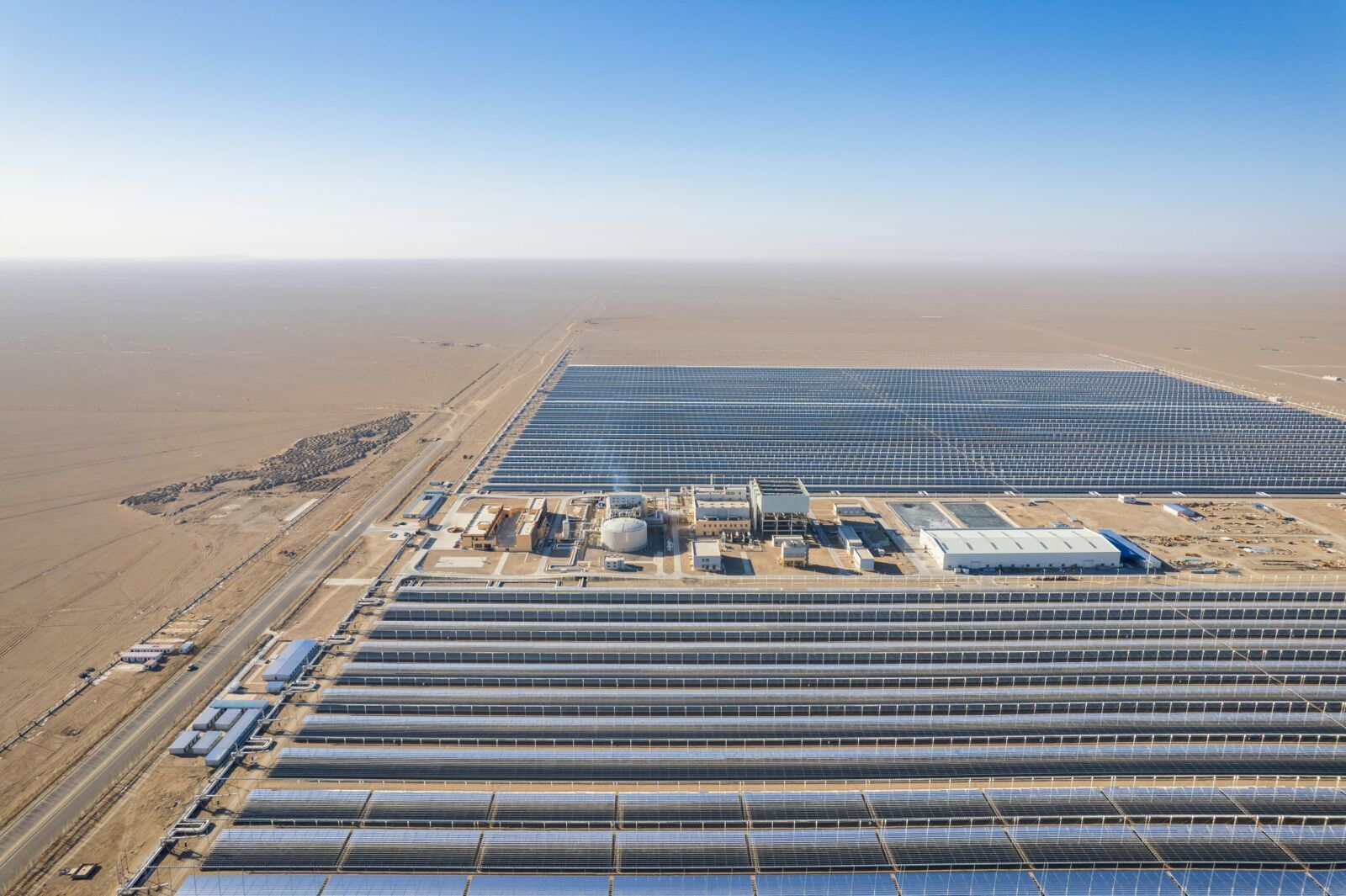
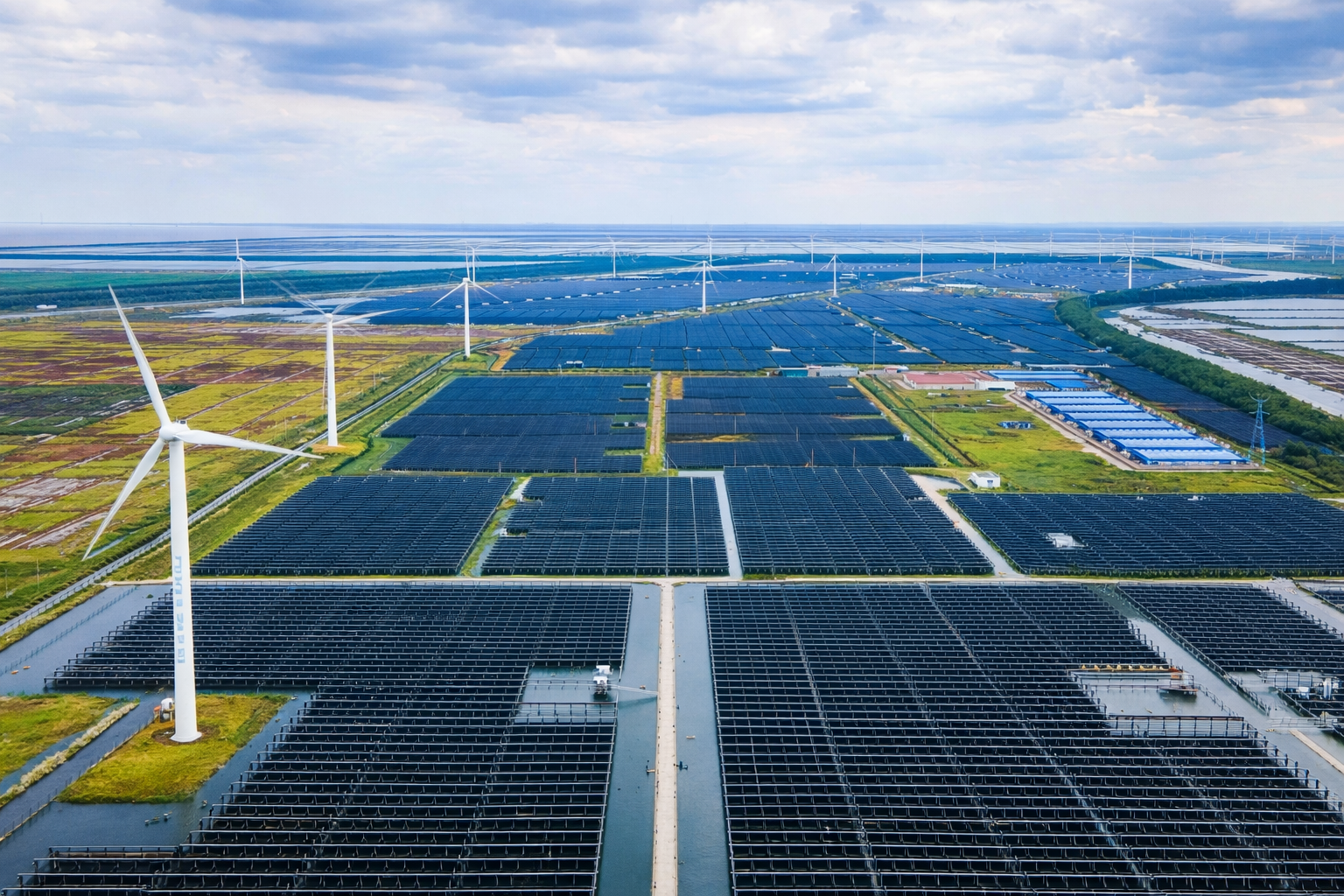
Solar power, from off-grid home systems to large-scale independent power projects, is now eclipsing fintech in capital inflows.
Investors, faced with macroeconomic tightening and slower tech valuations, are turning to assets with predictable cash flows, sovereign guarantees and climate-aligned returns.
Energy has become the continent’s most bankable development thesis.
Energy Security Drives Investor Repricing
The reallocation is rooted in fundamentals.
Africa remains home to more than 600 million people without access to reliable electricity.
Diesel generators dominate commercial back-up supply, exposing businesses to volatile fuel prices and currency depreciation.
Governments, meanwhile, are racing to meet energy transition targets while easing fiscal pressures.
Solar offers three advantages fintech cannot:
- Tangible infrastructure with long-term power purchase agreements (PPAs)
- Alignment with global climate finance mandates
- Hard-asset resilience against digital-sector valuation swings
Investors are recalibrating risk. Where fintech once promised exponential growth, solar promises stability, decarbonisation and inflation-hedged returns.
Capital Flows Reflect Structural Pivot
Sector | Recent Investment Trend | Investor Profile Shift |
|---|---|---|
Fintech | Slower deal velocity | Venture capital cautious |
Solar Energy | Accelerating inflows | Infrastructure & climate funds |
Off-grid Solar | Strong rural demand growth | Blended finance vehicles |
Utility-scale Solar | Increasing sovereign-backed projects | Development finance institutions |
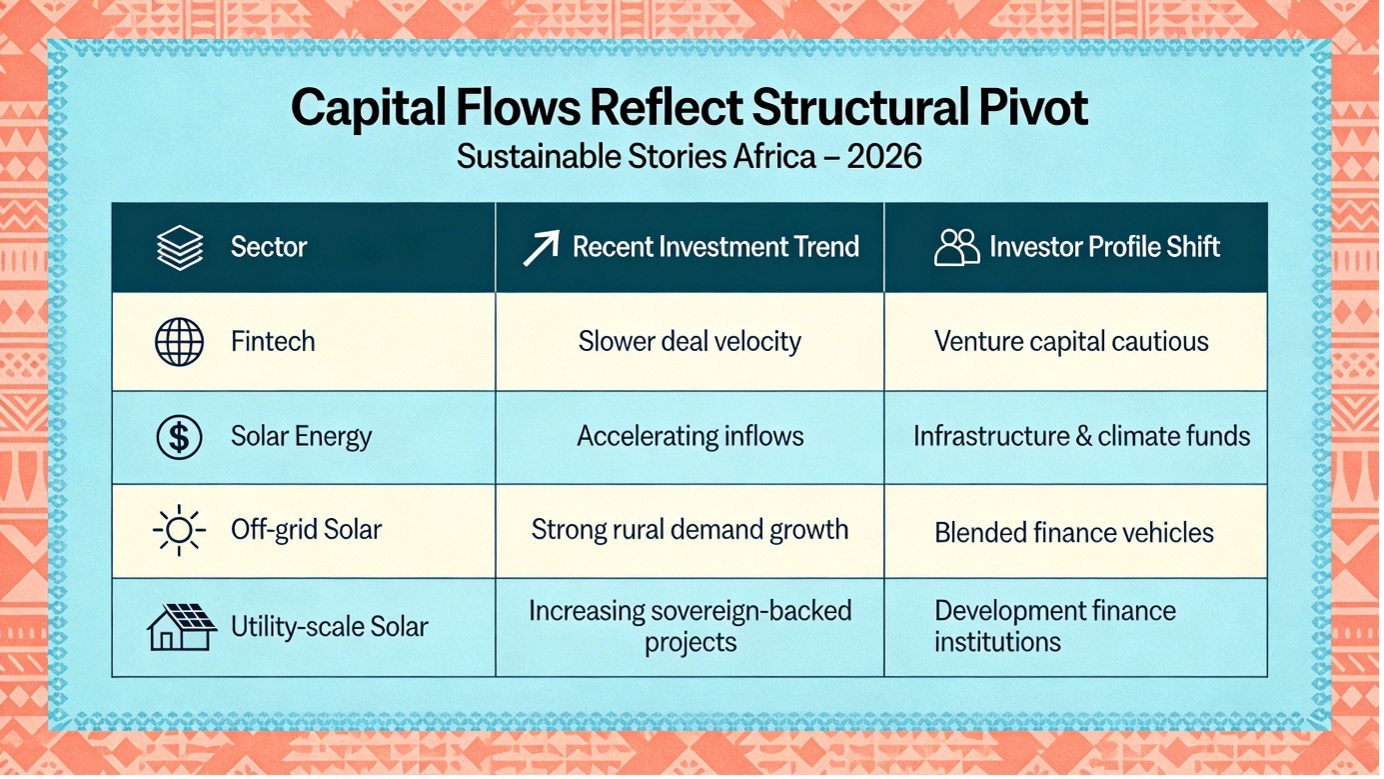
Solar is not merely attracting capital; it is diversifying its sources. Development finance institutions, climate funds, pension-backed infrastructure managers and sovereign wealth funds are deepening exposure to African renewables.
Distributed Solar Gains Momentum
Across commercial hubs in Lagos, Nairobi and Johannesburg, rooftop solar installations are rising above factories, malls and logistics centres.
Corporations are hedging energy risk by installing captive solar-plus-storage systems, cutting diesel dependence and stabilising operating costs.
In parallel, large-scale solar farms are expanding under public-private partnerships, supported by multilateral guarantees and concessional financing.
Mini-grids and pay-as-you-go solar models continue to scale in peri-urban and rural markets, reinforcing energy inclusion and increased investor returns.
A Climate-Aligned Growth Engine
The appeal extends beyond megawatts.
Solar’s rise strengthens Africa’s positioning within global climate capital flows. As Europe and North America tighten ESG mandates and climate disclosure requirements, African renewable energy projects offer a measurable decarbonisation impact.
The implications are strategic:
- Lower industrial energy costs improve competitiveness.
- Reduced diesel reliance strengthens foreign exchange stability.
- Clean power accelerates green manufacturing and data-centre growth.
Unlike fintech’s reliance on consumer transaction growth, solar underpins the real economy.
The continent’s energy transition is becoming an investment-grade asset class.
Path Forward – Align Capital, Policy, Infrastructure
Africa’s solar surge requires regulatory certainty, grid upgrades and local financing frameworks to sustain momentum.
Policymakers must streamline permitting, strengthen transmission networks and deepen platforms for blended financing.
Investors, meanwhile, are expected to prioritise scalable projects that combine climate impact with industrial growth, anchoring solar not just as an energy solution, but as the backbone of Africa’s next economic chapter.
Culled From: Solar Power Eclipses Fintech as Africa’s New Investment Magnet - Bloomberg