Somalia is accelerating customs and trade reforms as it seeks to convert membership of the East African Community and AfCFTA into measurable commercial gains.
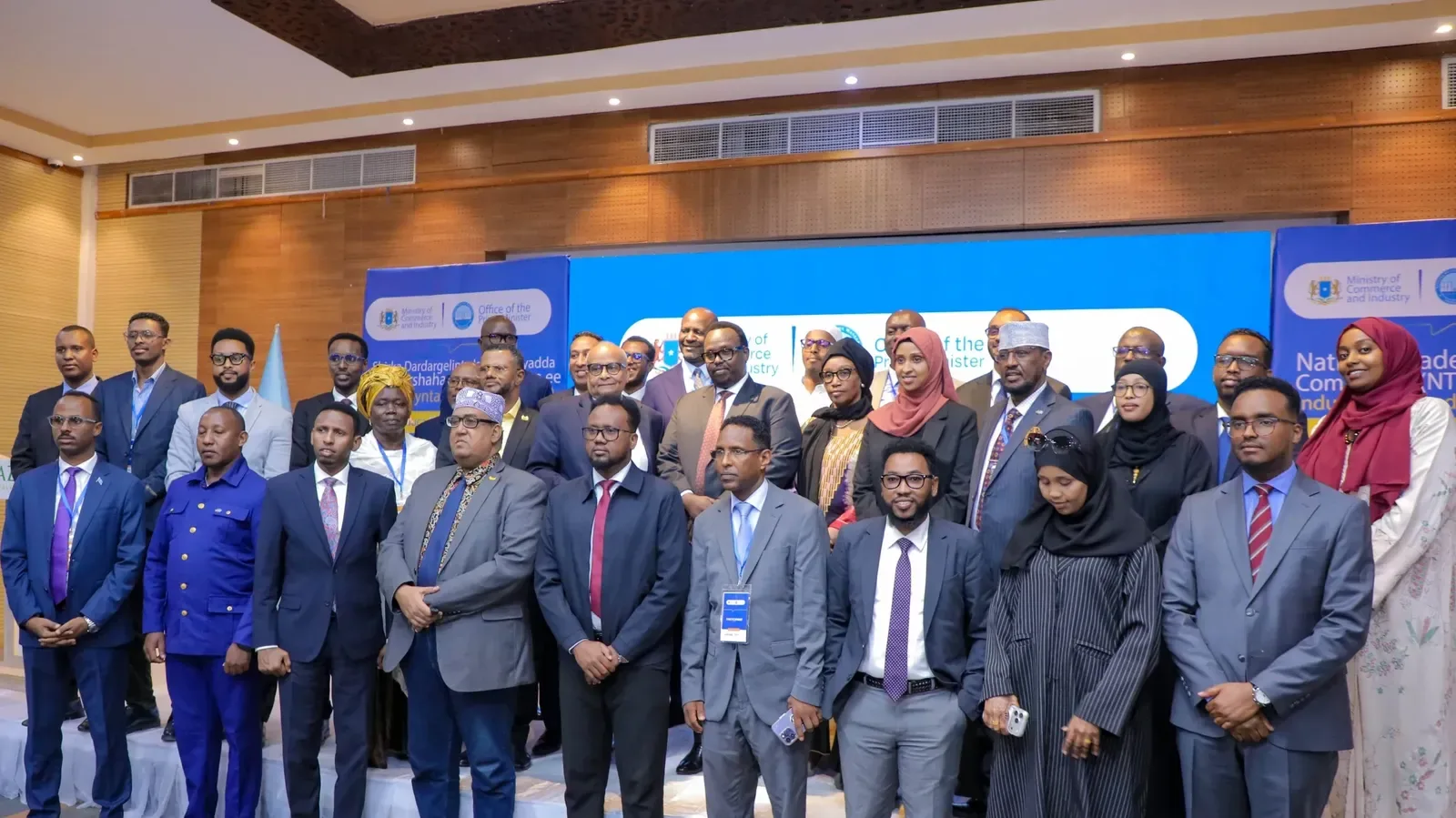
A high-level National Trade Facilitation Committee meeting in Mogadishu put border delays, regulatory alignment and customs capacity at the centre of the agenda.
The opportunity is large, but so is the implementation challenge: market access means little if goods remain expensive, slow or unpredictable to move.
Membership meets the border reality
Somalia is moving to modernise its customs and trade framework as policymakers confront a basic test of regional integration: joining large markets does not automatically make it easier for a trader to move a shipment across a border.
At a high-level National Trade Facilitation Committee meeting in Mogadishu, government officials, regional legislators, businesses and development partners focused on reducing border delays, improving customs efficiency and aligning domestic rules with East African Community and African Continental Free Trade Area obligations.
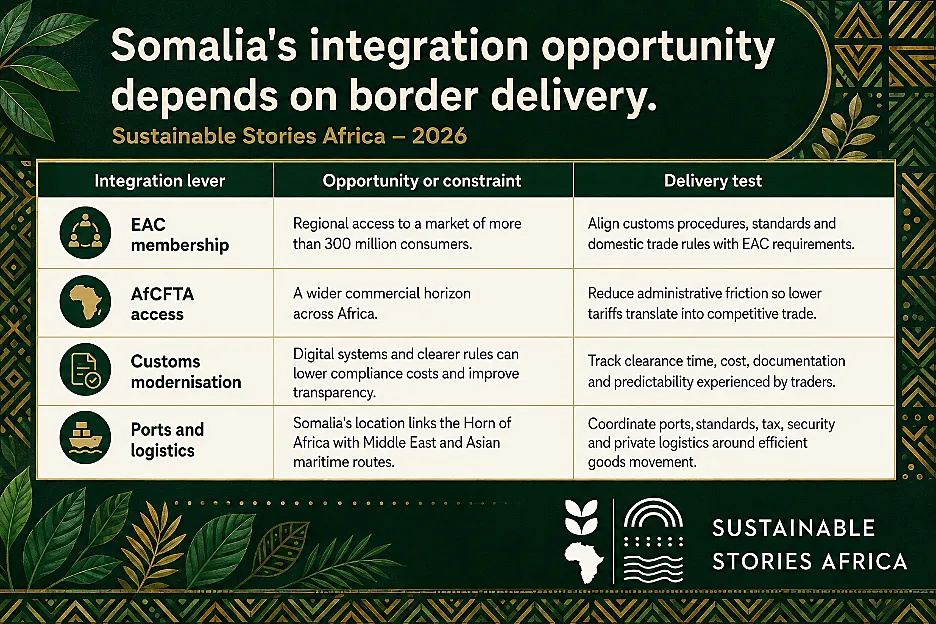
The reforms could determine how much Somalia gains from two major integration platforms. EAC membership gives the country access to a regional market of more than 300 million consumers, while AfCFTA widens the commercial horizon across Africa.
However, administrative bottlenecks can erase the advantages of lower tariffs through delays, uncertainty and higher logistics costs.
Customs efficiency becomes competitiveness policy
Rutazana Francine, a member of the East African Legislative Assembly, urged faster harmonisation of Somali trade legislation with EAC requirements, particularly customs procedures, product standards and the removal of non-tariff barriers.
For businesses, this is where integration becomes tangible.
- A small exporter does not experience AfCFTA as a treaty; it experiences documentation requirements, port processing times, standards checks, border fees and the predictability of customs decisions.
Improving those systems can also strengthen the public finances.
- More transparent customs administration can improve compliance and reduce leakages while making import and export transactions easier to trace.
That matters in Somalia, where stronger domestic revenue mobilisation is essential to expanding state capacity and financing development.
The country's geography adds to the opportunity.
- Somalia sits on major maritime routes linking the Horn of Africa with the Middle East and Asia.
Efficient ports, digital trade systems and internationally credible customs processes could support a larger logistics role, not only for national imports and exports.
Reform can widen business participation
The biggest gains may come from predictability.
- Investors considering manufacturing, processing or logistics need to know how quickly inputs can clear, whether standards are consistent and whether finished goods can reach regional customers without repeated administrative friction.
For small and medium-sized enterprises, simplified procedures can lower a barrier that larger firms are often better equipped to absorb.
- Digital systems, clearer rules and fewer manual interactions can reduce compliance costs and expand access to regional value chains.
Somalia's reform agenda therefore combines trade facilitation with institutional development.
- Capacity building for customs authorities, regulatory alignment and digitalisation can improve transparency as they support private investment.
There is also a regional supply-chain opportunity.
- More predictable customs could help Somali livestock, fisheries, and other producers connect with processors and buyers beyond the domestic market while making imported inputs easier to plan.
That matters because integration delivers greater development gains when firms can participate in value chains, rather than simply consuming more imported goods.
Implementation must follow market access
The next phase should focus on the practical journey of goods: documentation, valuation, standards, port handling and release.
- Reforms need measurable service targets so businesses can see whether border times and costs are actually falling.
Coordination will be equally important.
- Customs cannot modernise alone. Standards agencies, port authorities, tax institutions, security services and private logistics operators all shape the trading experience.
Development partners can support systems and training; however, Somali institutions must own the reforms if improvements are to persist.
Path Forward – Make Integration Work Daily
Somalia should prioritise digital customs systems, staff capacity, standards alignment and transparent service targets that reduce clearance time and uncertainty.
Reform should be measured by what traders experience, not only by laws adopted.
Closer coordination with EAC institutions and AfCFTA mechanisms can then turn market access into investment, stronger domestic revenues and new regional value chains.
The test is whether businesses can move goods more predictably and competitively.
Culled from: Somalia accelerates customs reform to unlock AfCFTA and EAC trade opportunities - African Sustainability Matters