
Nigeria's outsourcing sector is facing renewed pressure to adopt higher operational and ethical standards as stakeholders warn that weak regulation and inconsistent practices are undermining job quality and service delivery.
According to The Guardian, industry leaders say improved frameworks, training systems, and sustainability guidelines are critical if outsourcing is to support national competitiveness, protect workers, and attract global clients.
The call for reforms is intensifying.
Outsourcing Under Scrutiny as Demand for Standards Rises
Nigeria's outsourcing industry is facing mounting pressure to enhance compliance, worker protections, and service quality after stakeholders at a national forum warned that existing standards are no longer adequate for a fast-changing labour and technology landscape.
The Guardian reports that experts are calling for updated frameworks to ensure fair wages, skills development, and environmentally responsible operations.
Sector Needs Stronger Compliance, Training and ESG Integration
Industry representatives highlighted structural gaps in regulation, recruitment, occupational safety, and digital-skills readiness.
As automation and AI reshape global outsourcing, Nigerian firms risk losing competitiveness unless they strengthen performance standards and workforce sustainability.
Current Outsourcing Challenges
| Challenge Area | Industry Status | Consequence |
|---|---|---|
| Regulatory Oversight | Fragmented, outdated | Inconsistent worker protections |
| Skills Development | Slow upskilling, low digital readiness | Reduced service quality |
| Ethical Standards | Uneven compliance | Reputational risk |
| Job Quality | Low wages, unstable contracts | High turnover |
| ESG Integration | Limited adoption | Barriers to international clients |
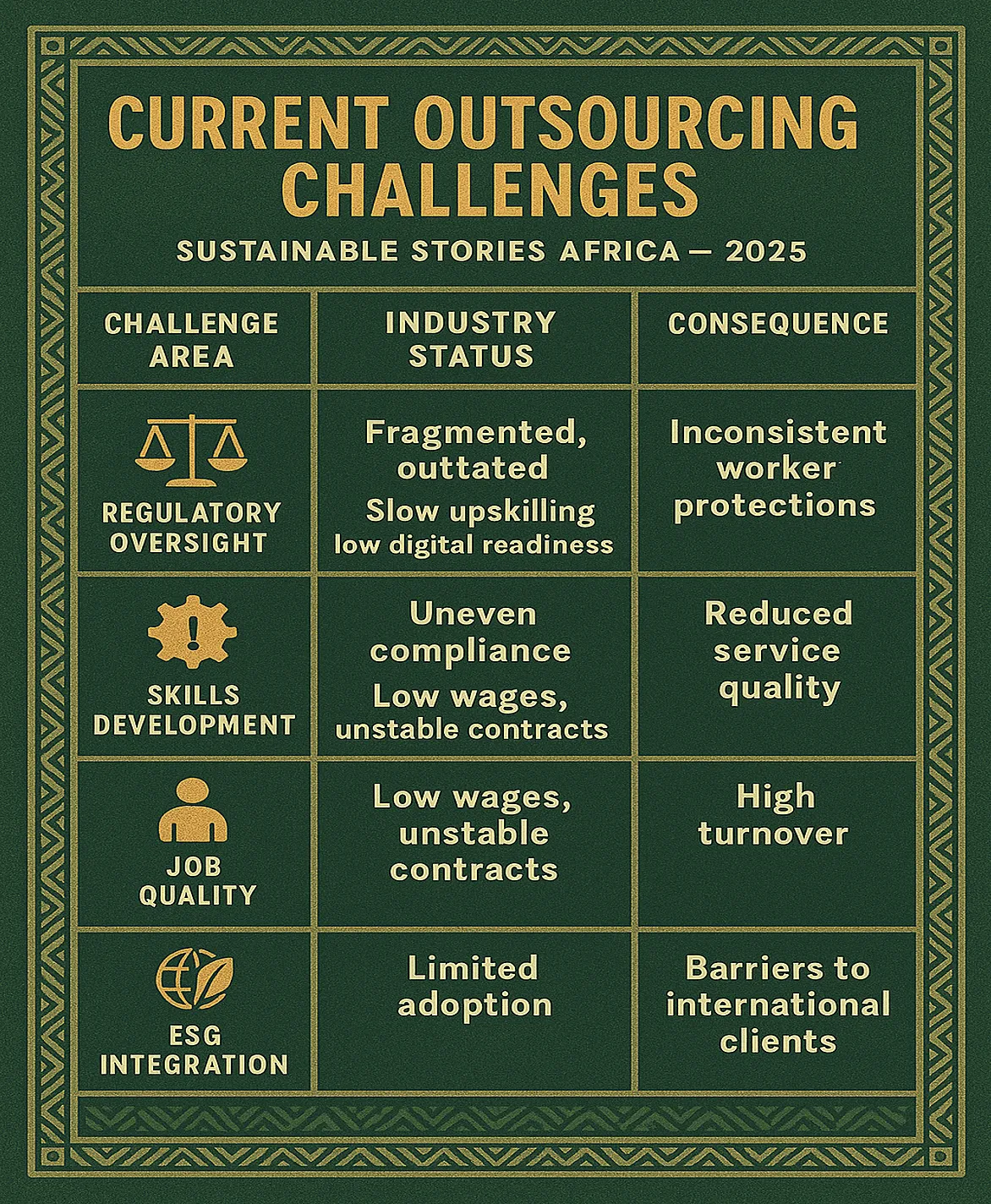
Stakeholders emphasise that global clients increasingly require verifiable ESG performance, responsible procurement, and transparent labour practices, areas where Nigerian outsourcing firms must improve rapidly.
Why Higher Standards Matter for Workers and the Economy
Analysts say the outsourcing sector could create thousands of quality jobs if reforms align with global benchmarks.
Stronger standards would protect workers, increase productivity, and boost Nigeria's attractiveness as a business-process outsourcing (BPO) hub.
Outsourcing Readiness Table
| Indicator | Current Situation | Needed Improvement |
|---|---|---|
| Worker Welfare | Limited protections | Clear labour-rights enforcement |
| Professional Certification | Low penetration | Sector-wide accreditation systems |
| Client Trust | Eroded by inconsistent delivery | Standardised performance frameworks |
| Technology Adoption | Lagging behind peers | Digital-skills acceleration |
| Sustainability Reporting | Minimal | ESG-aligned disclosures |
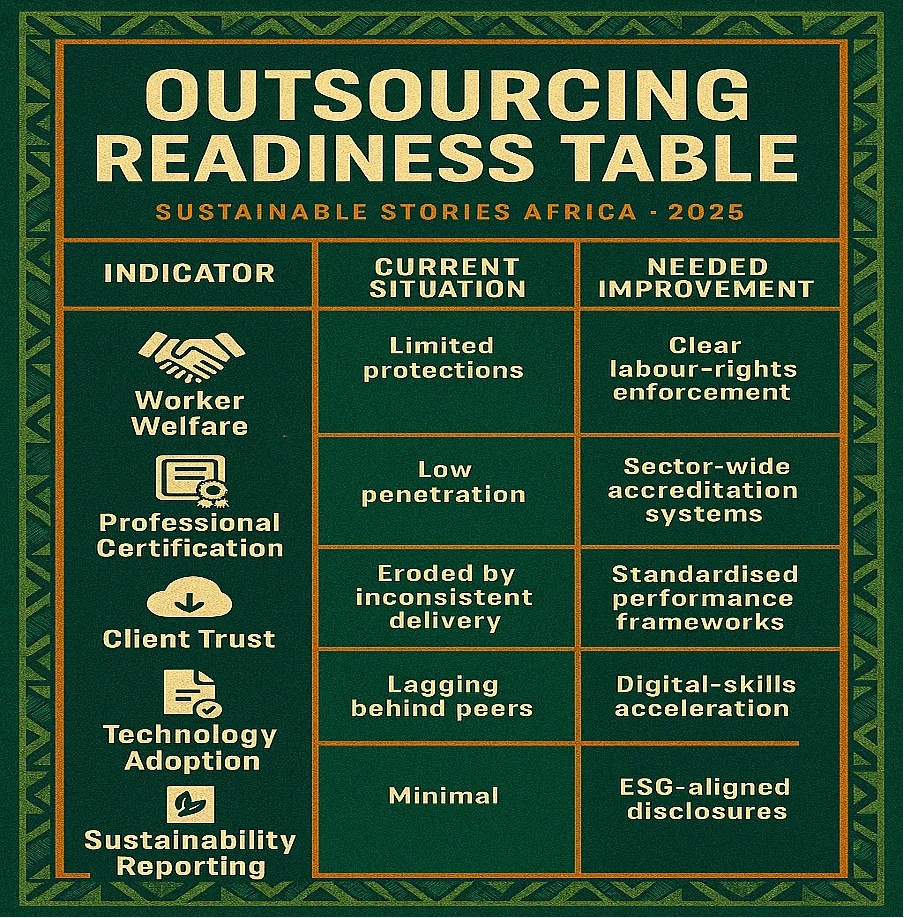
Without structured reforms, experts warn that Nigeria risks falling behind emerging outsourcing destinations such as Kenya, Rwanda, and South Africa, which are expanding ESG-driven BPO offerings.
Building a Stronger, Responsible, Competitive Outsourcing Ecosystem
Stakeholders recommended the following actions:
- Adopt a national outsourcing standard aligned with global labour, environmental, and governance principles.
- Establish certification frameworks for outsourcing firms and workers to ensure consistent service quality.
- Invest in continuous workforce training, particularly in digital, AI, and tech-enabled service delivery.
- Strengthen compliance monitoring across recruitment processes, workplace practices, and wage policies.
- Integrate sustainability requirements, including ESG reporting and responsible procurement policies.
Experts noted that these reforms would not only protect workers but also help Nigerian firms secure international contracts from clients increasingly demanding ethically aligned BPO partners.
PATH FORWARD – Raise Standards, Protect Workers, Elevate Outsourcing Competitiveness.
Nigeria's outsourcing sector stands at a turning point: embedding sustainability, quality assurance, and worker protections is now essential. As clients demand higher standards, Nigerian firms must modernise practices and adopt global best-practice frameworks.
With stronger governance, upskilling initiatives, and ESG integration, the sector can unlock new investment, create quality jobs, and position Nigeria as a competitive outsourcing destination.
Culled From: https://guardian.ng/appointments/stakeholders-seek-higher-standards-to-drive-sustainable-outsourcing/