Africa's rising natural gas output is reshaping discussions about the continent's economic future, with experts arguing that gas could accelerate industrialisation, expand energy access, and strengthen fiscal stability.
According to EnviroNews Nigeria, several African countries are scaling exploration and infrastructure investments as global demand evolves. Stakeholders say gas, if responsibly managed, could become a key transition fuel supporting long-term sustainable growth.
Gas Surge Revives Africa's Industrial Ambitions
Africa's expanding natural gas production is emerging as a central driver of the continent's economic transformation agenda.
EnviroNews Nigeria reports that increased exploration, new LNG projects, and pipeline development are positioning gas as a bridge fuel capable of powering industries, reducing energy deficits, and generating revenue as countries transition toward low-carbon economies.
Experts argue that gas could provide the stability Africa's economies urgently need.
Gas, Energy Access, and Economic Growth Intersect"
Africa holds roughly 7–8% of global gas reserves, yet energy poverty remains widespread, with nearly 600 million people lacking electricity.
Stakeholders note that using gas strategically could expand manufacturing capacity, support cleaner cooking alternatives, and provide baseload energy for renewable integration.
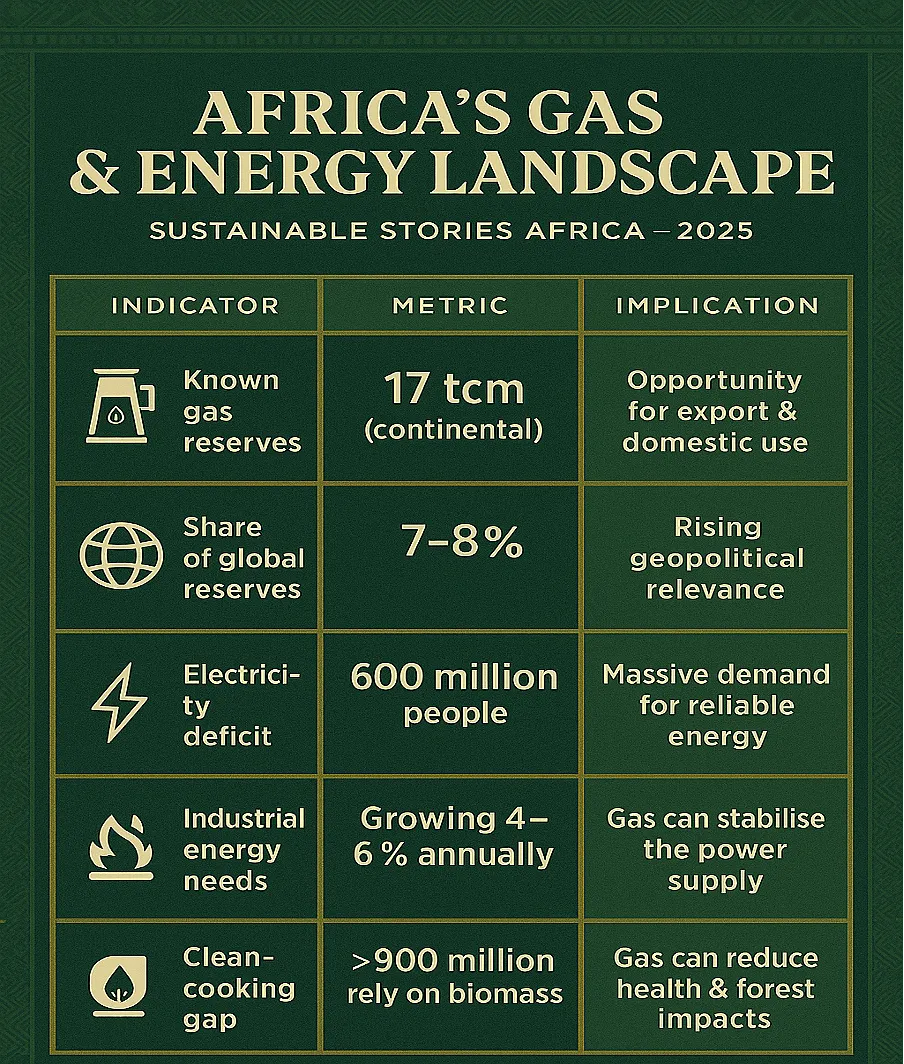
Africa's Gas & Energy Landscape
| Indicator | Metric | Implication |
|---|---|---|
| Known gas reserves | 17 tcm (continental) | Opportunity for export & domestic use |
| Share of global reserves | 7–8% | Rising geopolitical relevance |
| Electricity deficit | 600 million people | Massive demand for reliable energy |
| Industrial energy needs | Growing 4–6% annually | Gas can stabilise the power supply |
| Clean-cooking gap | >900 million rely on biomass | Gas can reduce health & forest impacts |
EnviroNews Nigeria highlights that countries such as Nigeria, Mozambique, Senegal, and Tanzania are advancing major gas projects expected to transform regional energy systems.
Balancing Gas Development With Climate Responsibility
Analysts say Africa must balance gas-driven development alongside global climate-action expectations.
While gas is cleaner than coal and diesel, concerns persist about methane emissions and long-term lock-in risks.
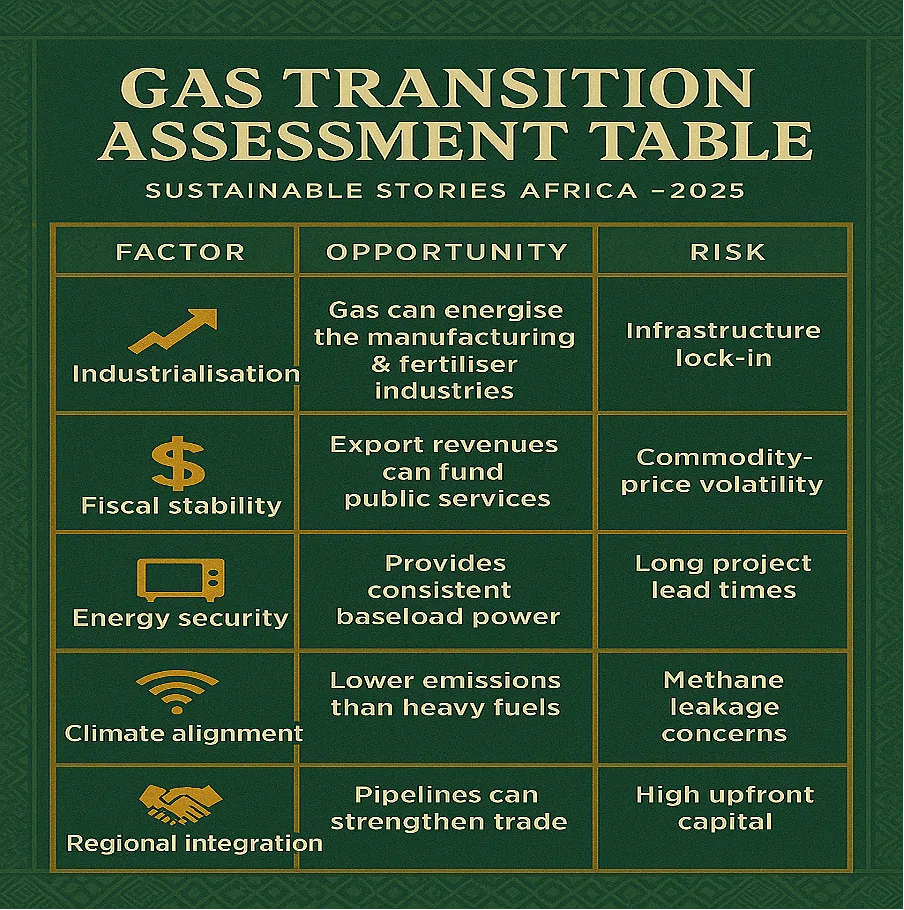
Gas Transition Assessment Table
| Factor | Opportunity | Risk |
|---|---|---|
| Industrialisation | Gas can energise the manufacturing & fertiliser industries | Infrastructure lock-in |
| Fiscal Stability | Export revenues can fund public services | Commodity-price volatility |
| Energy Security | Provides consistent baseload power | Long project lead times |
| Climate Alignment | Lower emissions than heavy fuels | Methane leakage concerns |
| Regional Integration | Pipelines can strengthen trade | High upfront capital |
Stakeholders emphasise that Africa needs a pragmatic, phased transition that simultaneously expands energy access and meets climate commitments.
What Africa Must Prioritise to Maximise Gas Benefits
Experts propose a set of strategic steps:
- Develop strong governance frameworks to manage gas revenues transparently.
- Invest in domestic utilisation, especially for power, industries, and clean-cooking solutions.
- Deploy methane-reduction technologies and strict environmental monitoring.
- Accelerate gas-to-power and LNG infrastructure, including regional transport corridors.
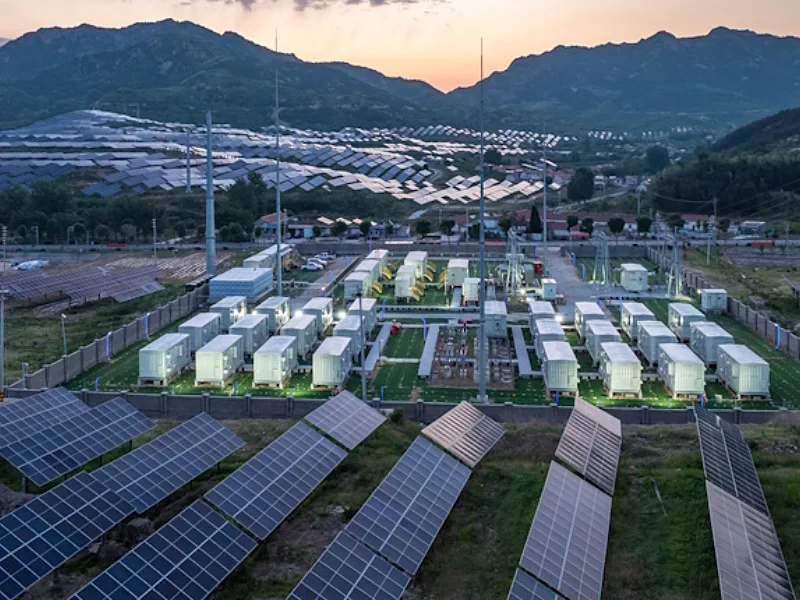
- Pair gas expansion with renewable energy growth to create hybrid, resilient systems.
EnviroNews Nigeria notes that if implemented responsibly, these interventions could help Africa build diversified, climate-compatible economies.
PATH FORWARD – Manage Gas Wisely, Unlock Sustainable African Growth.
Africa's expanding gas portfolio presents a rare opportunity to drive industrialisation, energy stability, and economic diversification. But success depends on effective governance, environmental safeguards, and integrated planning with renewables.
A balanced transition, which leverages gas as a bridge while scaling clean energy, could help African nations build resilient economies capable of competing globally in a rapidly evolving energy landscape.
Culled From: https://www.environewsnigeria.com/surge-in-gas-production-and-africas-path-to-economic-transformation/