ISO and the GHG Protocol have formed a joint working group of more than 250 experts to develop a harmonised product-level carbon accounting standard.
The move comes as regulators, buyers and financiers demand more consistent emissions data for trade, procurement and compliance.
For African exporters and manufacturers, clearer rules could shape who wins access, trust and margins in lower-carbon markets.
A New Rulebook For Carbon Claims
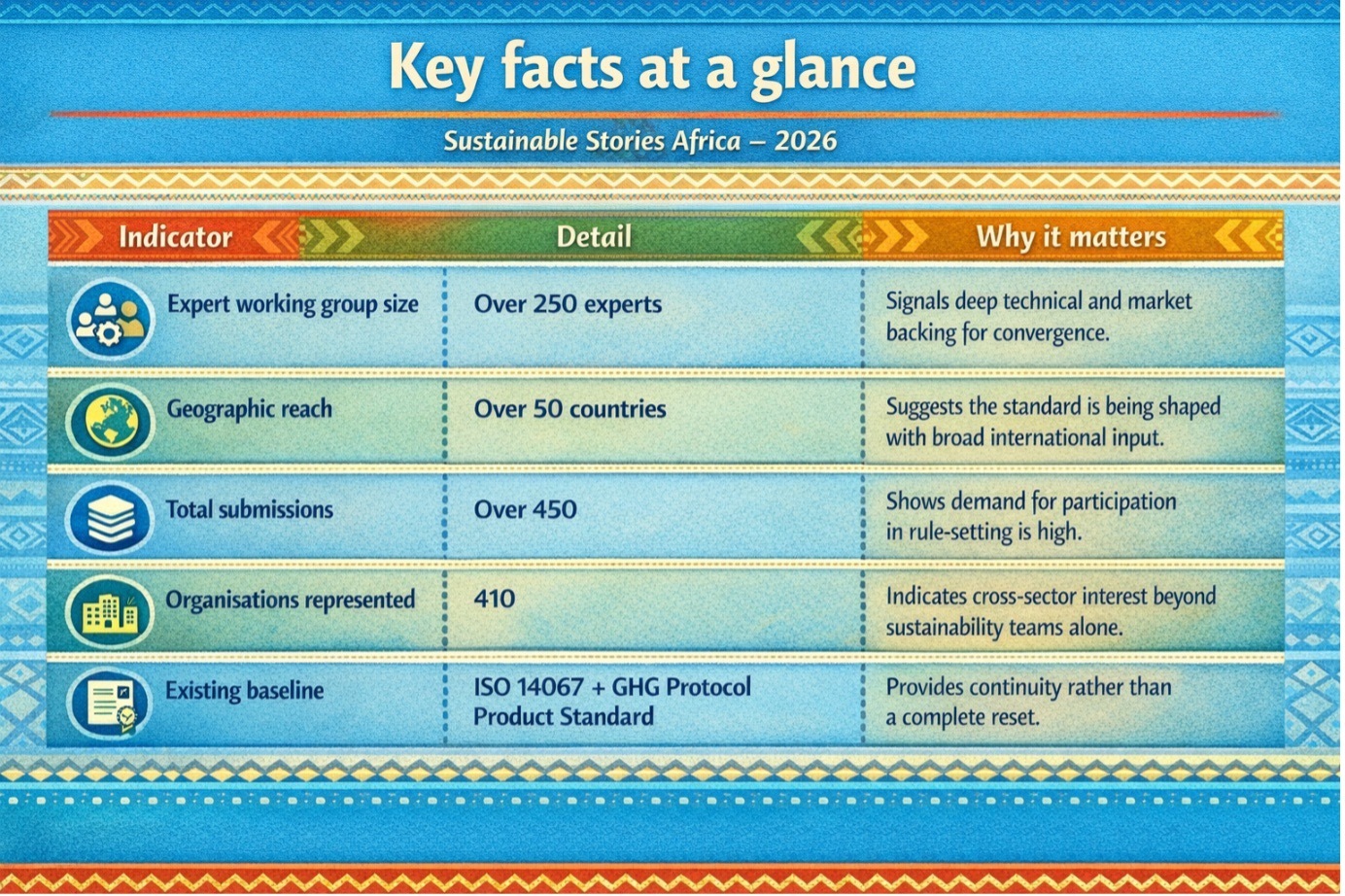
A quiet technical move with large commercial consequences is taking shape in global climate governance. ISO and the Greenhouse Gas Protocol have finalised a Joint Working Group bringing together more than 250 experts, selected from more than 450 submissions across 50 countries and 410 organisations, to build a more unified standard for product-level greenhouse gas accounting.
The effort aims to align two of the most influential systems in carbon measurement at a time when product emissions data is becoming central to trade, procurement, disclosure and industrial strategy.
The initiative builds on the strategic partnership ISO and GHG Protocol announced on 9 September 2025 to harmonise existing greenhouse gas standards and co-develop new ones spanning corporate, product and project accounting.
At the product level, the work will build from ISO 14067 and the GHG Protocol Product Life Cycle Accounting and Reporting Standard toward a shared global methodology.
Why Fragmentation Now Costs More
Product carbon data has moved from niche sustainability practice to mainstream business imperative. It now shapes supplier selection, eco-design, customer disclosures and cross-border compliance.
The GHG Protocol and ISO have finalised a Joint Working Group to develop a shared product-level emissions standard to improve transparency, comparability and implementation across supply chains, including for carbon border adjustment mechanisms.
For African and other Global South exporters, the stakes are immediate. The EU's Carbon Border Adjustment Mechanism entered its definitive phase in 2026, requiring importers to account for emissions embedded in covered goods.
That makes credible, comparable product-level data a commercial necessity, not a compliance footnote.
As GHG Protocol co-convener Amir Safaei noted, the joint standard is intended to be both credible and implementable, a critical combination for producers in emerging markets navigating tightening trade rules.
What Better Alignment Could Unlock
If the process succeeds, the gains could be practical as much as procedural. A harmonised standard could reduce the burden on companies that now navigate overlapping methodologies, duplicated calculations and conflicting data expectations.
- For manufacturers, that means less friction in proving product performance.
- For investors and auditors, it means more comparable data.
- For regulators and buyers, it means a stronger basis for judging claims and rewarding credible decarbonisation.
The benefits could be especially meaningful in African markets, where firms are often managing several reporting pressures at once: customer requests from export markets, lender demands, national disclosure expectations and growing scrutiny around green claims.
A clearer global product standard would not remove the cost of measurement; however, it could reduce confusion, make digital reporting tools more interoperable and improve confidence that suppliers from emerging markets are being assessed against a rulebook others also recognise.
African Firms Cannot Afford to Watch Passively
The immediate lesson for African businesses is not to wait for the final text before preparing. Product-level emissions accounting is moving from specialist practice into business infrastructure.
- Companies in carbon-exposed sectors should start tightening activity data, supplier engagement and product-level traceability.
- Standards bodies, industry groups and regulators across Africa should work to ensure regional realities are reflected in the emerging methodology.
That also means capacity building.
- Smaller producers will need access to verification support, digital tools and affordable technical guidance if they are to participate fairly in markets where emissions data increasingly influences pricing, procurement and trust.
As Bruna Cerqueira of the COP30 Presidency Action Agenda put it, harmonisation is “crucial for us to move forward.”
For African markets, moving forward means showing that integrity in carbon data can support industrial competitiveness rather than undermine it.
Path Forward – Standards Must Fit Real Economies
The next test is whether this joint process delivers a standard that is rigorous enough for regulators and usable enough for industry.
That balance will determine whether harmonisation becomes real market infrastructure or just another technical promise.
For African markets, the priority is clear: engage early, build data capabilities and ensure global carbon rules reflect local production realities.
Culled From: ISO and GHG Protocol Form 250-Expert Working Group to Build Unified Product Carbon Standard Across 50+ Countries