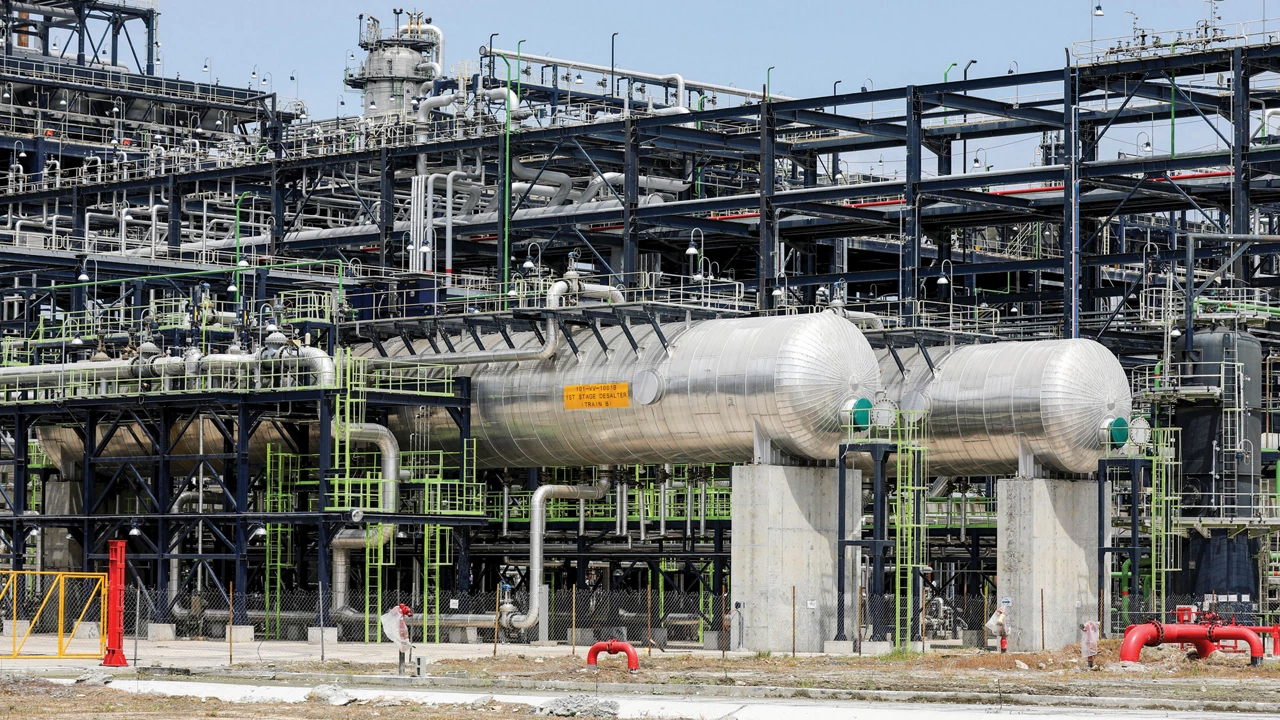
Nigeria has exported about 950,000 barrels of a new crude grade to the Netherlands.
The milestone signals fresh upstream momentum, but it also sharpens questions about local refinery supply, pump prices and policy discipline.
For households, businesses and subnational governments, the real test is whether higher oil earnings bring broader relief or deeper strain.
A Milestone With Immediate Questions
Nigeria’s latest crude export milestone may signal renewed life in the upstream sector, but Jide Pratt says the bigger story is whether that momentum can be sustained and shared.
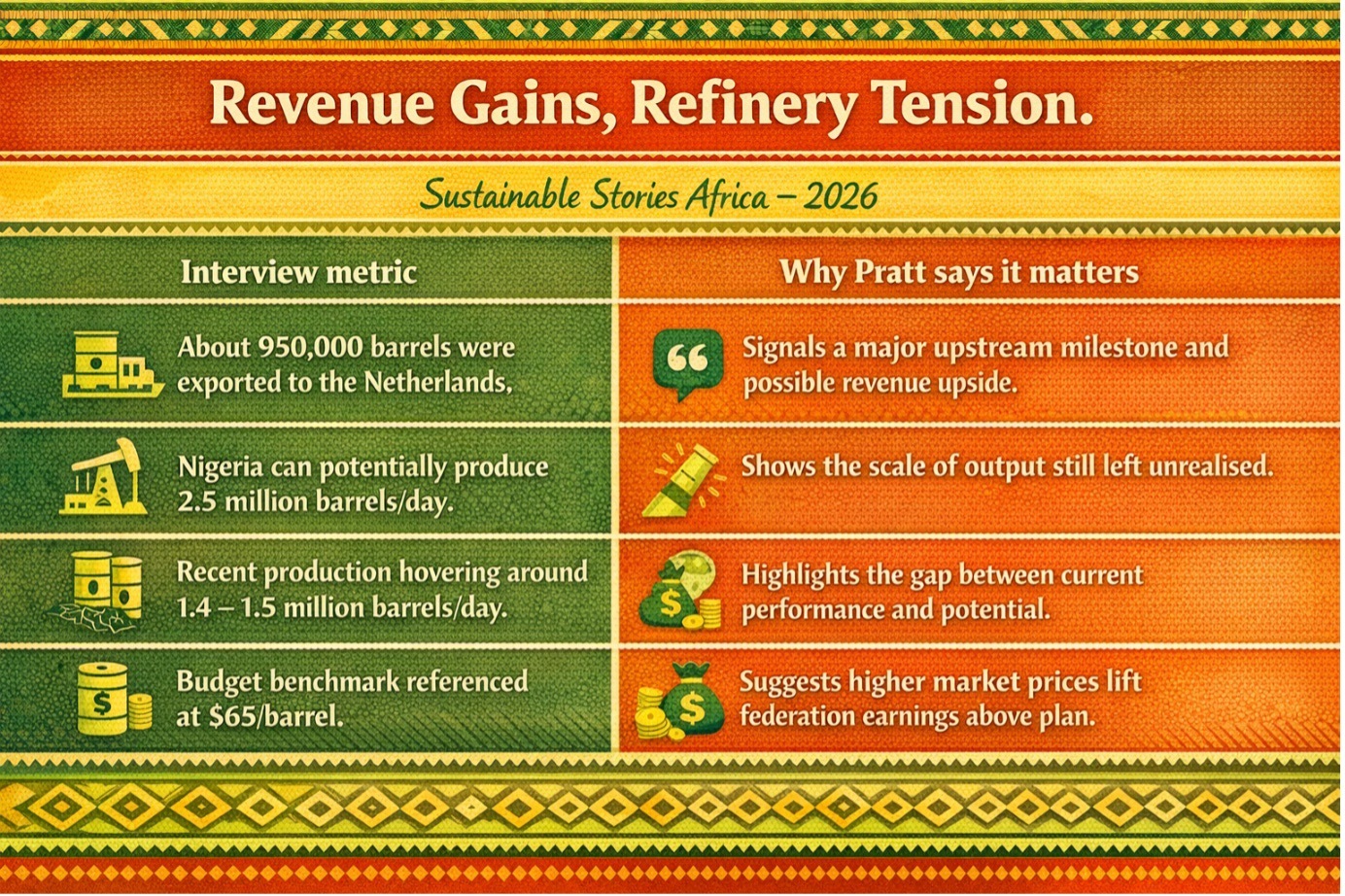
Speaking in a Channels Television interview with Ladi Williams, the energy professional described the export of about 950,000 barrels of the new Oboron blend to the Netherlands as “a major win,” while warning that the country must now strike a firmer balance between export revenue and domestic refining needs.
Nigeria, Pratt said, has the potential to produce 2.5 million barrels a day; however, it has recently hovered around 1.4 million to 1.5 million barrels, despite a brief rise to 1.8 million.
In that context, the new cargo matters because it points to rising rig activity, stronger production prospects and the possibility of more foreign exchange and federation revenue.
However, it also raises a harder policy question: how much crude should leave the country, and how much should be retained to feed domestic refineries efficiently?
Revenue Gains, Refinery Tension
Pratt’s central argument was that Nigeria cannot afford to treat export growth and domestic refining as separate policy tracks.
He acknowledged that exporting the cargo can help shore up the federation account during fiscal pressure; however, he maintained that the value of high crude output will be reduced if local refineries remain short of feedstock.
In his view, rising production should support both external earnings and internal refining capacity.
That concern became clearer in the discussion around Dangote refinery and other local plants. When it was suggested that exporting about 950,000 barrels while domestic refineries still need supply could appear counterproductive,
Pratt agreed the concern was legitimate. He argued that the domestic crude supply obligation should be applied more deliberately, with a clearer allocation formula that balances export volumes with refinery needs.
Pratt also linked the issue to consumer welfare. Higher crude prices can lift government revenues above the $65 per-barrel budget benchmark, but they also raise distillate prices, meaning citizens often bear the cost.
What Better Coordination Could Unlock
The interview’s most constructive thread was not simply that Nigeria had shipped a new grade, but that it could use such milestones to build a more coherent energy strategy.
Pratt argued that if the government channels some of the extra gains from higher crude prices into discounted domestic crude supply, it could help local refineries reduce ex-refinery pricing pressure and ease transport costs for citizens.
“What goes into the government federation account? What goes back as a discount in terms of crude supply to local refineries?” he asked.
That vision is appealing because it links macroeconomic gain to everyday relief. In Pratt’s telling, the upside is not only stronger exports but a more stable internal market: better refinery utilisation, secure fuel supply, efficient regional distribution and a clearer policy signal that production growth should benefit both the treasury and the public.
Without that balance, however, Nigeria risks celebrating export headlines while domestic consumers continue to absorb the cost of volatility.
Move From Windfall Thinking to Policy Discipline
Pratt’s call was ultimately a call for planning. He argued that the immediate task for policymakers is not to revive old subsidy language, but to design a more transparent system for sharing the upside from high crude prices.
- Part of that means strengthening domestic crude supply arrangements.
- Part of it means improving distribution logistics by moving product more efficiently through regional hubs rather than relying only on long-distance trucking.
- Part of it means demanding more accountability over what happens when oil prices exceed budget assumptions.
He also pressed refiners to respond to falling prices with the same speed they show when prices rise.
In the interview’s closing stretch, Pratt criticised the absence of a pricing window system and said pump prices should reflect the actual timing of crude receipt and refining, not only anticipated market jumps. “They’ve been very fast on the increase,” he said. “I think that same proactivity needs to go into the decrease.”
| Pratt’s proposed next steps | Intended outcome |
|---|---|
| Retain part of the incremental crude for local refining | Protect feedstock and domestic energy security |
| Use some excess oil revenue as discount support | Ease pressure on local fuel pricing |
| Peg volumes more deliberately to domestic needs | Improve refinery planning and supply certainty |
| Build stronger regional distribution through hubs | Make product availability faster and more even |
Path Forward – Balance Exports With Domestic Value
Nigeria’s new crude export is a strong signal, but Pratt’s interview makes clear that output growth alone is not enough.
The real opportunity lies in linking new production to domestic refining, pricing discipline and broader public value.
What is being advocated is straightforward: a clearer, crude allocation formula, better use of excess federation revenues, and faster pass-through when market conditions improve. That is how an export success becomes a more durable national energy story.