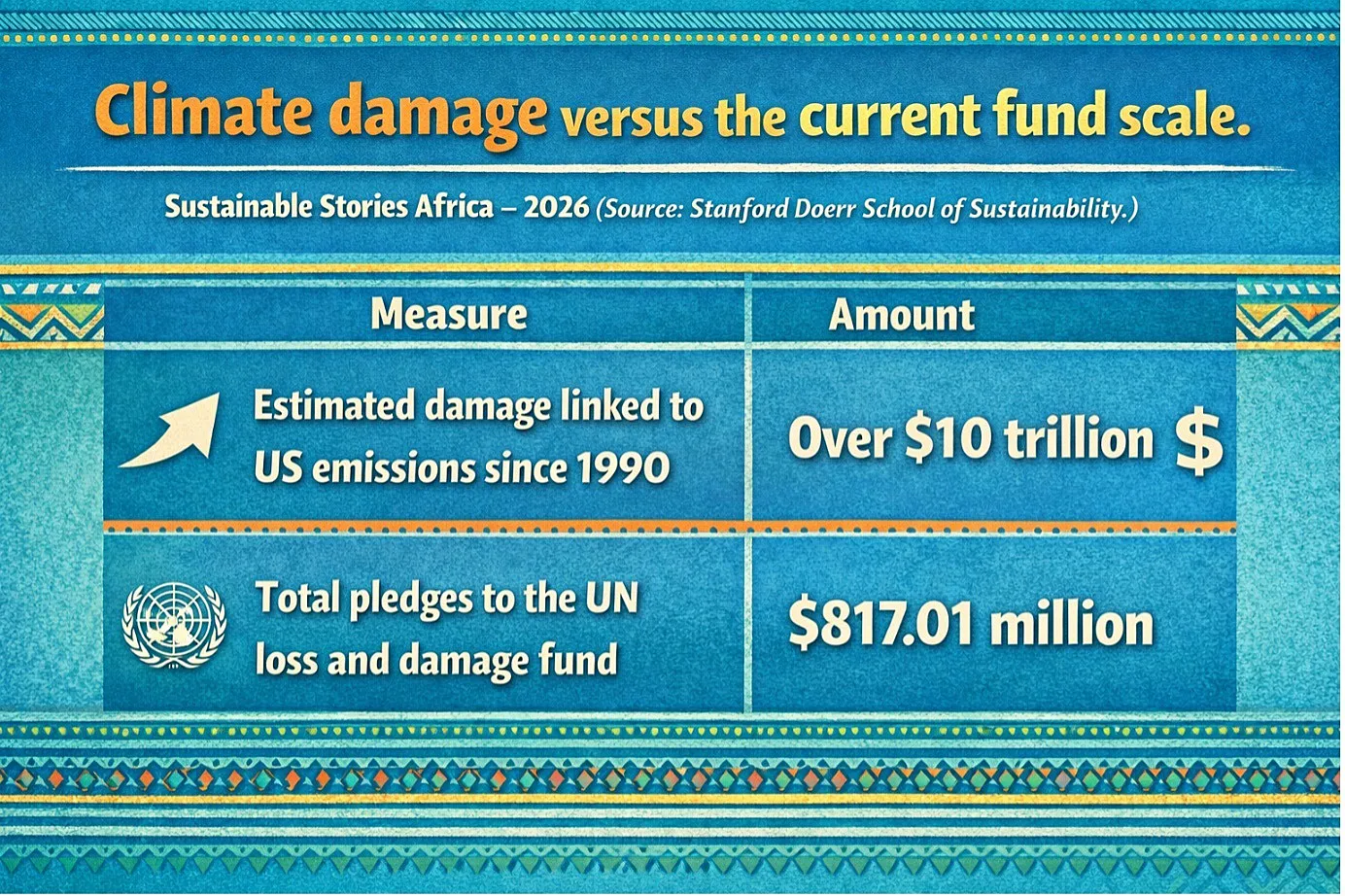
New research has put the economic damage linked to US emissions since 1990 at more than $10 trillion.
It matters now because the finding sharpens the politics of climate accountability, compensation and future financing.
For vulnerable countries, especially across the Global South, the numbers turn abstract warming into measurable economic harm.
A staggering number have entered the climate justice debate
A peer-reviewed study has provided one of the clearest monetary estimates, yet of who has caused climate-related economic harm and where that harm has landed.
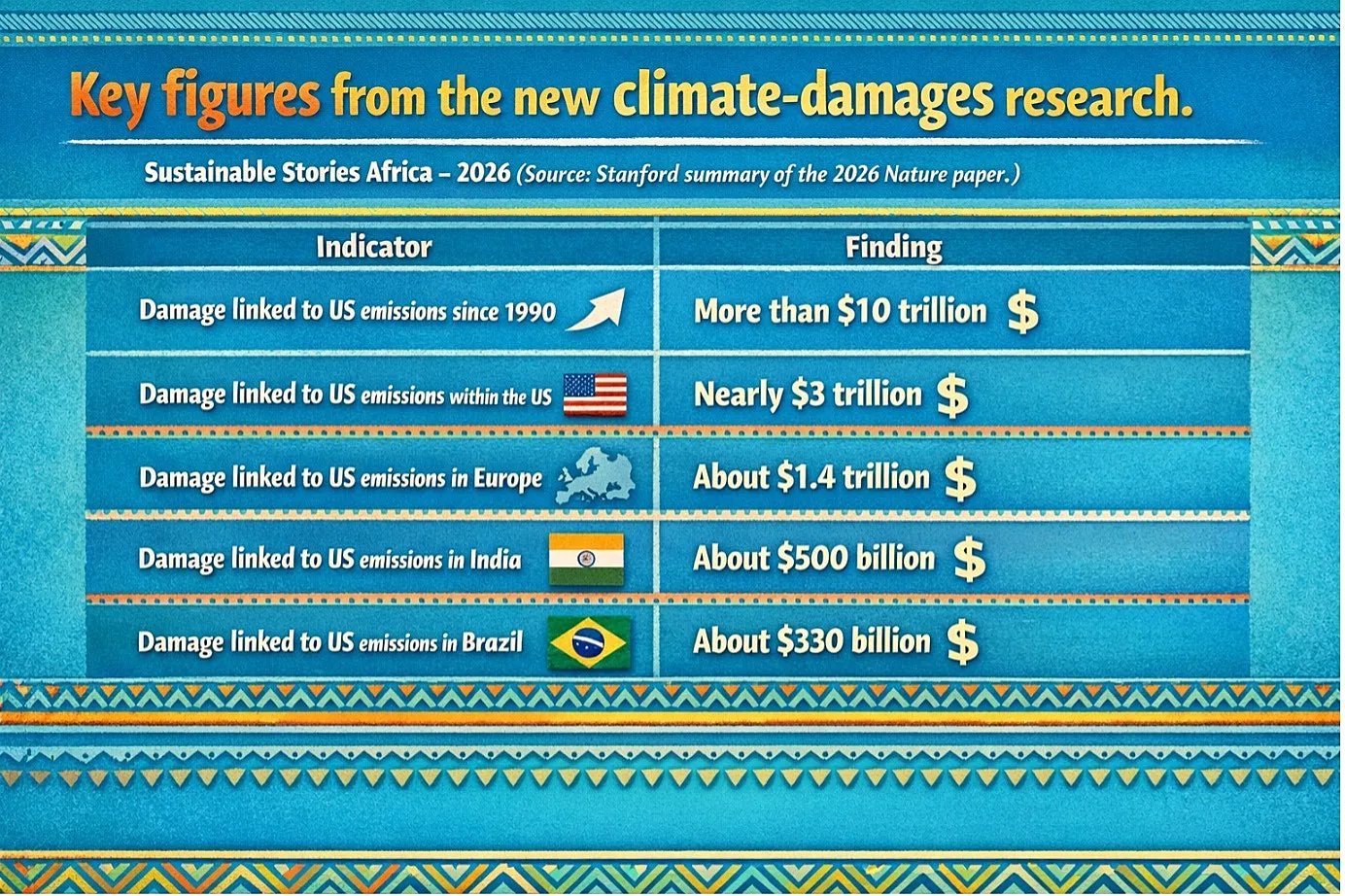
The headline figure is arresting: US emissions since 1990 have caused more than $10 trillion in global economic damages, more than any other country, according to new research published in Nature and highlighted in recent reporting by The Guardian.
The study, led by researchers including Stanford’s Marshall Burke, argues that climate change is no longer just an environmental externality or a future risk.
It is already a measurable drag on economic output. Stanford’s summary says the damages linked to US emissions include approximately $500 billion in India, $330 billion in Brazil, about $1.4 trillion in Europe and nearly $3 trillion within the United States itself.
That matters well beyond the US. For African and other developing economies, the finding strengthens a case that has often been made morally but less often quantified financially: countries that contributed least to warming are often among those carrying the heaviest burdens from lost productivity, disrupted agriculture, damaged infrastructure and weakened growth.
The research changes the tone from rhetoric to accounting
What makes this paper important is not only the scale of the number, but the method behind it.
The Nature paper says one tonne of CO2 emitted in 1990 caused an estimated $180 in discounted global damages by 2020 and is projected to cause an additional $1,840 through 2100.
In other words, climate damages do not end when a reporting year ends; they continue accumulating as long as those emissions remain in the atmosphere.
That shifts the conversation. Climate diplomacy has long wrestled with “loss and damage” as a politically fraught term, but this research gives it a harder economic edge.
Stanford says the framework was designed to calculate harms that countries cannot prevent simply by cutting emissions today or avoiding them through adaptation alone.
It also suggests that delayed action makes alternatives such as carbon removal less effective as a substitute for compensation.
For African readers, the practical meaning is easy to grasp.
- When extreme heat lowers worker productivity, when drought cuts harvests, when floods destroy roads, homes or public health systems, GDP does not just dip on paper.
Public budgets tighten. Insurance gaps widen. Borrowing becomes harder. Recovery slows. That is why the research lands as more than a US story; it is part of a wider fight over who pays for climate disruption that is already reshaping development prospects across the Global South.
If accountability improves, climate finance could become more credible
There is still a constructive side to this story. Quantifying harm more precisely could help move the climate debate from vague pledges toward more credible funding arrangements.
The UN climate process has already established and operationalised the Fund for Responding to Loss and Damage, which is meant to support developing countries that are particularly vulnerable to the adverse effects of climate change.
However, the gap between need and available money remains stark. UNFCCC documents show that, as of late 2025, total pledges to the fund amounted to about $817.01 million.
The contrast between a $10 trillion damages estimate and a fund still measured in millions is exactly why this research is likely to echo through future climate negotiations.
For African markets, stronger attribution research could eventually support more targeted adaptation finance, more forceful calls for concessional capital, and a clearer case for integrating climate justice into sovereign finance, insurance design and development planning.
It may also sharpen scrutiny of whether high-emitting economies are matching historic responsibility with present-day support.
The numbers now demand a policy response
The next question is no longer whether climate damage can be discussed in principle. It is whether governments, development financiers and multilateral institutions will respond to clearer evidence with clearer mechanisms for payment, prevention and resilience.
The UN fund’s own guidance points to work on access modalities, rapid disbursement and long-term resource mobilisation, but even the official decisions note concerns about delays in fundraising strategy.
That is where this research could matter most. It gives policymakers, campaigners and vulnerable countries a more concrete basis for arguing that climate harm is not merely diffuse or historical. It is attributable, cumulative and economically legible.
For African governments and institutions, this strengthens the case for pushing harder on loss-and-damage finance, adaptation investment, and accountability frameworks that connect historic emissions to present-day resilience needs.
Path Forward – Accountability Must Finally Meet Financing
The research does not settle every legal or political argument, but it makes one point harder to ignore: climate harm can be counted, and responsibility can be traced.
That raises the pressure for better funding, faster disbursement and more serious negotiations.
For African markets, the priority is to turn climate justice into practical finance: stronger loss-and-damage funding, deeper adaptation pipelines and development strategies built for a hotter, more unequal world.
Culled From: US has caused $10tn worth of climate damage since 1990, research finds | Climate crisis | The Guardian