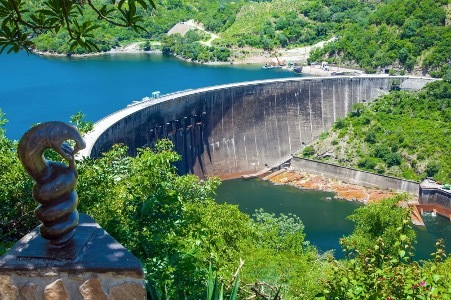
Zimbabwe is advancing a 500MW floating solar project at Kariba Dam, as part of a broader 1GW plan now moving through feasibility work and project-preparation financing.
It matters because drought has repeatedly cut hydropower output, worsening blackouts across homes, mines and factories.
If delivered, the scheme could turn strained infrastructure into cleaner, steadier power while supporting industry, jobs and a more resilient grid.
A big solar bet on a stressed dam
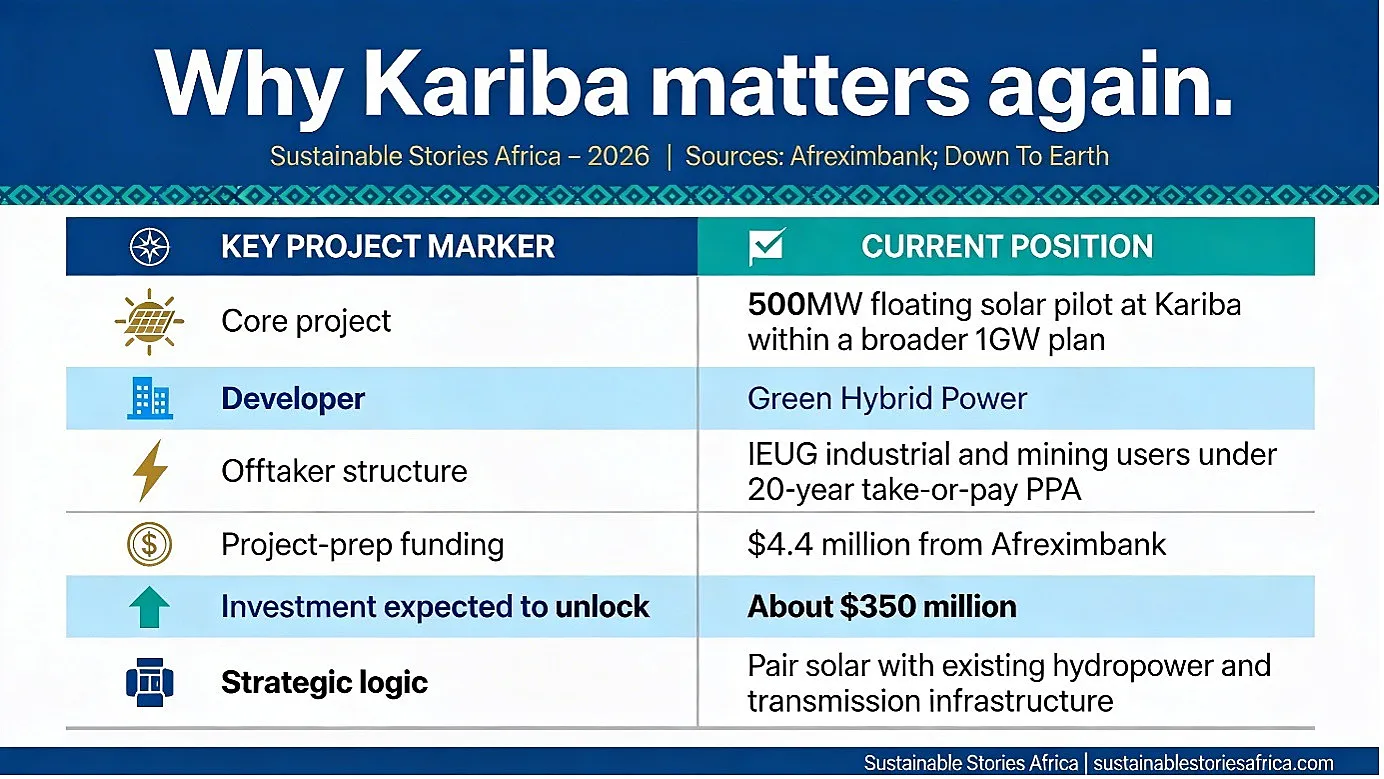
Zimbabwe is pushing ahead with a planned 500MW floating solar plant at Kariba Dam, a project being developed by Green Hybrid Power in partnership with the Intensive Energy Users Group, as the country looks for faster ways to stabilise power supply and reduce pressure on a drought-hit electricity system.
The proposal sits inside a broader 1GW hybrid floating solar plan on Lake Kariba, with Afreximbank having signed a $4.4 million project-preparation facility in July 2025 to fund feasibility, bankability studies and transaction advisory work.
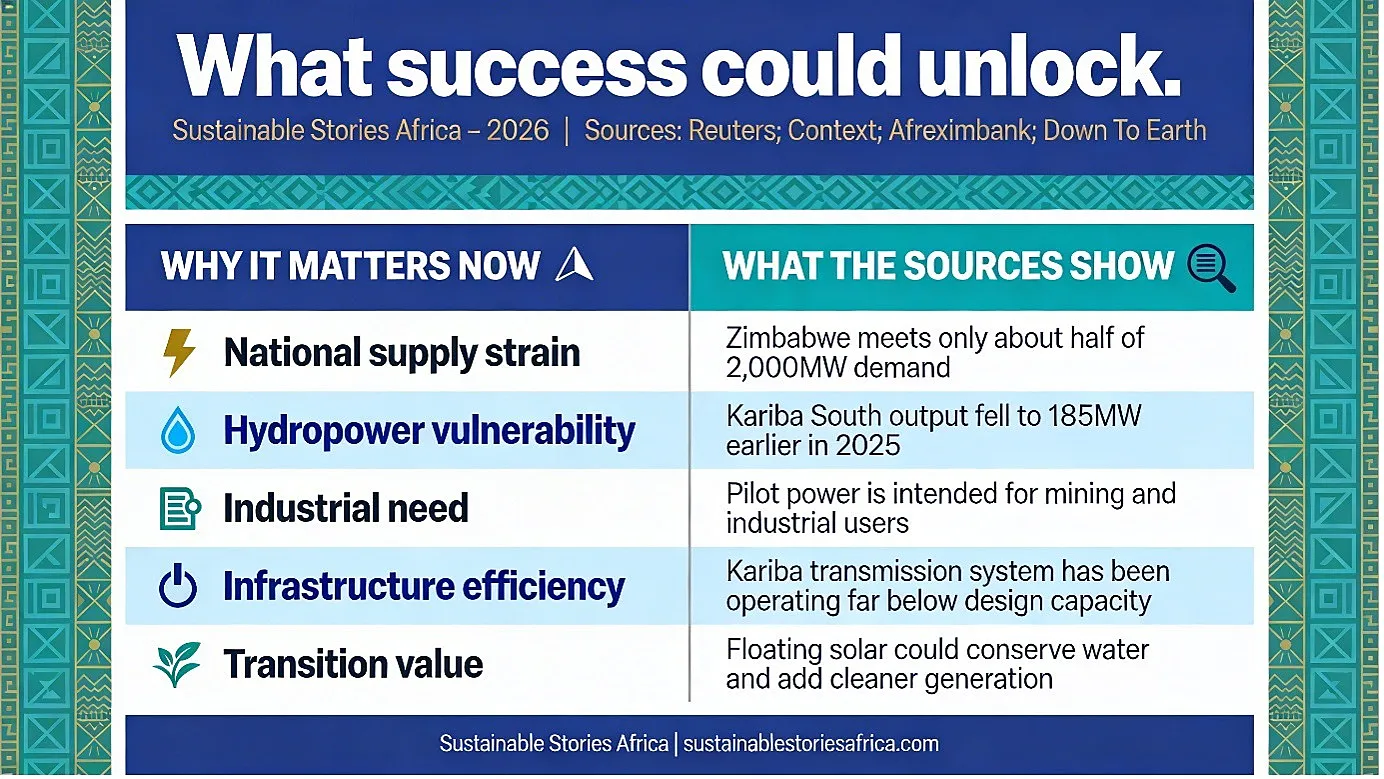
The timing is not accidental. Reuters reported in December that Zimbabwe was meeting only about half of its electricity demand of 2,000MW.
Earlier this year, Context reported that drought had cut output at Kariba South to just 185MW, down sharply from its 1,050MW installed capacity, helping to drive power cuts that in some places lasted more than 18 hours a day.
Why Kariba matters again
At a stakeholder meeting in Harare, Minister Marian Chombo said the proposed floating solar project could strengthen Zimbabwe’s export economy, especially mining and mineral processing.
Her case was not only about new power, but about using underused transmission infrastructure more effectively and lifting industrial output and foreign-currency earnings.
That is central to the project’s appeal. Afreximbank says the 500MW pilot phase will supply the IEUG consortium of industrial and mining users under a 20-year take-or-pay agreement with a cost-reflective tariff. On the other hand, the preparation facility is expected to unlock about $350 million in investment.
IEUG frames floating solar as a complement to hydropower: daytime solar can ease hydro generation, conserve water, and, with batteries, stabilise supply. If fully built out, the platform could materially further expand Kariba’s usable capacity for industry.
What success could unlock
If executed, the project’s value would reach beyond megawatts. Floating solar can support drought-stressed hydropower by generating during sunny hours, helping conserve water for later use while improving panel efficiency and reducing reservoir evaporation.
That makes Kariba more than a power project. A working solar-hydro system could give mines and factories a more reliable supply while easing the social strain of blackouts on households and informal businesses. In that sense, its promise is both industrial and human.
The proposal also includes aquaculture beneath the floating panels, a feature that could diversify livelihoods and create jobs if delivered well. For now, that remains part of the project vision.
However, it shows an effort to frame Kariba not just as a power station, but as a platform for industry, livelihoods and growth.
Feasibility must become delivery
The harder test begins now. Zimbabwe has no operational floating solar plant yet, and officials cited by Down To Earth said feasibility studies for Kariba have only just begun.
That means the real work lies ahead: environmental and engineering studies, financing, grid integration, procurement discipline and the credibility needed to move from ambition to steel, cables and connected power.
For policymakers and financiers, the lesson is clear. Zimbabwe cannot drought-proof its electricity future by leaning on hydropower alone, nor can it industrialise on intermittent fixes and emergency imports.
The Kariba floating solar plan now needs transparent execution, bankable contracts and a delivery timetable strong enough to convince markets that this is not another well-worded proposal but a serious infrastructure transition.
That conclusion is an inference from the project’s structure and Zimbabwe’s documented power constraints.
Path Forward – From Feasibility To Firm Power Delivery
Kariba’s floating solar plan now needs three things: credible studies, financial close and disciplined build-out. The concept is strong because it uses existing hydro and transmission assets while reducing drought risk.
For African markets, the wider signal is important. The most bankable clean-energy projects may be those that enable reliability, industrial productivity and climate resilience.
Culled From: 500MW Floating Solar Plant at Kariba Dam to Boost Zimbabwe’s Power Supply and Clean Energy Transition