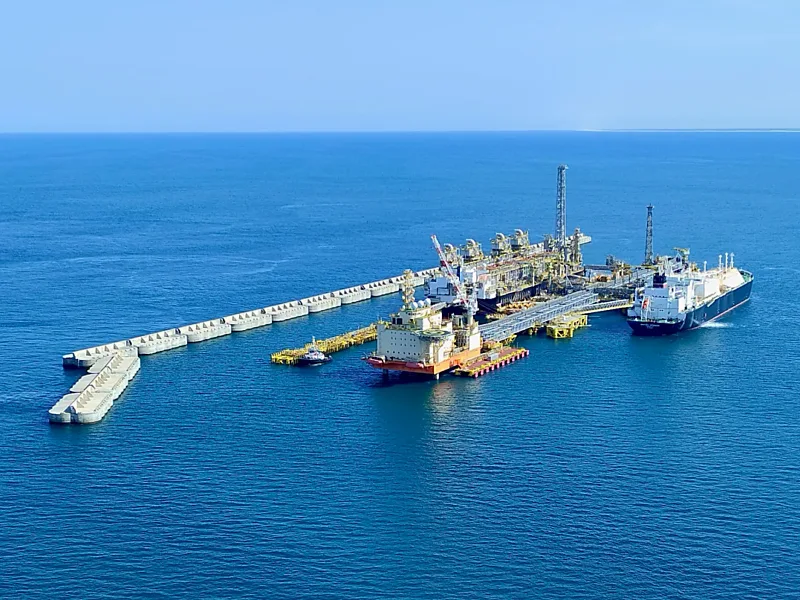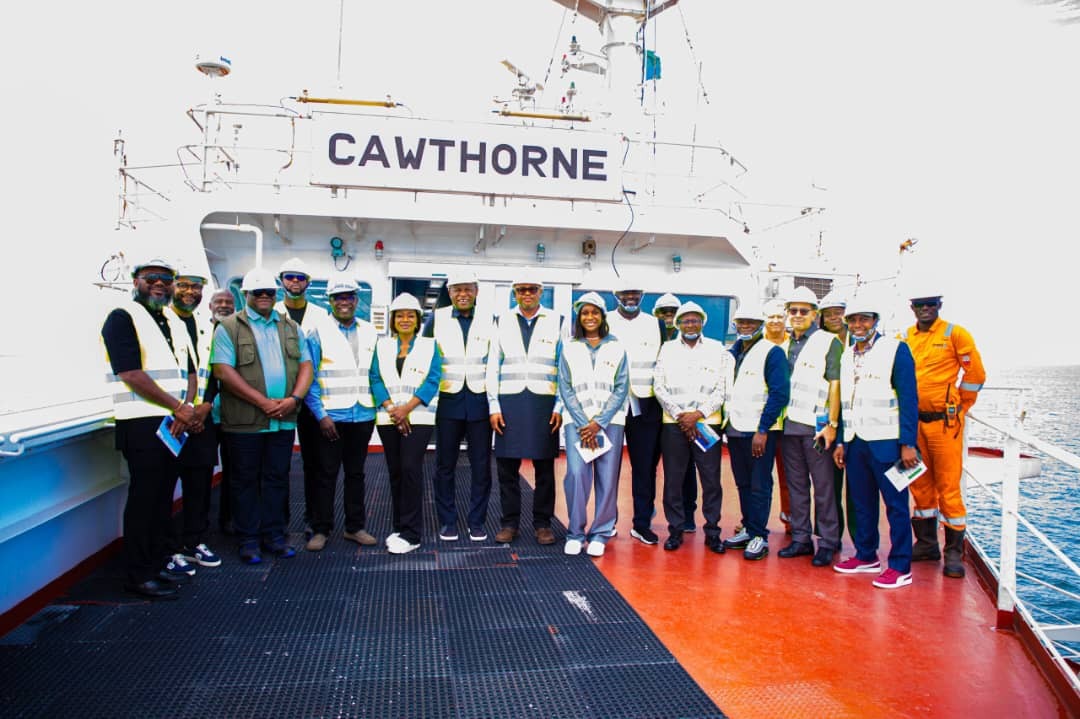
Nigeria has lifted its first cargo of Cawthorne Blend crude through FSO Cawthorne, a floating storage and offtake vessel that represents the country's first new crude oil terminal in half a century.
The milestone, backed by Sahara Group as a joint operator on OML 18, signals a decisive shift in Nigeria's upstream reform agenda.
Beyond the barrels, the development raises important questions about ESG accountability, indigenous participation, and whether Nigeria can now convert infrastructure momentum into lasting energy security.
Nigeria's First New Terminal in Fifty Years
Nigeria's upstream oil sector recorded a landmark moment on March 30, 2026: the first shipment of 950,000 barrels of Cawthorne Blend crude was lifted through FSO Cawthorne, a new floating storage and offtake vessel operating offshore Bonny, the country's first new crude oil terminal commissioned in 50 years.
The announcement, made by global energy conglomerate Sahara Group, confirms media reports from earlier in March about the emergence of a new light sweet crude grade under the Bayo Ojulari-led Nigerian National Petroleum Company Limited (NNPCL).
The development was enabled by the formal licensing and gazetting of the facility by the Nigerian Upstream Petroleum Regulatory Commission (NUPRC), giving Nigeria a new infrastructure anchor for its crude evacuation strategy.
The significance cannot be overstated. Five decades without a new terminal is itself an indictment of decades of underinvestment. That the gap has now closed, under a reform agenda backed by President Bola Tinubu as substantive Minister of Petroleum Resources, sets a new benchmark for what Nigeria's upstream sector can deliver.
What FSO Cawthorne Does and Who Is Involved
FSO Cawthorne is a critical offshore production support asset, providing storage and offtake capabilities for crude produced from OML 18 and nearby producing assets. Sahara Group, through its upstream subsidiary Asharami Energy, is a joint operator and joint venture partner on OML 18 alongside NNPCL.
The facility incorporates AI-enabled monitoring systems and robust Quality, Health, Safety and Environment (QHSE) frameworks, a technological standard rarely associated with legacy Nigerian upstream assets. Dr Tosin Etomi, Head of Commercial and Planning at Asharami Energy, described the first lifting as "a defining moment for the asset, the OML 18 partnership and the wider oil and gas sector."
Regulatory and operational support came from multiple agencies, including the NUPRC, the Nigerian Ports Authority (NPA), the Nigeria Customs Service, and the Nigerian Midstream and Downstream Petroleum Regulatory Authority (NMDPRA).
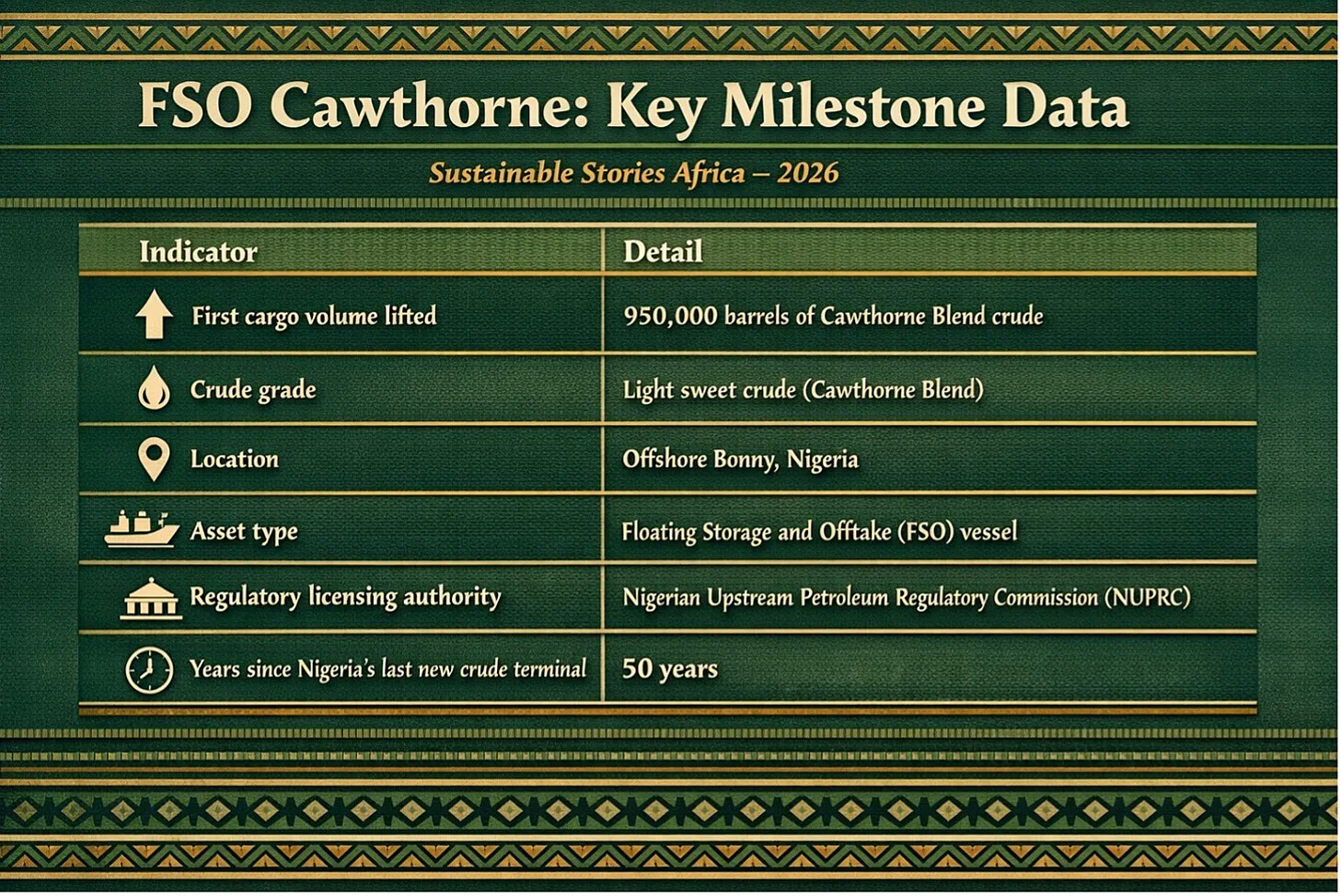
FSO Cawthorne: Key Milestone Data
| Indicator | Detail |
|---|---|
| First cargo volume lifted | 950,000 barrels of Cawthorne Blend crude |
| Crude grade | Light sweet crude (Cawthorne Blend) |
| Location | Offshore Bonny, Nigeria |
| Asset type | Floating Storage and Offtake (FSO) vessel |
| Regulatory licensing authority | Nigerian Upstream Petroleum Regulatory Commission (NUPRC) |
| Years since Nigeria's last new crude terminal | 50 years |
Energy Security, ESG Standards, and Community Gains
The case for FSO Cawthorne runs well beyond crude volumes. Nigeria currently loses an estimated $700 million annually to oil theft and pipeline vandalism, much of it concentrated in the Niger Delta region where OML 18 operates.
A modern offshore terminal with AI-enabled monitoring and strong QHSE controls reduces the surface area for infrastructure interference, improving the integrity of crude evacuation from the wellhead to the vessel.
Etomi emphasised that ESG commitment is embedded in the operating model: "Sustainable social impact interventions and community participation have been key drivers of our upstream success, and we remain committed to aligning our operations with the highest global environmental, social and governance standards."
He also highlighted indigenous participation as a defining pillar: "The transition of FSO Cawthorne into active export is consistent with our upstream growth strategy, prioritising operational excellence, indigenous participation and infrastructure capable of sustainably supporting Nigeria's production ambitions."
For host communities in OML 18's operational zone, meaningful participation in a responsibly run upstream asset translates directly into employment, local procurement, community infrastructure investment and reduced conflict, outcomes that matter far beyond barrel counts and board releases.
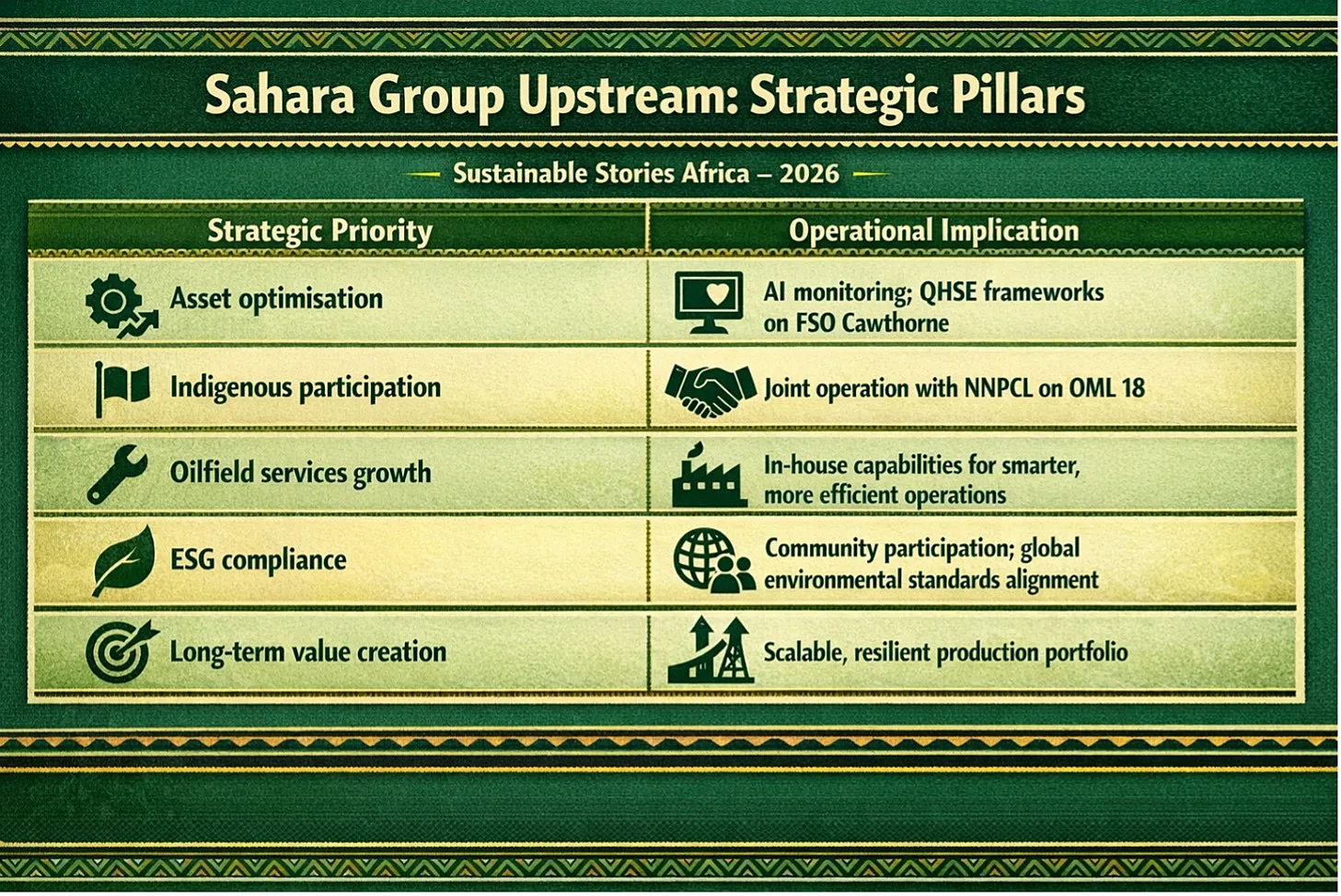
Sahara Group Upstream: Strategic Pillars
| Strategic Priority | Operational Implication |
|---|---|
| Asset optimisation | AI monitoring; QHSE frameworks on FSO Cawthorne |
| Indigenous participation | Joint operation with NNPCL on OML 18 |
| Oilfield services growth | In-house capabilities for smarter, more efficient operations |
| ESG compliance | Community participation; global environmental standards alignment |
| Long-term value creation | Scalable, resilient production portfolio |
Translate Infrastructure Win Into Systemic Reform
One cargo and one terminal, however significant, will not resolve Nigeria’s upstream constraints on their own.
The NUPRC, NNPCL and private-sector partners must now use the FSO Cawthorne model to accelerate the licensing and deployment of similar assets across producing basins, from the Niger Delta to deep-water fields.
For investors, lenders and development finance institutions, the signal is equally important: Nigeria’s regulatory environment is showing movement, and projects with strong AI monitoring, QHSE standards and ESG frameworks are becoming more bankable.
That progress must also be matched on the ground. Communities in the Niger Delta need measurable outcomes, including jobs, local contracts, environmental remediation and transparent grievance systems.
Path Forward – Nigeria Builds on Upstream Momentum
FSO Cawthorne’s first lifting sets a replicable benchmark for modern upstream infrastructure by combining AI-enabled operations, regulatory coordination and ESG accountability.
The next challenge is to scale that model across Nigeria’s wider asset base while linking production growth to cleaner, more diversified energy investment.
For Sahara Group and NNPCL, the real test lies in delivery. Indigenous participation and community development will determine whether this becomes lasting reform or a one-off milestone.