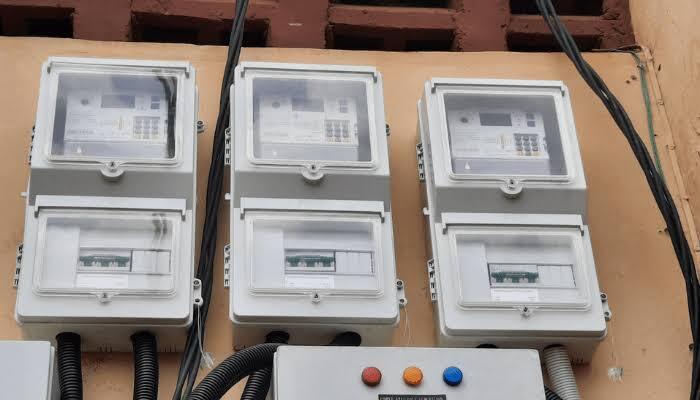
Electricity theft and billing inefficiencies drain an estimated $96 billion from utilities worldwide every year, with emerging market countries bearing the heaviest losses. Smart metering technology is now being deployed at scale to close this gap.
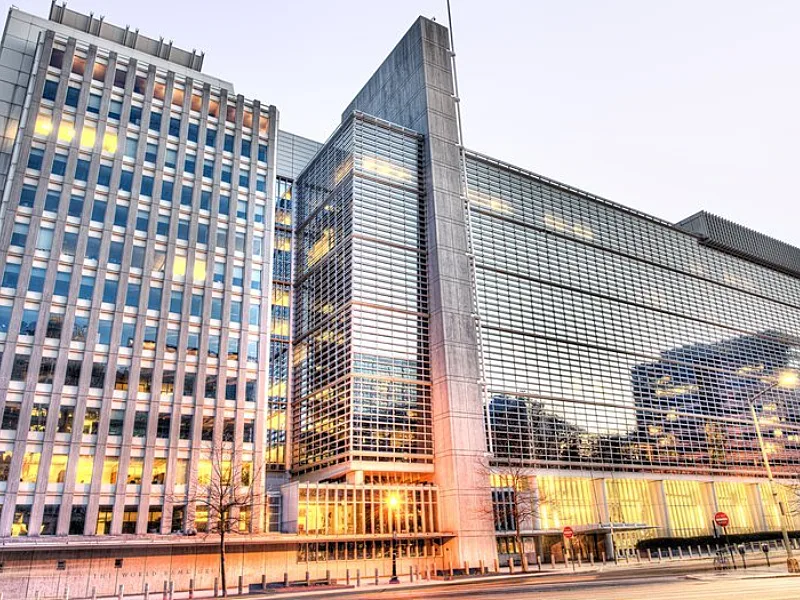
The moment is urgent: Africa's utilities are haemorrhaging revenue that could power hospitals, schools, and factories. Nigeria alone is racing to deploy seven million smart meters through a $500 million World Bank-backed initiative.
The rollout could transform utility finances, improve energy access, and reshape the economics of the continent's power sector.
Every Stolen Unit Has a Cost
Across Africa and much of the developing world, electricity losses are not only technical failures; they are revenue crises that undermine the foundations of power sector reform.
Non-technical losses, driven by meter tampering, illegal connections and billing failures, strip billions of dollars from utilities each year.
In markets already constrained by weak infrastructure, tariff shortfalls and underinvestment, that missing revenue translates directly into poorer maintenance, weaker reliability, slower grid expansion and a more fragile energy transition.
The pressure is especially severe across emerging markets, where electricity theft imposes outsized costs on already strained systems.
For Africa, the implications are existential. That is why smart metering is gaining urgency as a practical reform tool. Enugu State’s March 2026 partnership with UK authorities reflects a wider continental shift: utilities are increasingly treating better metering not as an upgrade, but as a core recovery strategy.
Africa Is Waking Up to the Metering Imperative
The case for smart meters in Africa is both financial and social. Estimated billing often overcharges low-income households while allowing some heavy users to underpay, creating a double distortion: utilities lose badly needed revenue, and consumers are billed for electricity they did not use.
In that sense, metering reform is not only a technical upgrade. It is a governance and fairness issue at the centre of power sector recovery.
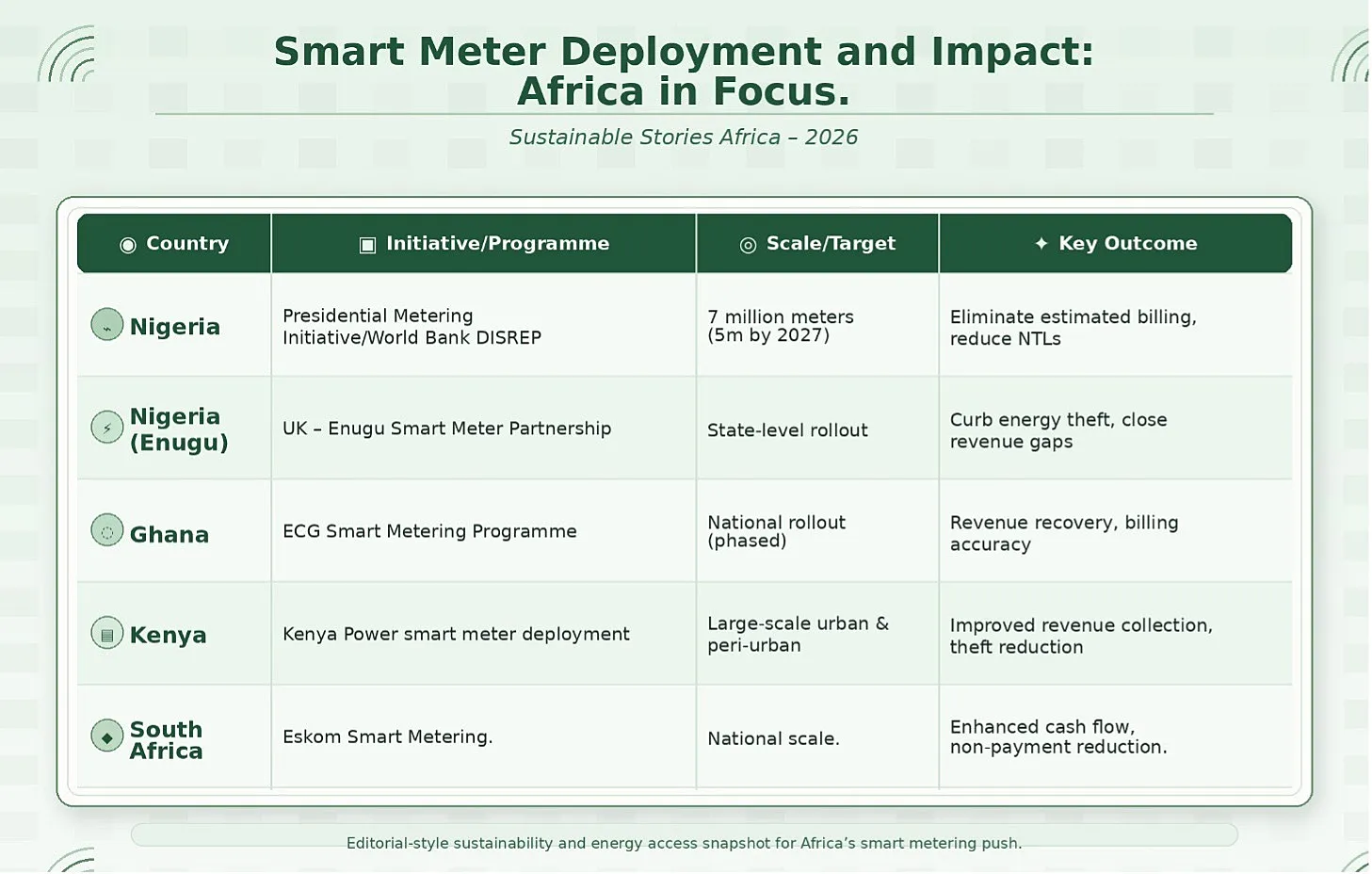
Nigeria illustrates both the scale of the challenge and the pace of response. The country still faces a metering gap of 5.3 million households, but the Presidential Metering Initiative is targeting seven million smart meter installations, supported by the World Bank-backed DISREP programme.
Ghana, Kenya and South Africa are also pushing ahead with smart metering to reduce leakage, improve collections and give consumers better visibility over usage.
The evidence is increasingly hard to ignore. Deployment studies show smart meters can sharply cut non-technical losses and electricity theft, making them one of the continent’s most practical tools for utility reform.
Smart Meter Deployment and Impact: Africa in Focus
| Country | Initiative/Programme | Scale/Target | Key Outcome |
|---|---|---|---|
| Nigeria | Presidential Metering Initiative/World Bank DISREP | 7 million meters (5m by 2027) | Eliminate estimated billing, reduce NTLs |
| Nigeria (Enugu) | UK – Enugu Smart Meter Partnership | State-level rollout | Curb energy theft, close revenue gaps |
| Ghana | ECG Smart Metering Programme | National rollout (phased) | Revenue recovery, billing accuracy |
| Kenya | Kenya Power smart meter deployment | Large-scale urban & peri-urban | Improved revenue collection, theft reduction |
| South Africa | Eskom Smart Metering | National scale | Enhanced cash flow, non-payment reduction |
The global smart meter market, valued at $19.9 billion in 2020, is projected to reach $29.8 billion by 2030, driven predominantly by demand from emerging markets pursuing grid modernisation and NTL reduction.
What Metered Africa Would Look Like
The economics of full metering in African power systems are increasingly difficult to ignore. In Nigeria alone, recovering even part of the revenue lost through non-technical losses could help finance new grid connections, support renewable energy integration and ease the long-running financial strain on distribution companies.
What seems to be a metering issue is, in reality, an opportunity for capital recovery and system reform.
The social gains are just as significant. Accurate metering can dismantle the deeply unpopular culture of estimated billing, while prepaid smart meters give low-income households greater control over daily electricity spending.
Beyond billing, smart meters also form the backbone of modern energy systems, enabling time-of-use tariffs, rooftop solar net metering, EV charging and demand response. Without that infrastructure, Africa’s cleaner and more flexible power future will remain harder to build.
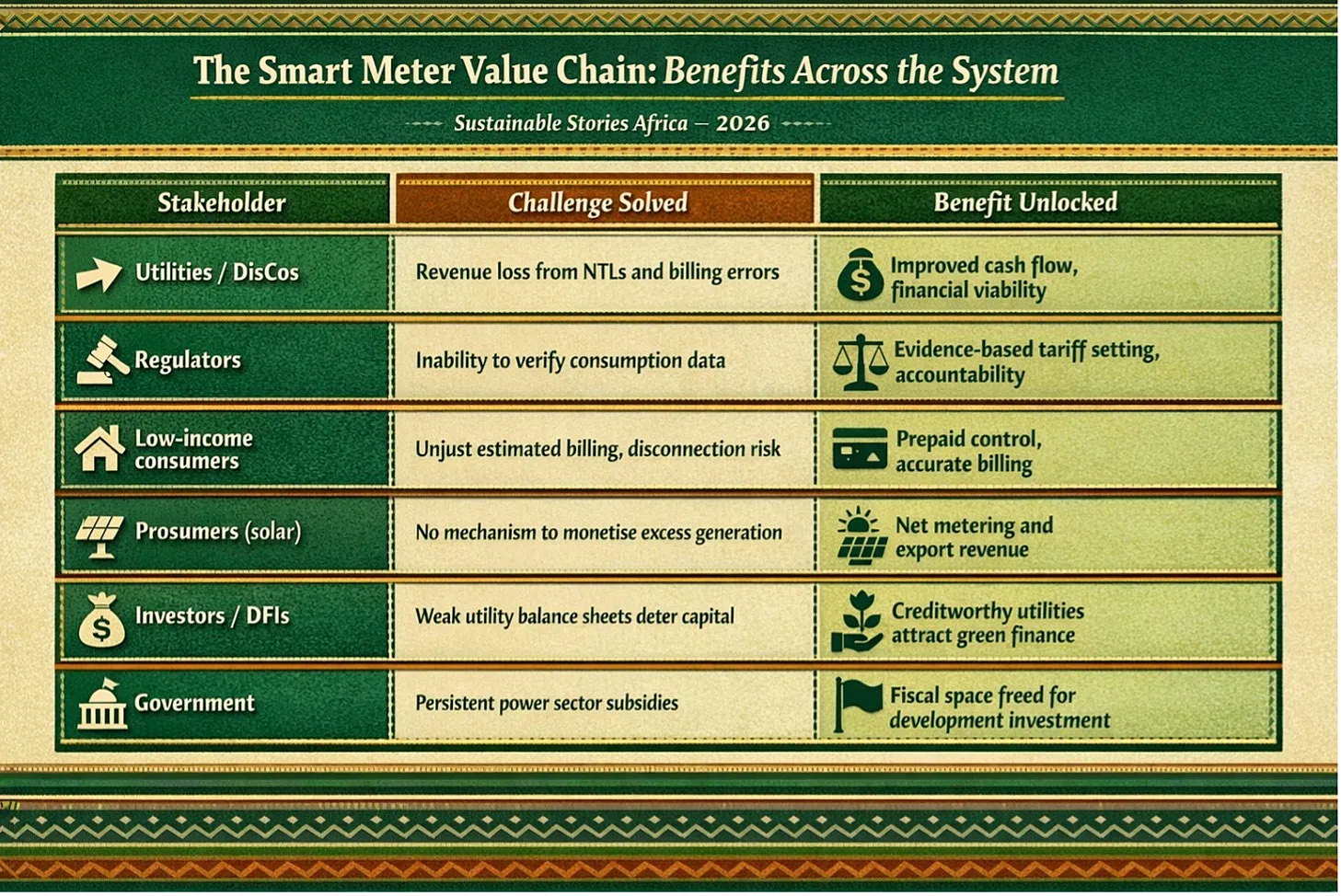
The Smart Meter Value Chain: Benefits Across the System
| Stakeholder | Challenge Solved | Benefit Unlocked |
|---|---|---|
| Utilities / DisCos | Revenue loss from NTLs and billing errors | Improved cash flow, financial viability |
| Regulators | Inability to verify consumption data | Evidence-based tariff setting, accountability |
| Low-income consumers | Unjust estimated billing, disconnection risk | Prepaid control, accurate billing |
| Prosumers (solar) | No mechanism to monetise excess generation | Net metering and export revenue |
| Investors / DFIs | Weak utility balance sheets deter capital | Creditworthy utilities attract green finance |
| Government | Persistent power sector subsidies | Fiscal space freed for development investment |
Governments and Investors Must Close the Gap Now
Momentum is building around smart metering in Africa, but progress still falls well short of what the crisis demands. Nigeria’s 5.3 million-household metering gap will not close through policy ambition alone.
It requires dependable financing, stronger supply chains, clear consumer protection rules and sustained political commitment.
Across sub-Saharan Africa, the same pattern holds millions of unmetered households remain trapped in a system of estimated billing, weak trust and incomplete revenue recovery.
That is why governments need to treat smart metering as critical national infrastructure, embedding it into electrification plans, climate strategies and wider energy-transition roadmaps.
Development finance institutions must scale concessional funding beyond isolated pilots, while private firms in metering, telecoms and data systems strengthen the wider ecosystem.
For citizens, especially those burdened by estimated bills, this is also a rights issue. Accurate billing is the basis of a fair, credible and financially sustainable electricity system.
Path Forward – Smart Meters, Stronger Energy Systems
Across Africa, the deployment of smart meters must be treated as an urgent governance priority, embedded in national energy strategies, supported by development finance, and protected by consumer-facing regulation that guarantees billing accuracy and data rights.
The path forward is clear: scale Nigeria's Presidential Metering Initiative as a continent-wide model, integrate smart metering into clean energy and net metering frameworks, and position utilities as ESG-credible institutions capable of attracting the long-term private capital Africa's energy transition demands.
Culled From: Smart meters help utilities tackle theft & billing gaps