Germany has adopted its Climate Action Programme 2026, a sweeping package of 67 measures backed by €8 billion, designed to cut greenhouse gas emissions by 65% from 1990 levels by 2030 and achieve full climate neutrality by 2045.
The timing is urgent. Europe's largest economy faces a double bind: surging energy costs and geopolitical pressure to end the dependence on fossil fuel.
However, the plan's ambition may be outpaced by reality, with Germany's own climate advisors warning the programme falls dangerously short.
Berlin Acts; However, Is It Enough?
Germany has unveiled one of its broadest climate packages in years, approving the Climate Action Programme 2026 on 25 March 2026.
It is backed by €8 billion in new funding and 67 policy measures. The plan aims to reduce greenhouse gas emissions 65% below 1990 levels by 2030 and deliver climate neutrality by 2045.
However, the programme is already facing sharp scrutiny. Germany’s expert climate council says it is unlikely to meet legal targets, arguing that outdated assumptions and a widening emissions gap undermine the plan’s credibility.
Germany, Europe's industrial heartbeat, has just made one of its most sweeping climate commitments in recent history, and it is already under fire.
A Plan Built on Ambition and Shaky Ground
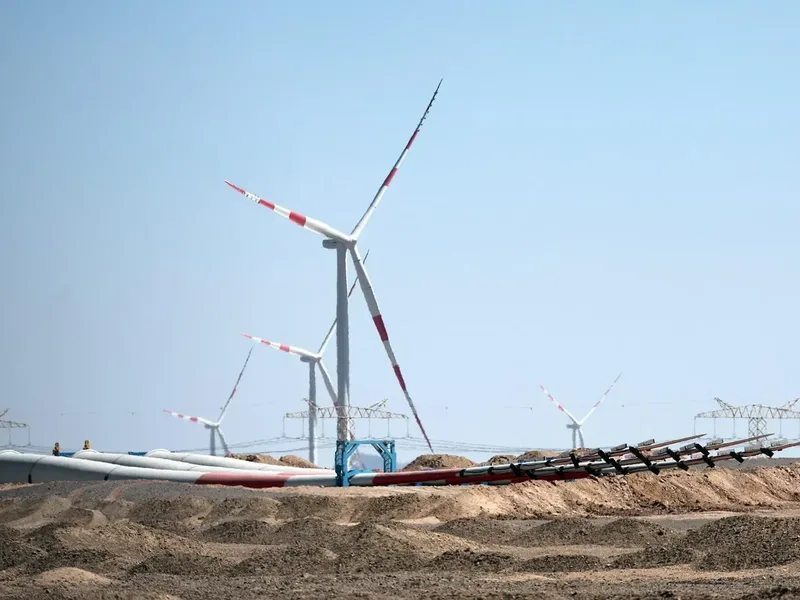
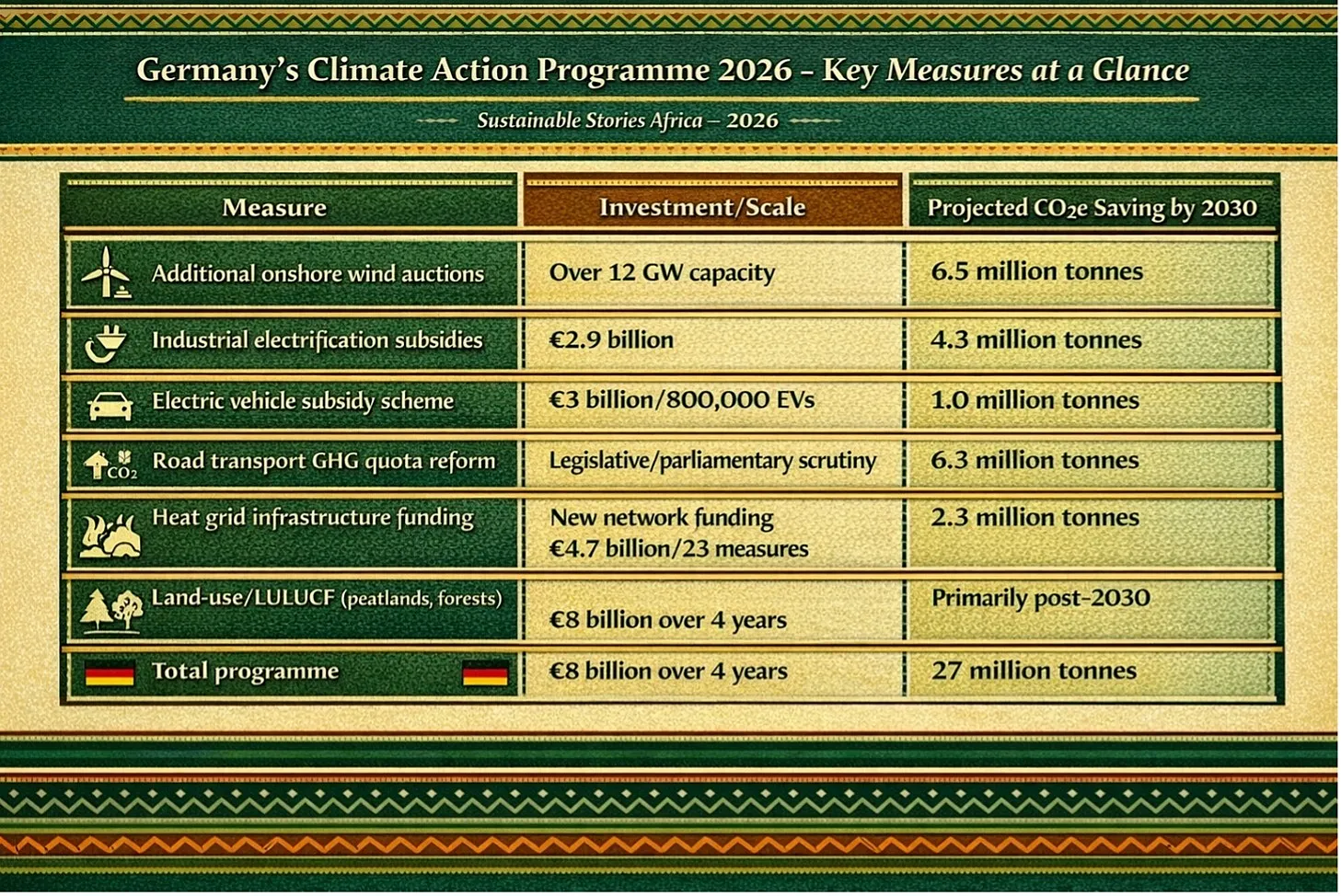
Germany’s Climate Action Programme 2026 is ambitious on paper. Its headline measure is an additional 12 gigawatts of onshore wind by 2030, expected to cut emissions by 6.5 million tonnes of CO₂e and ease power prices for households and industry.
Industry receives €2.9 billion for electrification, while a €3 billion EV subsidy scheme aims to support about 800,000 electric vehicles.
Land-use measures are backed by €4.7 billion, adding longer-term carbon removal potential.
Together, the package targets 27 million tonnes of annual emissions cuts by 2030. However, Germany’s own environment agency says the real gap is 42 million tonnes, exposing a major credibility problem.
Germany's Climate Action Programme 2026 – Key Measures at a Glance
| Measure | Investment/Scale | Projected CO₂e Saving by 2030 |
|---|---|---|
| Additional onshore wind auctions | Over 12 GW capacity | 6.5 million tonnes |
| Industrial electrification subsidies | €2.9 billion | 4.3 million tonnes |
| Electric vehicle subsidy scheme | €3 billion/800,000 EVs | 1.0 million tonnes |
| Road transport GHG quota reform | Legislative/parliamentary scrutiny | 6.3 million tonnes |
| Heat grid infrastructure funding | New network funding | 2.3 million tonnes |
| Land-use/LULUCF (peatlands, forests) | €4.7 billion/23 measures | Primarily post-2030 |
| Total programme | €8 billion over 4 years | 27 million tonnes |
Julia Blaesius of Agora Energiewende said Germany’s programme rests on shaky ground, understates the emissions gap, and lacks carbon-price certainty, with industry groups warning solar subsidy cuts could slow transition.
What a Credible German Transition Could Unlock
Despite the criticism, Germany’s direction still matters. If fully delivered, the programme could reduce gas consumption by nearly 7 billion cubic metres and petrol use by 4 billion litres a year by 2030, advancing the kind of energy independence that now doubles as economic strategy. For countries still exposed to fuel-price shocks, that signal is important.
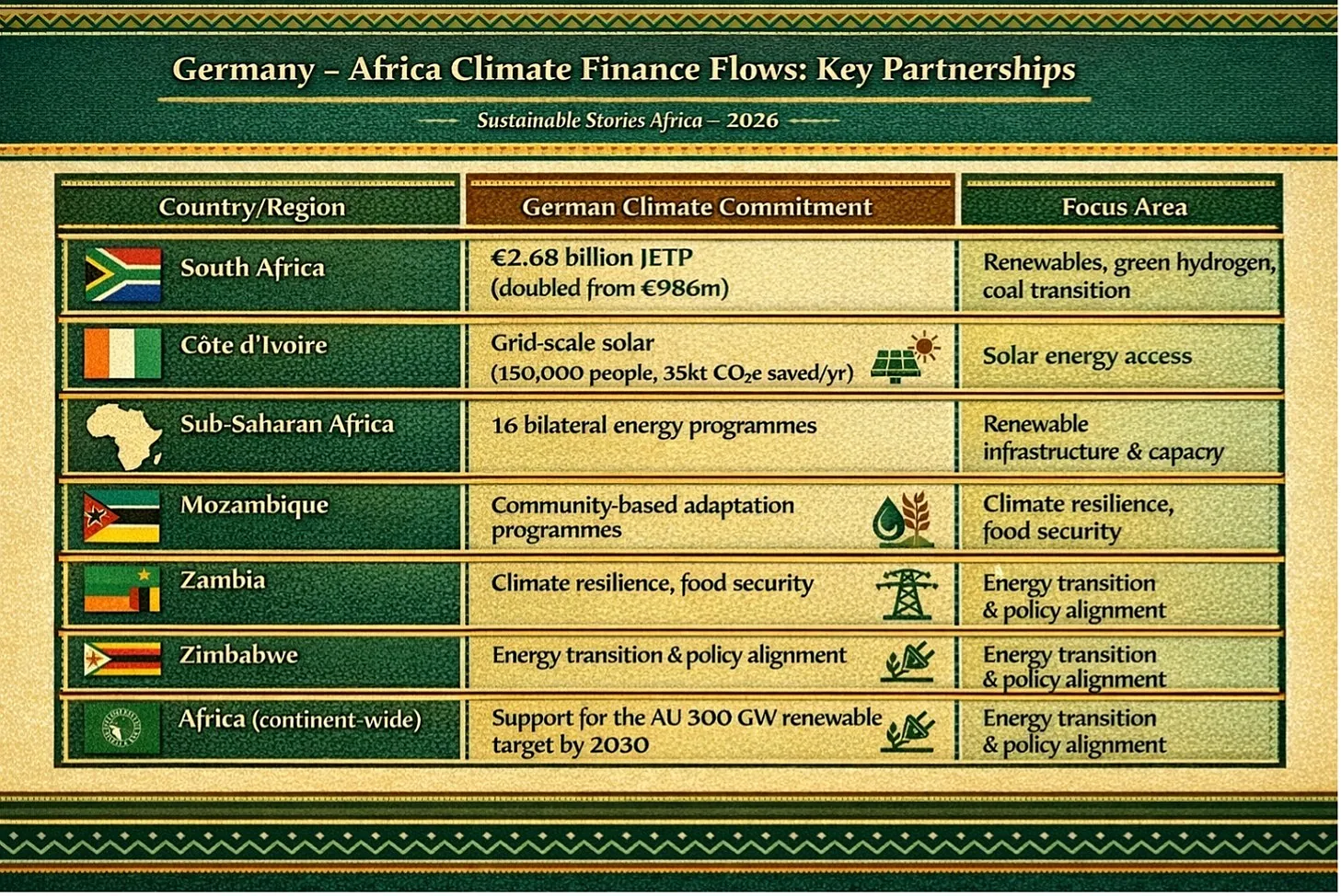
For Africa, the implications are substantial. Germany remains one of the continent’s most important climate finance partners, backing energy, agriculture, biodiversity and water programmes, while expanding support for South Africa’s Just Energy Transition Partnership.
Germany – Africa Climate Finance Flows: Key Partnerships
| Country/Region | German Climate Commitment | Focus Area |
|---|---|---|
| South Africa | €2.68 billion JETP (doubled from €986m) | Renewables, green hydrogen, coal transition |
| Côte d'Ivoire | Grid-scale solar (150,000 people, 35kt CO₂e saved/yr) | Solar energy access |
| Sub-Saharan Africa | 16 bilateral energy programmes | Renewable infrastructure & capacity |
| Mozambique, Zambia, Zimbabwe | Community-based adaptation programmes | Climate resilience, food security |
| Africa (continent-wide) | Support for the AU 300 GW renewable target by 2030 | Energy transition & policy alignment |
A more credible German transition could strengthen both its influence and its financial commitment abroad.
It could also deepen demand for African green hydrogen, critical minerals and clean industrial exports. The opportunity is real; the question is whether African governments are ready to capture it.
The World Cannot Afford a Hedge on Climate Action
Germany’s credibility gap now stands as a warning to the wider multilateral climate system. With the conclusion of COP30, failure by a wealthy, technologically advanced economy to close its own emissions gap risks eroding trust in global climate cooperation.
The response is clear: Berlin must recognise the full scale of the gap, embed a credible carbon price, and protect international climate finance, especially for Africa.
For African governments, the lesson is strategic. Energy sovereignty rooted in domestic renewables offers a stronger shield against the policy volatility still unsettling Europe’s transition.
Path Forward – Germany Must Lead, Not Just Promise
Germany’s Climate Action Programme 2026 sets a serious decarbonisation direction, spanning industrial electrification and land-use restoration, but its real test is credibility.
A stronger plan, grounded in current data, backed by a structural carbon price and sustained climate finance for African partners, will determine whether Berlin is advancing global ESG progress or merely protecting appearances.
For Africa, the strategic response is clear: strengthen energy sovereignty and turn Europe’s decarbonisation push into a lasting green industrial opportunity.