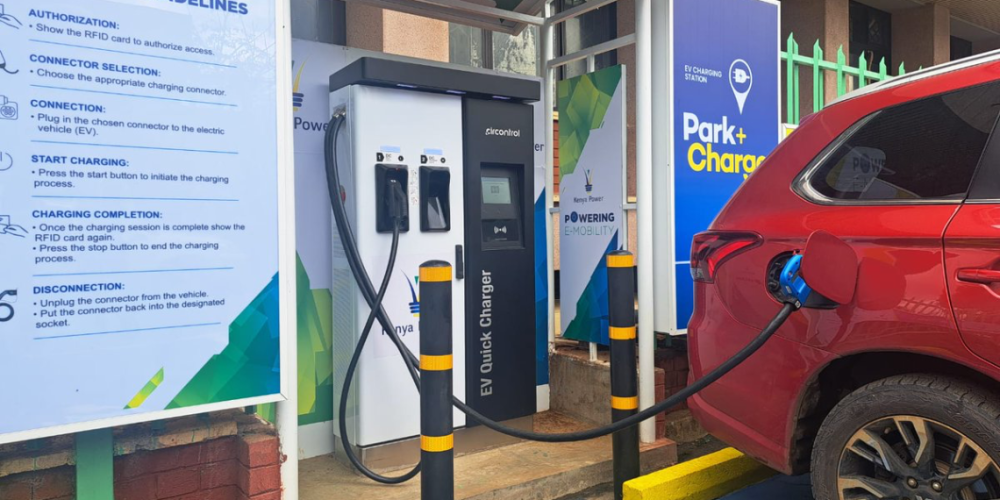
Kenya has launched a National Electric Mobility Policy to steer transport toward electric vehicles, lower fuel dependence and widen clean-transport investment.
EV uptake is accelerating, charging plans are expanding, and the country’s mostly renewable grid gives Kenya an unusual advantage.
For riders, commuters, manufacturers and investors, the policy could reshape costs, jobs, air quality, and industrial competitiveness if implementation moves as quickly as ambition.
A transport policy with industrial ambitions
Kenya’s formal launch of its National Electric Mobility Policy marks a shift from ambition to structure.
Presented in Nairobi as a roadmap for a cleaner, more efficient and lower-carbon transport system, the policy covers all transport modes. It is designed to guide adoption, regulation and nationwide scale-up.
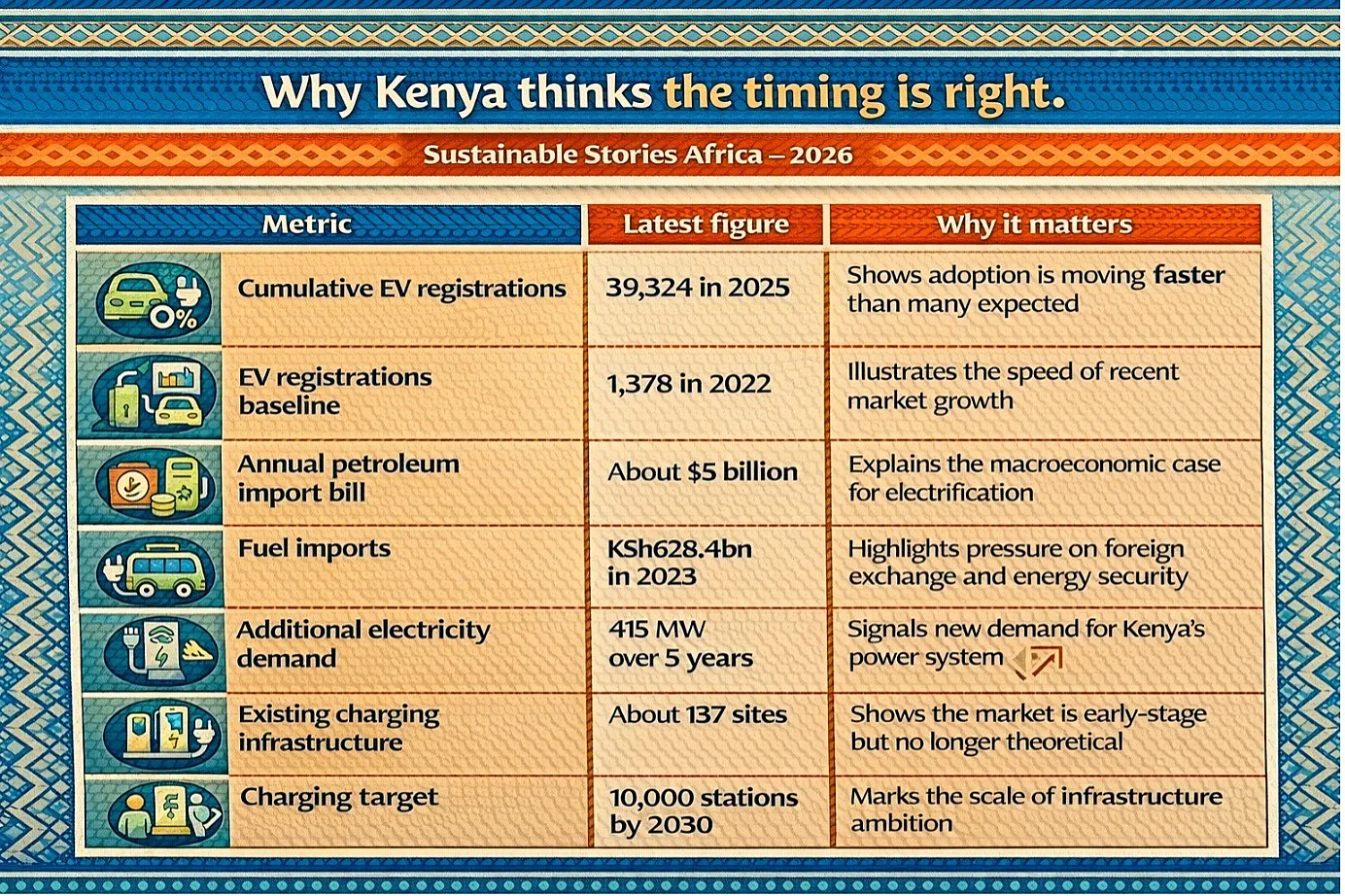
The significance is that Kenya is not starting from zero. By 2025, the country had cumulatively registered 39,324 electric vehicles, up from 1,378 in 2022.
At the same time, a petroleum import bill of about $5 billion shows why electrification is being framed as economic policy, not just climate policy.
That is the sharper storyline behind the launch. Kenya is trying to cut transport emissions, reduce exposure to imported fuel shocks and build a domestic clean-industry base at the same time.
In practice, the policy’s focus on local assembly, infrastructure, skills and private capital amounts to a bid for regional industrial leadership today.
Why Kenya thinks the timing is right
Kenya’s power system gives the policy an edge that many African markets do not yet have.
With nearly 90% of electricity generation coming from renewable energy and access steadily increasing, transport electrification is easier to justify on both economic and environmental grounds.
The grid is already relatively clean, and there is room to use more power productively.
That opportunity goes well beyond private cars. Government planning suggests e-mobility could add 415 MW of electricity demand over the next five years, building on about 137 charging and battery-swapping sites already in place and a target of 10,000 charging stations by 2030.
In effect, electric transport is being treated not only as a new vehicle market, but also as a new source of demand for underused renewable power.
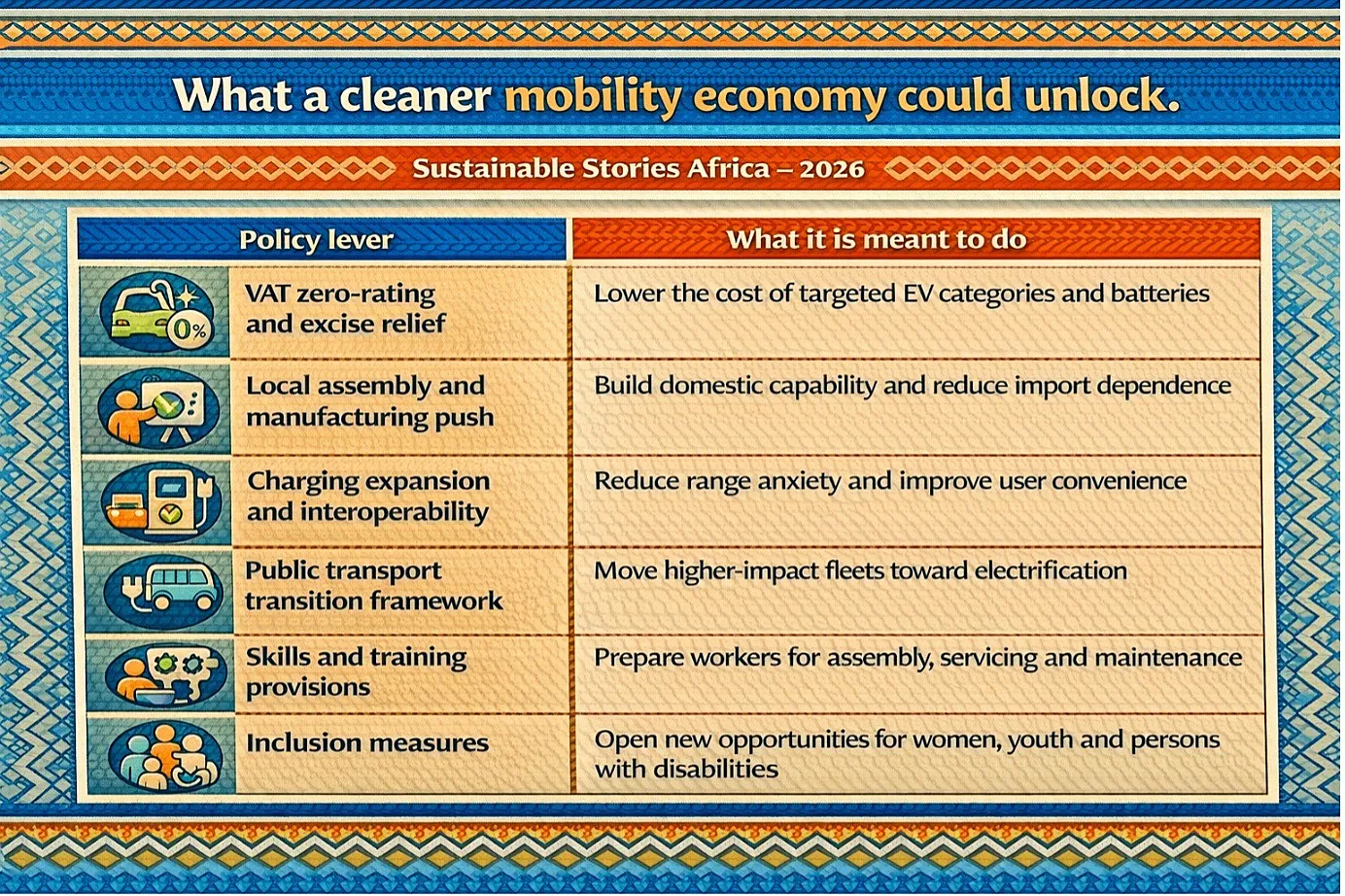
The policy also carries industrial intent. It links cleaner transport to local assembly, skills, interoperability, public transport reform and broader inclusion across Kenya’s emerging e-mobility value chain.
What a cleaner mobility economy could unlock
If the policy works, the gains will not be confined to emissions accounting. Electric motorcycles and buses can lower fuel and maintenance costs, improve urban air quality and reduce greenhouse gas emissions, especially in dense cities where two- and three-wheelers dominate short-distance movement.
UNEP has long argued that shifting to electric bikes in East Africa can cut costs, pollution and emissions together, and Kenya’s own ministry said the boda boda segment has posted the fastest percentage growth in EV uptake.
There is also a deeper industrial promise here. Fiscal incentives announced alongside the policy include zero-rated VAT on electric buses, bicycles, motorcycles and lithium-ion batteries, plus zero excise duty on electric bicycles, electric motorcycles and lithium-ion batteries.
Combined with Kenya’s renewable-power advantage and growing local assembly interest, those incentives could help create new value chains in components, maintenance, charging services, software and technician training.
Ambition now needs execution discipline
The harder phase starts after the launch event. Kenya’s own policy process acknowledges that transport emissions rose by 59.4% between 2009 and 2019, and ministry materials tie e-mobility directly to the country’s target of cutting greenhouse gas emissions by 32% by 2030.
That means implementation cannot stop at speeches, number plates and pilot projects. It must reach public transport fleets, peri-urban charging networks, affordable financing and technical standards that work beyond Nairobi.
The government has already said it is developing a National Electric Mobility Strategy to coordinate execution.
That next step matters because investors, assemblers, county governments and utilities need clarity on timelines, grid readiness, incentives, land access for charging, financing for operators and the rules for public-private participation. Kenya has built the policy signal; it now needs to build market confidence.
Path Forward – Policy Momentum Must Become Market Infrastructure
Kenya’s next test is practical: turn policy into chargers, credit, assembly lines and reliable standards.
The country has the clean-power advantage and an early market; it now needs coordinated rollout.
For African markets, the broader lesson is compelling. E-mobility works best when climate goals, industrial policy and inclusion are designed together, not treated as separate agendas.
Culled From: Kenya’s New e-Mobility Policy Aims to Cut Emissions and Build a Clean Industrial Hub