Sahara Power Group has joined the Mission 300 Private Sector Council.
The move matters because Africa still has roughly 600 million people without electricity, making private capital central to closing the access gap.
For African markets, the announcement points to a bigger test: turning policy ambition into bankable projects, stronger grids and broader energy access.
A new seat in a high-stakes power push
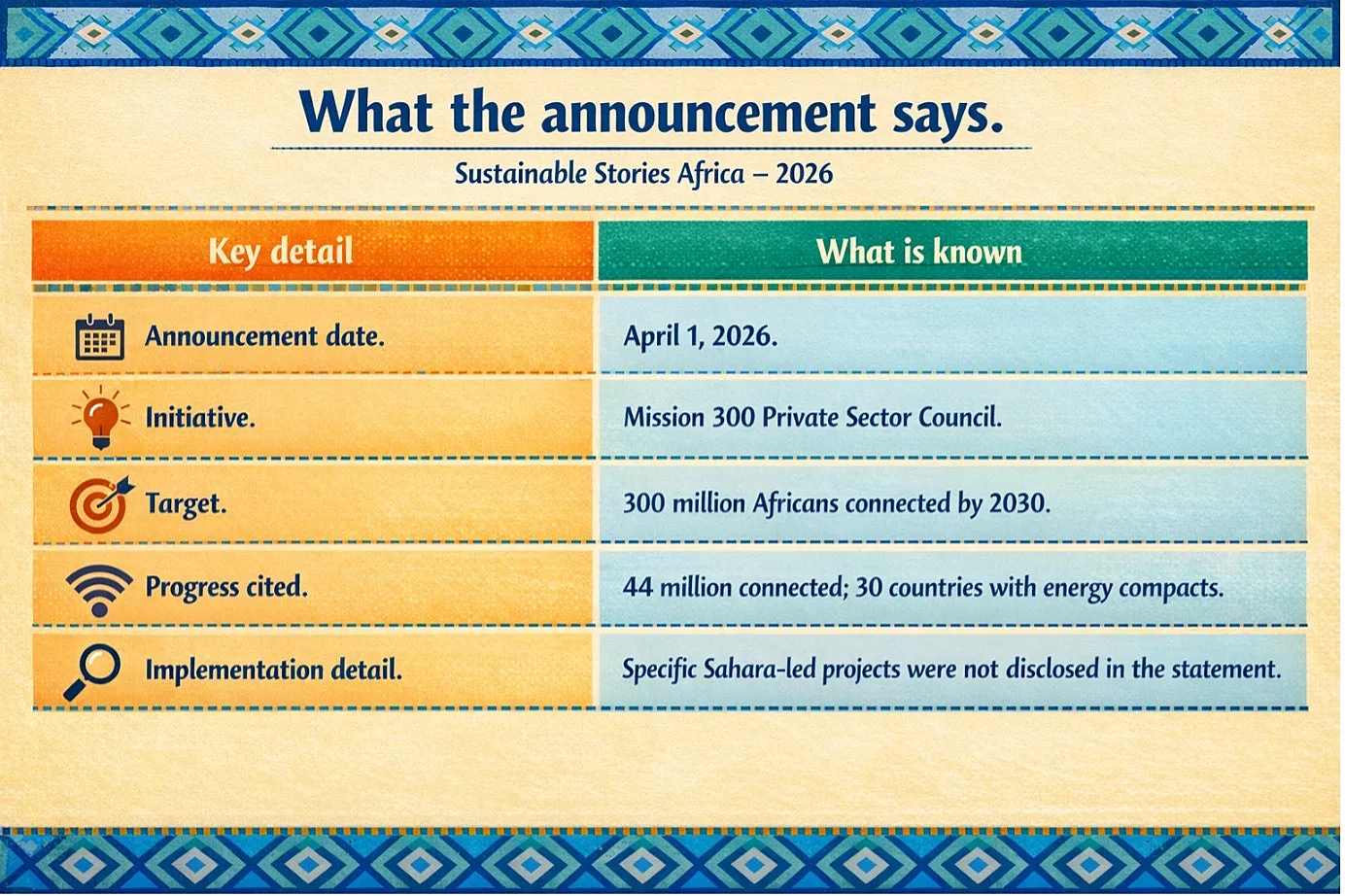
Sahara Power Group has been named to the Mission 300 Private Sector Council, a platform backed by the World Bank Group, the African Development Bank and The Rockefeller Foundation to help accelerate electricity access for 300 million Africans by 2030.
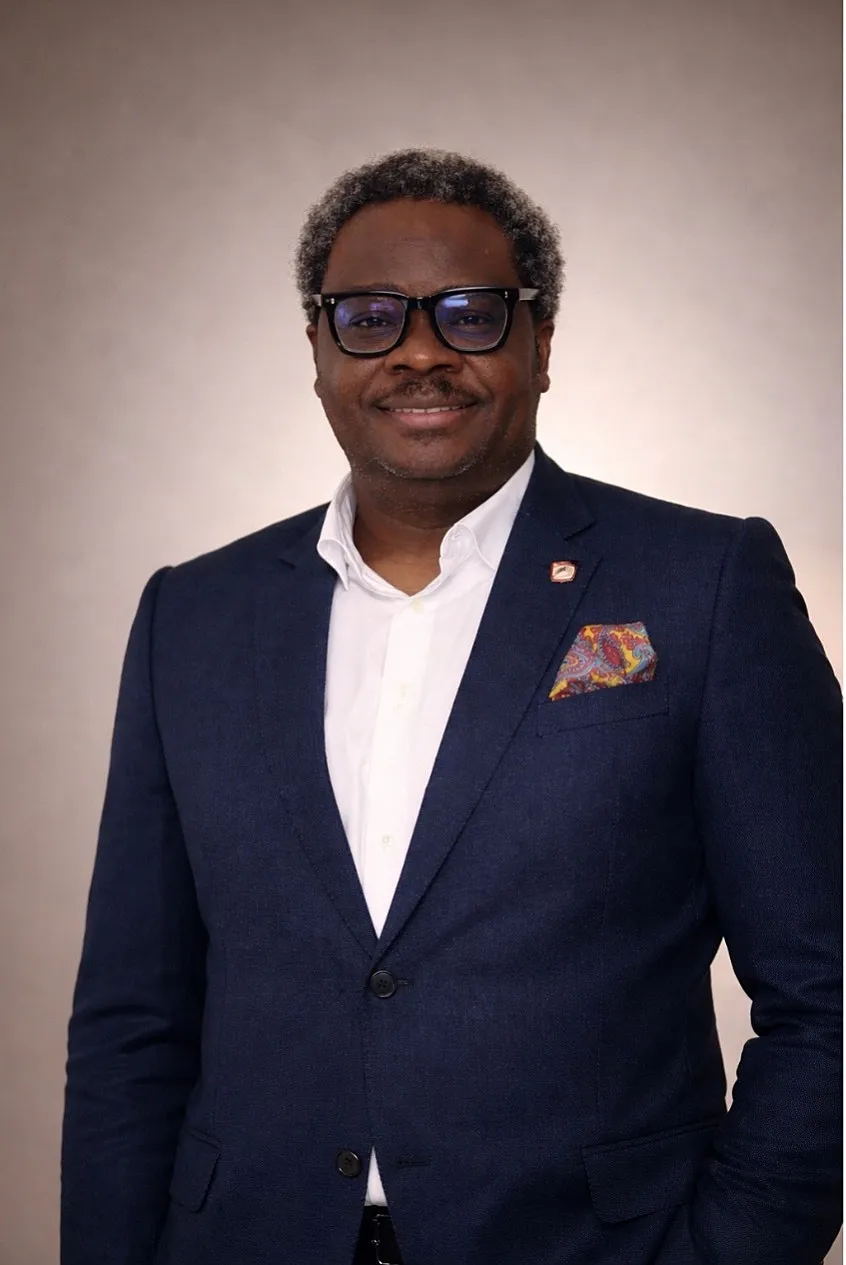
The company said its Group Managing Director, Dr Kola Adesina, will sit on the council, joining business leaders expected to help translate the initiative’s large development goal into investable power projects.
Announced in Lagos on April 1, 2026, the broader council launch was announced by the World Bank on March 31, 2026.
The central policy message is straightforward: Africa’s electricity gap will not close on public funding alone.
That is why this matters now. The International Energy Agency says around 600 million people in sub-Saharan Africa still lack access to electricity as of 2024, showing just how far the continent remains from universal access.
What the announcement says, and what it does not
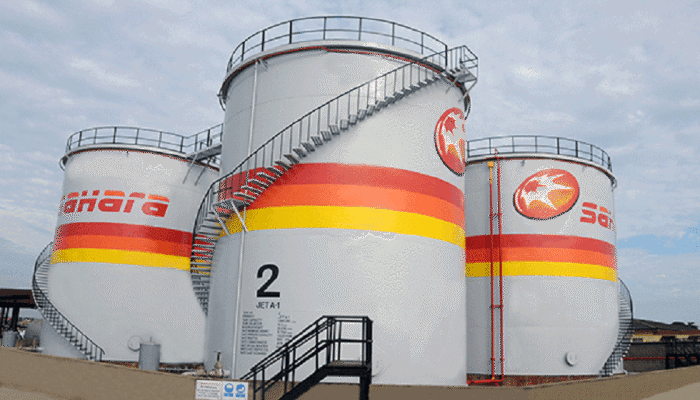
According to Sahara’s statement, the company’s inclusion reflects its existing footprint across power generation, distribution, renewable and off-grid energy, and data-enabled infrastructure.
Sahara described its portfolio as including Egbin Power Plc, Ikeja Electric, and First Independent Power Limited.
The company framed its council appointment within a broader economic case for electricity access, arguing that reliable power is central to industrialisation, competitiveness and private-sector growth.
Akinwumi Adesina, the former CEO of the African Development Bank, described electricity as a prerequisite for industrial development. Also, in the words of IFC Managing Director Makhtar Diop, Mission 300 will depend on mobilising private investment at scale and drawing on businesses with deep knowledge of Africa’s energy market.
Mission 300 is also being positioned as a large-scale African development effort rather than a narrow donor programme.
Why the market will care
If Mission 300 delivers as intended, its impact could reach well beyond new household connections.
Improved electricity access can raise factory output, improve the reliability of schools and hospitals, reduce diesel dependence, and ease the operating uncertainty that continues to constrain many African businesses.
Financing, however, remains a major bottleneck.
That is why Sahara’s appointment carries significance beyond symbolism. Companies with experience across generation and distribution can help close the gap between political ambition and commercially viable execution, turning national energy compacts into functioning assets that support both electricity access and broader economic productivity.
The real measure is delivery
For now, the announcement is best seen as an important signal rather than a completed outcome. Governments still need clearer regulatory pathways, financiers still need de-risked project structures, and private operators still need to show how investment will deliver faster connections, stronger service quality and more resilient grids.
That makes execution the real test. The key questions are which projects emerge from the council’s work, how quickly energy compacts become financed assets, and how much of that momentum reaches underserved households, productive businesses and off-grid communities across Africa.
Path Forward – Bankable Projects Must Now Reach People
Mission 300’s promise will be judged less by council memberships than by whether it accelerates investable projects, expands reliable supply and reaches communities still living beyond the grid.
For Sahara Power Group, the immediate challenge is to turn representation into measurable delivery.
For African policymakers and investors, the larger task is to build the financing, regulation and partnerships that make electricity access scalable.
PRESS RELEASE: Sahara Group