
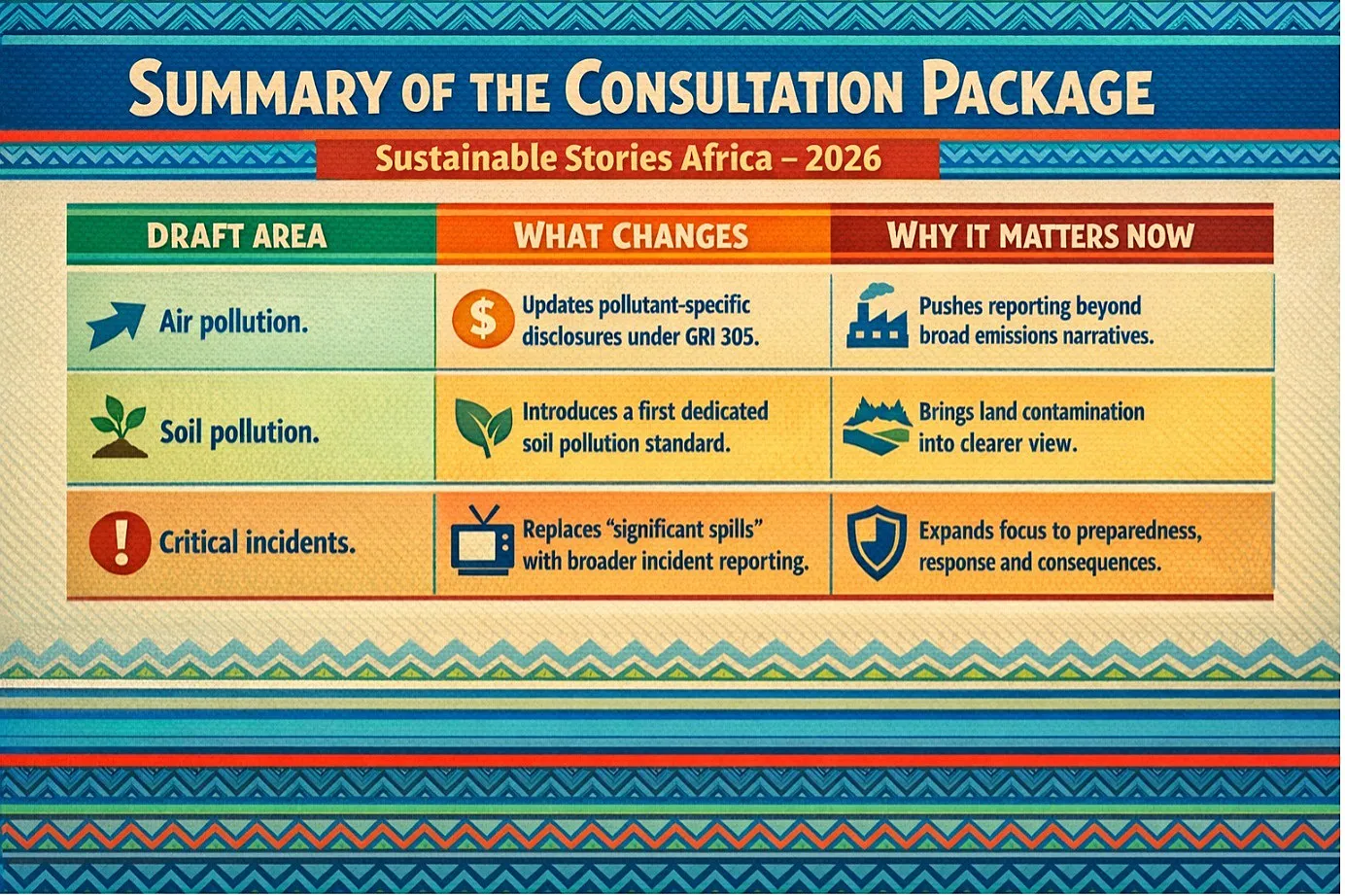
GRI has opened consultation on new air pollution, soil pollution and critical incident reporting standards.
The move widens disclosure expectations beyond familiar emissions totals to preparedness, response and pollutant-specific impacts.
For African companies and regulators, the shift could reshape how markets judge operational risk, community harm and corporate credibility.
A wider reporting net
The Global Reporting Initiative has opened a public comment period on three draft standards covering air pollution, soil pollution and critical incidents, with submissions due by 8 June 2026. The consultation signals more than a technical update.
It reflects a broader shift in sustainability disclosure away from reporting emissions alone toward showing how companies prevent, manage and respond to pollution and major operational failures.
Given that over 14,000 organisations use the standard across over 100 countries, the outcome could shape reporting expectations well beyond specialist ESG teams.
For African markets, the relevance is immediate. GRI is already working with the Africa Securities Exchange Association and exchanges including Nairobi, Ghana and Eswatini to strengthen ESG disclosure guidance and training.
That means African issuers are increasingly being asked not only what they emit, but what risks they prevent, how prepared they are for critical incidents, and how they respond when failures occur.
From emissions totals to real-world harm
The clearest shift appears in GRI’s proposed Critical Incidents standard. The exposure draft would replace Disclosure 306-3 on significant spills and widen reporting to cover all critical incidents, including those triggered by natural events and human activity.
Companies would be expected to explain what they classify as critical incidents and why. They will also have to disclose prevention, preparedness and response measures, site coverage, incident records and spill-specific details where relevant.
That matters strongly for African sectors such as mining, oil and gas, transport, manufacturing and agribusiness.
In GRI’s framing, the standard is broad enough to include floods, vehicle crashes, equipment failures, cyberattacks, public violence and armed conflict, causing severe impacts on workers, communities, infrastructure or biodiversity.
For companies operating in climate-vulnerable and infrastructure-stressed markets, disclosure is moving closer to real operational risk.
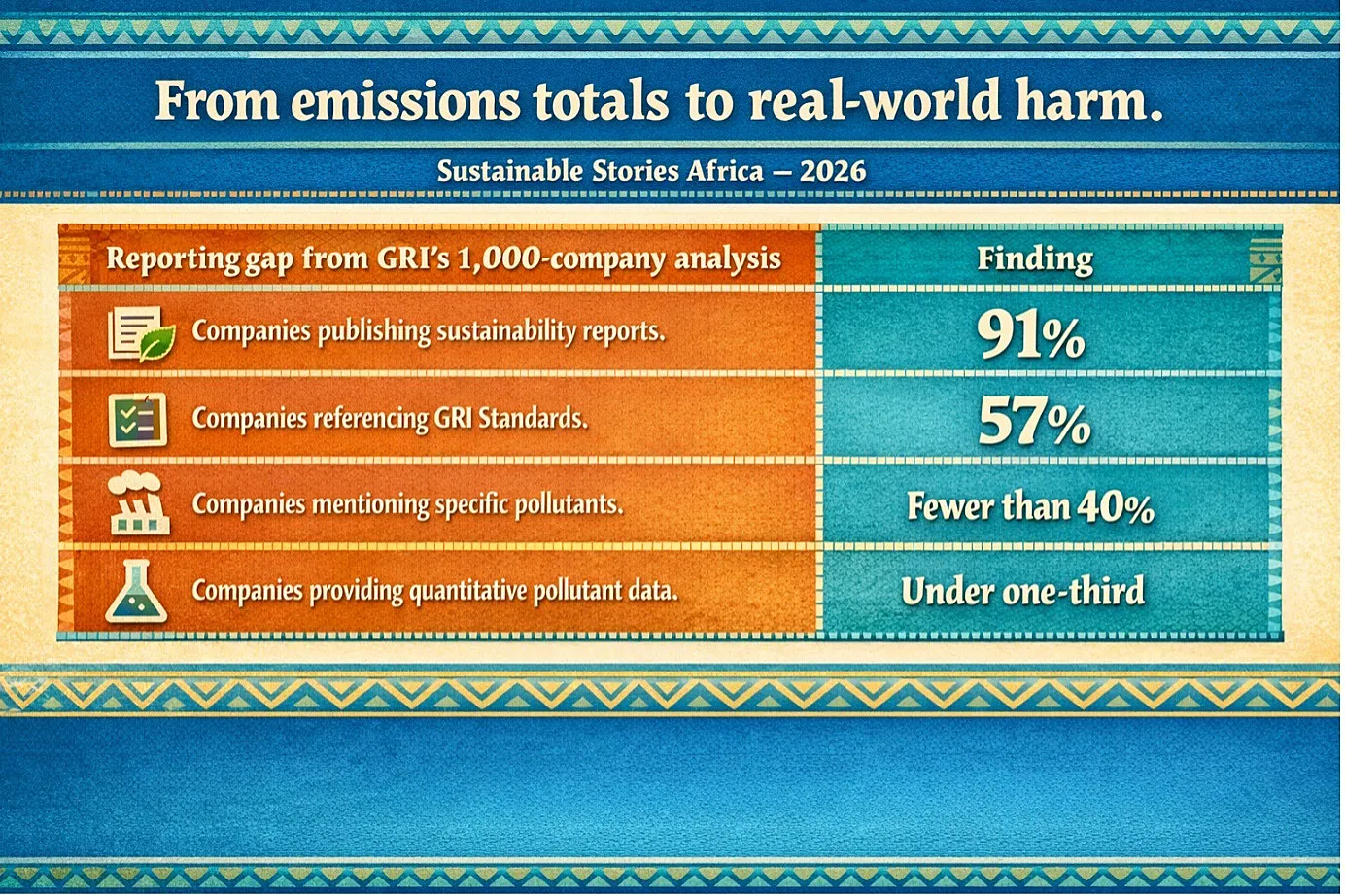
GRI’s own research shows why the revision matters. While 91% of 1,000 large, listed companies published sustainability reports, fewer than 40% disclosed specific air pollutants, and less than one-third provided quantitative data, highlighting a disclosure gap that the new standards seek to close.
Better data, better decisions
If adopted, the new standards could make sustainability reporting more useful for regulators, investors, lenders and communities by tying disclosure more closely to operational risk, resilience and accountability.
Requiring firms to classify incidents, assess preparedness, identify affected sites and explain remediation would also push reporting beyond branding and closer to internal risk control.
That shift matters because the stakes extend beyond compliance. With ambient air pollution linked to an estimated 4.2 million premature deaths worldwide in 2019, broader pollution disclosure is also a public-health issue, connecting corporate transparency more directly to health, resilience and responsible management.
Consultation is open, expectations are rising
Companies, investors, exchanges and regulators should treat the consultation as an early signal, not a routine paperwork exercise.
African issuers that wait until final publication in 2027 risk scrambling to define critical incidents, strengthen site-level preparedness, improve pollutant measurement and tighten response documentation.
Those that engage early will be better placed to shape the rules while building systems that markets are increasingly likely to demand.
The immediate task is clear: review the drafts, submit comments before 8 June, and identify where current reporting still treats pollution too narrowly.
Disclosure expectations are moving beyond carbon totals toward broader questions of harm, prevention, response and operational integrity.
Path Forward – Turning Disclosure Into Credible Risk Management
African markets need reporting systems that connect pollution, safety, resilience and community impact.
The consultation creates an opportunity to build standards that reflect local operating realities while meeting global expectations.
The priority now is early engagement: stronger measurement, clearer incident definitions, better site preparedness and faster remediation disclosure.
That is how ESG reporting becomes more decision-useful and more trusted.