Africa’s electric motorbike market is moving from pilot to scale, led by locally assembled bikes, battery-swapping networks and solar-powered charging hubs.
It matters because motorcycles already carry millions of passengers, goods and livelihoods, while fuel costs, dirty air and import dependence keep rising.
For riders, factories and financiers, the shift could cut operating costs, create jobs and reshape how African cities move.
A transport revolution is arriving on two wheels
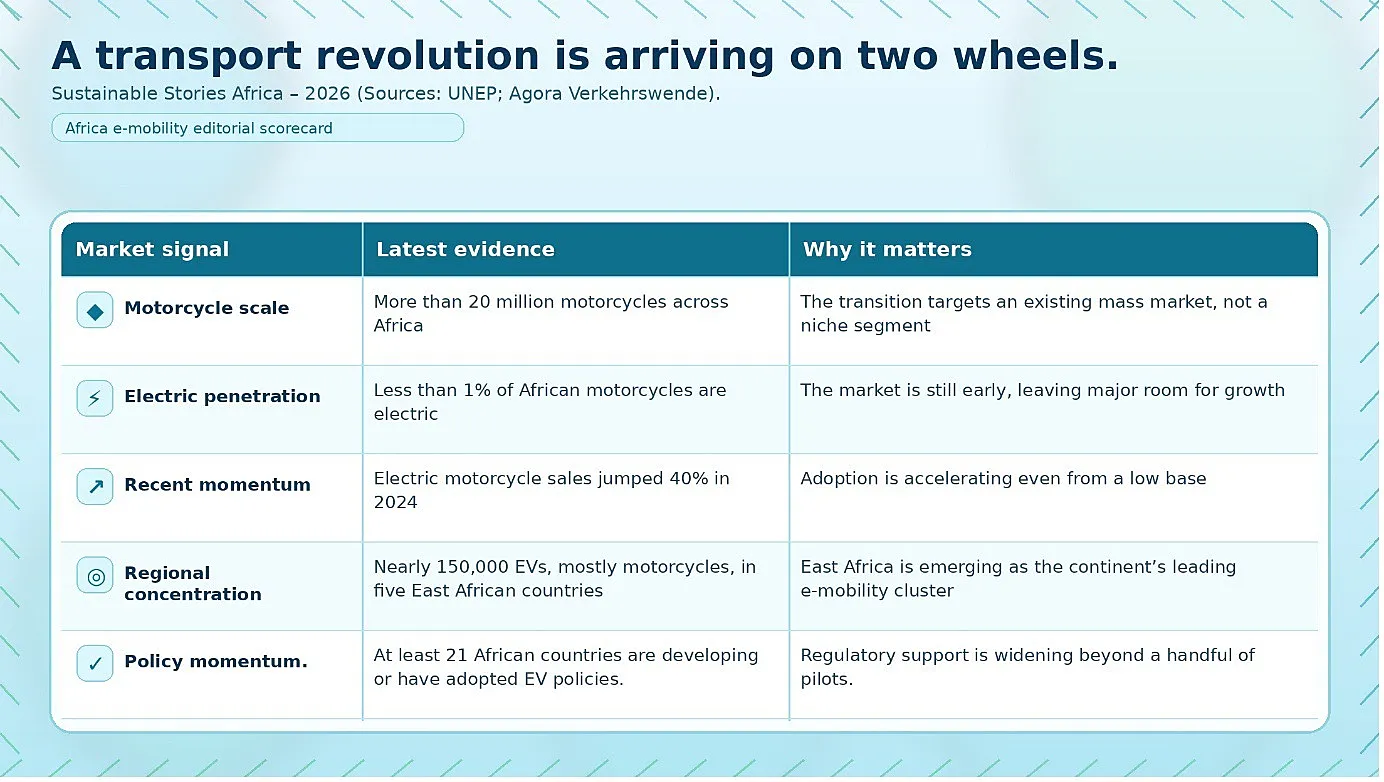
Africa’s electric mobility story is no longer driven by private cars. It is increasingly shaped by motorcycles: cheaper to run, easier to deploy and central to the movement of people and goods across cities and towns.
Adoption remains early, but growth is no longer marginal.
The stronger signal is regional. What began as scattered pilots is now becoming a policy and industrial ecosystem, with electric motorcycles gaining ground across multiple African markets.
That shift matters because the two-wheel segment sits where affordability, climate action and practical mobility meet.
For Africa, that makes e-motorcycles more than a transport trend. They could become one of the continent’s clearest low-carbon inclusion stories, lowering costs, widening access and supporting jobs in the informal economy.
Local factories and solar hubs are replacing the old model
What makes this phase of Africa’s electric mobility transition different is that it is being built around local roads, local economics and local operating realities.
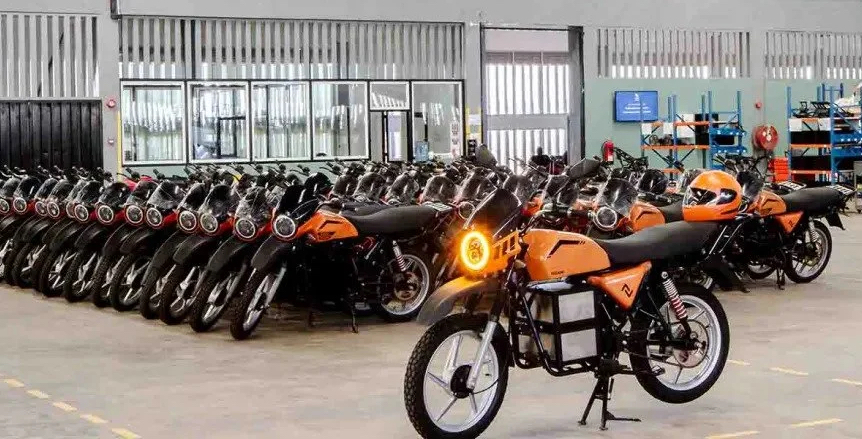
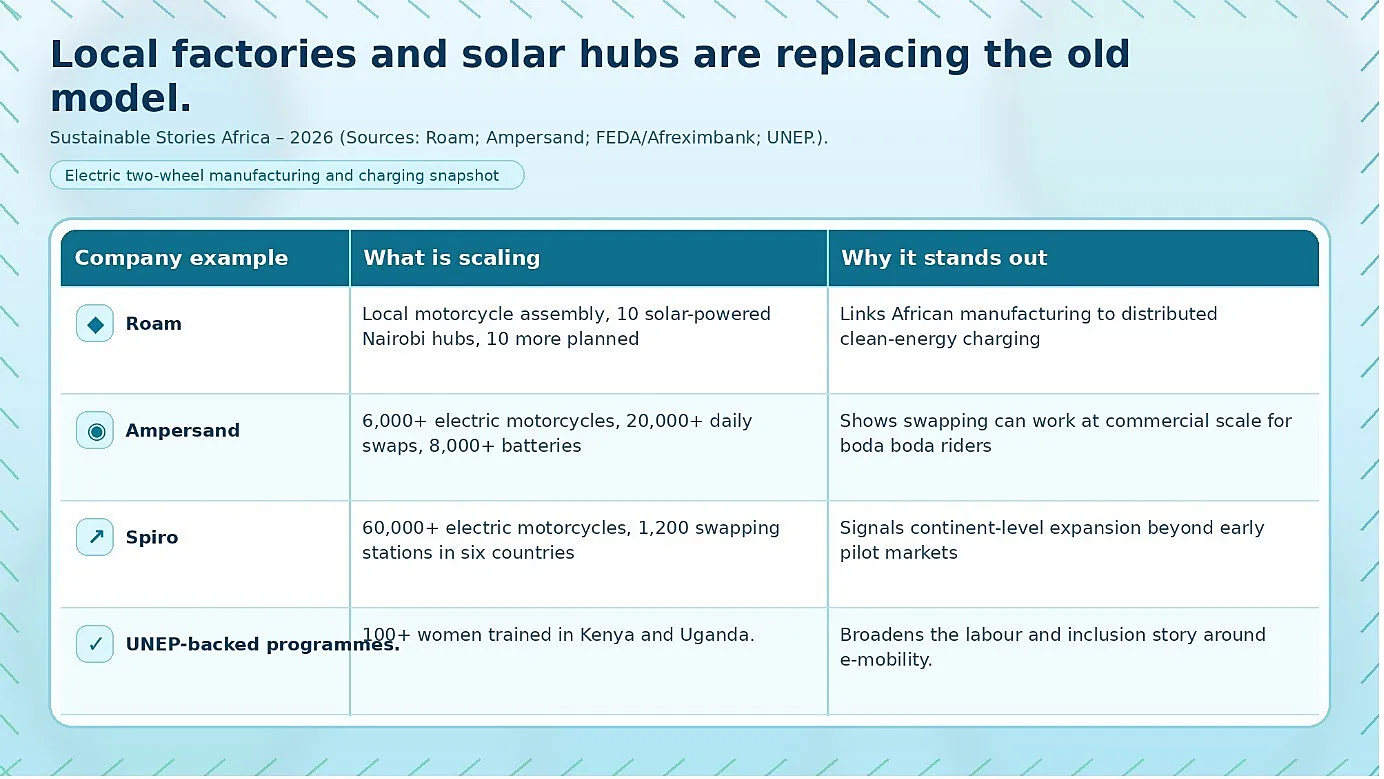
In Kenya, Roam says the Roam Air is the country’s first locally designed and manufactured electric motorcycle. Its Nairobi facility, spanning more than 10,000 square metres, points to a bigger shift: electric mobility is starting to look less like imported hardware and more like domestic industrial capacity.
Solar is also moving from ambition to an operating model. Roam says it runs 10 solar-powered hubs across Nairobi and plans to add 10 more, with each site designed for charging, battery rentals and after-sales support.
That matters because Africa’s likely winning model may not depend on private home charging, but on distributed energy and shared infrastructure built around commercial use.
Rwanda-based Ampersand points to the same conclusion from the battery-swapping side. The company said in 2025 that it was delivering more than 20,000 battery swaps a day, using over 8,000 batteries to power more than 6,000 electric motorcycles across Rwanda and Kenya.
Just as important, it said seven motorcycle brands were already using its energy system, suggesting the market is moving toward interoperable infrastructure.
Scale is no longer limited to East Africa. Spiro’s footprint across six African countries suggests the sector now has enough operating density to be discussed as an emerging industry, not just a pilot phase.
There is also a human story behind the hardware. Training women as riders, mechanics, entrepreneurs and solar technicians’ shows that this transition is not only about cleaner transport, but about who gets to participate in the next mobility economy.
What Africa gains if this shift holds
The payoff is potentially large. Riders save on fuel and maintenance. Cities gain quieter streets and fewer tailpipe emissions. Governments reduce pressure from imported petroleum.
Local industry captures more value through assembly, servicing, software, charging infrastructure and battery management. The World Bank says e-mobility can create jobs, strengthen economies and reduce fuel dependence, especially in high-use urban segments.
UNEP’s Rob de Jong put the market case plainly in April 2025: “Electric motorcycles are now cost competitive.” That matters because technologies scale fastest when they stop asking users to pay a premium for doing the right thing.
In African mobility, cost parity may be the turning point that makes climate action feel less like a sacrifice and more like common sense.
The next phase needs standards, finance and trust
The market is moving, but the bottlenecks are clear. UNEP says awareness, standardisation and financing remain critical.
Agora argues that long-term policy certainty and regional coordination will be essential to create economies of scale, and the World Bank points to targeted investments and better financing models as the route to wider adoption.
That means African governments, investors and operators now have a narrower but more serious task: make the sector bankable. Interoperable charging and swapping standards, affordable rider finance, stable tax treatment, battery recycling systems and regional component supply chains will matter more than headline announcements.
The revolution is already visible. The question now is whether institutions can keep pace with the market.
Path Forward – Scale Local Manufacturing, Finance, and Standards
Africa’s electric motorbike push now needs disciplined follow-through: more local assembly, interoperable infrastructure, cheaper finance and clearer policy signals. Those are the pieces that turn promising fleets into durable markets.
The strongest opportunities will arise where clean mobility, industrial policy and distributed energy are built in tandem. On two wheels, Africa may be showing the rest of the developing world what practical electrification looks like.
Culled From: Africa’s Electric Motorbike Revolution: Locally Built, Solar Powered and Ready to Transform Mobility