Ethiopia is accelerating one of Africa’s boldest transitions to electric mobility, backed by a ban on imports of internal combustion vehicles and a wider transport overhaul.
It matters now because the strategy links cleaner mobility to foreign-exchange relief, renewable power use and urban redesign.
For households, bus operators and cities, the shift could lower transport costs while changing how people move, work and breathe.
Ethiopia’s electric mobility shift is becoming a wider economic strategy
Ethiopia’s push into zero-emission mobility is no longer just an environmental story. It is emerging as a broader state-led strategy to reduce fuel dependence, protect scarce foreign exchange, expand the use of renewable electricity and redesign cities around cleaner, more inclusive transport.
That is the central message from recent reporting on the country’s aggressive e-mobility drive, which combines electric vehicles, public transport expansion and non-motorised mobility into a single policy direction.
The most dramatic move came in January 2024, when Ethiopia banned the import of internal combustion engine vehicles, with exemptions only for ambulances, military vehicles and heavy machinery.
The policy was framed not simply as climate action, but as an energy-security response to a fuel import bill that had become economically unsustainable.
Transport consumed more than 90% of the country’s fuel supply, placing heavy pressure on foreign exchange.
A transport transition with fiscal logic
What makes Ethiopia’s model noteworthy is that it is being built on an electricity system already dominated by renewables.
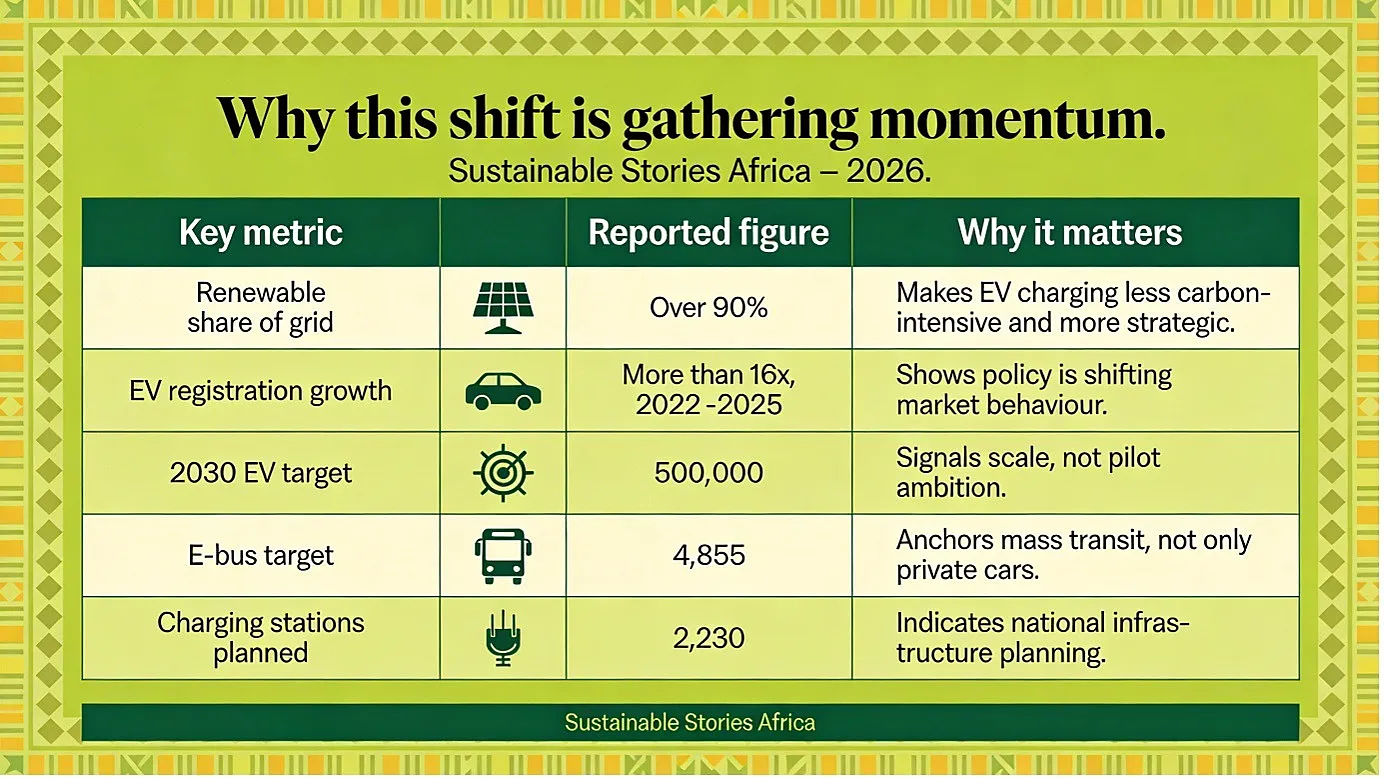
The reporting says the national grid is more than 90% renewable, largely hydropower-based, giving the country a structural advantage as it electrifies transport.
That means the EV shift is not just about replacing one vehicle type with another; it is about using domestic renewable power to reduce dependence on imported fossil fuels.
The government’s E-Mobility Strategy and Implementation Plan for 2025–2030 sets ambitious targets:
- 80% electrification of new vehicles by 2030
- 100% of new two- and three-wheelers
- 100% of new government vehicles
- 100% of new public transport, and 30% local production of new electric vehicles.
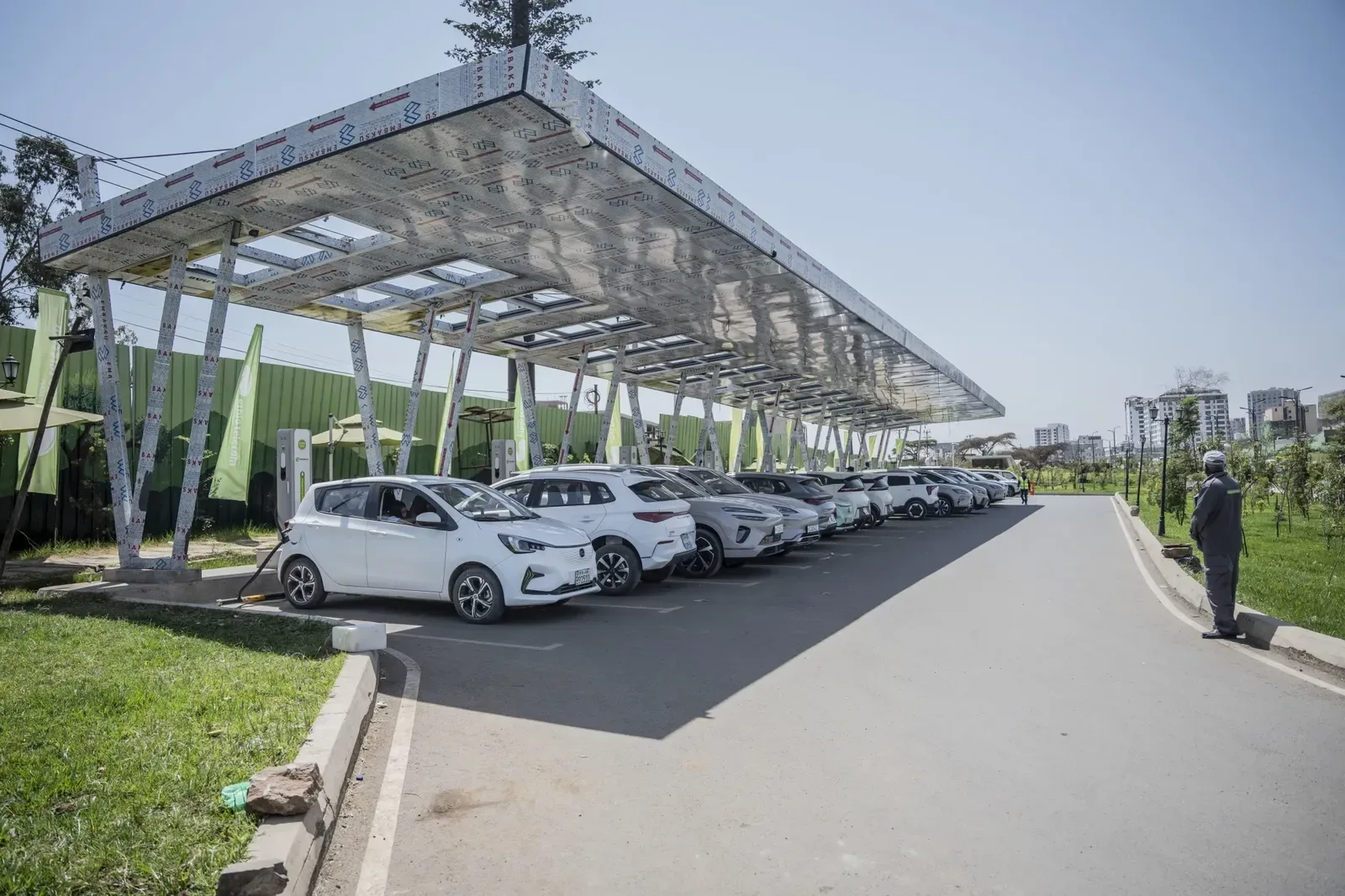
The strategy also targets 500,000 EVs, 4,855 e-buses and 2,230 charging stations nationwide, including 1,176 in Addis Ababa and 1,054 in regional areas.
Why this shift is gathering momentum
The economics are already helping the case. According to Ethiopia’s Ministry of Transport and Logistics, an average EV owner who once spent approximately 4,000 birr per month on fuel now spends roughly the equivalent of $4 on charging.
The gap is even sharper in public transport: operating 30 diesel buses costs more than 11 million birr monthly in fuel, while 30 comparable e-buses consume about 1.5 million birr in electricity.
That cost advantage is being reinforced by policy. EVs and charging equipment, whether completely knocked down, semi-knocked down or fully built, are fully exempt from customs taxes, according to the reporting.
As a result, EV registrations in Ethiopia rose more than sixteenfold between 2022 and 2025, albeit from a small base.
Ethiopia’s mobility strategy goes beyond EV rollout. The country has deployed 120 e-buses and more than 400 locally assembled mini and midi electric buses, while expanding walking and cycling infrastructure across dozens of cities.
In Addis Ababa, urban redesign is aligning roads, public space and access with real travel patterns.
What Ethiopia could unlock
If Ethiopia sustains this approach, the gains could be significant. It could reduce exposure to oil price shocks, cut urban air pollution, lower transport operating costs, and build a local industrial ecosystem around assembly, charging, components, inspection and research.
The plan includes an EV and components manufacturing and assembly centre, an EV research centre and a dedicated EV technology park, all intended to anchor a domestic industrial base.
That matters for the wider African market too. Ethiopia is showing that clean mobility can be tied to industrial policy, energy sovereignty and urban inclusion.
In other words, this is not a narrow climate programme. It is a systems-level development strategy.
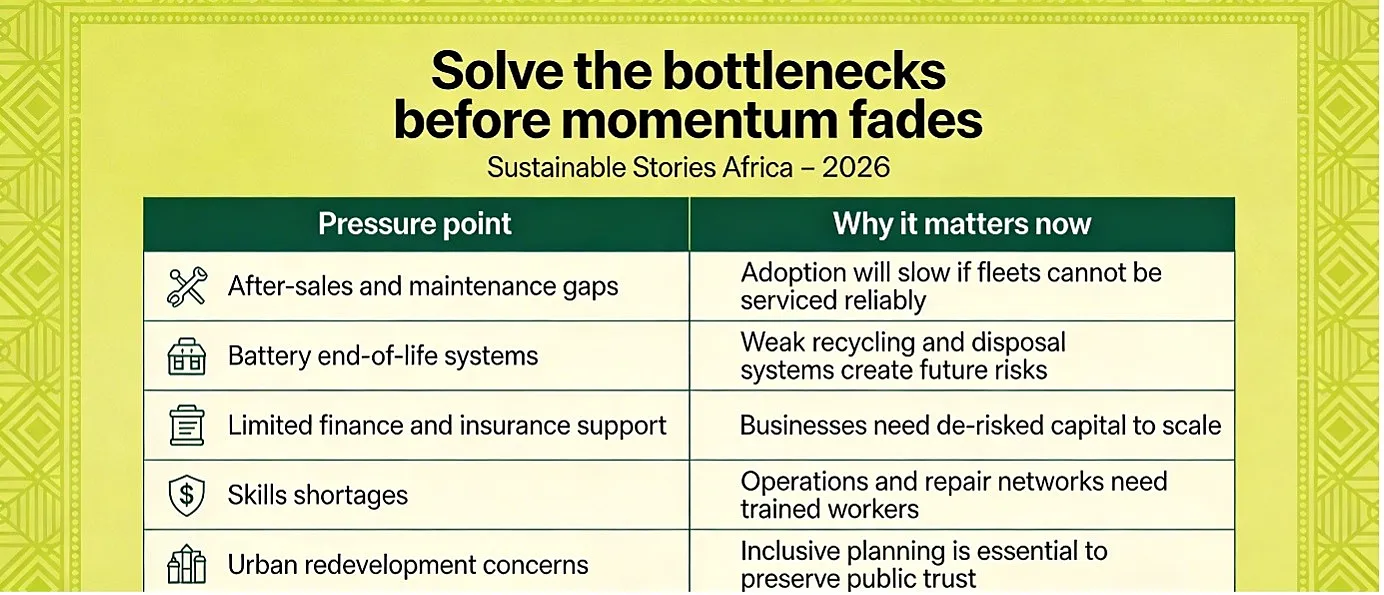
Solve the bottlenecks before momentum fades
The challenge now is execution. The reporting identifies gaps in after-sales service, battery end-of-life management, land for charging stations and training centres, skills for EV maintenance, insurance confidence, bank collateral requirements and limited donor support for local start-ups.
There are also concerns about displacement and gentrification tied to urban redevelopment.
For African policymakers, the lesson is clear: EV policy works when linked to public transport, power planning, industrial capacity and urban design. Ethiopia shows that cleaner mobility can also strengthen resilience.
Path Forward – Keep Clean Mobility Broad And Inclusive
Ethiopia’s next test is whether it can turn bold policy into durable systems: more charging, more skills, stronger local assembly and more inclusive city planning.
That will determine whether the transition remains credible.
For African markets, the bigger signal is powerful. Clean transport becomes more investable when it is linked to energy security, industrial upgrading, and better public mobility, rather than treated as a standalone green experiment.
Culled From: https://www.downtoearth.org.in/africa/e-powering-ethiopia-and-its-integrated-leap-to-zero-emission-mobility