South Africa has appointed veteran negotiator Roelf Meyer as its next ambassador to the United States.
The choice comes after months of diplomatic strain, trade uncertainty and the expulsion of Pretoria’s previous envoy.
For business, workers and policymakers, the post now sits at the centre of trade access, investor confidence and political trust.
A Familiar Negotiator Returns To Washington
South Africa has turned to one of the country’s best-known political bridge-builders to manage one of its most difficult foreign relationships.
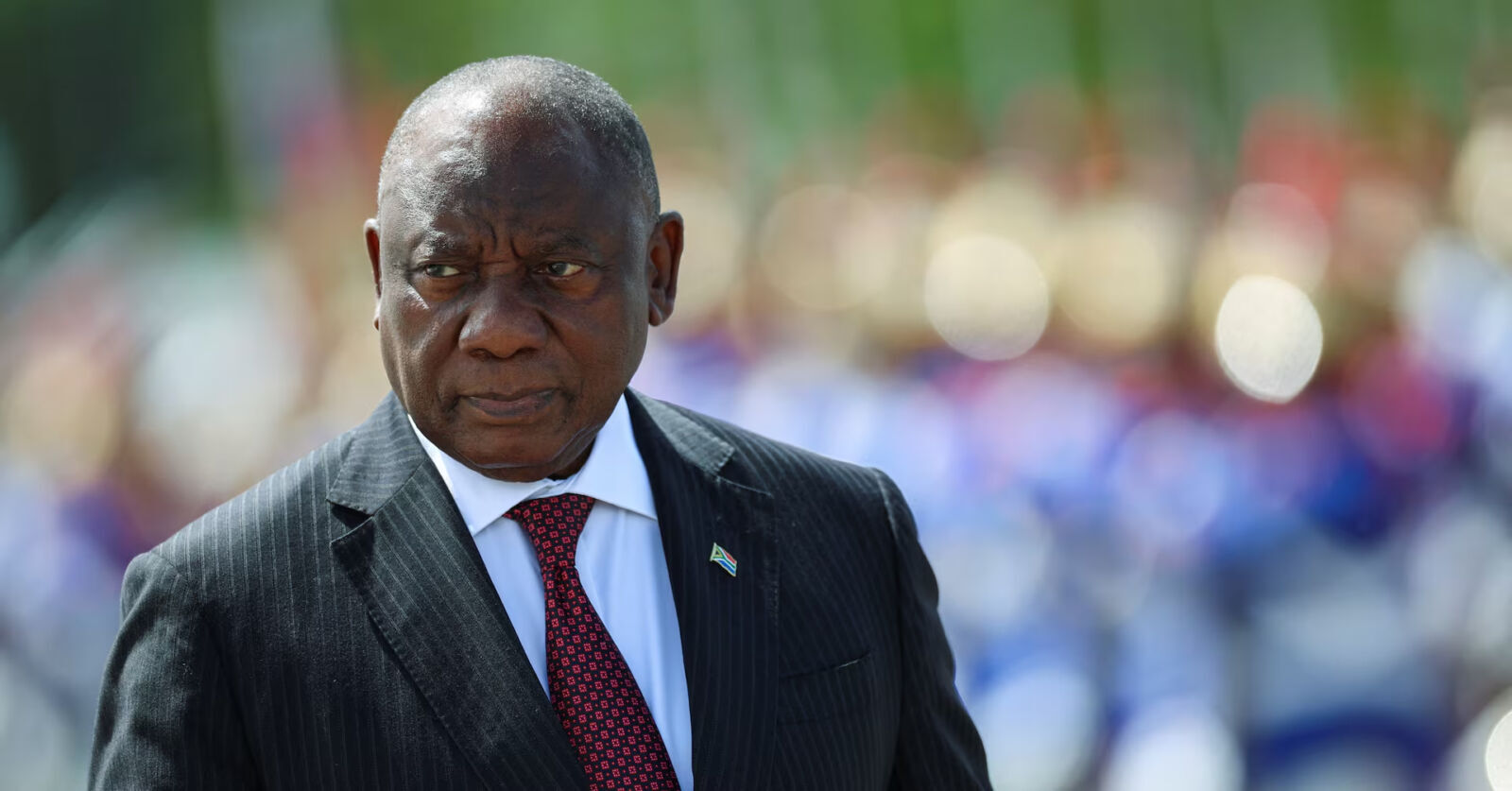
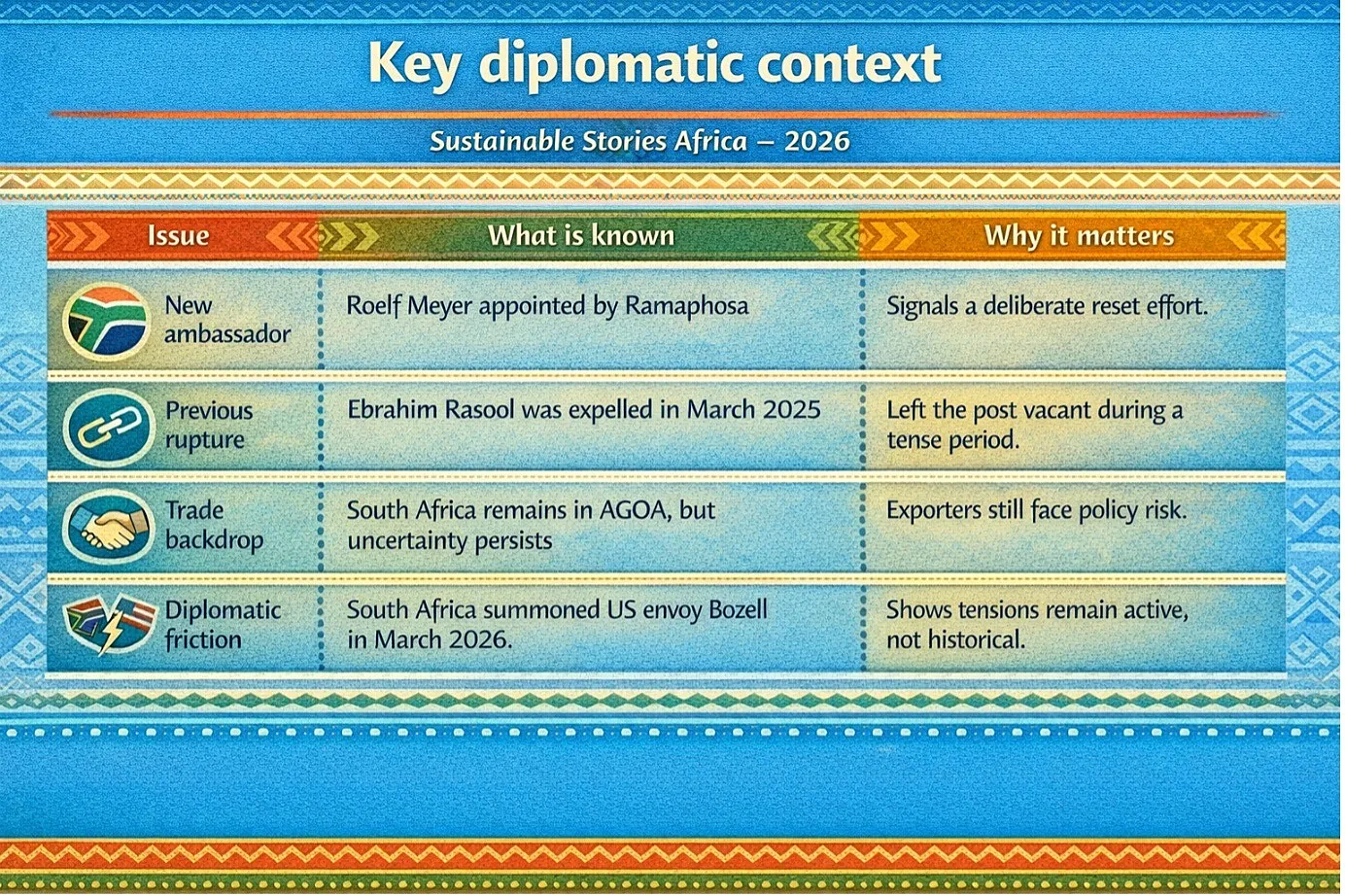
President Cyril Ramaphosa has appointed Roelf Meyer, an Afrikaner politician and central figure in the negotiations that helped end apartheid, as ambassador to the United States, filling a post that had stood vacant since Ebrahim Rasool was expelled in March 2025.
The choice is more than symbolic. It comes at a moment as ties between Pretoria and Washington have been strained by disputes over race, trade, foreign policy and diplomacy itself.
Reuters reported that the rand was steady on April 15, with sentiment helped in part by Meyer’s appointment, suggesting markets read the move as an attempt at stabilisation.
Meyer’s selection also carries historical weight. In the 1990s, he negotiated for the apartheid government while Ramaphosa led talks for the ANC.
That former adversaries are again being asked to work across a divide is part of the message Pretoria appears keen to send, where politics hardens, South Africa still reaches for negotiators, rather than ideologues.
Why This Diplomatic Post Suddenly Matters More
The Washington posting has become one of South Africa’s most sensitive diplomatic jobs because the relationship now affects far more than protocol.
It touches tariffs, aid, investor sentiment, AGOA trade access and the broader political narrative around South Africa’s place in a more combative global order.
Relations deteriorated sharply after Rasool’s expulsion, while the United States under President Donald Trump also criticised South African domestic and foreign policy, cut aid, and intensified rhetoric around the treatment of the white minority.
In February 2026, Washington’s new ambassador to Pretoria, Leo Brent Bozell III, arrived amid those already fraught ties, and in March South Africa summoned him over what it called “undiplomatic remarks.”
Pretoria has tried to keep channels open. Ramaphosa appointed former deputy finance minister Mcebisi Jonas as special envoy to the US in April 2025, a sign that South Africa viewed the rupture as too important to leave unmanaged. Meyer’s appointment now adds a full ambassadorial layer to that effort.
For ordinary South Africans, this may sound distant. However, it is not. Trade preferences, export access and the tone of bilateral relations shape real outcomes for factories, farms, ports and payrolls.
South Africa remains in AGOA after a one-year extension signed in February 2026; however, the reprieve remains fragile, and uncertainty persists.
What A Successful Reset Could Unlock
If Meyer succeeds, the gains could be bigger than a calmer diplomatic tone. A steadier relationship with Washington could help protect trade flows, reduce headline risk for investors and create more room for practical cooperation in areas such as energy, minerals, industrial policy and finance.
That matters for South Africa, struggling to convert investment pledges into actual delivery.
There is also a human dimension. When diplomacy breaks down, the cost often shows up first in uncertainty: exporters delay decisions, investors demand more caution, and governments spend time containing damage instead of building opportunity.
Meyer’s reputation as a pragmatic negotiator may help because the current task is not to erase disagreement, but rather to ensure disagreement does not become economic injury.
Diplomacy Must Now Deliver Economic Calm
The real test starts now. South Africa will need to turn a symbolic appointment into a functioning channel for problem-solving.
That means disciplined engagement on trade, a clearer message to US political and business actors, and careful management of flashpoints that have already hardened mistrust.
Washington, too, will have to decide whether it wants the relationship defined by grievance politics or strategic realism.
South Africa is too large an economy, too significant a regional actor and too important a gateway into African markets for the relationship to remain trapped in rhetorical escalation.
Businesses on both sides will be watching whether Meyer can restore not only warmth but also order.
Path Forward – Repair Trust, Protect Market Access
Pretoria’s immediate priority is to convert Meyer’s appointment into a steady diplomatic engagement that protects trade, lowers political temperature and restores credibility in one of its most important bilateral relationships.
For African markets, the broader lesson is that diplomacy remains an economic infrastructure.
When political trust weakens, market risk rises; when channels reopen, investment, trade and long-term policy coordination become easier to defend.
Culled From: South Africa turns to Afrikaner as ambassador to US | Semafor