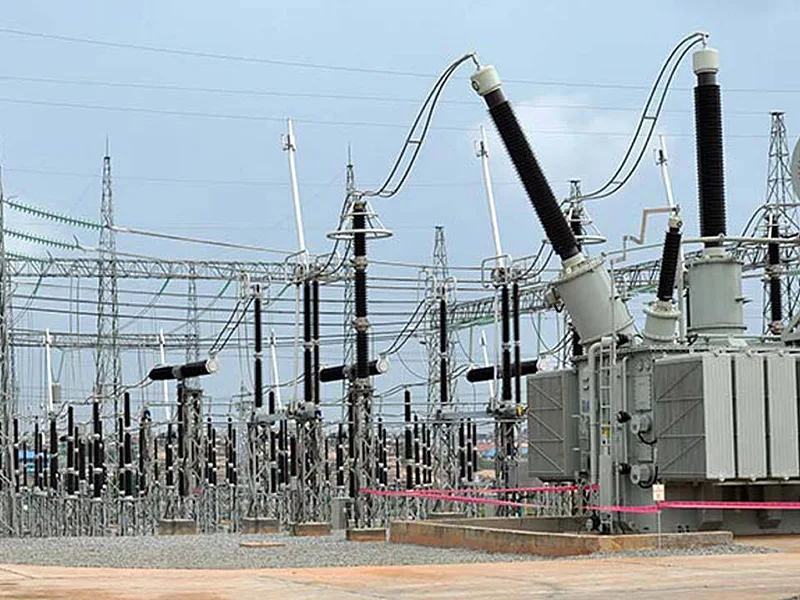
Nigeria's aviation sector is facing criticism for failing to implement meaningful climate-governance measures despite growing global pressure on airlines to decarbonise.
According to ThisDay, experts warn that most Nigerian carriers lack emissions-management systems, sustainability reporting structures, or transition plans needed to meet international climate obligations. They argue that without urgent reforms, the country risks falling behind global aviation standards.
Aviation Under Fire as Climate Obligations Intensify
Nigeria's airlines are "doing next to nothing" to meet emerging global climate-governance standards, according to aviation experts quoted by ThisDay.
Despite rising emissions, fuel inefficiency, and international decarbonisation targets, analysts say most Nigerian carriers remain unprepared for sustainability requirements that are rapidly becoming compulsory across the global aviation industry.
The warning comes as regulators tighten climate-compliance rules.
Airlines Lack Climate Plans, Emissions Tools, and Governance Systems
Experts note that Nigerian airlines lag their peers in Europe, the Middle East, Asia, and even some African markets where climate reporting, fuel-efficiency programmes, and carbon-offset mechanisms are now standard practice.
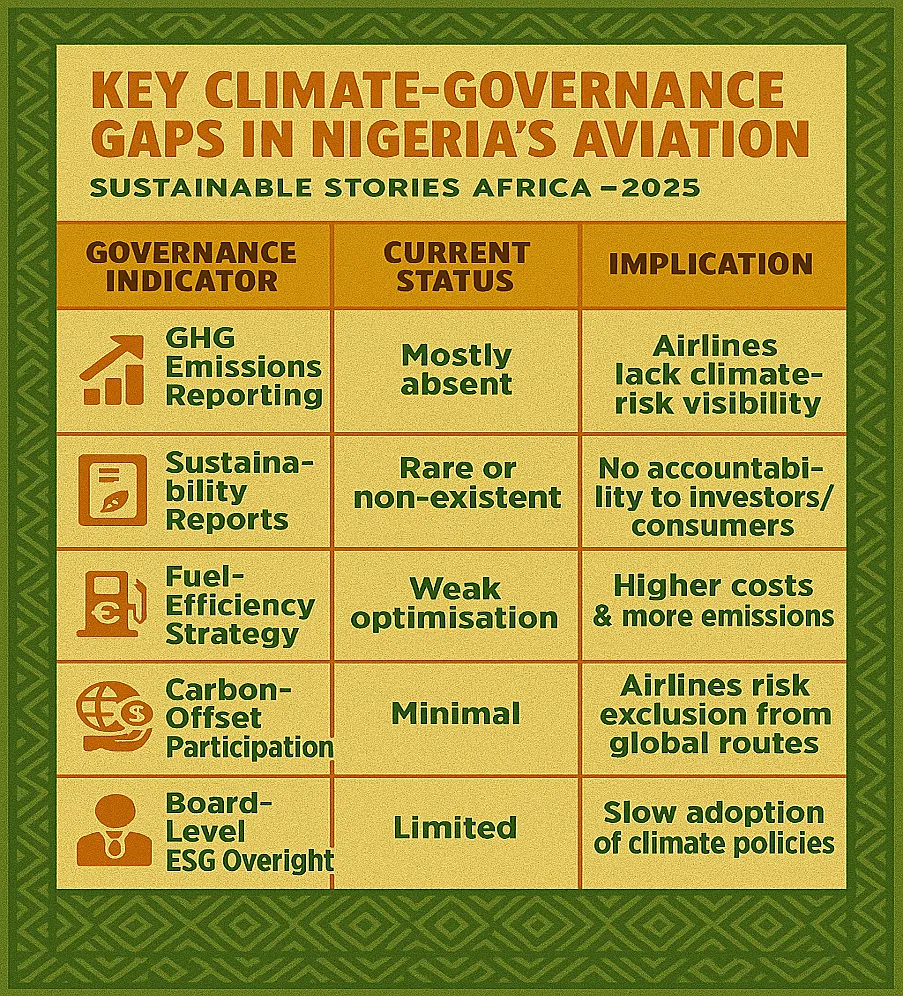
Key Climate-Governance Gaps in Nigeria's Aviation
| Governance Indicator | Current Status | Implication |
|---|---|---|
| GHG Emissions Reporting | Mostly absent | Airlines lack climate-risk visibility |
| Sustainability Reports | Rare or non-existent | No accountability to investors/consumers |
| Fuel-Efficiency Strategy | Weak optimisation | Higher costs & more emissions |
| Carbon-Offset Participation | Minimal | Airlines risk exclusion from global routes |
| Board-Level ESG Oversight | Limited | Slow adoption of climate policies |
Industry commentators argue that Nigeria could face reputational risks if these gaps persist, particularly as major aviation hubs adopt stricter environmental requirements.
Why Inaction Threatens Competitiveness and Market Access
Global aviation is shifting toward mandatory climate disclosure and emissions-reduction frameworks such as CORSIA, ICAO's LTAG, and national net-zero commitments. Nigerian carriers risk penalties, route restrictions, and higher operating costs if they do not modernise their governance systems.
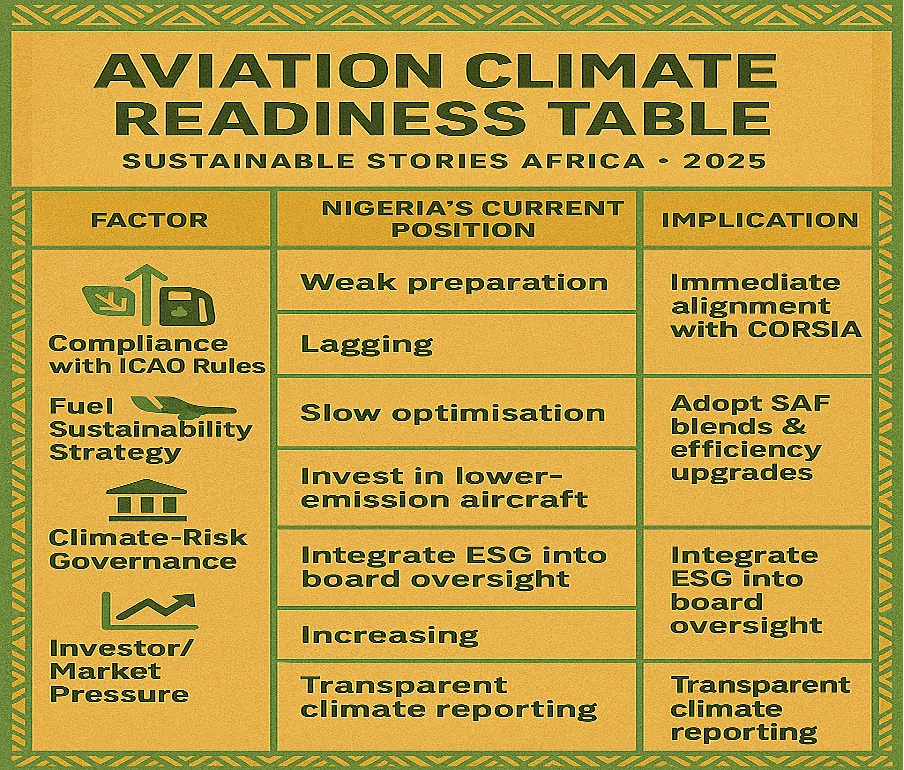
Aviation Climate Readiness Table
| Factor | Nigeria's Current Position | Strategic Need |
|---|---|---|
| Compliance with ICAO Rules | Weak preparation | Immediate alignment with CORSIA |
| Fuel Sustainability Strategy | Lagging | Adopt SAF blends & efficiency upgrades |
| Fleet Modernisation | Slow | Invest in lower-emission aircraft |
| Climate-Risk Governance | Minimal | Integrate ESG into board oversight |
| Investor/Market Pressure | Increasing | Transparent climate reporting |
Analysts warn that failure to act may result in Nigerian airlines being priced out of international partnerships, code-share agreements, and airport slots.
Urgent Steps Needed to Strengthen Climate Governance
To close the gaps, experts recommend:
- Mandatory emissions tracking and disclosure for all Nigerian carriers.
- Sector-wide climate-governance guidelines, developed with aviation authorities and environmental agencies.
- Investment in sustainable aviation fuel (SAF) pilots and fleet-efficiency programmes.
- Training for airline executives and technical teams on climate-risk management.
- Partnerships with international aviation and climate-finance institutions to support transition financing.
Without coordinated regulatory action, Nigeria's aviation sector may struggle to remain competitive in a rapidly decarbonising global market.
PATH FORWARD – Govern Smarter, Reduce Emissions, Protect Aviation Competitiveness.
Nigeria's aviation industry must accelerate climate governance to avoid future market barriers and regulatory sanctions. Building emissions-tracking systems, aligning with global frameworks, and integrating ESG oversight into corporate governance are immediate priorities.
With stronger policies and targeted investments, Nigerian airlines can reposition themselves for a low-carbon future while enhancing competitiveness across regional and global routes.
Culled From: https://www.thisdaylive.com/2025/12/04/nigerian-airlines-doing-next-to-nothing-on-climate-governance/