
Africa's $5 billion film industry is increasingly being positioned as a strategic lever for private healthcare financing, according to discussions at the Africa Film Finance Forum panel hosted by ABCHealth.
Stakeholders argued that storytelling can humanise data, shift investor perception, and mobilise capital toward a healthcare sector facing a $66 billion annual financing deficit.
Storytelling Redefines Investment in African Healthcare
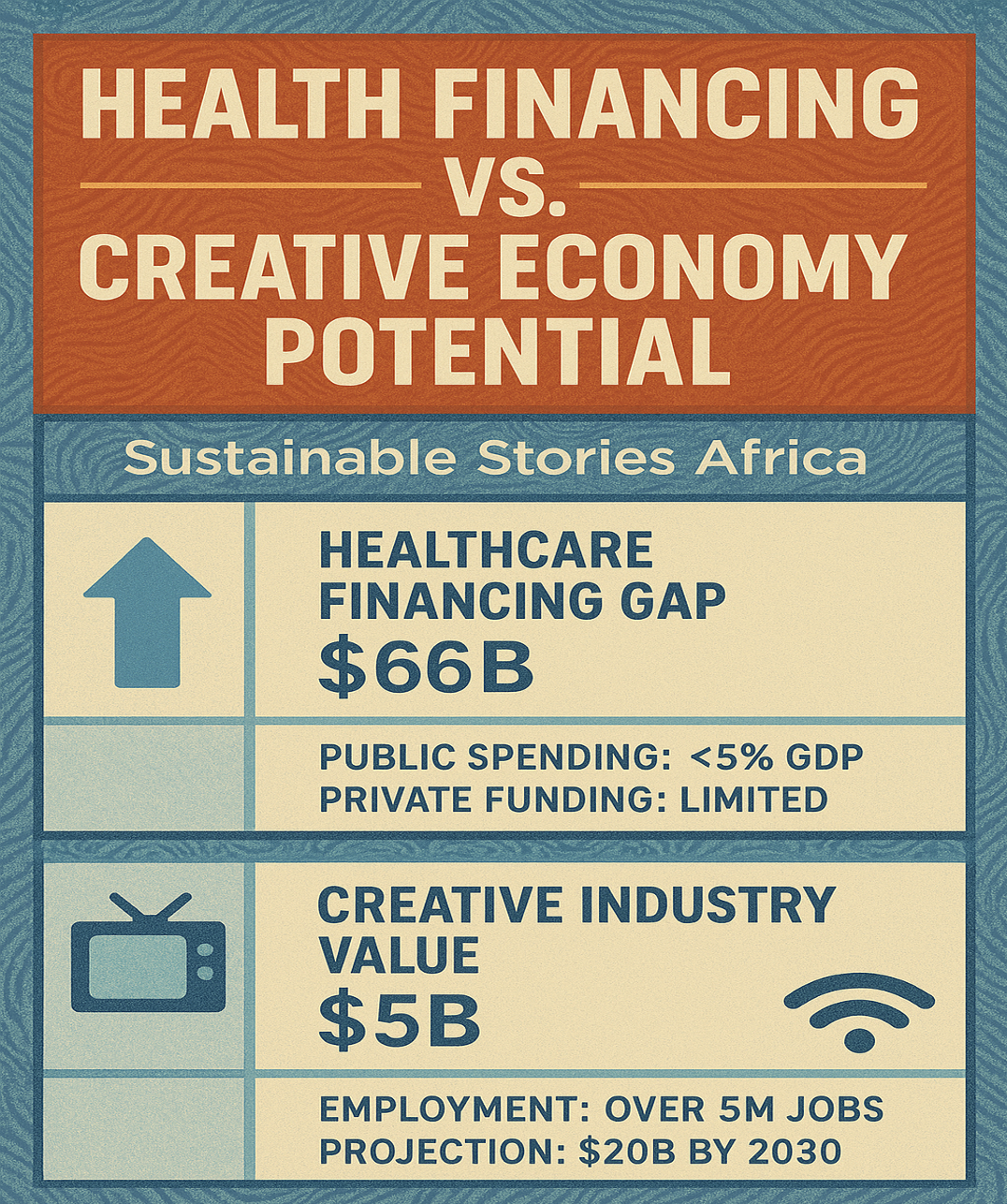
Africa's healthcare sector faces a financing gap exceeding $66 billion annually, with public expenditure often below 5% of GDP. This shortfall threatens the continent's ability to deliver equitable and resilient healthcare systems. However, a parallel creative economy, valued at $5 billion and projected to surpass $20 billion by 2030, offers untapped potential for collaboration.
At the Africa Film Finance Forum hosted by ABCHealth, industry experts, investors, and health leaders spotlighted the power of storytelling to transform healthcare's image from a cost centre to a compelling investment frontier. Participants argued that emotionally resonant narratives, backed by credible data, can bridge perception gaps and attract sustainable private-sector capital.
This shift signals a growing recognition across Africa's development landscape: narratives are not auxiliary tools, but strategic levers capable of shaping investor confidence, building public trust, and reimagining how health financing conversations unfold.
$66 billion health sector deficit, $5 billion creative sector economy
Health Financing Gap Meets Creative Capital
Panellists emphasised that Africa's healthcare deficit is not solely a resource problem, but also a perception problem. Investors frequently view health interventions as high-risk, low-return ventures. Meanwhile, Africa's creative industries have mastered audience engagement and command global cultural influence; however, they remain under-leveraged in health advocacy and financing.
The report notes that Nollywood alone produces approximately 2,500 films annually, making it the world's second-largest film producer. With a youthful, digitally connected audience and expanding streaming presence, the industry provides a powerful platform for health messaging and investment storytelling.
HEALTH FINANCING VS. CREATIVE ECONOMY POTENTIAL
Storytelling Reduces Perceived Investment Risk
Speakers highlighted that emotionally resonant storytelling helps humanise data and demonstrate the tangible impact of health investments.
Case studies referenced in the report, including MTV Shuga and Soul City, showed measurable improvements in HIV testing and health-seeking behaviours among young audiences, illustrating how narrative interventions translate into outcomes.
By demonstrating clear links between storytelling and behavioural change, panellists argued that narratives can reduce investor scepticism and build confidence in financing mechanisms.
Data credibility increases investor confidence
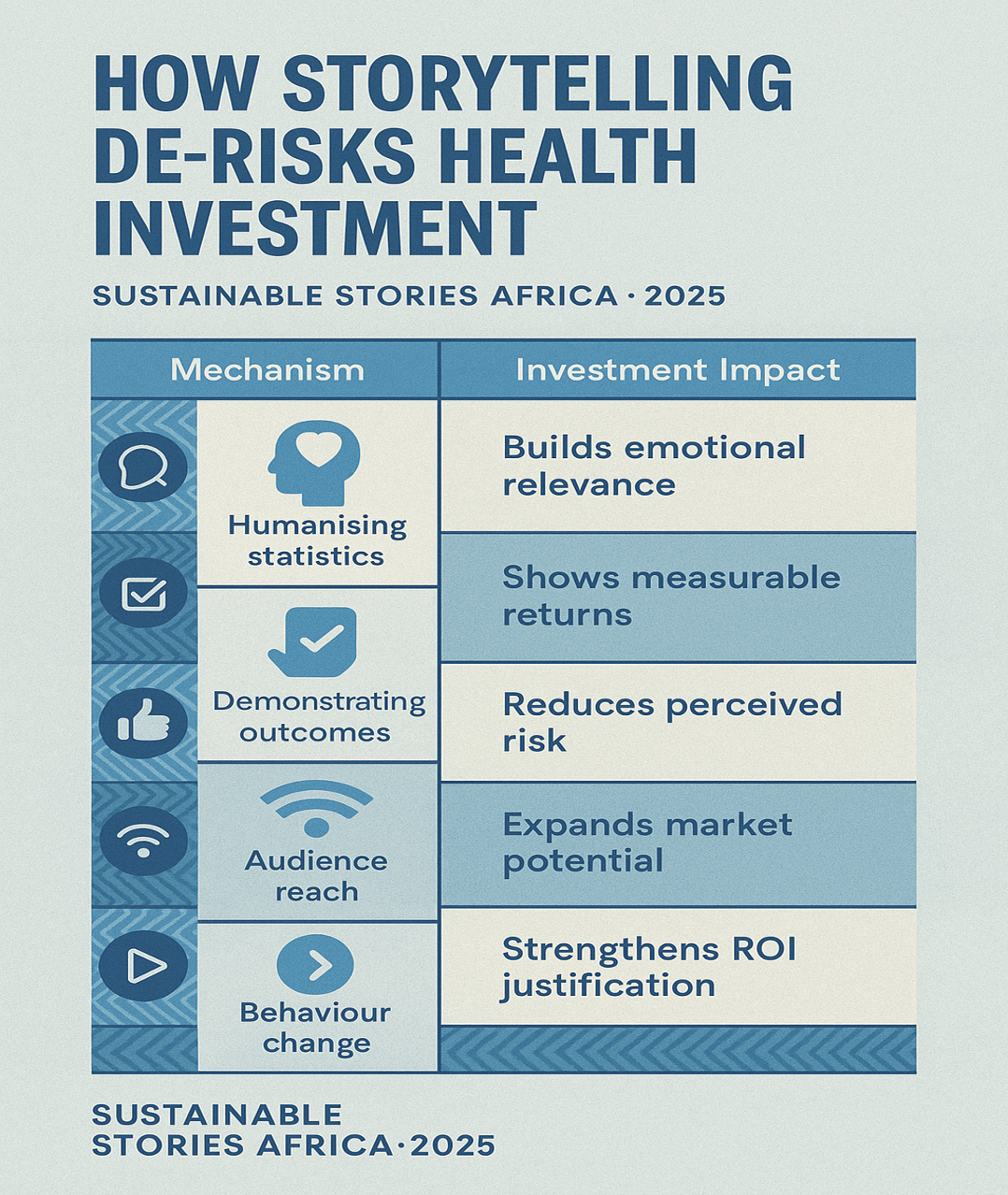
HOW STORYTELLING DE-RISKS HEALTH INVESTMENT
| Mechanism | Investment Impact |
|---|---|
| Humanising statistics | Builds emotional relevance |
| Demonstrating outcomes | Shows measurable returns |
| Influencing perception | Reduces perceived risk |
| Audience reach | Expands market potential |
| Behaviour change | Strengthens ROI justification |
Structuring Health Stories as Investable Products
A recurring theme was that impact stories must be designed as bankable ventures, not philanthropic appeals.
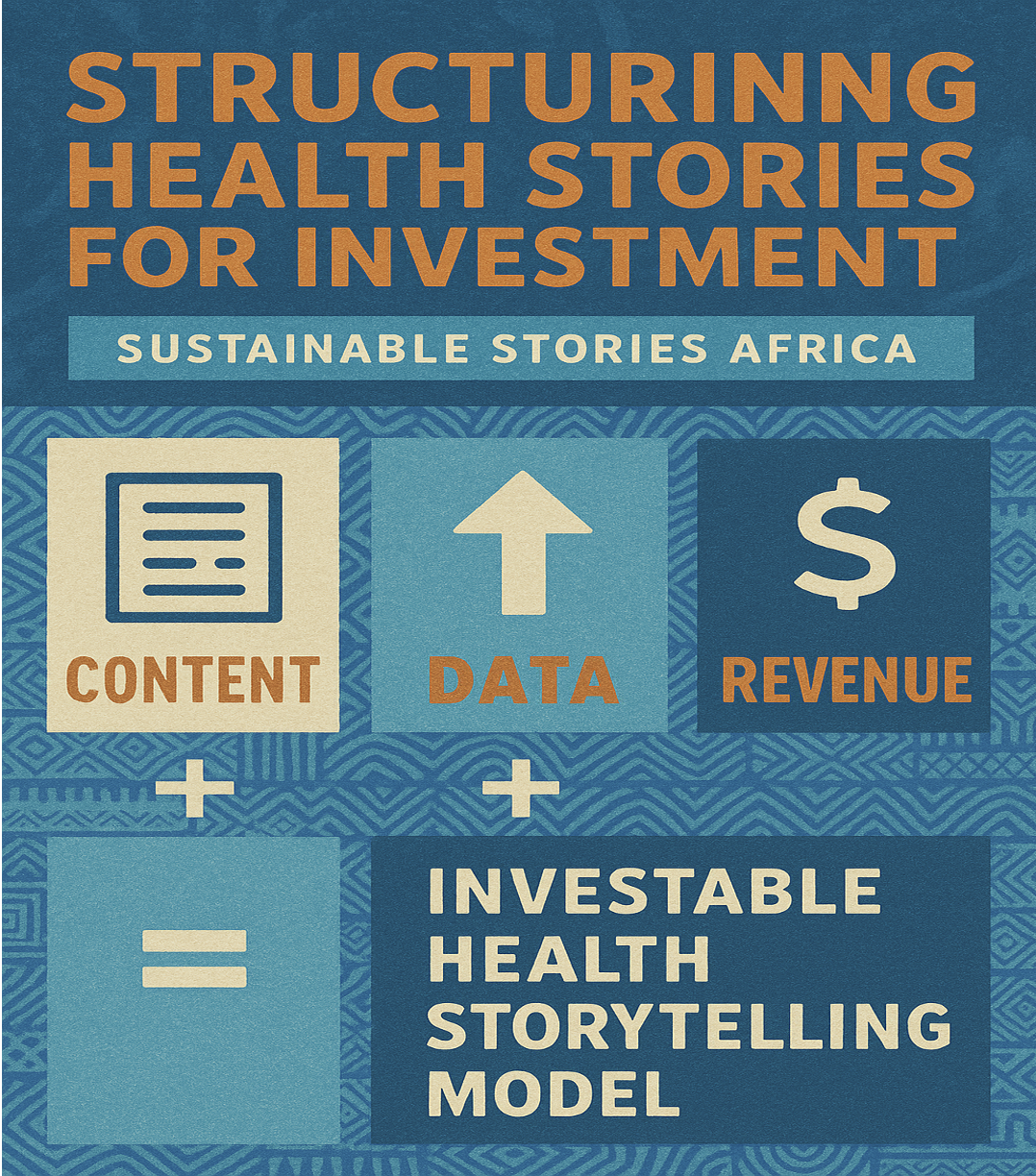
Financiers on the panel emphasised that investors already fund multi-million-dollar Nollywood productions, proving willingness to invest when commercial viability is clear. The same logic, they argued, should apply to health-focused storytelling if supported by:
- defined revenue models
- streaming and licensing strategies
- brand partnerships
- measurable key performance indicators (KPIs)
Without structured financial pathways, health storytelling risks remaining episodic and unsustainable.
Revenue pathways unlock financing flows
STRUCTURING HEALTH STORIES FOR INVESTMENT
Building Cross-Sector Investment Ecosystems
Panel insights stressed that collaboration between creatives, financiers, and health professionals is essential. The report notes emerging models where:
- telcos integrate health content with service offerings
- fintech companies support health access platforms
- film productions partner with NGOs and hospitals
- streaming platforms amplify health campaigns
These multilayered partnerships allow storytelling to evolve into service delivery pathways, turning awareness into action.
Partnerships drive scalable health outcomes
CROSS-SECTOR ROLES IN HEALTH STORYTELLING
| Sector | Contribution |
|---|---|
| Creative industry | Audience engagement |
| Health sector | Technical accuracy |
| Finance | Investment capital |
| Telecom/Fintech | Access platforms |
| Media | Dissemination |
Panellists also called for institutional frameworks such as:
- health-focused film festivals
- storytelling investment funds
- narrative incubators
- policy-level adoption of storytelling tools
These structures can ensure sustainability and scale.
Path Forward – Capital, Credibility, Collaboration Drive Impact
The report suggests that the future of Africa's health financing will depend on the ability to align creative influence with investment strategy. Emotional resonance, supported by credible data, provides a persuasive case for private sector engagement.
If storytelling becomes embedded within health policy, investment decisions, and private financing models, it could reshape the continent's development trajectory.
Africa's healthcare financing future will depend on transforming compelling narratives into structured, investable products supported by data, measurable outcomes, and clear revenue pathways. Storytelling must shift from awareness campaigns to vehicles that attract sustainable private capital.
By strengthening cross-sector collaboration, building storytelling investment frameworks, and institutionalising narrative tools within health financing policy, stakeholders can unlock scalable impact and accelerate progress toward closing the $66 billion annual funding gap.
Stories Mobilise Capital, Transform Health Systems