

Climate finance can support growth and resilience, but institutions determine whether commitments become working projects.
A World Bank COP31 discussion puts government coordination and delivery under the spotlight.
For African economies, the practical question is how to connect national ambitions with budgets, accountable agencies and benefits that households can actually experience.
Climate Ambitions Need Institutions That Deliver
African governments seeking climate finance also need institutions capable of turning that funding into reliable services, resilient infrastructure and economic opportunity.
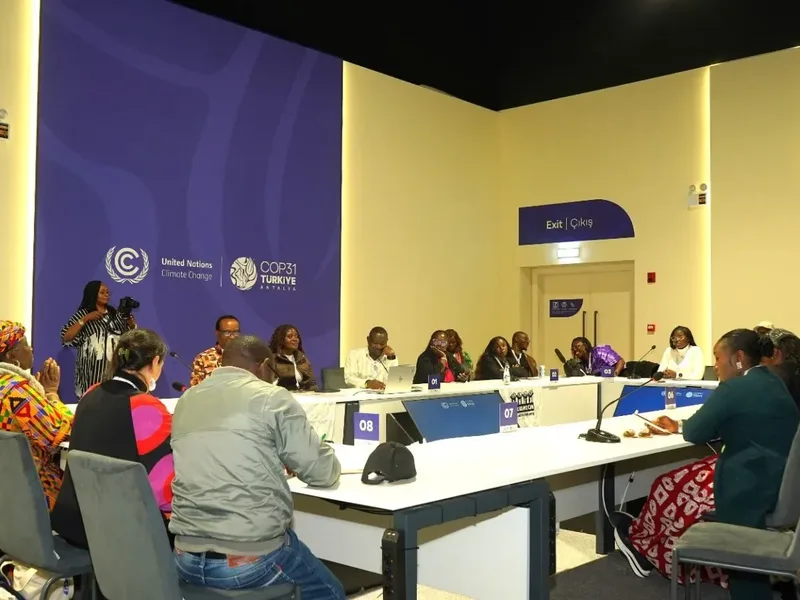
The World Bank Group's November 17 COP31 session, Governance for Climate-Smart Development, examined that implementation challenge in Antalya, Türkiye, drawing on its Country Climate and Development Reports, or CCDRs.
- The report examines the institutional connections between commitments, planning and public finance.
The stakes extend beyond environmental ministries.
- A government can announce an ambitious climate target while its transport agency, electricity utility and treasury continue making incompatible decisions.
- For communities waiting for dependable water, safer roads or electricity, that disconnect becomes a development problem.
The central challenge is to make climate commitments part of everyday government decisions.
Promises Lose Value When Delivery Breaks
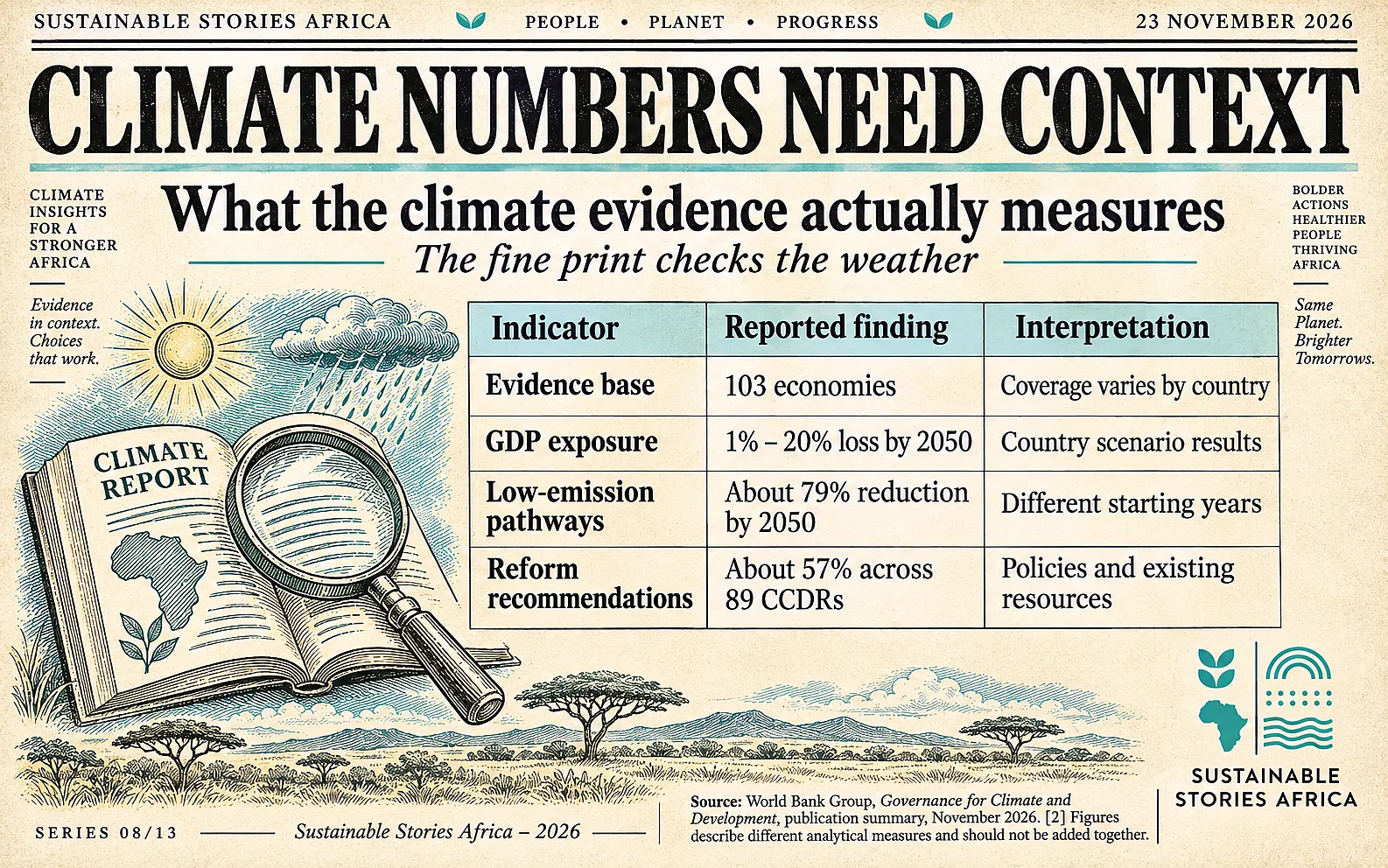
The Bank's synthesis reports potential GDP losses ranging from 1% to 20% by 2050 across countries, depending on their circumstances.
- These are modelled country outcomes, not a forecast that every African economy will lose the same share of output.
- Low-emission pathways assessed in the reports reduce aggregate emissions by about 79% by 2050 from their respective starting years.
These findings make institutional performance economically relevant.
- A resilience project that cannot move through appraisal, procurement and maintenance cannot deliver its projected benefits.
- Equally, approving infrastructure without considering future climate conditions can leave public authorities paying for assets that underperform.
The delivery should become a central measure of climate credibility.
- Announcements establish direction; implementation records show whether institutions can carry that direction into services and investment.
- This requires scrutiny of decisions between the national pledge and the completed project, where responsibility can become fragmented or unclear.
Follow Decisions From Ministries Into Budgets
The COP31 session brought together Stéphane Hallegatte, the Bank's chief economic adviser for climate, and country representatives including Uganda's Sam Mugume Koojo, Somalia's Ayan Harare and Kazakhstan's Rustam Nasirkhan.
- Hallegatte's account stressed that reform must follow each country's particular implementation failures.
- Koojo described a Ugandan country platform linking finance, environment and planning institutions.
More than 50 of the 103 economies have enacted climate framework laws, drafted or in preparation.
- Separately, more than 40 economies have adopted or are developing climate budget tagging.
- Neither measure, by itself, establishes that projects are being completed or services improved.
Budget tagging identifies expenditure associated with climate objectives.
- Its practical value depends on what follows: whether funds are released, contracts are delivered, and assets remain functional.
- Public reporting should distinguish the amount labelled for climate from the amount spent effectively on an identified result.
An implementation record should also cover maintenance.
- A completed water system or road can lose its usefulness when no institution has the resources or responsibility to keep it operating.
- Publishing the expected operating cost and the agency responsible would make that obligation visible before construction begins.
- It would also give communities a clearer route for raising service failures after a contractor leaves.
Earlier World Bank analysis offers an African example of political ownership.
- In Côte d'Ivoire, the Council of Ministers endorsed the CCDR as a government document and assigned the Prime Minister's office for follow-through.
- This illustrates an institutional route for connecting technical evidence with central government authority.
The lesson is to identify who resolves conflicts between agencies.
- A coordination committee has limited value if it cannot settle competing priorities or secure a decision when implementation stalls.
Published responsibilities and escalation procedures would make that coordination more visible to citizens and financiers.
Better Governance Can Protect Everyday Development
Nigeria is a tangible illustration:
- Climate change could push an additional 5.1 million people into poverty by 2035, while adaptation measures assessed in its CCDR could protect about 3 million.
- These are conditional modelling estimates, rather than recorded poverty outcomes.
The practical implication is to judge adaptation through the services and livelihoods it protects.
- Assess a drainage programme against reduced disruption, alongside construction expenditure.
- Agricultural support should show whether farmers can sustain production through adverse conditions.
- Such indicators link resilience planning with the development outcomes that justify public spending.
Financing arrangements also need to match the activity.
- The Bank's May 2024 investment explainer finds greater potential for private participation in industry and energy than in water, with large differences between countries and technologies.
- It stresses that reforms and financing models affect what private capital can realistically provide.
That distinction matters for public priorities.
- A commercially attractive investment and an essential service with limited revenue are different financing propositions.
- Governments should explain where public funding is indispensable, where private investment is feasible and what obligations accompany each arrangement.
- Communities need to understand how access and affordability will be protected.
Make Financing Decisions Traceable Through Implementation
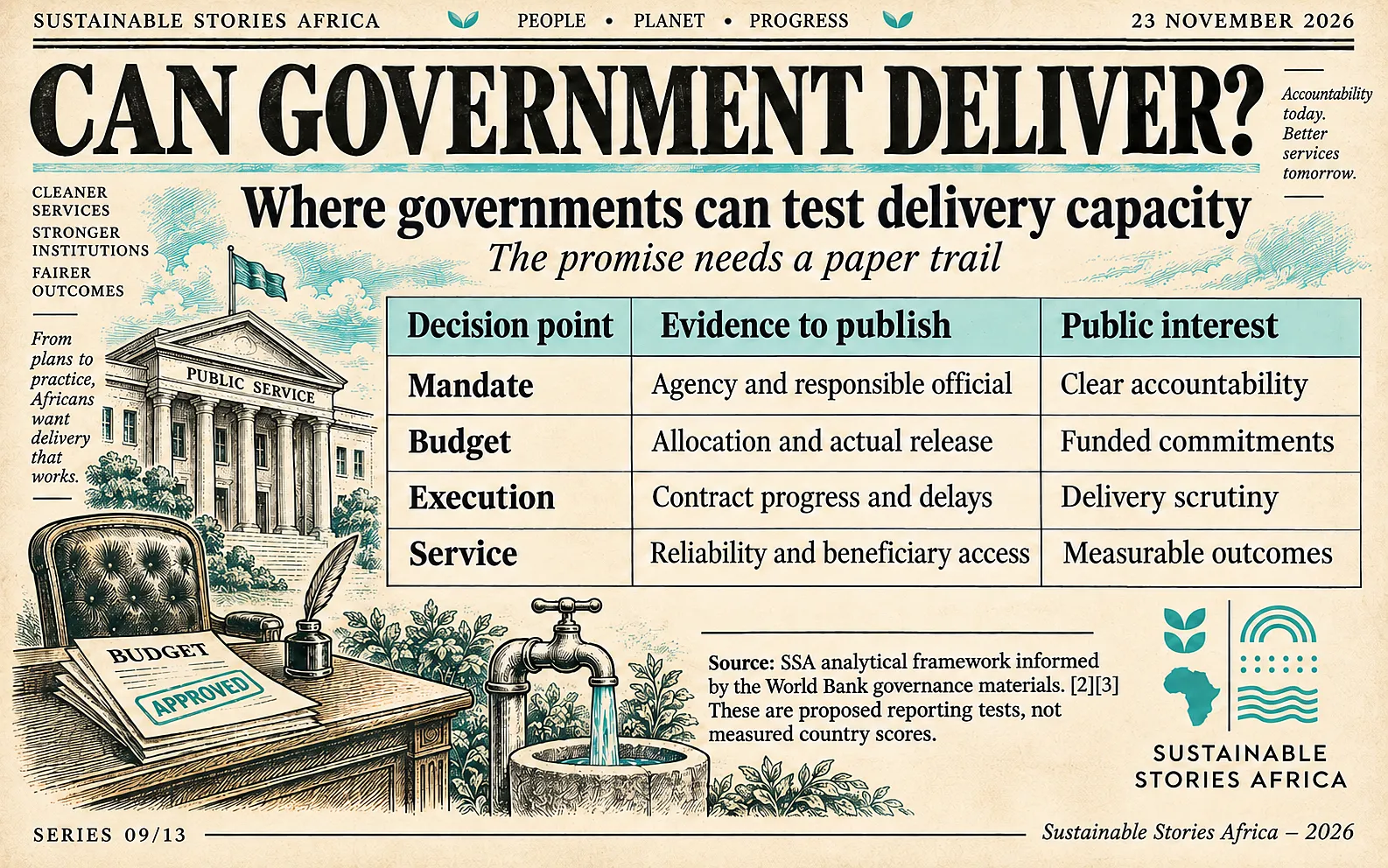
Governments can begin by selecting priority interventions and publishing a record of their progress from approval to operation.
- For each, the record should identify the delivery agency, financing arrangement, procurement timetable and intended service outcome.
- Recording the reason for a delay would help distinguish a funding shortage from a design or coordination problem.
Development partners should examine the same decisions when structuring support.
- Project preparation, technical skills and maintenance arrangements belong in the financing conversation.
- A budget that covers construction while leaving operation unresolved can transfer costs into later years and weaken the intended development benefit.
Investment estimates require care, too.
- The Bank's methodological explainers show that CCDRs use different baselines: some measure additional costs against an existing development pathway, while others incorporate spending to close infrastructure and service gaps.
- The resulting figures cannot automatically be compared as identical measures of climate expenditure.
Public investment proposals should disclose their baseline, assumptions and distribution of benefits.
- Legislatures, businesses and civil society would then have a clearer basis for questioning costs and monitoring implementation.
- The objective is a record that links public money with an identifiable result and allows corrective action when delivery slips.
Oversight should ask who benefits as well as what gets built.
- National expenditure totals can conceal unequal access between locations or income groups.
- A project-level account of service coverage, affordability and complaints would make those differences easier to examine.
These proposed checks translate the governance discussion into questions citizens can use when assessing a climate investment in their own community.
Path Forward – Means Funding Accountable Delivery
African governments should connect climate commitments to named institutions, executable budgets and published service outcomes.
Development partners can reinforce that connection through project preparation and support for implementation capacity.
Success should be judged through functioning infrastructure, protected livelihoods and reliable services, with transparent evidence showing how finance reached those outcomes.
Institutional reform and investment must progress together.