
Stockpile averages can hide the ore characteristics that determine processing performance.
NTWIST's mine-to-mill playbook proposes connecting geology, material movements, blending and plant decisions to reduce those blind spots.
Its reported gains offer useful questions for African operators, provided vendor claims are tested against site evidence and resource efficiency is measured alongside production.
Mining Performance Starts Before Processing Begins
African mining operators seeking more predictable production may need to look upstream from the processing plant.
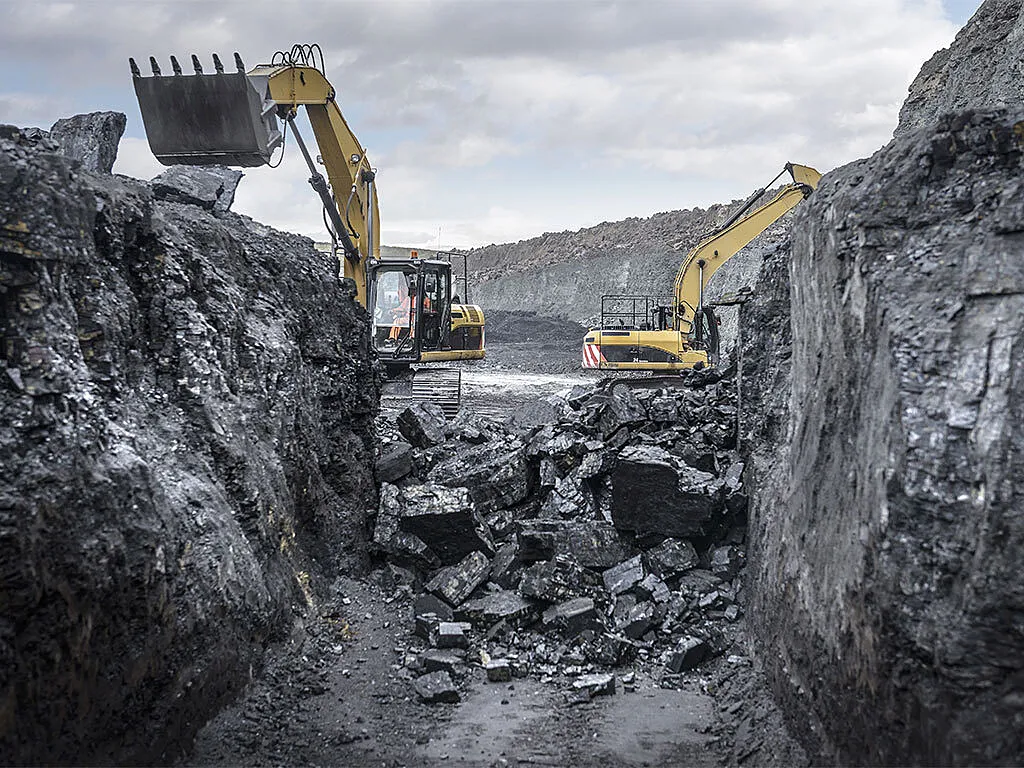
- Decisions about ore movement and blending determine what reaches the mill, yet broad stockpile averages can conceal differences in grade, hardness and mineralogy.
- Better information could help operators anticipate those differences before they disrupt processing.
Mine-to-Mill Production Maximisation Playbook is published by mining technology provider NTWIST.
- It presents the company's MineMax framework, comprising OreMax, DynaMax, PlanMax and MillMax, and describes three customer cases.
- It is a commercial playbook rather than an independent evaluation
Its central argument is that information should travel with material from extraction through stockpiling and processing.
- For African mines, the opportunity is to test whether that continuity improves decisions and reduces avoidable resource use.
- The evidence presented requires careful interpretation before it can support claims about performance at another operation.
Hidden Variability Can Undermine Processing Decisions
An average grade can describe a stockpile while concealing where its higher and lower grades are located.
- Hardness and mineralogy can vary within the same inventory.
- The playbook argues that losing this detail makes blending less predictable and leaves plant teams reacting after the feed has changed.
This is a coordination problem across geology, planning, haulage and metallurgy.
- Each team may hold useful records, but decisions become harder when those records do not describe the same material at the same time.
- The playbook links these gaps to unstable throughput, reduced recovery and excessive reagent or energy use.
The proposed response is more detailed tracking linked with forecasts and operating advice.
- The practical test is whether the information changes a decision early enough to improve the result.
- A detailed model has limited operational value if its predictions arrive too late or cannot be reconciled with what the plant actually receives.
Managers should also distinguish a better estimate from a verified inventory.
- Confidence measures, reconciliation and a record of material movements remain necessary.
- Granularity makes uncertainty more visible
It does not make the underlying records automatically accurate.
Connect Inventory Knowledge With Plant Operating Decisions
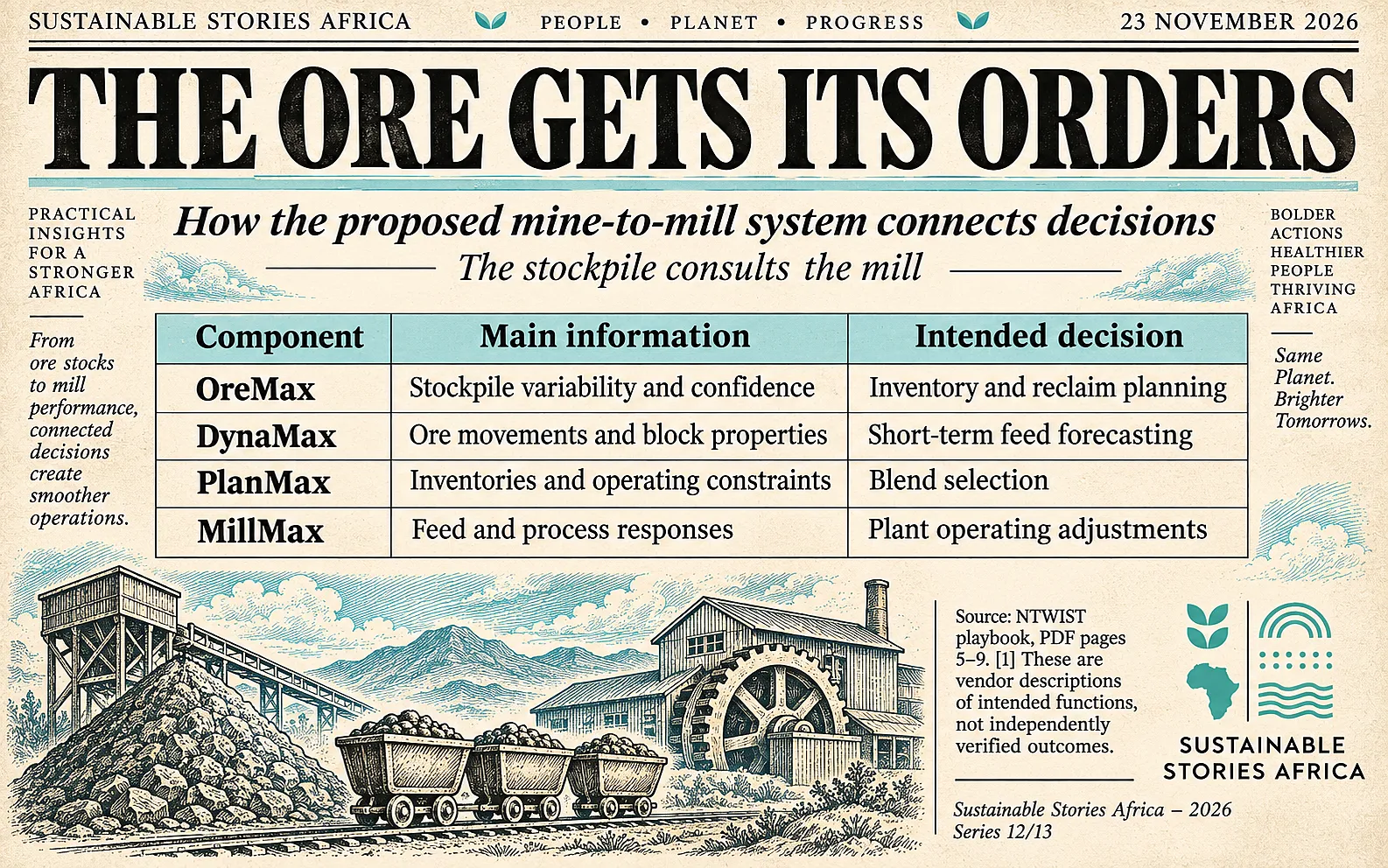
OreMax, the first component described, combines resource and grade-control models with truck information and stockpile surveys.
- It is intended to represent spatial variability within long-term stockpiles, helping geologists and planners identify material that broad averages may obscure.
- The playbook also emphasises confidence measures and traceability.
DynaMax then tracks properties at the run-of-mine, or ROM, pad.
- It replaces a single stockpile average with smaller blocks carrying attributes such as grade and hardness.
- NTWIST says sites can start with manually uploaded spreadsheets before connecting operational systems for more frequent updates.
PlanMax uses the inventories and their uncertainty to develop blends within reclamation and plant constraints.
- MillMax links feed information with geometallurgical models to predict plant responses and recommend operating adjustments.
- The relationship matters: a processing recommendation depends partly on the reliability of the material information feeding it.
The playbook distinguishes advisory recommendations from optional supervisory control that writes operating setpoints within guardrails.
- An operation considering either should establish who approves changes and how operators respond when a prediction conflicts with observed conditions.
- Clear responsibility becomes more important as software moves from explaining performance to influencing equipment settings.
Reported Gains Need Clear Operational Context
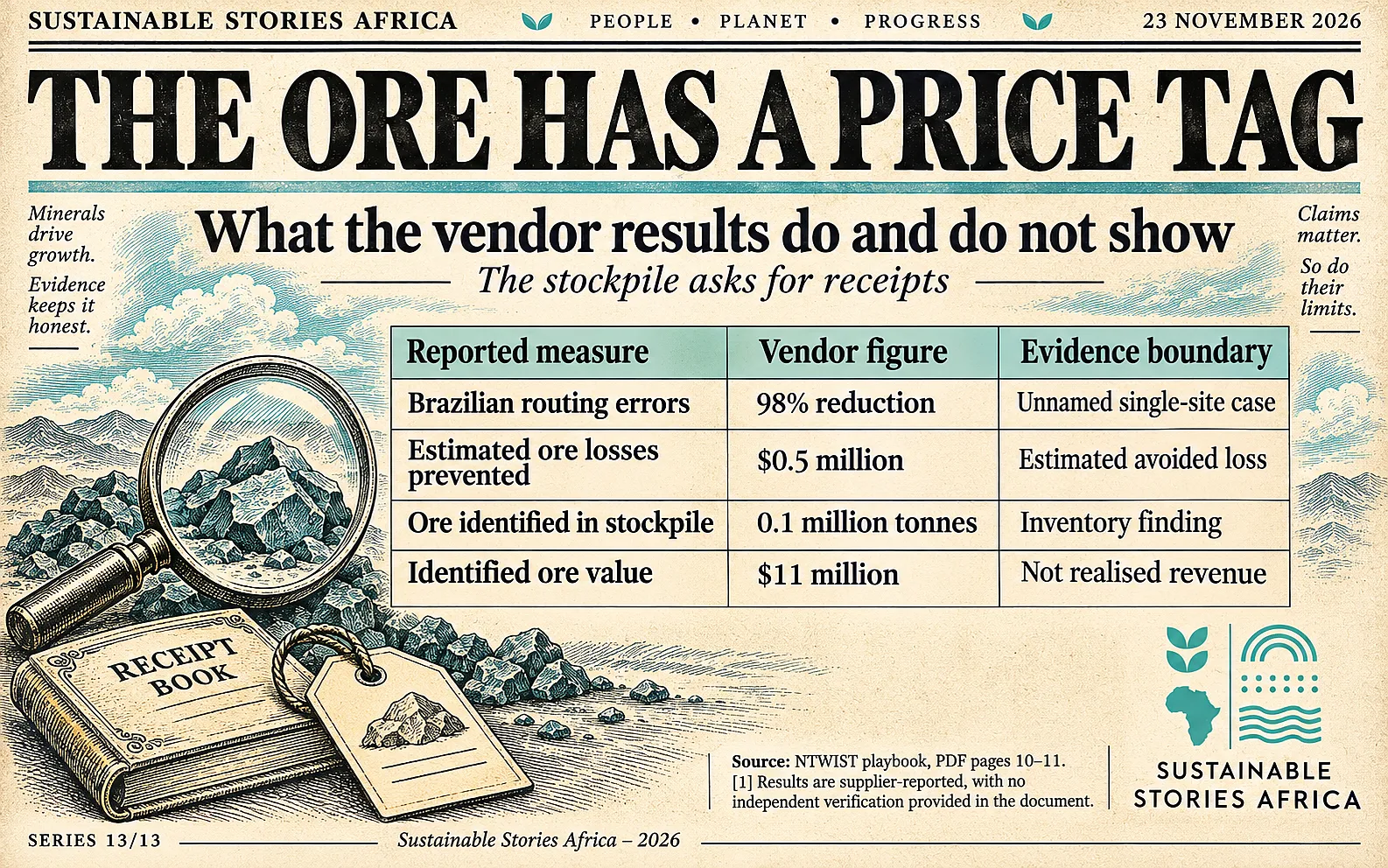
The strongest numerical case concerns an unnamed Brazilian open-pit gold mine described as producing 50,000 ounces annually.
- NTWIST reports that routing errors fell by 98% within a few months after tracking was introduced, with estimated prevention of $0.5 million in ore losses.
- These figures describe the company's account of one operation.
A second case describes a South American gold mine where detailed modelling identified 0.1 million tonnes of previously unaccounted-for medium- and high-grade ore, valued at US$11 million.
- This is an inventory identification claim.
- The document does not establish that the full value became recovered metal, sales revenue or profit.
The cover separately advertises a 30% reagent cost reduction and a 0.5% – 5% recovery improvement.
- It does not provide a transparent calculation or clarify whether the recovery range describes relative percentages or percentage points.
- Neither headline should therefore be treated as a guaranteed outcome for African mines.
The third case concerns a 100,000-ounce gold operation with a concentrator and leach plant.
- It describes improved feed visibility and adjustments to SIBX collector dosing but provides no quantified savings
- Its wording also moves between cyanide overuse and SIBX optimisation.
These are distinct reagent applications and should not be merged into one savings claim.
Test Resource Efficiency Alongside Production Performance
For African operators, the proposed next step is a bounded site trial with agreed measures before expansion.
- Teams should establish a baseline for routing accuracy, feed prediction, throughput, recovery and reagent use, then record what changed during the trial.
- Ore characteristics and other operating changes need to be considered when attributing an improvement.
A useful comparison should also track the cost of acting on recommendations.
- Better recovery may require additional processing time, energy or chemicals; a faster throughput rate may deliver a different recovery result.
- The trial should disclose these trade-offs together, using a consistent period and production basis.
- An isolated improvement can otherwise conceal a cost elsewhere in the operation.
The environmental case also needs direct evidence.
- Lower reagent consumption or energy use per tonne could improve resource efficiency, but higher production may change absolute consumption.
- A credible assessment should show both intensity and total use, alongside the relevant production denominator
- The playbook's operational claims do not establish a verified reduction in emissions or wider environmental impacts.
Implementation should begin with data that the site can maintain.
- The playbook's suggested spreadsheet entry route may help establish an initial workflow, but staff still need to check records, reconcile movements and resolve missing information.
- The cost of these tasks belongs in the assessment alongside software and integration costs.
Before scaling, management should compare predicted feed characteristics with measured plant results and investigate persistent differences.
- The review can identify whether the problem lies in movement records, sampling, modelling or implementation.
- The purpose is to establish where the system adds value and where human checks remain essential, rather than treating installation itself as evidence of improvement.
Involve operators and technical teams in evaluating recommendations.
- They need a way to challenge doubtful inputs, reject unsuitable advice and retain a record of changes.
- A useful system should make operational reasoning more transparent and strengthen the site's ability to learn from results.
Path Forward – Starts With Measured Site Evidence
African mines should test connected ore tracking against documented operational baselines, with clear ownership of data and processing decisions.
Vendor case studies can guide questions, while site results determine whether expansion is justified.
The sustainability test is measurable: recover more useful material while demonstrating what happens to energy, reagents and other resource use.
Production gains and environmental benefits each need evidence.