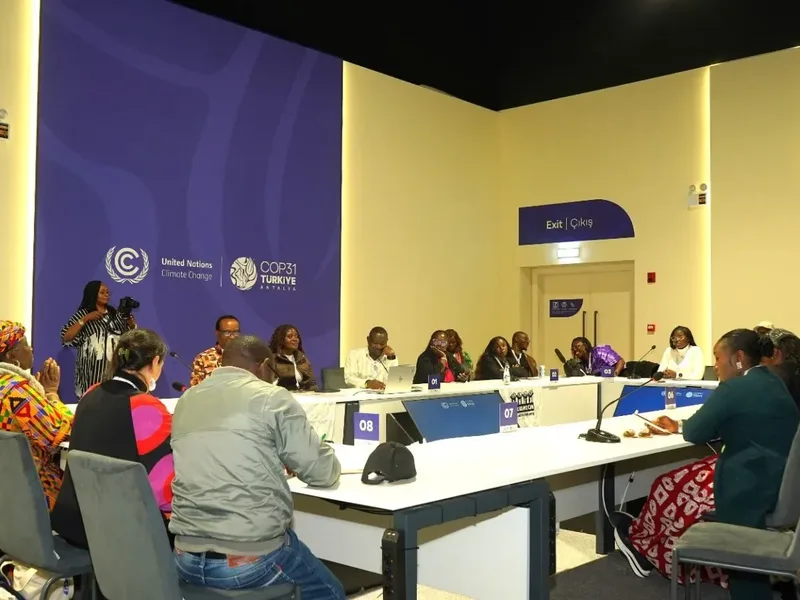

The COP31 electrification pledge sets a global direction towards electricity supplying 35 per cent of final energy use by 2035.
Africa’s opportunity extends from new household connections to competitive industry.
Delivery will depend on reliable grids, affordable equipment and finance that reaches underserved communities, rather than on a rising global percentage alone.
Electricity Ambition Meets Africa’s Development Needs
The COP31 Presidency’s Global Electrification Pledge gives African governments a new reference point for linking energy access with industrial development.
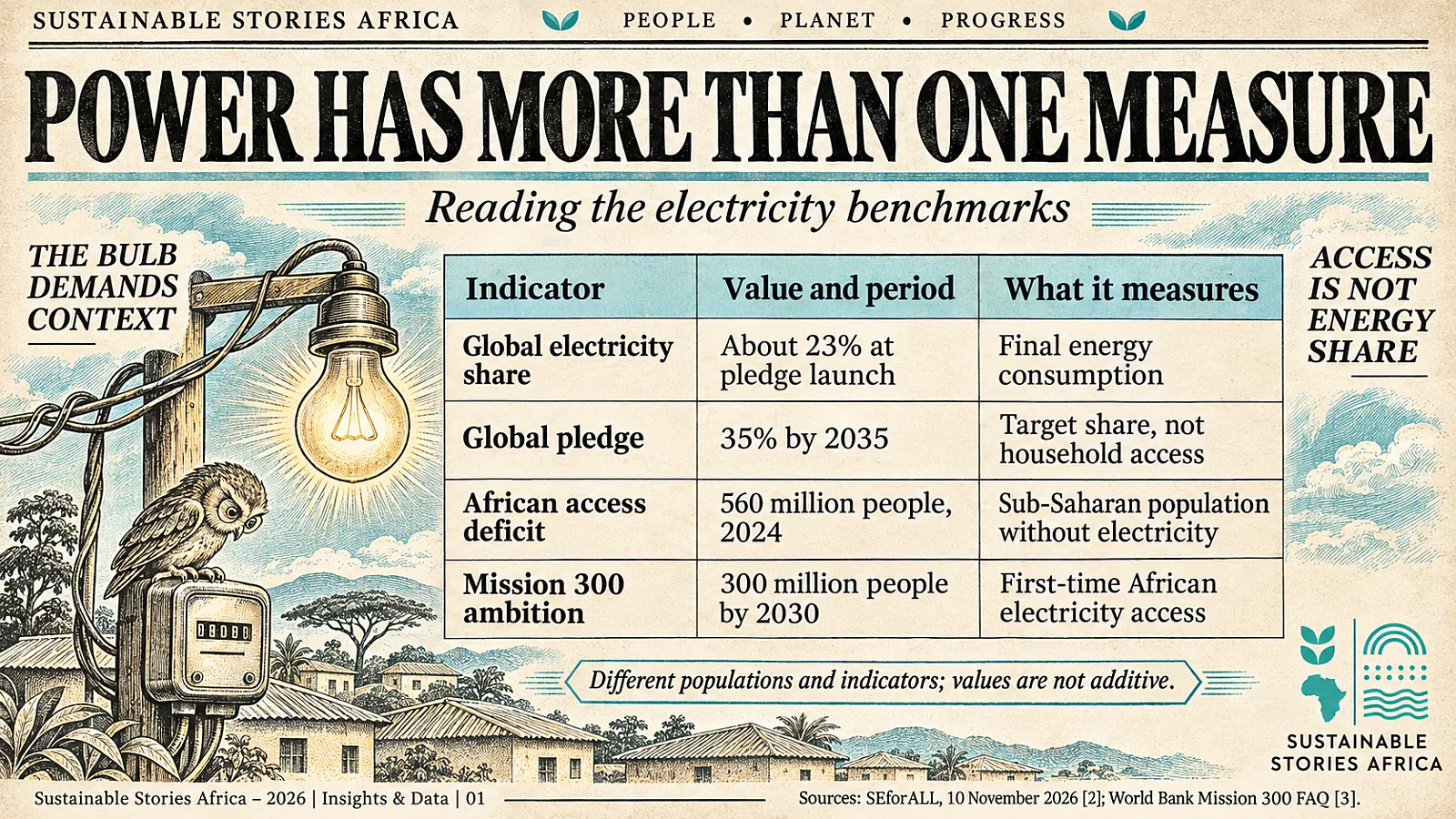
It targets electricity’s share of global final energy consumption, rather than the proportion of households connected to power.
- These measures answer different questions and should be tracked separately.
“COP31 Launches the Age of Electricity: A Global Pledge to Raise Electricity to 35% of Final Energy Use by 2035”, describes the pledge and its supporting institutions.#
- SEforALL’s The Electrification Opportunity adds emerging-market context.
For Africa, the practical question is whether a global ambition can improve the power available to households, farms and businesses.
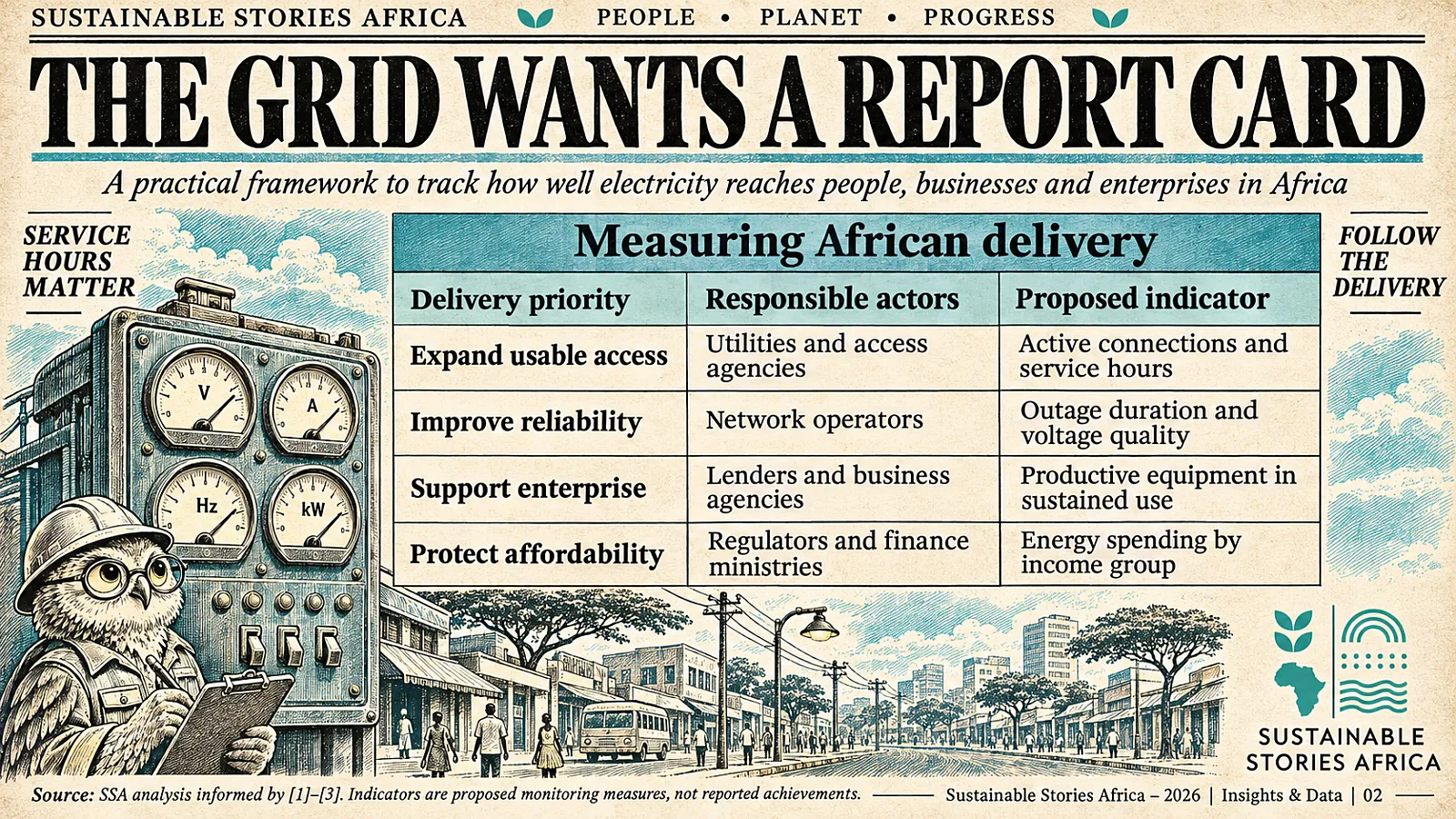
- Success should be judged through service quality, productive activity and affordability, alongside emissions performance.
A Global Target With Unequal Starting Points
The movement from approximately 23% to 35% represents a 12-percentage-point increase, or about 52% relative to the starting share.
- This is SSA’s calculation from the published figures.
- It does not mean that electricity generation must rise by precisely that amount:
- Efficiency improvements and changes in total energy demand also affect the denominator.
Africa enters this discussion with a major access deficit.
The World Bank’s Mission 300 information records 560 million people without electricity in sub-Saharan Africa in 2024.
- The initiative aims to provide first-time access to 300 million people across Africa by 2030.
- These are a historical estimate and a programme target, respectively, rather than evidence that the targeted connections have already been delivered.
A household may acquire a connection yet still lack the dependable power needed for refrigeration or income-generating equipment.
Conversely, a factory may replace a fuel-burning process with electricity without adding a single newly connected household.
- Both changes matter, but combining them in one headline would conceal who benefits and what has improved.
African energy strategies therefore need parallel objectives.
- They should extend basic service, improve existing supply and support new productive demand.
- Pursuing only the easiest commercial customers could improve aggregate electricity consumption while leaving remote settlements behind.
- Pursuing connections without considering operating costs could leave families with access they cannot afford to use consistently.
Why Grids Determine What Electrification Can Deliver
SEforALL identifies three pathways:
- First-time access
- Switching existing fuel use to electricity
- Creating demand through industrialisation.
Its analysis links these pathways to planning, investment, clean supply, networks and workforce capabilities.
- This shows a more useful development framework than treating electrification as an equipment procurement programme.
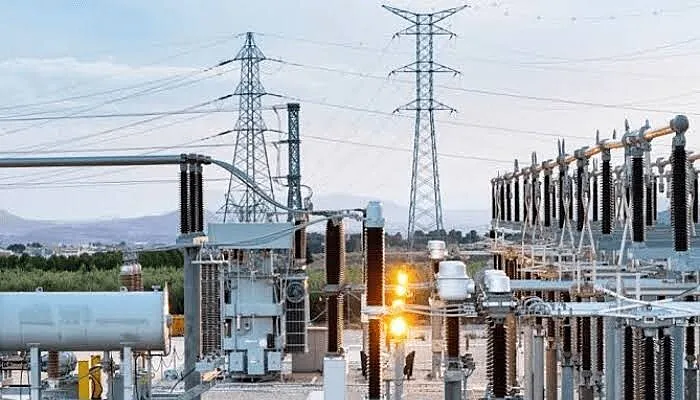
The grid is where these ambitions meet operational reality.
- An electric bus depot needs sufficient connection capacity when vehicles charge.
- A processing business needs voltage stable enough to protect machinery.
- A clinic needs continuity during periods when patients arrive.
Planning around annual energy totals alone can miss these local requirements.
Distributed systems deserve a place in that planning.
- Where extending a central network is expensive or slow, a mini-grid may support nearby households and enterprises.
- The relevant comparison is the cost and reliability of a complete service, including maintenance and eventual replacement, rather than the purchase price of generation equipment alone.
This also changes procurement.
- Governments should specify the service an investment must deliver and require realistic demand assessments.
- A project designed around an anchor customer should explain how surrounding households can connect, how prices will be set and what happens if that customer’s demand falls.
- These questions belong before financial approval.
Turning New Connections Into Wider Economic Opportunity
The development opportunity lies in what people can do with electricity.
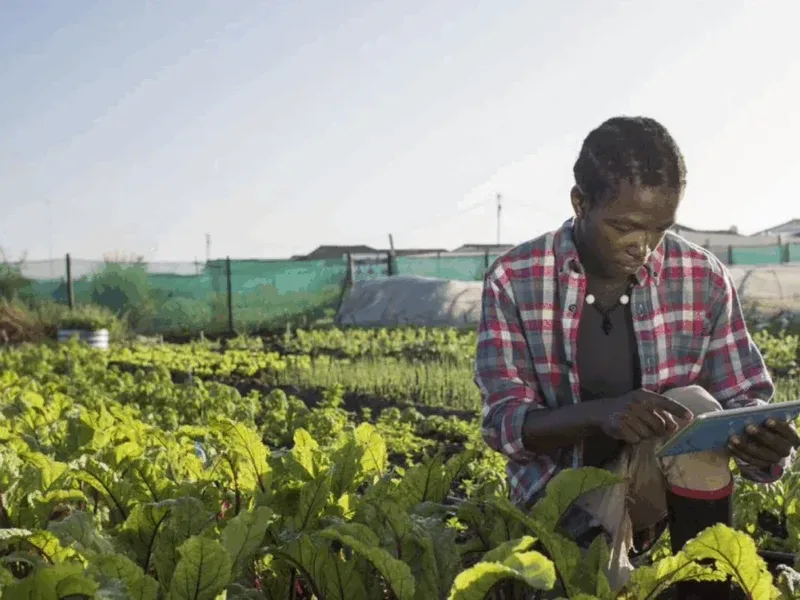
- A farming cooperative could use cooling to extend the time available to sell produce.
- A workshop could run more efficient equipment.
- Schools and health facilities could maintain services through longer operating hours.
These are potential applications, not outcomes automatically guaranteed by connection statistics.
Productive use also requires complementary investment.
- A business cannot benefit fully from a new electric machine if it lacks credit, trained operators or access to customers.
- Energy ministries should therefore work with industrial, agricultural and education agencies when choosing priority locations.
- Otherwise, equipment and network programmes can develop on separate schedules and leave expensive assets underused.
There are local enterprise opportunities in installation, maintenance, metering and equipment servicing.
- Training providers should build these skills around likely demand and recognised qualifications.
- Local procurement should encourage capable suppliers while preserving quality and competition; purchasing rules that merely increase equipment costs could undermine the affordability they are intended to support.
Electrification can also shift risks.
- Replacing imported fuel with domestic power could reduce exposure to fuel-price volatility, but poorly managed electricity tariffs or outages could create new vulnerabilities.
The investment case should test both possibilities and make clear who carries the financial consequences when service fails.
Making Finance Reach Projects And Household Budgets
The primary briefing describes an Electrification Forum, IEA-supported tracking and IRENA’s distribution-grid programme.
- It also says the World Bank and African Development Bank will co-chair the Electrify Now Finance Coalition in 2027.
- These arrangements provide possible routes for coordination; they do not establish that finance has been allocated to an individual African project.
Governments should turn national ambitions into costed programmes with named implementing agencies.
- Each programme needs an explanation of demand, network constraints, land requirements, affordability and maintenance.
Investors can then assess a defined proposition, while citizens can see which service improvements public support is intended to purchase.
Finance should address the barrier at the appropriate level.
- Concessional funding may help an underserved network expansion; equipment finance may help a viable enterprise switch technologies.
- Neither instrument removes the need to assess repayment capacity, currency exposure and the recurring cost of service.
- Public guarantees should have explicit limits and disclose the obligations taxpayers assume.
Public reporting should follow projects beyond approval.
- Ministries should publish commissioning dates, expenditure, reliability and affordability results, with explanations for delays.
- National statistics should also distinguish planned, completed and actively used connections.
- This discipline would make it harder for announcements to substitute for service and easier to identify investments that deserve expansion.
Energy efficiency should sit within the same investment plan.
- A more efficient appliance can change the capacity a household requires and the bill it faces.
- Planners should compare the cost of improving equipment with the cost of expanding supply, using realistic usage patterns.
- This can reveal combinations that provide a better service within a constrained budget.
Country priorities will differ.
- An economy with widespread connections but unreliable supply may prioritise network rehabilitation, while an underserved district may need a combination of new distribution and off-grid systems.
- African cooperation should share practical evidence without imposing a uniform sequence.
A useful regional forum would help officials compare these choices, document performance and adapt financing to the service required.
Path Forward – For Africa’s Electricity Transition
African governments should link the COP31 ambition to national access, industrial and grid investment plans.
Development partners should support preparation and affordable finance for projects that can demonstrate dependable service.
Progress should be measured through electricity people can use, businesses that can operate and communities that can afford supply.
A global target gains development value when these outcomes become visible locally.