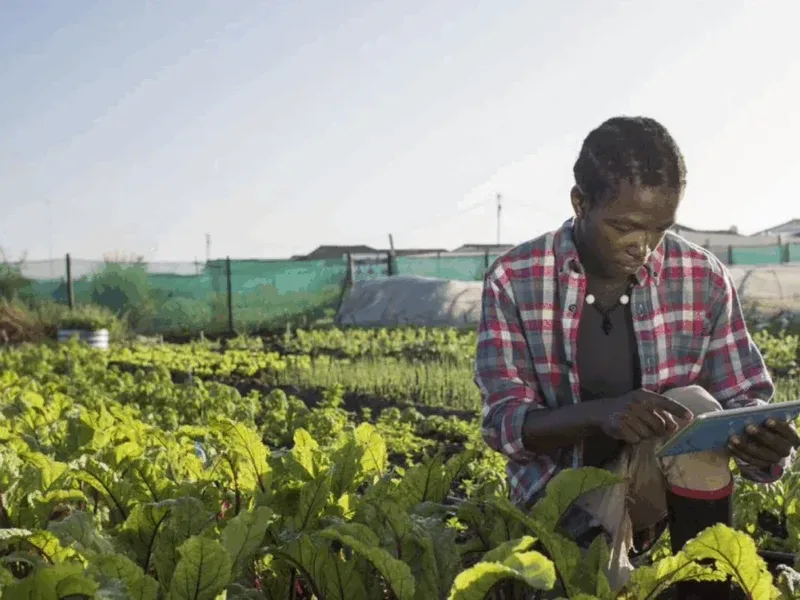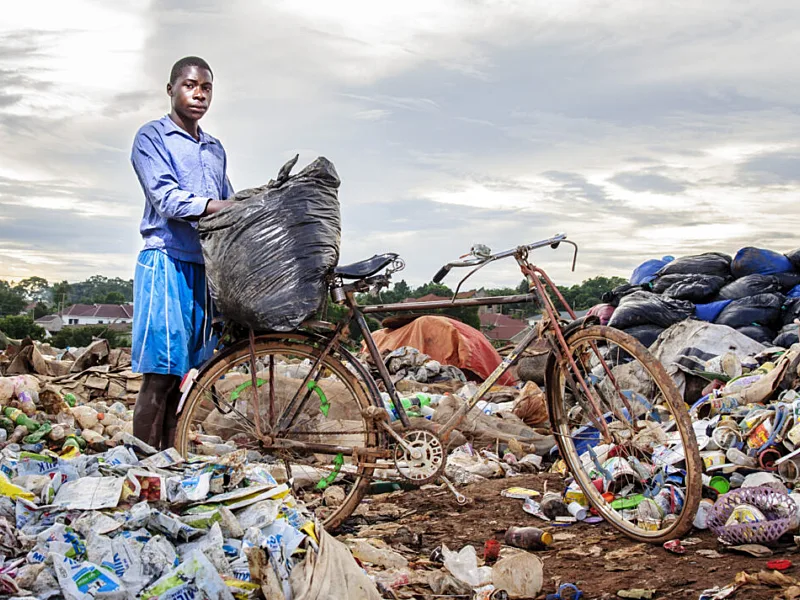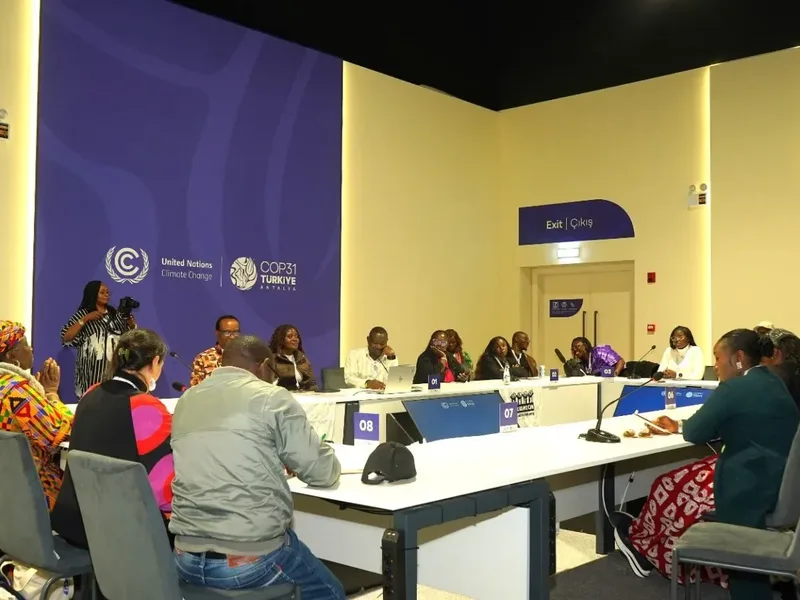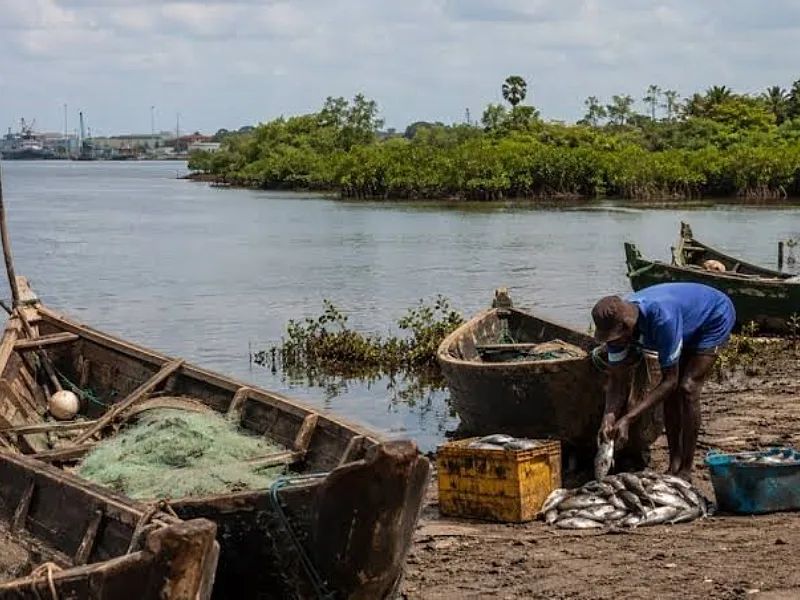
Climate hazards interact with unequal access to income, services and decision-making.
Women’s exposure therefore depends on the conditions in which they live and work, rather than gender alone.
African adaptation programmes can become more effective by protecting health and livelihoods, reducing unpaid burdens and giving women meaningful influence over investment choices.
Climate Inequality Reflects Access And Power
African climate strategies need to account for the ways unequal access to resources changes the consequences of heat, floods and water disruption.
- People experiencing the same hazard can have very different capacities to respond.
- Income, land rights, health services, care responsibilities and influence over public decisions shape the options available before and after an event.
“Same Crisis, Different Burdens: Climate Change and Women” frames gendered climate vulnerability through structural inequality and calls for safer infrastructure, appropriate services and women’s leadership.
- Its central lesson is that effective adaptation must examine social conditions alongside physical exposure.
This African analysis adds evidence from FAO’s 2024 The Unjust Climate research and WHO’s October 2026 heat-health monitoring initiative.
- These sources support careful discussion of income and health risks without assuming that every woman, household or African country experiences the same effects.
The Same Hazard Can Produce Unequal Losses
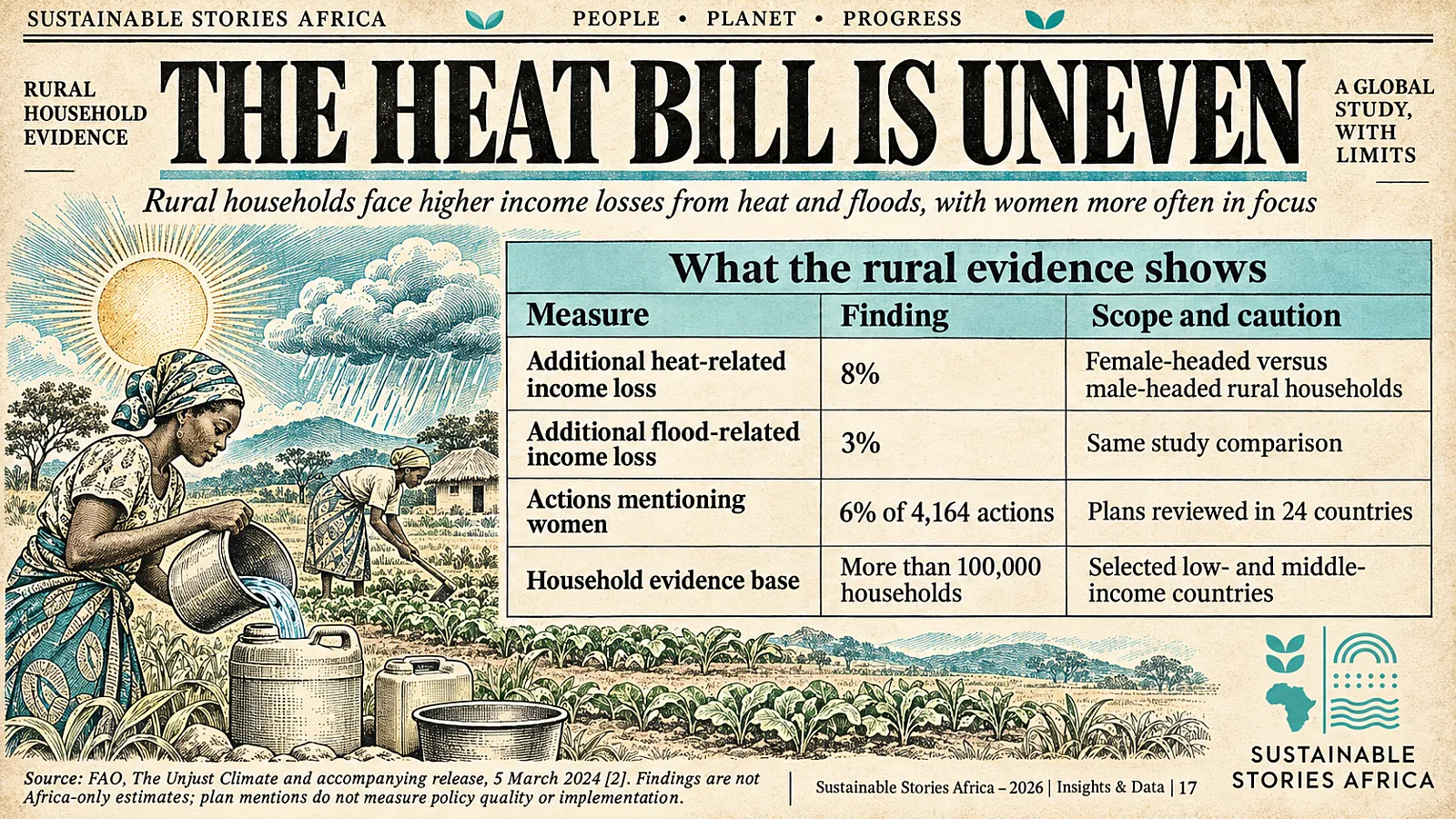
FAO’s research across 24 low- and middle-income countries found greater income losses associated with heat and floods among rural female-headed households than male-headed households.
- Its analysis used socioeconomic information from more than 100,000 rural households together with long-term weather data.
- The study provides evidence of inequality, but its sample should not be presented as a census of African women.
Household headship is also a specific analytical category.
- It does not capture every woman’s control over resources within a household or establish that all male-headed households are secure.
- African programmes should use the finding to investigate relevant local barriers, rather than turning an average difference into an assumption about each person’s circumstances.
The mechanism matters for intervention design.
- If a producer cannot obtain credit or make decisions over land, advice about a new farming practice may have limited practical value.
- If caring responsibilities restrict working hours, an additional training requirement can be difficult to meet.
- Programmes should assess what enables a person to use the support offered.
The article also draws attention to safety and essential services.
- Water shortages, evacuation arrangements and disrupted care can create additional burdens where systems are inadequate.
- The appropriate response is to examine actual conditions and provide protection, rather than imply that climate hazards alone explain every instance of violence, ill health or displacement.
Data Should Identify Who Support Is Missing
FAO reports average additional income losses among rural female-headed households of 8% from heat stress and 3% from floods relative to male-headed households.
- It also found that only 6 per cent of 4,164 climate actions in the reviewed national plans mentioned women.
- These are findings from the study’s defined country and policy samples.
The policy result warrants scrutiny, but mentioning women is only a starting point.
- A programme can include gender language and still lack a budget, accessible services or decision-making opportunities.
- Evaluation should ask who can participate, who receives resources and whether the programme changes the constraints it identifies.
Health systems face a related information challenge.
- In October 2026, WHO and partner agencies launched priority indicators to monitor heat impacts on pregnant women, newborns and children.
- The framework encourages countries to connect health outcomes and heat exposure to improve preparedness and response.
For African services, this suggests a practical route towards identifying risks within routine care.
Monitoring should preserve clinical and statistical precision.
- An association between heat and an adverse outcome does not mean heat explains every case.
- Health agencies should assess local evidence, strengthen service readiness and communicate risks through qualified professionals.
Broad claims about climate change causing particular diseases can mislead if they omit other exposures and determinants.
Women’s Leadership Can Improve Investment Design
Women should have influence over the decisions shaping adaptation, rather than participate only as beneficiaries.
- A water project’s location, operating hours and payment arrangements affect whether it is usable.
- Those who manage daily household and livelihood tasks can help identify design choices that a purely technical appraisal may miss.
Participation needs practical support.
- Meeting schedules, transport, childcare and language can determine who is able to contribute. Institutions should also explain which decisions participants can influence and how proposals will be considered.
- Attendance figures alone cannot show that women changed the allocation of resources or the design of a service.
Access to finance requires a similar approach.
- A programme should examine whether collateral rules, identification requirements or repayment schedules exclude intended participants.
- Changes should be tested against the realities of income and business activity.
- A loan offered under an empowerment label may be unsuitable if it increases obligations without improving the borrower’s capacity to earn or adapt.
There are benefits for public investment quality.
- Better understanding of users can improve the location and operation of facilities, reduce barriers to uptake and identify safety concerns early.
- These are reasons to build meaningful participation into project preparation and monitoring.
They should be evaluated through actual service outcomes rather than assumed from the existence of a consultation process.
Fund Services That Reduce Unequal Climate Burdens
African governments should begin with local assessments that connect hazards to access barriers.
- Data should be disaggregated where useful and interpreted alongside age, disability, income and location.
- This can help authorities identify who needs additional support without treating women as a single, uniformly vulnerable group or overlooking people facing intersecting disadvantages.
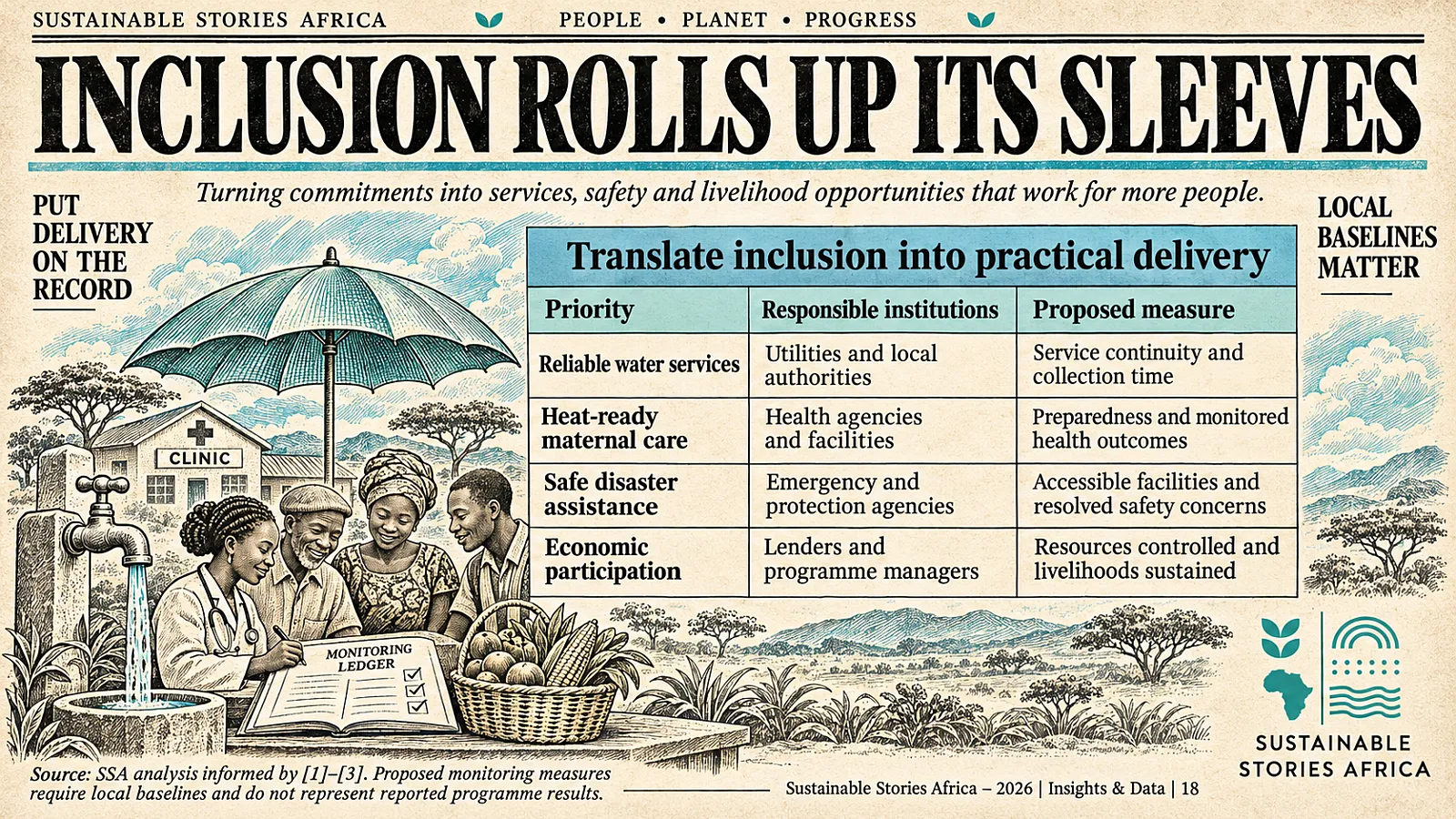
Water, health and disaster agencies should coordinate their plans.
- A safe evacuation facility needs workable access, sanitation, lighting and links to essential care.
- A health facility needs reliable services during heat or flooding.
- Funding should include operation and maintenance, because infrastructure that cannot be kept functional offers limited protection when it is most needed.
Employers and business associations should examine working conditions and continuity arrangements for women across their value chains.
- This includes the ability to obtain information, use protective measures and maintain income through disruption.
- Procurement and enterprise support should track whether opportunities are accessible to women-owned and women-led businesses in practice.
Funders should require budgets and evidence for inclusion commitments.
- Useful reporting would show what changed in service access, time burdens, economic security and decision-making influence.
- It should also identify where measures failed to reach intended users.
- Publishing such findings can help African institutions improve programmes and make gender-responsive adaptation a matter of delivery rather than ceremonial recognition.
Evidence collection should itself be proportionate.
- Repeated surveys can take time from participants without changing a decision.
- Programme managers should explain why information is needed, protect sensitive records and use existing service data where appropriate.
- Women should be able to see how their input affects delivery and challenge conclusions that do not reflect their circumstances.
Local accountability can connect these requirements.
- A community review should ask whether a service remains usable during disruption, whether assistance reaches the intended users and whether identified problems are resolved.
Reporting these answers alongside spending would give a clearer picture of resilience than a budget total or participation count alone.
Path Forward – For Gender Responsive African Adaptation
African climate programmes should fund dependable water and health services, safe assistance and fair access to economic opportunities.
Women need practical influence over the decisions affecting their lives.
Governments and partners should track changes in access, time burdens and livelihoods, using local evidence.
Better adaptation will address structural barriers while recognising women’s knowledge, enterprise and leadership as assets for resilient development.